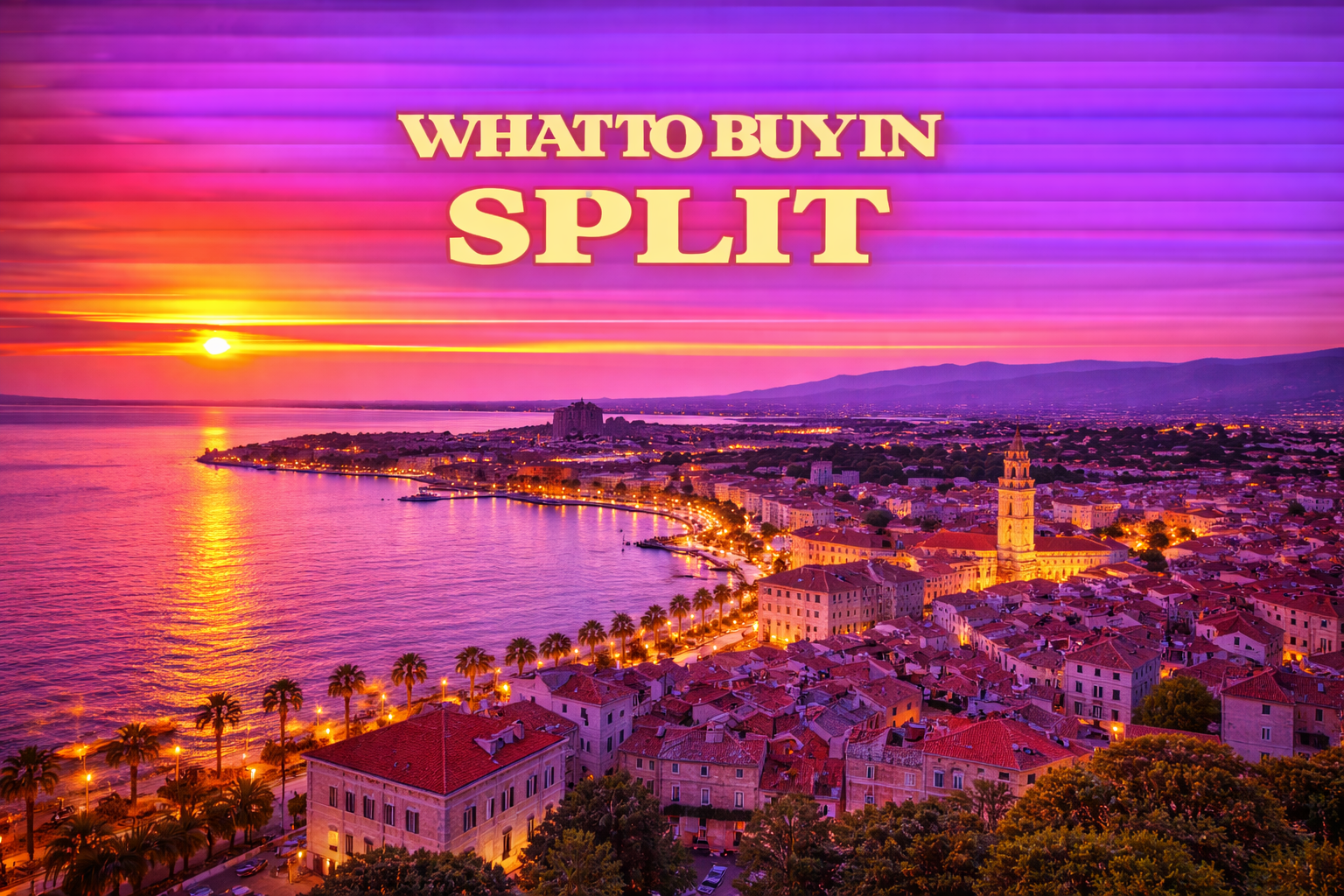
Split is a coastal city with a long history of craft and food traditions. Shopping here mixes market stalls, museum shops, and small independent makers rather than a single souvenir street.
This guide covers items you can find across Split — not just one shop or market — and focuses on things that show local craft or flavor, pack well, and hold their value.
1. Extra-virgin Dalmatian olive oil
• Why it’s worth buying: Olive oil from the region reflects local olive varieties and long production history. It’s a practical gift that you’ll actually use at home.
• Where to look: food halls and specialty grocers.
• Price range: $12–$40
• How to spot a good one: Choose bottles with a recent harvest date and a clear varietal or producer listed.
• Easy-to-pack tip: Wrap the bottle in clothing and put it in the center of your suitcase.
2. Sea salt harvested from the Adriatic
• Why it’s worth buying: Sea salt captures coastal flavor and seasons foods differently than table salt. Small, well-packaged jars last long and travel easily.
• Where to look: independent shops near markets.
• Price range: $4–$18
• How to spot a good one: Look for coarse crystals, minimal additives, and a clear source label.
• Easy-to-pack tip: Put the jar in a sealed plastic bag to prevent spills.
3. Dried figs and candied citrus
• Why it’s worth buying: These preserve the region’s Mediterranean fruit and make for simple snacks. They’re shelf-stable and typically come in neat packages.
• Where to look: markets.
• Price range: $5–$20
• How to spot a good one: Prefer transparent packaging showing whole fruit and an ingredients list with few additives.
• Easy-to-pack tip: Place packets in a hard-sided part of your bag to prevent crushing.
4. Hand-painted ceramics
• Why it’s worth buying: Ceramics show local color and often use traditional motifs or glazes unique to Dalmatia. Small pieces work well as decorative keepsakes.
• Where to look: galleries and artisan stalls.
• Price range: $15–$90
• How to spot a good one: Check for an artisan signature, consistent glaze, and smooth, even firing marks.
• Easy-to-pack tip: Wrap fragile pieces in layers of clothing, and carry the smallest items in your cabin bag.
5. Linen textiles and table linens
• Why it’s worth buying: Linen is traditional in Mediterranean homes and holds up well over time. It’s useful at home and compresses easily for travel.
• Where to look: co-ops and independent textile sellers.
• Price range: $12–$70
• How to spot a good one: Inspect weave tightness and natural fiber feel; synthetic blends will feel slippery.
• Easy-to-pack tip: Roll linens tightly to save space and prevent creasing.
6. Leather sandals or small leather goods
• Why it’s worth buying: Locally made leather goods are practical and often use durable construction. Small items like wallets and belts are easy to test for quality.
• Where to look: independent shops along pedestrian streets.
• Price range: $20–$120
• How to spot a good one: Smell the leather, check stitching, and test hardware for sturdiness.
• Easy-to-pack tip: Wear new sandals on travel days to avoid packing bulky footwear.
7. Filigree and handmade jewelry
• Why it’s worth buying: Jewelry often reflects regional designs and fine metalwork traditions. Small pieces are easy to pack and make personal gifts.
• Where to look: galleries that showcase local makers.
• Price range: $25–$200
• How to spot a good one: Look for hallmarks, precise soldering, and consistent metal color.
• Easy-to-pack tip: Store jewelry in a small padded case or a soft cloth to avoid tangles.
8. Olive-wood kitchenware
• Why it’s worth buying: Olive-wood utensils are durable and show attractive grain patterns unique to the region. They’re useful in the kitchen and attractive on a counter.
• Where to look: open-air markets and craft stalls.
• Price range: $8–$60
• How to spot a good one: Smooth finishes without rough edges and a solid, heavy feel indicate quality.
• Easy-to-pack tip: Wrap wooden items in clothing to protect them from bumps.
9. Local liqueurs and rakija (bottled spirits)
• Why it’s worth buying: Regional spirits capture local fruit and herbal traditions and make distinctive gifts. Bottles come sealed and last long when packed correctly.
• Where to look: food halls and licensed grocers.
• Price range: $10–$50
• How to spot a good one: Choose sealed bottles with clear ingredient lists and producer information.
• Easy-to-pack tip: Double-bag and place bottles centrally in checked luggage, or ship them.
10. Small nautical-themed wooden crafts
• Why it’s worth buying: These reflect Split’s maritime heritage and make compact mementos. Handcrafted pieces have more character than molded plastic souvenirs.
• Where to look: museum shops and seaside stalls.
• Price range: $6–$35
• How to spot a good one: Check for solid joinery, fine sanding, and natural finish rather than thick paint.
• Easy-to-pack tip: Cushion wooden ornaments with newspapers or soft goods to prevent scratches.
11. Local prints, maps, and postcards
• Why it’s worth buying: Prints capture local scenes and are affordable keepsakes or frames for home. They’re light and easy to mail.
• Where to look: markets and printmakers’ tables.
• Price range: $2–$45
• How to spot a good one: Prefer signed prints, quality paper, and clear printing rather than thin photocopies.
• Easy-to-pack tip: Carry prints flat in a portfolio sleeve or roll them inside a tube.
12. Honey and dried herb blends
• Why it’s worth buying: Local honey shows floral differences by region, and herb blends add recognizable Dalmatian flavor. Both travel well when sealed.
• Where to look: co-ops and markets.
• Price range: $6–$30
• How to spot a good one: Look for ingredient lists, minimal processing, and clear origin statements.
• Easy-to-pack tip: Seal jars in plastic bags and declare liquids according to airline rules.
Quick buying tips for Split
- Carry some cash for small purchases; many stalls take cards less often.
- Bargain politely at open-air markets; haggling sometimes expected for multiple items.
- Wrap ceramics and glass with clothing to protect fragile items during travel.
- Many sellers offer shipping; ask prices and insurance before handing over items.
- Look for “made locally” labels, artisan stamps, or uneven finishes as authenticity clues.
- Pack liquids double-sealed and declare alcohol; follow airline food and liquid packing rules.
Where to shop in Split
Shopping is spread across the old center, market squares, and waterfront. Look for different types of sellers in each area — food at market stalls, craft at galleries, and souvenirs along the promenade.
- Diocletian’s Palace and Old Town streets for small artisan crafts, jewelry, and prints.
- Pazar (Green Market) near the palace for fresh produce, dried fruit, and sea salt.
- Peskarija (fish market) for seafood-related products and local spice blends.
- Riva waterfront promenade for nautical crafts, postcards, and seasonal stalls.
- Marmontova and nearby pedestrian lanes for leather goods and fashion accessories.
- Museum shops at the city’s museums for well-made replicas, books, and design objects.
- Seasonal artisan fairs and summer markets on the waterfront for handmade gifts.
What to skip (common tourist traps)
- Mass-produced keychains and magnets; they show little connection to local craft.
- Bottles of oil without producer or harvest date; they may be blended and low quality.
- Cheap ceramics with uneven glazing and no artisan mark; superficial decoration often peels.
- Imitation leather labeled vaguely; real leather should have a clear origin and feel.
- Unlabeled “local” liqueurs; lack of producer information makes authenticity unclear.
- Overpriced souvenir shops near major landmarks that sell identical items found elsewhere.
If you only buy three things
Extra-virgin Dalmatian olive oil — a useful, regional product that shows local flavor.
Sea salt harvested from the Adriatic — compact, durable, and distinctly coastal.
Hand-painted ceramics — they reflect craft traditions and serve as lasting keepsakes.
FAQ
-
What is Split known for making?
Split and the Dalmatia region are known for olive oil, sea salt, and preserved fruits. Local crafts include ceramics, woodwork, and traditional metal and jewelry making. The city’s maritime history also shows up in small nautical crafts. -
What are the best edible souvenirs from Split?
Olive oil, sea salt, dried figs, local honey, and packaged spice blends are reliable choices. Bottled liqueurs and rakija are popular but require careful packing or shipping. -
Are souvenirs expensive in Split?
Prices range widely: market finds and postcards are inexpensive, while handcrafted leather, ceramics, and jewelry cost more. Paying a bit extra often means better materials and clearer origin information. -
What is the easiest souvenir to pack from Split?
Dried foods, printed items, small textiles, and jewelry are the simplest to carry. They fit in carry-on luggage and don’t require special handling. -
How do I know if something is truly local?
Ask the seller for producer names, origin towns, or artisan signatures and check ingredient labels. Look for “made locally” statements, artisan stamps, and small imperfections that indicate handwork.
Tip: Save your receipts, and keep fragile items in your carry-on.
About the Author
Colin is the founder of SouvenirsIdeas.com and a passionate traveller with a soft spot for ceramics, markets, and food tours. He writes practical, first-hand guides to help you bring home souvenirs that actually mean something — not just more clutter!
Let us know in the comments if this has been useful or if you’ve got suggestions we can include

Leave a Reply