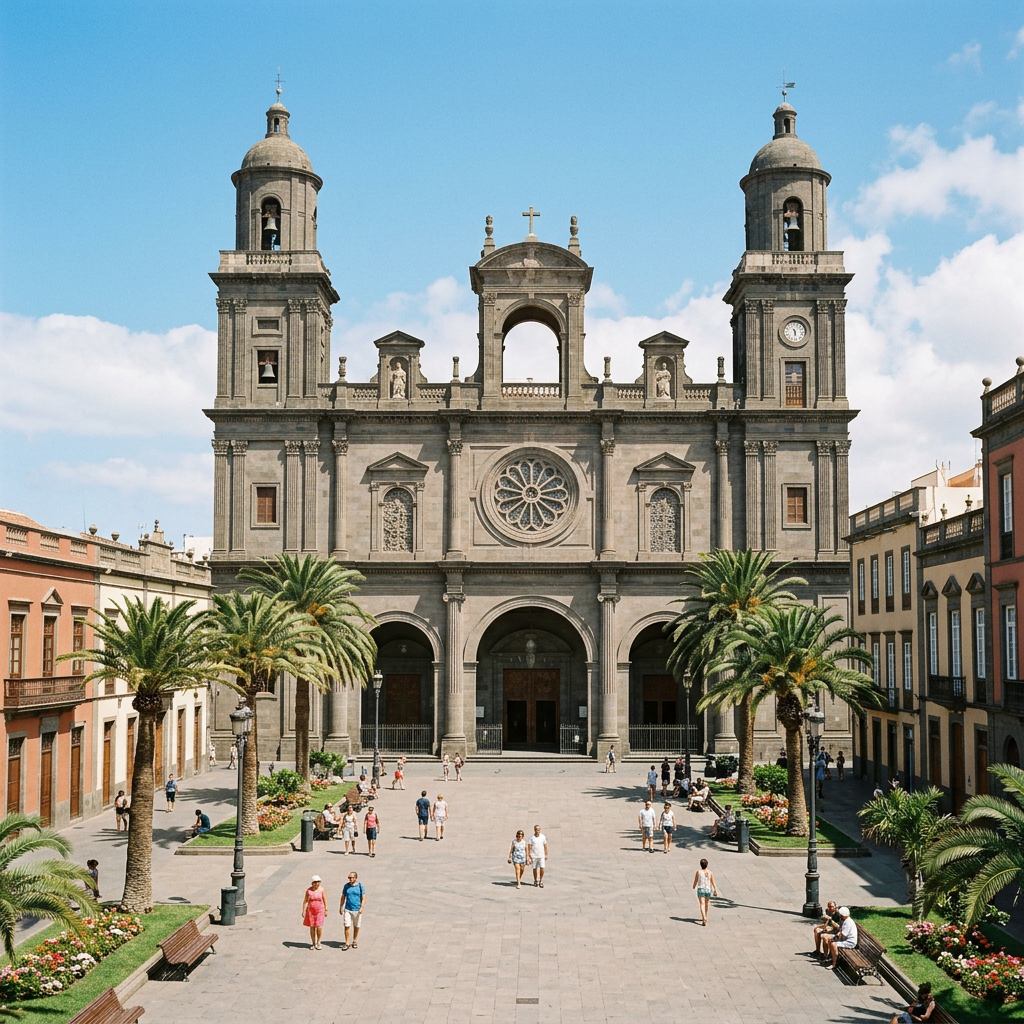
Las Palmas de Gran Canaria is one of those cities that quietly outperforms its reputation. As the capital of Gran Canaria and one of the largest cities in Spain, it has a proper old town, Vegueta, with cobbled streets, a 15th-century cathedral, and the house where Christopher Columbus stayed in 1492.
It has one of the great urban beaches in Europe in Las Canteras, a thriving food culture rooted in the island’s Guanche heritage, and a shopping scene that ranges from artisan markets to duty-free bargains. The Canary Islands’ status as a special economic zone means some goods such as electronics, tobacco, perfume are significantly cheaper here than on the Spanish mainland.
Whether you’re arriving by cruise ship at the Puerto de la Luz, flying in from northern Europe, or based here as a digital nomad, here are 12 things actually worth buying in Las Palmas de Gran Canaria — no fridge magnets required.
1. Ron Arehucas (Gran Canaria Rum) 🥃
Destilerías Arehucas, founded in 1884 in the town of Arucas just 15km north of Las Palmas, is one of the oldest and largest rum cellars in Europe. It ages over 1.2 million litres of cane spirit in 4,308 American white oak barrels, and was awarded the title of Supplier to the Spanish Royal House as early as 1892. Ron Arehucas is the dominant rum brand across the Canary Islands, and its Ron Miel Guanche — a honey rum blended with Canarian honey — is one of the most popular spirits in the archipelago.
- Why pick this up: A genuinely local product with over 140 years of history, made from sugar cane still grown in Arucas — and one of the great underrated rums of Europe. The honey rum in particular is a uniquely Canarian style you won’t find replicated anywhere else.
- What to look for: Ron Miel Guanche (honey rum, the flagship); Ron Arehucas 7 Años for something more complex and aged; Ron Reserva 20 Años for a premium gift. The distillery in Arucas is open for tours and has its own shop.
- Price bracket (2025): €10–€35 per bottle depending on age.
- Where to find it: Supermarkets across Las Palmas; La Molina shop; specialist food shops throughout Vegueta and Triana; the Destilerías Arehucas factory shop in Arucas (worth the short trip).
2. Flor de Guía and Queso de Guía (DO Cheese) 🧀
Gran Canaria’s most celebrated cheese comes from the municipalities of Santa María de Guía, Gáldar, and Moya in the northwest of the island — about 40 minutes from Las Palmas. Queso de Flor de Guía is made primarily from raw Canarian sheep’s milk, curdled using juice pressed from cardoon flower heads rather than animal rennet, giving it a uniquely creamy, slightly bitter, deeply complex flavour. It holds a full Protected Designation of Origin (DOP) and is considered the gastronomic jewel of the Canary Islands.
- Why pick this up: One of the most singular cheeses in all of Spain — the use of vegetable thistle rennet is rare anywhere in the world, and the cheese produced in these three Gran Canaria municipalities is genuinely unique. Multiple international award winner.
- What to look for: Queso de Flor (the premium, fully thistle-curdled version — the most prized); Queso de Media Flor (partially thistle-curdled, more accessible in flavour); Queso de Guía (the young, milder style). Ask for vacuum-packing for travel.
- Price bracket (2025): €15–€30 per piece depending on size and type.
- Where to find it: Mercado de Vegueta (the city’s oldest market, founded 1856); Mercado Central; specialist food shops in Triana; the Sunday market in Guía town for the freshest selection direct from producers.
3. Mojo Sauce 🌶️
Mojo is the defining condiment of the Canary Islands — a thick, garlicky sauce that comes in two main styles: mojo rojo (red, made with dried peppers and paprika) and mojo verde (green, made with fresh coriander or parsley). Every family has a version, every restaurant serves it with papas arrugadas (wrinkled salted potatoes), and bottled versions from quality local producers make one of the most practical and genuinely useful food souvenirs you can bring home.
- Why pick this up: Completely Canarian — mojo is not found in mainland Spain in the same form, and the best bottled versions from local producers taste genuinely close to fresh. Lightweight, travels well, and actually gets used at home.
- What to look for: Artisan bottled mojo rojo and mojo verde from local producers — La Molina stocks an excellent range. Also worth trying: mojo de almendras (almond mojo, thicker and nuttier), a Gran Canaria speciality.
- Price bracket (2025): €3–€8 per jar.
- Where to find it: La Molina shop (El Muelle shopping centre, near the port); Mercado de Vegueta; specialist food shops throughout the historic centre; supermarkets island-wide.
4. Gofio 🌾
Gofio is the most ancient food of the Canary Islands — a flour made from toasted grains (traditionally wheat, millet, or barley, now often maize or mixed grain) that was the staple of the pre-Hispanic Guanche people. It’s used across Canarian cuisine: stirred into soups, mixed into desserts, kneaded into a paste with water and honey, or blended into a thick shake. It’s been described as a prehistoric superfood — high in fibre, minerals, and slow-release energy.
- Why pick this up: One of the most genuinely ancient foods still eaten daily in Europe — gofio connects directly to the pre-conquest Guanche culture of the islands, and quality artisan versions are a uniquely Canarian product impossible to find at home.
- What to look for: Look for single-grain artisan gofio — pure maize (maíz), wheat (trigo), or mixed grain. La Molina and the Mercado Central both stock a good range from local mills. Avoid cheap supermarket versions if possible.
- Price bracket (2025): €2–€6 per bag.
- Where to find it: La Molina; Mercado de Vegueta; Mercado Central (look for stalls specifically labelled gofio canario); specialist food shops in Triana and Vegueta.
5. Bienmesabe 🍯
Bienmesabe — literally “it tastes good to me” — is the great sweet of the Canary Islands: a thick, luscious cream made from ground almonds, honey, egg yolks, cinnamon, sugar syrup, and lemon zest, with probable Arabic origins. It’s served as a dessert in restaurants, poured over ice cream, used as a cake filling, and sold in jars as one of the most beloved food gifts from the archipelago. Arehucas also makes a bienmesabe liqueur.
- Why pick this up: A uniquely Canarian sweet with centuries of history — the flavour combination of almonds, honey, and cinnamon is deeply regional and the texture is unlike any other Spanish confectionery.
- What to look for: Artisan bienmesabe in sealed jars from local producers — check ingredients for real almonds and honey rather than artificial flavouring. The Arehucas bienmesabe liqueur (24% ABV) is an excellent alternative for those wanting something longer-lasting.
- Price bracket (2025): €4–€10 per jar; €12–€18 for the Arehucas liqueur.
- Where to find it: La Molina; Mercado de Vegueta; confectionery shops throughout Las Palmas; supermarkets island-wide.
6. Café de Agaete (Gran Canaria Coffee) ☕
The Agaete valley in the northwest of Gran Canaria is home to the only commercial coffee plantation in all of Europe — a remarkable fact that most visitors never discover. Café de Agaete is grown at altitude in volcanic soil, hand-picked, and processed in tiny quantities. It is the rarest coffee produced on European territory, and carries a level of terroir and provenance that no imported roast can match.
- Why pick this up: The only coffee grown in Europe — full stop. A bag of Agaete coffee is one of the most genuinely extraordinary and conversation-worthy food souvenirs available anywhere in Spain.
- What to look for: Look for 100% Café de Agaete on the label — pure, unblended, from the valley. It’s available as whole beans or ground. Production is very limited so availability varies; the Puerto de Las Nieves area and specialist shops in Las Palmas are the most reliable sources.
- Price bracket (2025): €15–€30 for 250g — more expensive than most coffees, justified by its rarity.
- Where to find it: La Molina; specialist food shops in Vegueta; some stalls at the Mercado de Vegueta; shops in and around the Agaete valley itself.
7. Canarian Aloe Vera Cosmetics 🌿
The Canary Islands are one of Europe’s principal producers of aloe vera — and crucially, the volcanic mineral-rich soil in which it grows gives Canarian aloe an exceptionally high concentration of active compounds compared with aloe grown elsewhere. The result is cosmetics — gels, creams, after-sun, face masks, shampoos — that are internationally recognised for their quality, and far better value bought here than imported into other markets.
- Why pick this up: Canarian aloe vera has measurably higher mineral content due to volcanic soil, making island-produced cosmetics genuinely superior to most imported alternatives — and they’re considerably cheaper bought at source.
- What to look for: Pure aloe vera gel (97%+ aloe content); after-sun gel with aloe; face moisturisers and serums from Canarian producers. Look for products labelled aloe vera de Canarias with a Canarian producer address. Avoid generic tourist-label aloe that may be imported.
- Price bracket (2025): €6–€25 depending on product and size.
- Where to find it: Specialist aloe shops throughout Las Palmas; El Corte Inglés; duty-free shops at the cruise terminal and airport; pharmacies across the city.
8. Platano de Canarias Products 🍌
The Canarian banana — plátano de Canarias — holds a Protected Geographical Indication and is widely considered sweeter, denser, and more flavourful than the larger Cavendish bananas that dominate supermarket shelves worldwide. While fresh bananas travel poorly, a range of banana-derived products — liqueurs, jams, dried banana chips, and confectionery — make excellent, lightweight food souvenirs.
- Why pick this up: The Canarian banana has a PGI and a flavour profile genuinely different from any other banana variety — and banana liqueur from the Canaries is a delicious, authentically local spirit unavailable elsewhere.
- What to look for: Crema de plátano (banana liqueur/cream) from Arehucas or other local producers; banana jam (mermelada de plátano); dried banana chips from local producers. Avoid generic “banana flavour” products in tourist shops.
- Price bracket (2025): €5–€15 per bottle or jar.
- Where to find it: La Molina; Mercado de Vegueta; supermarkets and specialist food shops throughout Las Palmas.
9. Traditional Canarian Ceramics 🏺
Canarian pottery has a direct lineage to the pre-Hispanic Guanche people — the indigenous inhabitants of the islands before the Spanish conquest. The traditional method involves hand-shaping clay without a wheel and firing pieces in the open air or in simple kilns, producing vessels with an organic, earthy quality entirely different from wheel-thrown ceramics. Contemporary Canarian potters continue this tradition, blending ancient techniques with modern forms.
- Why pick this up: One of the very few ceramic traditions in Europe with a direct connection to pre-European indigenous craft — each piece carries thousands of years of Canarian history in its making method.
- What to look for: Hand-built pieces without the perfect symmetry of wheel-thrown pottery — the slight irregularity is a mark of authenticity. Small bowls, decorative vessels, and tiles are the most practical. Look for pieces from artisan workshops rather than mass-produced tourist versions.
- Price bracket (2025): €10–€60 depending on size and maker.
- Where to find it: Craft stalls in Vegueta and around the Plaza de Santa Ana; the Sunday craft market in Las Palmas; artisan shops on Calle Triana; the FEDAC (Canarian Craft Foundation) shop, which only sells certified authentic Canarian crafts.
10. The Timple (Canarian Miniature Guitar) 🎸
The timple is the defining folk instrument of the Canary Islands — a small, five-stringed instrument resembling a diminutive guitar, with a convex back and a bright, distinctive sound. It is thought to have been introduced by early Portuguese and Spanish settlers and adapted into a uniquely Canarian form. Handmade timples from island craftspeople are among the most culturally significant souvenirs available in the archipelago.
- Why pick this up: A completely Canarian instrument found nowhere else in the world — even a decorative timple carries the sound and identity of the islands in a way no other souvenir can.
- What to look for: Handmade timples from certified Canarian craftspeople — these are functional musical instruments, not decorative props, and the quality difference is significant. FEDAC-certified makers are a reliable guarantee of authenticity. Smaller decorative versions are available for those not wanting a full-size instrument.
- Price bracket (2025): €80–€300+ for a playable handmade timple; decorative versions from €20.
- Where to find it: The FEDAC shop; specialist music shops in Las Palmas; craft fairs and markets in Vegueta.
11. Duty-Free Perfume and Cosmetics 💫
The Canary Islands operate as a special economic zone with lower VAT and import duties than the Spanish mainland or the rest of the EU. This makes Las Palmas genuinely one of the cheapest places in Europe to buy international perfume, cosmetics, tobacco, and electronics. The savings on premium fragrance brands can be substantial — often 20–30% below mainland Spain prices.
- Why pick this up: If you wear a premium fragrance or use high-end cosmetics, Las Palmas is one of the best places in Europe to stock up. The savings are real and the selection is excellent.
- What to look for: International perfume brands in the duty-free shops around the port (Muelle Santa Catalina) and along Mesa y López; cosmetics from international brands including Chanel, Dior, Armani. Note EU limits: 1 litre of spirits, 2 litres of wine, 200 cigarettes, and perfume up to a reasonable personal use quantity when returning to the EU mainland.
- Price bracket (2025): Typically 20–30% below mainland Spain prices.
- Where to find it: Duty-free shops at Muelle Santa Catalina (near the cruise terminal); shops on and around Avenida Mesa y López; El Corte Inglés.
12. Locally Designed Art and Prints 🎨
Las Palmas has a flourishing contemporary arts scene, anchored by institutions including the CAAM (Centro Atlántico de Arte Moderno) in Vegueta and the Casa-Museo de Colón. Several galleries and independent shops around the city sell original prints, limited-edition artworks, and illustrated products by Canarian artists — work that reflects the islands’ unique position at the confluence of European, African, and Latin American culture.
- Why pick this up: A print or original piece by a Canarian artist carries the cultural crossroads identity of the islands — and supports an independent arts scene that is genuinely one of the most interesting in provincial Spain.
- What to look for: Illustrated prints of Las Palmas city scenes, Vegueta architecture, or island landscapes; original linocuts and screen prints from independent artists; art books published by local galleries. The CAAM gift shop is the most reliable single source.
- Price bracket (2025): €8–€60 for prints; original work from €40.
- Where to find it: CAAM gift shop, Calle Los Balcones 11 (Vegueta); independent galleries around Plaza de Santa Ana; Calle Triana boutiques; the Artsenal creative space at Muelle Uno.
🛒 Las Palmas de Gran Canaria Shopping Tips
- The Mercado de Vegueta (founded 1856) is the best single stop for local food — Guía cheese, gofio, mojo, bienmesabe, local honey, and tropical fruits are all sold here. Go on a weekday morning for the best atmosphere.
- La Molina in the El Muelle shopping centre near the port is the best specialist shop for Canarian food products — excellent range of mojo sauces, gofio, jams, and coffee, with knowledgeable staff.
- The FEDAC shop (Fundación para la Etnografía y el Desarrollo de la Artesanía Canaria) is the most reliable place to buy certified authentic Canarian crafts — everything sold there is verified as genuinely island-made, including timples, ceramics, and basketwork.
- Canary Islands duty-free rules: When returning to EU member states, limits apply — 1 litre of spirits (over 22%), 2 litres of wine, 200 cigarettes, 50 cigars. Check current rules for your specific destination before stocking up on alcohol or tobacco.
- The best shopping streets in Las Palmas are Calle Triana (the historic pedestrianised shopping street in the old town) and Avenida Mesa y López (modern shopping with El Corte Inglés and duty-free shops). Vegueta is best for artisan crafts, markets, and food.
Las Palmas is the kind of city that rewards those who get off the cruise ship and walk into Vegueta. The cheese, the rum, the coffee from the only plantation in Europe — this is one of the most genuinely interesting food-souvenir cities in any Spanish destination.
Colin is the founder of SouvenirsIdeas.com and a passionate traveller with a soft spot for local markets, artisan craft, and anything with an interesting story behind it. He writes practical guides to help you bring home souvenirs that actually mean something.


Leave a Reply