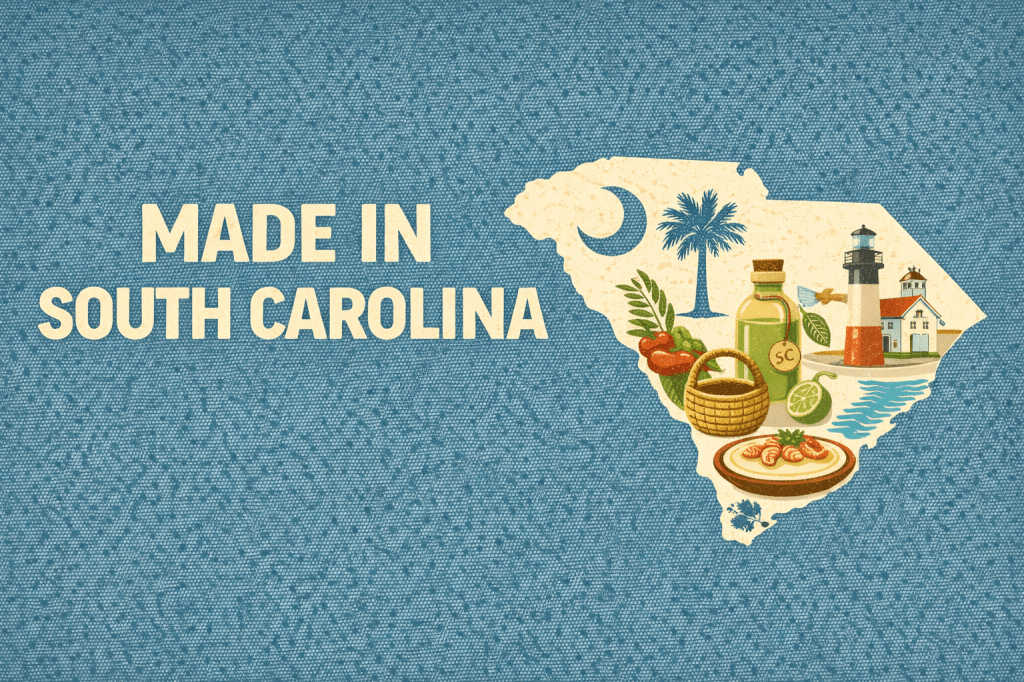
Low, humming marshes, live oaks draped in Spanish moss, and the salt-sweet wind off the Atlantic. South Carolina’s landscape, from the Sea Islands and Lowcountry rice fields to the Piedmont foothills shapes how things are made here.
You’ll find crafts and foods born of tidal rivers, palmetto palms, indigo vats, and generations of Gullah and Appalachian skill, each piece carrying the tactile memory of place.
Here are the best things truly made in South Carolina, products that reflect its heritage, creativity, and everyday life, and that are genuinely Made in South Carolina.
1. Sweetgrass Baskets
Why it’s made here:
The Sea Islands’ salt marshes are home to the grasses used by Gullah artisans; the basket form and coiled technique arrived with West African traditions and evolved on Lowcountry plantations. The durable coiling and natural sheen of sweetgrass make these baskets distinctively local.
What to look for:
Tightly coiled bundles with even stitching, natural color variations, a maker’s tag or signature, and a firm, weighty feel. Beware of polypropylene imitations sold as “sweetgrass” that feel plastic and too uniform.
Price bracket (2025):
$60 for small collectors’ baskets to $800+ for large, museum-quality pieces.
Where to find it:
Sea Island craft markets, Lowcountry artisan shops, Gullah community cooperatives, and festival booths in Beaufort and Charleston.
2. Carolina Gold Rice
Why it’s made here:
Carolina Gold was the heirloom rice that built the Lowcountry economy; revived in recent decades, it’s now grown in small farms and millhouses around the tidal rivers where the variety originally thrived.
What to look for:
Packaging that names the farm or mill, milling date, and whether it’s labeled heritage or Carolina Gold specifically; whole grains should be golden-hued and fluffy after cooking.
Price bracket (2025):
$8–$20 per pound depending on source and milling.
Where to find it:
Farmers’ markets, specialty food stores in Charleston and Hilton Head, and heritage-food producers’ stalls.
3. Indigo-Dyed Textiles
Why it’s made here:
Indigo was a colonial cash crop in South Carolina; contemporary dyers and textile artists have reclaimed that history, using locally sourced or traditionally prepared indigo vats to create hand-dyed cloth.
What to look for:
Uneven, organic color depth (a sign of true vat dyeing), stitch or resist patterns tied to local motifs, and small-batch or maker-signed tags.
Price bracket (2025):
$40 for small accessories to $250+ for full yardage or garments.
Where to find it:
Textile ateliers, craft fairs, and indigo workshops on the Sea Islands and in Charleston’s historic districts.
4. Edgefield-Style Stoneware
Why it’s made here:
The Edgefield district in western South Carolina is famous for its alkaline-glazed stoneware tradition dating to the 18th and 19th centuries; local potters continue the heavy, utilitarian forms and reactive glazes.
What to look for:
Thick, durable walls, warm ash or green glaze variegations, and footmarks or maker stamps indicating a local potter; authentic pieces often show glaze movement and subtle imperfections.
Price bracket (2025):
$50 for small pieces to $600+ for large crocks or signature works.
Where to find it:
Pottery studios in the Upstate and Piedmont, regional craft festivals, and cooperative galleries.
5. Lowcountry Sea Salt
Why it’s made here:
The tidal flats and marshy estuaries along South Carolina’s coast produce mineral-rich brine; small producers harvest sea salt by evaporation, capturing local flavor nuances.
What to look for:
Coarse crystals with a slightly off-white or gray tint (minerals), clear labeling of harvest location, and small-batch or hand-packed containers.
Price bracket (2025):
$6–$20 per jar depending on size and infusion (herbed or smoked varieties cost more).
Where to find it:
Coastal farmers’ markets, specialty food shops, and distillery or culinary cooperative stands.
6. Sea Island Cotton Garments and Linens
Why it’s made here:
Sea Island cotton — an extra-long-staple cotton once cultivated on the barrier islands — has been revived in artisanal quantities; its silky fibers make luxurious scarves and linens.
What to look for:
Soft, lustrous hand, labels stating Sea Island cotton or long-staple origin, and small-batch or hand-finished seams.
Price bracket (2025):
$100–$600 for scarves, shirts, or linens depending on garment and maker.
Where to find it:
Boutiques in coastal towns, artisanal textile studios, and heritage-fiber events.
7. Benne Wafers and Benne-Based Sweets
Why it’s made here:
Benne (sesame) seed confections reflect West African culinary influence in Gullah traditions; Charleston and the Lowcountry keep this thin, crisp cookie and related sweets alive in local bakeries.
What to look for:
Thin, crisp texture, toasted sesame aroma, and packaging that names a Charleston or Lowcountry bakery or cooperative.
Price bracket (2025):
$5–$15 per tin or package.
Where to find it:
Bakery counters, market stalls, heritage-food producers, and museum shops.
8. Smoked Fish & Lowcountry Seafood Preserves
Why it’s made here:
The fisheries along South Carolina’s coast supply mullet, oysters, bluefish, and shrimp; local smokehouses and packers turn catches into shelf-stable smoked fish, potted shrimp, or pickled seafood preserved by regional methods.
What to look for:
Clear labeling of catch, smoking method (cold vs. hot), small-batch or family-run smokehouses, and firm, flaky texture for smoked products.
Price bracket (2025):
$8–$30 per jar or tin.
Where to find it:
Coastal smokehouses, fish markets, and farmers’ markets near Charleston, Beaufort, and Hilton Head.
9. Peach Preserves, Jams, and Brandy
Why it’s made here:
South Carolina peaches are a signature crop; local orchards and small-scale producers concentrate their fruit into preserves, conserves, and peach brandy reflecting regional sweetness.
What to look for:
High fruit content, named orchard or cooperative, seasonal labels, and minimal additives.
Price bracket (2025):
$6–$25 per jar; peach brandy bottles $30–$70+.
Where to find it:
Farmers’ markets, orchard farm stands, and festival stalls during summer and harvest season.
10. Small-Batch Distilled Spirits (Rye, Bourbon, Coastal Rum, Gin)
Why it’s made here:
South Carolina’s grain farms and coastal sugarcane/rum influences have supported a lively craft-distilling scene producing small-batch whiskey, coastal-style rums, and botanically bright gins inspired by local flora.
What to look for:
Distillery tasting-room bottles with batch numbers, state-distilled labels, and tasting notes that reference local grains, wood finishes, or coastal botanicals.
Price bracket (2025):
$30–$80 per bottle for small-batch spirits; limited releases higher.
Where to find it:
Distillery tasting rooms, craft spirit festivals, and select liquor boards carrying local producers.
11. Hand-tooled Leather Goods
Why it’s made here:
Upstate saddlery and Appalachian leathercraft traditions have produced belts, wallets, and custom boots made with regional hides and tooling techniques.
What to look for:
Solid leather with hand-stitched seams, maker’s mark, vegetable tanning indications, and tooling patterns consistent with hand finishing.
Price bracket (2025):
$75–$400 depending on item and customization.
Where to find it:
Upcountry artisan workshops, craft fairs, and bespoke leather studios.
12. Palmetto-Handicraft Items
Why it’s made here:
The sabal palmetto is the state tree; artisans use palmetto fronds and fiber to make fans, ornaments, and practical items that echo coastal lifestyles.
What to look for:
Natural palmetto texture, handwoven joins, and tags indicating handwork rather than mass-produced press-cut pieces.
Price bracket (2025):
$10–$80 depending on size and intricacy.
Where to find it:
Coastal craft booths, island markets, and folk-art festivals.
13. Seaglass and Shell Jewelry
Why it’s made here:
Miles of coastline provide unique seaglass, shells, and small marine finds that local jewelers and makers set into minimalist pieces inspired by the sea.
What to look for:
Irregular, frosted seaglass, locally sourced shell types, sterling or gold-fill settings, and maker attribution.
Price bracket (2025):
$30–$200 for necklaces, bracelets, and earrings.
Where to find it:
Beachside artisan stalls, gallery co-ops, and craft markets in coastal towns.
Local Makers & Traditions
South Carolina’s craft identity is layered. The Gullah Geechee communities of the Sea Islands preserve West African basketry and foodways. Colonial indigo and rice economies left a legacy taken up by contemporary dyers and heritage grain farmers.
Upstate potters continue alkaline-glazed stoneware techniques from Edgefield, and distillers and textile artists draw on local materials. Artisan markets in Charleston, Beaufort, and across the Sea Islands, as well as cooperative studios and heritage farms, keep these practices visible and economically viable.
Workshops and small museums often host demonstrations, from indigo vat dipping to basket coiling and pottery throwing, so visitors can see technique and provenance firsthand.
How to Spot Genuine Local Products
- Look for maker attribution: a named producer, farm, or cooperative is a strong sign of authenticity.
- Inspect materials: sweetgrass, palmetto fronds, Sea Island cotton, and indigo-dyed fibers have tactile and visual cues that differ from synthetics.
- Check for irregularities: hand-coiled baskets, hand-thrown pottery, and vat-dyed cloth will show natural variation and small imperfections, not machine perfection.
- Read labels closely: for foods, look for harvest/milling dates and farm names; for spirits, look for distillery and batch information.
- Avoid overly cheap pricing or glossy mass-produced packaging that mimics local forms; if something looks too uniform or is made of plastic, it’s likely imported.
Where to Buy Made-in-South Carolina Goods
- Local farmers’ markets and coastal craft markets.
- Historic town centers and waterfront artisan districts (Charleston, Beaufort, Hilton Head).
- Museum shops and cultural centers that curate regional makers.
- Distillery and winery tasting rooms for small-batch spirits.
- Upstate studio trails and pottery cooperatives.
- Airport and train-station shops that partner with local producers for genuine regional products.
FAQs
Are products in South Carolina expensive?
Prices vary widely: small snacks and confections are inexpensive, while large sweetgrass baskets, heritage cotton garments, and limited-release spirits or stoneware can be costly; quality and provenance drive value.
How can I tell if something is authentically made here?
Ask where materials were sourced, look for a maker’s name or farm label, inspect for handcraft traits (variation, tool marks), and buy from community-run markets or workshops when possible.
What is the best made-in-South-Carolina gift to bring home?
A sweetgrass basket is an unmistakably Lowcountry gift that carries history and practical use; for food lovers, a jar of Carolina Gold rice or a tin of benne wafers captures regional flavor.
Explore local shops and markets to experience the texture, scent, and stories behind truly Made in South Carolina goods.
Let me know in the comments if you have any other top ‘what to buy’ ideas!
About the Author
Colin is the founder of SouvenirsIdeas.com and a passionate traveller with a soft spot for ceramics, markets, and food tours. He writes practical, first-hand guides to help you bring home souvenirs that actually mean something — not just more clutter!

 Souvenir Ideas to Take Home from Every Country and City
Leave a comment