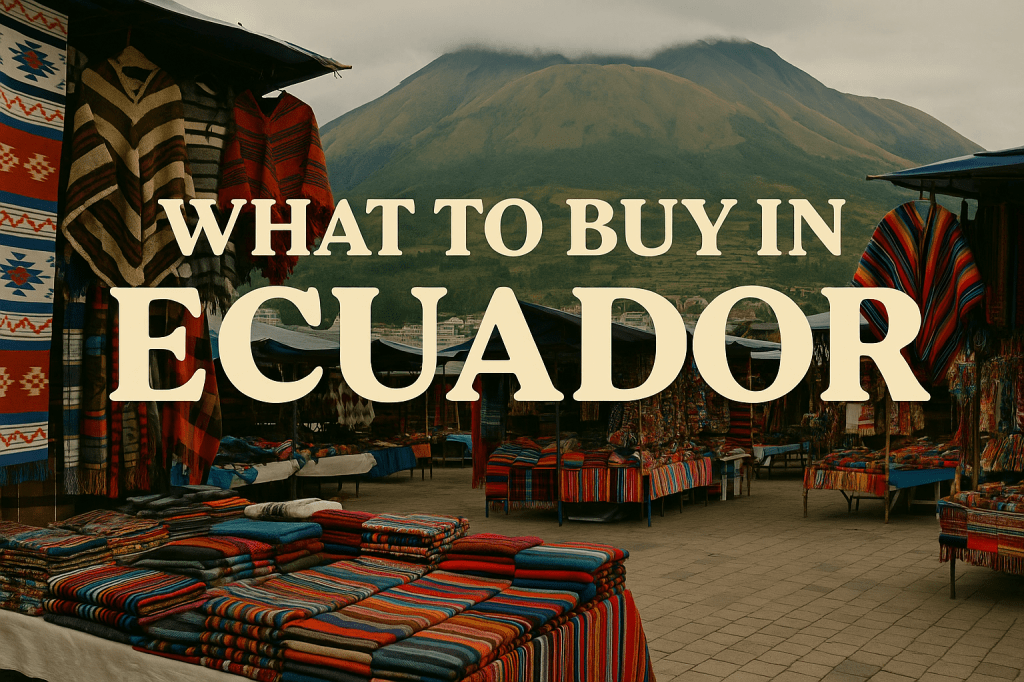
From the dizzying colors of Otavalo’s market stalls to the cool air of Quito’s TelefériQo and the salty tang of the Pacific in Manta, Ecuador hits the senses at every turn. Highland wool, Amazonian carvings, and the floral perfume of raw cacao mingle with the sharp bite of freshly roasted coffee — all part of the rich tapestry that makes Ecuadorian souvenirs feel like small, portable pieces of place.
Whether you’re hunting hand-woven textiles in Imbabura, artisanal chocolate in Quito, or a perfectly rolled Montecristi hat from the coast, here’s what to buy in Ecuador to bring a piece of this vibrant country home with you.
1. Montecristi (Panama) Hat
Why pick this up: The finely woven straw hat is a symbol of Ecuador’s coastal craft — lightweight, elegant, and famously packable. A true Montecristi is buttery soft and breathes in hot, sunny weather.
What to look for: Tight, even weave (a “cuenca” weave), a smooth brim, and a tag or stamp saying “Montecristi” or the artisan’s name. Finer weaves (toquilla straw) mean higher value.
Price bracket (2025): $40–$450 (simple brim hats at the low end; museum-quality, handwoven Montecristis can reach several hundred dollars).
Where to find it: Workshops in Montecristi and Manabí, hat shops in Manta and Guayaquil, and select artisan stalls in Quito’s historic center.
2. Otavalo Textiles and Ponchos
Why pick this up: Otavalo’s blankets, shawls, and ponchos burst with woven patterns and natural dyes — wearable art that reflects Kichwa traditions and Andean color palettes.
What to look for: Hand-spun wool or alpaca, vibrant natural dyes, traditional geometric motifs, and finished edges (not glued or machine-made).
Price bracket (2025): $12–$180 (small table runners and scarves at the low end; large handwoven rugs or premium alpaca ponchos higher).
Where to find it: Plaza de los Ponchos in Otavalo (Imbabura), artisan markets in Quito, and galleries in Cuenca.
3. Tagua Nut Jewelry
Why pick this up: Called “vegetable ivory,” tagua is a sustainable, creamy-white nut carved and dyed into lightweight beads, earrings, and statement necklaces — perfect for ethical travelers.
What to look for: Smooth carving, non-toxic dyes, and combinations with silver or local seeds. Artisanal finishes are preferable to mass-produced plastics.
Price bracket (2025): $5–$60.
Where to find it: Indigenous markets in Otavalo, craft stalls in Quito’s La Mariscal, and Amazonian villages in Napo and Pastaza.
4. Single-Origin Ecuadorian Chocolate
Why pick this up: Ecuador is famous for its Nacional cacao; bars and bean-to-bar chocolates showcase floral, fruity, and complex flavor profiles far removed from supermarket chocolate.
What to look for: “Single-origin” labels, percentage of cacao, and local bean-to-bar brands like Pacari and República del Cacao. Look for ethically sourced notes and flavor descriptors.
Price bracket (2025): $3–$15 per bar; gift boxes $20–$50.
Where to find it: Chocolate shops in Quito and Guayaquil, specialty stores in Cuenca, and airport boutiques (look for small-batch producers for the best taste).
5. Artisanal Coffee (Highland Micro-Lots)
Why pick this up: Southern highlands like Loja and the cloud forests around Zamora produce bright, floral coffees that make excellent souvenirs for coffee lovers.
What to look for: Roast date, origin (Loja, Zamora-Chinchipe), varietal notes, and small-batch / micro-lot labels. Ask vendors for brew suggestions.
Price bracket (2025): $6–$30 per 250–500 g bag.
Where to find it: Specialty roasters in Loja and Quito, farm shops in Loja province, and artisanal markets.
6. Alpaca and Suri Wool Garments
Why pick this up: Soft, warm, and naturally breathable, alpaca and suri wool sweaters, scarves, and hats are perfect mementos from the Andes.
What to look for: Genuine alpaca or suri fiber (check labels), hand-knit or hand-loom details, and minimal pilling; local color palettes often reflect Andean motifs.
Price bracket (2025): $35–$300 (small accessories to high-quality sweaters or handwoven garments).
Where to find it: Cuenca’s artisan shops, markets in Otavalo, and boutiques in Quito’s historic center.
7. Tigua Paintings (Andean Folk Art)
Why pick this up: Tigua paintings — colorful, naive landscapes and festival scenes painted on sheepskin or canvas — capture Andean life with joyous detail and are unmistakably Ecuadorian.
What to look for: Signed pieces by Tigua artists (from the Cotopaxi/Ambato region), lively colors, and scenes of markets, fiestas, and volcanoes.
Price bracket (2025): $20–$200 depending on size and artist.
Where to find it: Ambato and Latacunga shops, galleries in Quito, and artisan markets in Otavalo.
8. Cuenca Ceramics and Pottery
Why pick this up: Cuenca’s ceramicists blend indigenous forms with colonial influences, producing decorative plates, mugs, and painted tiles that reflect Andean motifs and Catholic iconography.
What to look for: Hand-painted designs, local clay glazes, and sturdy finishes. Traditional motifs include flowers, llamas, and church imagery.
Price bracket (2025): $8–$120.
Where to find it: Shops and studios along Cuenca’s Calle Larga and around Parque Calderón, plus artisan fairs.
9. Wood Carvings and Masks from San Antonio de Ibarra and the Amazon
Why pick this up: From the delicate furniture lacquered in San Antonio de Ibarra to Amazonian shamanic masks and small carvings, woodwork in Ecuador ranges from refined to wildly expressive.
What to look for: Solid wood, hand-carved detail, and fair-trade or artisan attribution. For Amazonian pieces, ask about the cultural significance and source.
Price bracket (2025): $10–$250.
Where to find it: San Antonio de Ibarra (Imbabura), Cuenca galleries, and markets in Napo and Pastaza for Amazonian pieces.
10. Handcrafted Silver and Filigree Jewelry
Why pick this up: Silver jewelry in Ecuador often blends Andean symbolism with Spanish filigree techniques — delicate pieces that travel well and age beautifully.
What to look for: Sterling marks (925 when available), detailed filigree or traditional motifs (sun, condor), and solid closures. Handmade beats mass-produced trinkets.
Price bracket (2025): $25–$220.
Where to find it: Quito’s artisan markets, jewelry shops in Cuenca, and stalls around Otavalo and Loja.
Tip: Pack fragile ceramics and handwoven textiles carefully (use clothing as padding), and remember to declare food items at customs — happy hunting for authentic Ecuadorian souvenirs! ✈️
Let me know in the comments if you have any other top ‘what to buy’ ideas!
About the Author
Colin is the founder of SouvenirsIdeas.com and a passionate traveller with a soft spot for ceramics, markets, and food tours. He writes practical, first-hand guides to help you bring home souvenirs that actually mean something — not just more clutter!



 Souvenir Ideas to Take Home from Every Country and City
Leave a comment