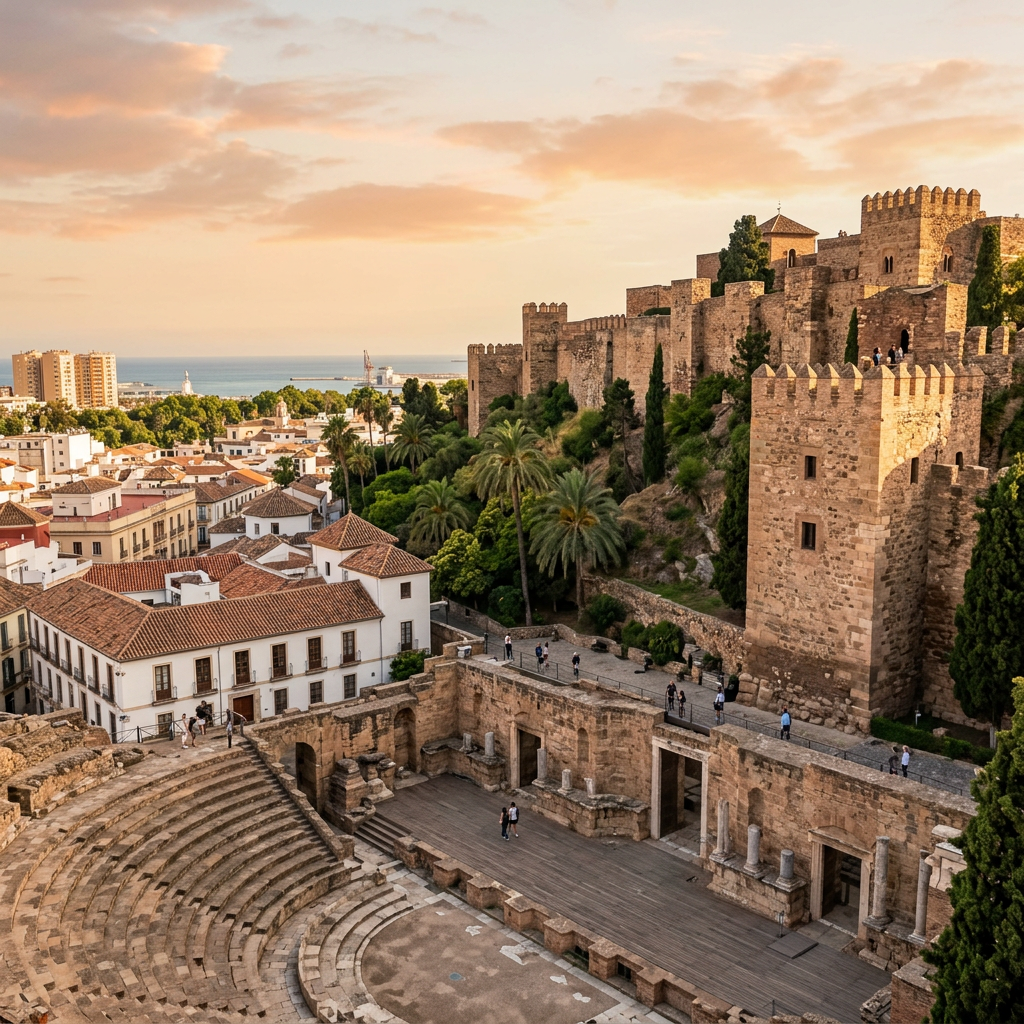
Málaga has been doing a lot right for a long time. The Romans built a port here, the Moors left their architecture, Picasso was born in a townhouse on Plaza de la Merced, and the sun has been drawing visitors for centuries. Today it’s one of Spain’s most confidently rewarding cities — a proper cultural capital with world-class museums, an extraordinary food market, and a wine tradition that predates the Spanish nation itself.
Whether you’re arriving by cruise ship, flying into Andalusia’s busiest airport, or taking the high-speed rail from Madrid, here are 12 things actually worth buying in Málaga — no fridge magnets required.
1. DO Málaga Sweet Wine 🍷
Málaga’s sweet wines are among the most historic and underrated in Spain. Made primarily from Moscatel de Alejandría and Pedro Ximénez grapes grown on steep terraced vineyards in the Axarquía hills, they range from the pale, floral Cartojal — the wine of the city’s annual Feria — to deep, amber-coloured aged styles with notes of raisins, fig, coffee, and dark chocolate. The region has held a Denominación de Origen since 1933, making it one of Spain’s oldest.
- Why pick this up: Málaga sweet wine is genuinely irreplaceable — the combination of the Axarquía climate, sun-dried grapes, and the unique use of arrope (reduced grape must) in the aged styles produces something no other DO in Spain replicates.
- What to look for: Cartojal (pale, lightly sweet, serve very cold) for something fresh; Moscatel Traсаñejo or Pajarete for something more complex and aged. Bodegas Málaga Virgen (est. 1885) and Bodegas Quitapenas (est. 1880) are the most respected producers.
- Price bracket (2025): €5–€20 per bottle from a wine shop.
- Where to find it: Antigua Casa de Guardia on Alameda Principal (open since 1840, wine poured from the barrel, tabs chalked on the bar) — the most authentic tasting experience in the city; El Pimpi on Calle Granada; specialist wine shops throughout the historic centre.
2. Pasas de Málaga (Moscatel Raisins) 🍇
The Moscatel raisin — pasa de Málaga — is one of the province’s most significant agricultural products, protected under its own Denominación de Origen. The grapes are grown on the terraced hillsides of the Axarquía region, then dried in the sun on paseros (drying beds) for several weeks. The result is plump, intensely sweet, and completely unlike the thin commercial raisins sold in supermarkets at home.
- Why pick this up: A genuinely DO-protected product with a flavour and texture impossible to replicate elsewhere — these are the raisins that the great Moorish courts and Victorian-era Europeans were importing by the shipload.
- What to look for: Loose raisins sold by weight at market stalls, or vacuum-packed gift boxes from the Axarquía. Look for the DO Pasas de Málaga seal. The town of Frigiliana is particularly famous for its raisins.
- Price bracket (2025): €2.50–€8 for 250g–500g.
- Where to find it: Mercado de Atarazanas; specialist food shops throughout the historic centre; market stalls near the Cathedral.
3. Miel de Caña de Frigiliana (Sugar Cane Honey) 🍯
Miel de caña — cane honey — is a dark, intensely sweet syrup made from sugar cane, similar in appearance to molasses but with a softer, more complex flavour. The town of Frigiliana, about an hour east of Málaga, is home to Europe’s last surviving traditional cane honey factory, the Ingenio de Nuestra Señora del Carmen, which has been producing it since the 16th century. It’s used across Málaga’s cuisine — drizzled over fried aubergine, stirred into cakes, or simply spread on bread.
- Why pick this up: The only place in Europe still producing traditional cane honey at industrial scale — Frigiliana’s miel de caña is a genuinely singular product you cannot buy at home.
- What to look for: Dark glass bottles or jars labelled miel de caña de Frigiliana — the genuine article from the Ingenio. Some shops also sell it blended with honey or in smaller gift jars.
- Price bracket (2025): €4–€10 per jar.
- Where to find it: Mercado de Atarazanas; gourmet food shops in the historic centre; directly from producers in Frigiliana village if making a day trip.
4. Aceitunas Aloreñas (DO Olives from Álora) 🍋
Not all olives are created equal — and the olives from the village of Álora, in the hills north of Málaga, hold a full Denominación de Origen, making them the only table olive in Andalusia with protected status. They are a distinctive cracked-style olive, seasoned with wild thyme, fennel, and garlic — the aliño method that dates back centuries. The flavour is unlike any brined olive you’ll find in a jar at home.
- Why pick this up: Spain’s first DO table olive — a genuinely rare, locality-specific product that you won’t find outside Málaga province in this form.
- What to look for: Look for the DO Aceituna Aloreña seal on vacuum-packed jars or pouches. Some market stalls sell them loose and will vacuum-pack to order. The Hojiblanca variety is the most common.
- Price bracket (2025): €4–€10 for 250g–500g.
- Where to find it: Mercado de Atarazanas (several olive stalls, some with vacuum-packing on site); specialist food shops on Calle Santa María and around the Cathedral.
5. Andalusian Ceramics 🏺
Málaga’s ceramic tradition stretches back to the Moorish period — the city was once a major centre of loza production, and the blue-and-green glazed style known as Málaga ware was traded across the medieval Mediterranean. Today the tradition continues in local workshops producing hand-painted plates, tiles, bowls, and kitchen pieces in both traditional geometric and contemporary coastal designs.
- Why pick this up: Rooted in over 1,000 years of craft history — the best pieces from local artisan studios are a world away from the mass-produced Spanish ceramics sold at tourist stalls.
- What to look for: Hand-painted pieces from local studios rather than imported product. Alfajar on Calle Císter is the most recommended artisan ceramics shop in Málaga, with a Picasso-inspired range and work by local artists. Check the back for a maker’s mark.
- Price bracket (2025): €10–€80 depending on size and complexity.
- Where to find it: Alfajar Cerámica Artesanal, Calle Císter 1; artisan shops in the Thyssen District and around Plaza de la Merced; Mijas Pueblo (a 30-minute drive) for a wider range of traditional pottery.
6. Picasso-Inspired Art and Prints 🎨
Pablo Picasso was born on 25 October 1881 at number 15 Plaza de la Merced — a fact the city celebrates with genuine pride. The Museo Picasso Málaga holds the world’s third-largest collection of his work, and his Casa Natal (birthplace) is a museum in its own right. The city’s souvenir market has evolved considerably around this — the best shops sell carefully produced art prints, ceramics, and original work inspired by his style rather than cheap reproductions.
- Why pick this up: Picasso is genuinely from here — a print or ceramic piece purchased in his birthplace carries a provenance and story that buying Picasso merchandise elsewhere simply doesn’t.
- What to look for: Quality art prints from the Museo Picasso gift shop; Picasso-inspired ceramics from Alfajar; original prints and artworks from galleries in the Soho district and around Calle Granada. Avoid mass-produced tourist tat — the museum shop is the best single source.
- Price bracket (2025): €8–€60 for prints; original ceramics from €30.
- Where to find it: Museo Picasso Málaga gift shop, Calle San Agustín 8; Casa Natal de Picasso gift shop, Plaza de la Merced 15; Alfajar, Calle Císter 1; galleries in the Soho district.
7. Salchichón de Málaga 🍖
Málaga’s own cured sausage — salchichón malagueño — is softer and more delicate than the firm salchichón produced in other Spanish regions. Made from high-quality pork with black pepper and other spices (but crucially no paprika, unlike chorizo), it has a clean, gently peppery flavour with a silky texture unusual in a cured meat. Local restaurants sometimes serve a tartar made from it — a sign of its quality.
- Why pick this up: A genuinely local cured meat with a distinctive character — softer and more refined than most Spanish salchichón, and largely unavailable outside the province.
- What to look for: Ask for salchichón de Málaga specifically, not generic salchichón. Request vacuum-packing at the counter for travel. Check customs regulations for your destination before buying.
- Price bracket (2025): €8–€20 per piece depending on size.
- Where to find it: Mercado de Atarazanas (charcutería stalls at the entrance); specialist food shops throughout the historic centre; supermarkets across the city.
8. Aceite de Oliva Virgen Extra from Málaga 🫒
Málaga province is home to several exceptional olive oil producers working with varieties — particularly Hojiblanca, Picual, and Arbequina — that thrive in the province’s diverse microclimate zones, from coastal hills to inland plains. Finca La Torre, in the Antequera area, is one of Spain’s most awarded small producers, winning multiple international gold medals for both its intense fruity green and ripe fruity styles.
- Why pick this up: Málaga olive oil is overshadowed by Jén and Sevilla despite comparable or superior quality from the best producers — you’re buying directly from source at significantly lower prices than export.
- What to look for: Aceites Finca La Torre for award-winning single-variety oils; look for cold-pressed, early-harvest extra virgin in dark glass bottles. The El Corte Inglés Gourmet Experience has an excellent curated range of Málaga oils.
- Price bracket (2025): €8–€25 for a 500ml bottle.
- Where to find it: Mercado de Atarazanas; El Corte Inglés Gourmet Experience (top floor); specialist food shops on Calle Santa María; Temporánea Concept Shop near Calle Larios.
9. Esparto Grass Crafts 🧵
Esparto grass — a tough, wiry grass that grows throughout the Andalusian countryside — has been woven into baskets, bags, hats, and household items in Málaga for centuries. It’s one of the most genuinely traditional crafts of the region, eco-friendly, durable, and made by hand using techniques passed down through generations. The results range from simple market baskets to decorative items and lamps.
- Why pick this up: A genuinely regional craft — practical, sustainable, and made with natural materials by local artisans. A well-made esparto basket or bag is something you’ll actually use.
- What to look for: Baskets, shopping bags, table mats, and hats woven from natural esparto. Check that the weave is tight and even. A specialist esparto shop on Plaza Arriola (upriver from Atarazanas) is the best source in the city.
- Price bracket (2025): €8–€40 depending on size and complexity.
- Where to find it: The specialist esparto shop on Plaza Arriola; artisan markets in the Soho district; craft stalls near the Cathedral.
10. Queso de Cabra Malagueño (Málaga Goat’s Cheese) 🧀
Málaga is one of Europe’s most significant producers of goat’s milk, and the province’s goat’s cheeses have won multiple international awards. Several producers in the Axarquía and around Ronda make fresh, semi-cured, and cured goat’s cheeses with a clean, mineral character that reflects the wild herbs the goats graze on in the Andalusian hills.
- Why pick this up: Málaga goat’s cheese is largely unknown outside the province despite its quality — fresh and semi-cured styles pair perfectly with the local Moscatel wine and the local raisins, making them a natural souvenir trio.
- What to look for: Fresh queso fresco de cabra for eating immediately; semi-cured or cured rounds for travelling (ask for vacuum-packing). Some producers also make a rosemary-rubbed cured version worth seeking out.
- Price bracket (2025): €5–€18 per piece depending on size and age.
- Where to find it: Mercado de Atarazanas (cheese stalls, some with vacuum-packing on site); El Corte Inglés Gourmet Experience; specialist food shops in the historic centre.
11. La Biznaga (Jasmine Bouquet) or Its Ceramic Replica 🌸
The biznaga is Málaga’s fragrant emblem: a handmade bouquet assembled by inserting fresh jasmine flowers into a dry cardoon stem, creating a small, intensely scented floral arrangement. In summer, traditionally dressed biznagueros sell them from trays along Calle Larios. The fresh version won’t travel far, but several shops sell beautifully made ceramic replicas — permanent keepsakes that capture the city’s most distinctive visual and olfactory symbol.
- Why pick this up: The biznaga is Málaga’s own — found nowhere else in Spain. A ceramic version is one of the most characterful and city-specific souvenirs available.
- What to look for: A fresh biznaga from a street vendor in summer (the jasmine scent is extraordinary); ceramic replicas from artisan shops for a lasting souvenir. Rincón de la Biznaga is one of the shops stocking high-quality ceramic versions.
- Price bracket (2025): €1–€2 for fresh; €8–€25 for ceramic replicas.
- Where to find it: Fresh biznagas from street vendors on Calle Larios (summer months); Rincón de la Biznaga and other artisan shops in the historic centre for ceramic versions.
12. Locally Designed Gifts from Temporánea 🛏️
Not every souvenir needs to be edible or centuries old. Temporánea Concept Shop — opened in 2023 near Calle Larios — is the city’s best curated souvenir shop, stocking exclusively locally designed and locally made products: art prints, tote bags, homeware, wine, textiles, and decorative objects, all created by Málaga-based artists and producers. It’s the thoughtful alternative to the generic gift shop — everything in it has a maker, a story, and a genuine connection to the city.
- Why pick this up: Everything is made in Málaga province, designed by local artists, and selected for quality — the antithesis of the tourist-trap souvenir, and a genuinely good shop to browse.
- What to look for: Art prints featuring Málaga city scenes and landmarks; hand-printed silk scarves; locally produced wine and food products; ceramic and textile homeware with a contemporary Andalusian aesthetic.
- Price bracket (2025): From €4 for small items; silk scarves from €120.
- Where to find it: Temporánea Concept Shop, Calle Salinas (near Calle Larios); also available online.
🛒 Málaga Shopping Tips
- The Mercado de Atarazanas, in a stunning 14th-century Moorish gateway on Calle Atarazanas, is the single best stop for food souvenirs — olives, raisins, cheeses, cold meats, olive oil, and cane honey are all sold under one roof. Go on a weekday morning for the best atmosphere and least crowds.
- Antigua Casa de Guardia on Alameda Principal (open since 1840) is essential for tasting Málaga wines before you buy — order from the barrel, and pick up a bottle of your favourite to take home. Cash only, tabs chalked on the bar.
- The historic centre (Casco Antiguo) and the streets around the Cathedral — particularly Calle Santa María and the Thyssen District — have the best concentration of independent artisan shops. The Soho district has a strong contemporary arts and craft scene.
- Olive oil, wine, and cane honey over 100ml cannot go in cabin baggage — buy at the end of your trip and pack in hold luggage, well-wrapped. Vacuum-packed cheese and salchichón are flight-safe in hold luggage for most EU destinations; check customs rules for non-EU travel.
- Ask in food shops whether products are de la provincia de Málaga — some stalls sell generic Andalusian products. The DO seals on raisins, olives, and wine are the clearest guarantee of genuine local origin.
Málaga gets dismissed as a gateway city — the airport on the way to the beach. Don’t make that mistake. The Atarazanas market alone is worth an afternoon, and a glass of Cartojal at Antigua Casa de Guardia is one of the great cheap pleasures of any Spanish city.
Colin is the founder of SouvenirsIdeas.com and a passionate traveller with a soft spot for local markets, artisan craft, and anything with an interesting story behind it. He writes practical guides to help you bring home souvenirs that actually mean something.


Leave a Reply