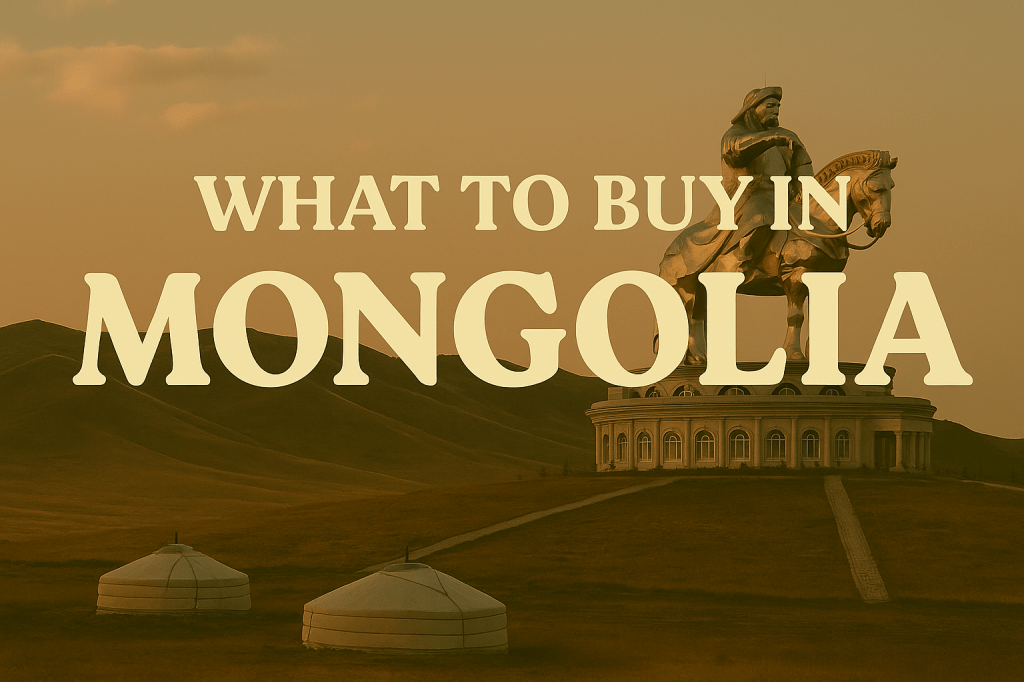
From the wind-bleached grasses of the steppe to the warm wool-smoke inside a ger, Mongolia greets the senses with contrasts: the dry heat of the Gobi at noon, the metallic tang of yak butter tea on your tongue, and the bright colors of deels fluttering against a cobalt sky.
Walking through Ulaanbaatar’s Narantuul (Black Market), you can hear the chink of silver jewelry being examined, smell the sweet-sour aaruul drying in the sun, and feel the cloud-like softness of true Mongolian cashmere under your fingers.
Beyond the city, the low hum of horse hooves in the Orkhon Valley and the felted patterns adorning gers tell stories of a nomadic life shaped by horses, sheep, and Buddhism; artisans in Terelj and Kharkhorin keep age-old stitching and felting techniques alive.
If you’re curating keepsakes, think of tactile, locally made pieces that carry this landscape and craft, Mongolia souvenirs that speak of wide skies and long traditions.
Here’s what to buy in Mongolia to bring a piece of its spirit back home.
1. Mongolian Cashmere Scarf or Sweater
Why pick this up:
Mongolian cashmere comes from Hircus goats grazing in high-altitude pastures, giving the fiber exceptional warmth and a feather-light feel. A scarf or lightweight sweater is a practical luxury that compresses well for travel while carrying unmistakable softness.
What to look for:
Seek single-origin cashmere labeled as Mongolian or Gobi cashmere, with a tight, even knit and no pilling. Ask whether it’s 100% cashmere or a blend; hand-loomed or artisan-branded pieces often indicate smaller-batch quality.
Price bracket (2025):
₮40,000–₮250,000
Where to find it:
State Department Store (Ulaanbaatar), Narantuul Market stalls, cooperative shops in Terelj and Erdene Zuu.
2. Hand‑sewn Deel (Traditional Robe)
Why pick this up:
The deel is the signature garment of Mongolian identity—colorful silk or cotton robes with distinct collars and fastenings that reflect regional patterns and occasions like Naadam or Tsagaan Sar. Wearing one at home is a tactile reminder of nomadic life and ceremonial dress.
What to look for:
Check hand-stitched seams, authentic closures (toggles and ties), and traditional motifs; tailor-made deels from local seamstresses will fit and last longer than mass-produced souvenirs.
Price bracket (2025):
₮80,000–₮450,000
Where to find it:
Tailors around Sukhbaatar Square, artisan stalls at Narantuul Market, maker workshops in Terelj.
3. Felt Goods (Hats, Wall Hangings, Insulation Panels)
Why pick this up:
Felt is central to ger construction and nomadic crafts—dense, warm, and intricately decorated. Small felt items capture Mongolian patterns and are durable, practical, and full of rustic charm.
What to look for:
Look for densely fulled wool with visible hand-pressed motifs and natural dyes; seams should be tight and colors derived from local dyes when possible.
Price bracket (2025):
₮15,000–₮120,000
Where to find it:
Ger camps in Terelj, provincial soum markets, craft stalls at Narantuul.
4. Shagai (Ankle Bone Game Set & Decorative Pieces)
Why pick this up:
Shagai—ankle bones from sheep or goats—are traditional game pieces, talismans, and good-luck charms used in celebrations and divination. They’re a playful, portable souvenir tied deeply to nomadic pastimes.
What to look for:
Choose polished, lightly decorated shagai or sets displayed with instructions; some are mounted in small wooden boxes or strung as necklaces. Verify real bone rather than plastic imitations.
Price bracket (2025):
₮3,000–₮25,000
Where to find it:
Narantuul Market, souvenir stalls near Gandan Monastery, artisan markets in Kharkhorin.
5. Miniature Morin Khuur (Horsehead Fiddle) or Ornament
Why pick this up:
The morin khuur is Mongolia’s soul instrument; a miniature captures its carved horse-head and two-string silhouette, echoing the music of the steppe. It’s a decorative keepsake that nods to the country’s equestrian culture.
What to look for:
Seek hand-carved wood, genuine horsehair strings on larger minis, and detailing on the headstock; mass-produced plastic versions are common—prefer wooden craftsmanship.
Price bracket (2025):
₮30,000–₮160,000
Where to find it:
Music and craft stalls in Ulaanbaatar, cultural centers, Terelj craft cooperatives.
6. Aaruul (Dried Curds) — Packaged for Travel
Why pick this up:
Aaruul is a quintessential Mongolian dairy snack: dried, tangy curds that can last months and provide a truly local taste. It’s portable, uniquely regional, and a favorite among locals for long journeys.
What to look for:
Buy vacuum-sealed or tightly wrapped packages with ingredient lists; common flavors include plain, salty, or sweetened with milk. Check customs rules for transporting dairy into your home country.
Price bracket (2025):
₮2,000–₮12,000 per pack
Where to find it:
Open-air market stalls, Narantuul, grocery sections of larger supermarkets, ger camps.
7. Handwoven Gobi Rug or Kilim
Why pick this up:
Woven rugs from the Gobi and central steppes use sheep’s wool and traditional geometric motifs, doubling as floor coverings or wall art with durable, rustic textures. They reflect clan patterns and pastoral life.
What to look for:
Examine knot density, even edges, and natural wool dyes; hand-knotted pieces will be heavier and have slight irregularities that indicate authenticity.
Price bracket (2025):
₮200,000–₮1,500,000
Where to find it:
Weavers’ cooperatives in Ömnögovi and Gobi artisan shops, Narantuul market traders, museum shops at Erdene Zuu.
8. Silver Nomadic Jewelry (Belt Buckles, Earrings, Amulets)
Why pick this up:
Silverwork is prominent in Mongolian ceremonial dress—ornate buckles, amulets, and earrings are worn during festivals and mark status. These small pieces are wearable and rich with symbolic motifs.
What to look for:
Look for hallmarks or maker stamps, hand-engraving, and traditional patterns; solid silver is preferable to silver-plated pieces for longevity and value.
Price bracket (2025):
₮60,000–₮350,000
Where to find it:
Jewelry sections of Narantuul, boutique stalls in the State Department Store, Gandan Monastery souvenir areas for blessed items.
9. Traditional Gutal (Leather Boots)
Why pick this up:
Gutal, Mongolian leather boots with upturned toes, are built for riding and walking the steppe; a well-made pair is sturdy, locally styled, and strikingly original. They make a bold, functional souvenir if you plan to wear them.
What to look for:
Check thick leather, reinforced soles, and hand-stitched detailing; traditional gutal have distinctive toe shapes and patterned leather insets.
Price bracket (2025):
₮50,000–₮300,000
Where to find it:
Cobblers near Narantuul Market, leather workshops, provincial soum markets.
10. Bone or Antler Carvings (Utensils, Knives, Ornaments)
Why pick this up:
Carvings from bone or antler, used for knife handles, spoons, or decorative panels, showcase local carving skills and animal-resource use integral to nomadic survival. These pieces are tactile and rooted in everyday life.
What to look for:
Seek visible tool marks, smooth polish, and natural grain patterns; ask about animal sourcing and prefer ethical, locally sourced pieces over mass-produced imports.
Price bracket (2025):
₮10,000–₮120,000
Where to find it:
Carvers’ stalls at Narantuul, artisanal markets in Ulaanbaatar and Kharkhorin, museum craft shops.
Tip: Pack soft goods like cashmere and felt in your carry-on to protect them from crushing and keep edible items like aaruul sealed and declared to customs 🧳
Local Shopping Culture & Traditions
Mongolian shopping blends marketplace bustle with nomadic courtesy. Bargaining is common at open-air markets like Narantuul (the Black Market) and provincial soum markets, though prices in museum shops and airport stores are usually fixed.
Many purchases are tied to ritual and season: Tsagaan Sar gifts, Naadam festival garments, and offerings sold near Gandan Monastery reflect both Buddhist and nomadic influences.
Artisan villages and ger camps around Terelj and Kharkhorin still practice age-old felting, weaving, and silverworking techniques passed down through families.
Weekend bazaars in provincial centers bring herders and makers together, so timing your visit to coincide with a market day often yields the best selection and chance to meet producers.
How to Spot Genuine Local Souvenirs
Authentic Mongolian items show evidence of handcrafting: uneven weave on rugs, visible stitchwork on deels, dense hand-felted texture, and natural variation in bone or antler carvings.
For cashmere, feel for that lightweight warmth and check labels for Mongolian origin; avoid overly glossy, synthetic-feeling fibres. With food like aaruul, choose vacuum-sealed packages with clear ingredient lists and production dates; avoid loose, dusty products unless buying from a reputable stall where you can see production.
Silver items should carry maker marks or be relatively heavy for their size; mass-produced tourist trinkets are often plated and feel light. Ask artisans where materials come from – local wool, yak hair, and goat down signify regional production and prefer cooperatives or museum-affiliated sellers when provenance matters.
Where to Shop in Mongolia
- Narantuul (Black Market), Ulaanbaatar — the best-known open-air market for everything from cashmere to gutal.
- State Department Store, Ulaanbaatar — fixed-price, higher-end Mongolian brands and cashmere.
- Terelj and Kharkhorin craft stalls — artisan cooperatives and ger-camp workshops.
- Gandan Monastery area and Erdene Zuu (Kharkhorin) — religious items and blessed talismans.
- Museum of Mongolian Folk and Applied Arts shop — curated traditional crafts.
- Chinggis Khaan International Airport gift shops — for last-minute, sealed food items and certified cashmere.
FAQs
Q: Are souvenirs in Mongolia expensive?
A: Prices range widely—market finds and small handicrafts are affordable, while handwoven rugs, custom deels, and high-grade cashmere command premium prices.
Q: Is bargaining common in Mongolia?
A: Yes at open-air markets and with independent vendors; start lower and meet halfway, but be respectful—fixed-price shops won’t haggle.
Q: How do I know if food souvenirs can be taken home?
A: Look for vacuum-sealed packaging and export labels; always declare animal products at customs and check your home country’s rules before buying.
Enjoy exploring Mongolia’s markets and artisans—you’ll return with meaningful Mongolia souvenirs that tell a story of wide skies and skilled hands.
Let me know in the comments if you have any other top ‘what to buy’ ideas!
About the Author
Colin is the founder of SouvenirsIdeas.com and a passionate traveller with a soft spot for ceramics, markets, and food tours. He writes practical, first-hand guides to help you bring home souvenirs that actually mean something — not just more clutter!


 Souvenir Ideas to Take Home from Every Country and City
Leave a comment