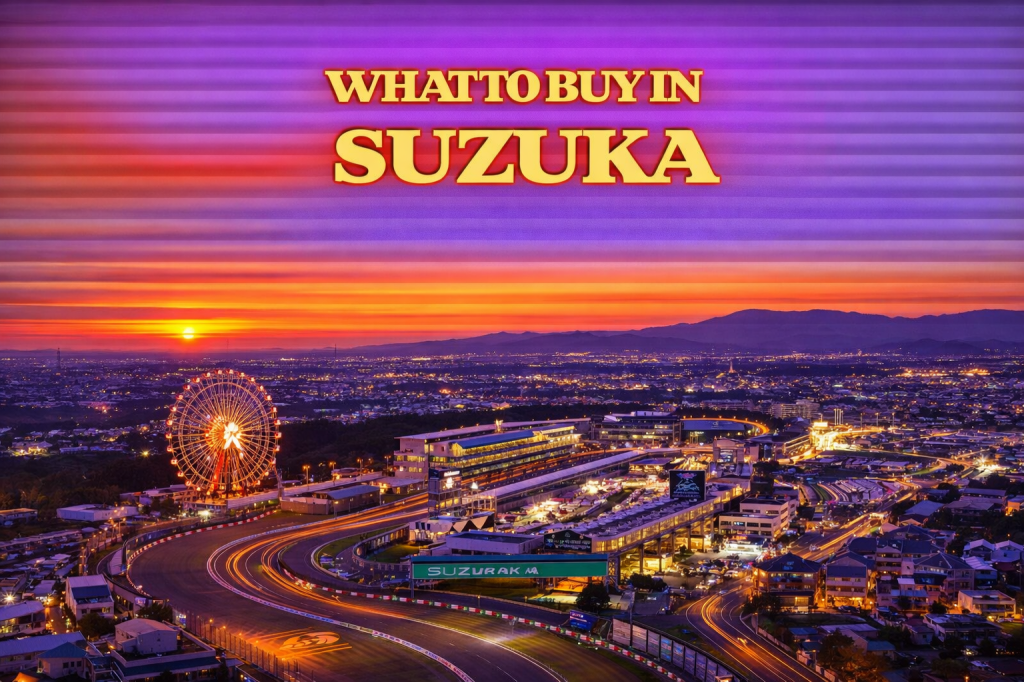
Most visitors come to Suzuka for the racing. The figure-of-eight circuit in Mie Prefecture has hosted the Japanese Grand Prix since 1987, and the 130R corner alone has a place in motorsport mythology. But step away from the grandstands and you’ll find a city with a quite different kind of legacy — one measured not in lap times but in centuries.
Suzuka is home to two of Japan’s most celebrated traditional crafts: Suzuka-zumi ink sticks, the only inkstick designated a Traditional Japanese Craft, and Ise katagami, the exquisite paper-stencil art used for dyeing kimono. Add in Mie Prefecture’s extraordinary food culture — from Matsusaka beef to Akafuku mochi — and you have a city with far more to offer the curious shopper than an F1 cap.
Here are 12 things actually worth buying in Suzuka — no fridge magnets required.
1. Suzuka-zumi Ink Sticks 🎚️
This is Suzuka’s most singular souvenir. Suzuka-zumi ink sticks have been produced here for around 1,200 years, and are the only inkstick craft in Japan to hold official Traditional Craft designation. The craft was born from the pine trees of the Suzuka Mountains, whose resin-rich wood produces an especially fine soot when burned. Today, only one workshop keeps the tradition alive: Shinseido, run by a father-and-son team who make every inkstick entirely by hand.
- Why pick this up: You are buying something made in exactly one place, by exactly two people, using a 1,200-year-old technique. That’s as local as souvenirs get.
- What to look for: Classic black sumi inksticks for calligraphy and painting; Shinseido also produces 100–150 shades ranging from subtle blue-black tones to vivid coloured inks using natural pigments — a striking modern evolution of the tradition.
- Price bracket (2025): ¥5,000–¥30,000+ depending on grade and size.
- Where to find it: Shinseido workshop in Suzuka City; the Suzuka City Traditional Handicrafts Museum also stocks local craft items.
2. Ise Katagami Stencils and Goods 🧧
Ise katagami is one of Japan’s great traditional crafts — the intricate art of cutting paper stencils from washi paper bonded with persimmon tannin, used for centuries to dye kimono fabric. The craft is centred in Suzuka, specifically in the Shiroko district. It carries Important Intangible Cultural Property status, and has inspired Western artists since the Meiji period.
- Why pick this up: A piece of genuine craft history — the stencils are works of art in their own right, and modern craftspeople make framed pieces, fan decorations, and accessories using the same hand-cut technique.
- What to look for: Framed stencil panels, hand fans decorated with katagami patterns, notebooks and accessories. Workshops at the Suzuka City Traditional Handicrafts Museum let you try the cutting technique yourself.
- Price bracket (2025): ¥1,500–¥20,000 depending on piece.
- Where to find it: Suzuka City Traditional Handicrafts Museum, Shiroko district; specialist craft shops in the city.
3. Suzuka Circuit Official Merchandise 🏎️
For many visitors, this is the whole point — and it’s done well. The circuit’s on-site shops stock everything from team-branded racing gear to circuit-exclusive goods you genuinely can’t get anywhere else.
- Why pick this up: Circuit-exclusive items branded with that year’s Japanese GP artwork are the rare genuinely limited-edition souvenir that will mean something in ten years.
- What to look for: Japanese GP official programmes, die-cast scale models from Racing Zone, circuit-branded clothing from Circuit Plaza, and Gourmet Plaza’s exclusive Suzuka Circuit sweets.
- Price bracket (2025): ¥500–¥30,000+ depending on item.
- Where to find it: Circuit Plaza, Racing Zone, Gate Shop, Lobby Shop — all within Suzuka Circuit. The Gate Shop keeps long hours and is open on non-race days too.
4. Akafuku Mochi 🍡
Akafuku is Mie Prefecture’s most beloved sweet — soft mochi rice cake wrapped in sweet red bean paste, its shape inspired by the flowing Isuzu River near the Ise Grand Shrine. Made the same way for centuries, it is the classic omiyage from this part of Japan.
- Why pick this up: One of the most iconic regional sweets in all of Japan, directly tied to the culture of Ise pilgrimage that has shaped this corner of Mie for a thousand years.
- What to look for: The original Akafuku mochi in its simple packaging. It has a short shelf life, so buy near the end of your trip and eat within a day or two.
- Price bracket (2025): ¥600–¥1,500 for a small box.
- Where to find it: Akafuku shops throughout Mie Prefecture; Suzuka Circuit Gourmet Plaza; major rail stations.
5. Zaku Sake from Shimizu Seizaburo Shoten 🍶
Suzuka sits on the Suzuka River, prized for its exceptionally pure, soft water. The most celebrated spirit made with it is Zaku, produced by Shimizu Seizaburo Shoten in Suzuka — the sake chosen for the toast at the G7 Ise-Shima Summit in 2016.
- Why pick this up: A world-class sake made a short drive from the circuit, chosen by the Japanese government to represent the country at one of the highest-profile international summits in recent memory.
- What to look for: The Junmai Daiginjo is the benchmark pour — clean, delicate, and beautifully packaged as a gift.
- Price bracket (2025): ¥2,000–¥10,000 per bottle depending on grade.
- Where to find it: Specialist sake shops and department stores in Suzuka and wider Mie Prefecture; some bottles at better-stocked Nagoya liquor shops.
6. Matsusaka Beef Gift Products 🥩
Mie Prefecture is home to Matsusaka beef, one of Japan’s three great Wagyu brands and by many accounts the finest. The marbling is extraordinary, the fat sweet, the flavour deeply umami. Fresh cuts won’t survive a flight, but several shelf-stable gift formats travel without issue.
- Why pick this up: Matsusaka beef is rare even within Japan. Gift-format products bring a little of that luxury home without the refrigeration problem.
- What to look for: Wagyu beef jerky, vacuum-packed shabu-shabu sets, or a tin of Matsusaka beef tsukudani (meat simmered in soy and mirin — excellent on rice).
- Price bracket (2025): ¥1,500–¥20,000+ depending on format.
- Where to find it: Department stores and gift shops in Suzuka and across Mie; Mie Terrace in Tokyo if you’re passing through.
7. Ise Tea 🍵
Mie Prefecture is one of Japan’s less-celebrated but genuinely high-quality tea regions, with growing areas stretching from the foothills of the Suzuka Mountains. The cool mountain air and soft water give Ise tea a distinct regional character.
- Why pick this up: A beautiful, light, and very packable souvenir — significantly better value than buying equivalent Japanese tea outside the country.
- What to look for: Kabusecha (a shaded tea with mellow, umami-rich character), Tencha (raw material for matcha), or Bancha for everyday drinking. Single-origin estate teas offer the most regional flavour.
- Price bracket (2025): ¥800–¥4,000 for a gift tin.
- Where to find it: Specialist tea shops in Suzuka; department stores and gift shops throughout Mie Prefecture.
8. Shigureni Hamaguri Clam in Sweet Sauce 💞
Neighbouring Kuwana city is famous across Japan for its hamaguri — orient clams from the tidal flats of Ise Bay. The classic preparation is shigureni: simmered low and slow in a sweet glaze of soy, sake, and mirin until deeply savoury and caramel-dark. A classic omiyage from this corner of Mie.
- Why pick this up: Shelf-stable, delicious, and entirely specific to this region. As flavour-authentic as souvenirs get.
- What to look for: Jars or tins labelled Kuwana hamaguri shigureni. Serve over rice or alongside sake.
- Price bracket (2025): ¥800–¥3,000 per jar.
- Where to find it: Department stores and gift shops in Suzuka and Kuwana; Nagoya Station for travellers heading on by Shinkansen.
9. Ise Udon Dried Noodle Kits 🍜
Ise udon looks like standard udon but is quite different — the noodles are much thicker and softer, boiled for hours until almost pillowy, and served in a concentrated dark tamari broth that functions more like a dipping sauce. Suzuka Circuit itself has a dedicated Ise Udon restaurant in the grandstand.
- Why pick this up: You’ve eaten it here; now you can make it at home. Dried noodle kits with the proper tare sauce are widely available and make a great dinner-party dish with a story behind it.
- What to look for: Gift kits with dried Ise udon noodles and a bottle or sachet of dark tamari tare. The noodles should be noticeably thick.
- Price bracket (2025): ¥600–¥2,000 for a gift set.
- Where to find it: Supermarkets, food gift shops, and department stores throughout Mie; Suzuka Circuit Gourmet Plaza.
10. Somen Noodles from the Suzuka Region 🍝
The cold winter winds that blow down from the Suzuka Mountains — known locally as the Suzuka Oroshi — create ideal drying conditions for thin noodles. The region has a long somen and hiyamugi tradition, and the local dish Somen-nuta — noodle offcuts cooked with miso — reflects a Japanese ethic of wasting nothing.
- Why pick this up: Lightweight, packable, long shelf life, and genuinely regional — easy to cook at home and easy to tell the story behind.
- What to look for: Bundled somen in gift boxes; prefer locally produced northern Mie brands over generic national ones.
- Price bracket (2025): ¥500–¥2,500 for a gift box.
- Where to find it: Local supermarkets; gift shops in Suzuka; department store food halls.
11. Yokkaichi Banko Ware Pottery 🏺
Just north of Suzuka, Yokkaichi has produced Banko ware pottery since the Edo period. It’s prized for its shidei (purple clay) teapots, which develop a handsome patina over time, and for earthenware pots so heat-resistant they account for around 80% of Japan’s donabe clay cooking pots.
- Why pick this up: A beautiful, functional, and distinctly regional craft. The purple clay pieces look unlike anything else in Japanese ceramics and genuinely improve with use.
- What to look for: Purple clay teapots (the shidei kyusu is the classic), small sake cups, or a compact donabe for tabletop cooking.
- Price bracket (2025): ¥2,000–¥20,000 depending on size and maker.
- Where to find it: Craft shops and department stores in Yokkaichi (around 20 minutes from Suzuka by train); some pieces at Mie Prefecture gift shops.
12. F1-Inspired Sumi Ink Paintings 🏎️
Unique to Suzuka is the work of illustrator Hiroshi Tarui, who paints F1 and GT racing cars using traditional sumi ink — specifically Shinseido’s Suzuka-zumi — combining a 1,200-year-old Japanese craft with one of the world’s fastest sports. His work has been exhibited at the circuit and appeared on covers of Japanese travel publications.
- Why pick this up: Nowhere else on earth can you buy a painting of a Formula 1 car made using the local 1,200-year-old ink tradition. It tells the whole Suzuka story in one object.
- What to look for: Prints and originals from Hiroshi Tarui’s portfolio; also look for other local artists using sumi ink in contemporary ways, sometimes exhibited at Suzuka Circuit during race events.
- Price bracket (2025): Prints from ¥3,000; originals considerably more.
- Where to find it: Tarui’s work is available online; some pieces have been sold at Suzuka Circuit during Grand Prix weekends.
🛍️ Suzuka Shopping Tips
- If you’re visiting for the Grand Prix, buy circuit-exclusive merchandise on Day 1 — limited-edition items sell out fast during race weekends.
- The Suzuka City Traditional Handicrafts Museum in Shiroko is the best single stop for Ise katagami goods, Suzuka-zumi ink, and local craft — and you can book a hands-on workshop while you’re there.
- For food souvenirs, Nagoya Station (around 40 minutes away) has a comprehensive regional gift floor — Mie specialities are well represented there for travellers heading on by Shinkansen.
- Sake and soy-based products travel fine in hold luggage when well-wrapped. Anything liquid over 100ml cannot go in cabin bags, so time your purchases accordingly.
- Ask whether food items are Mie-ken-san (from Mie Prefecture) — some shops stock nationally distributed products rather than genuinely local specialities.
Suzuka rewards the curious. Beyond the circuit, you’ll find a city that has been quietly producing world-class craft for over a thousand years — and that’s a lap worth taking.
Colin is the founder of SouvenirsIdeas.com and a passionate traveller with a soft spot for local markets, artisan craft, and anything with an interesting story behind it. He writes practical guides to help you bring home souvenirs that actually mean something.


 Souvenir Ideas to Take Home from Every Country and City
Leave a comment