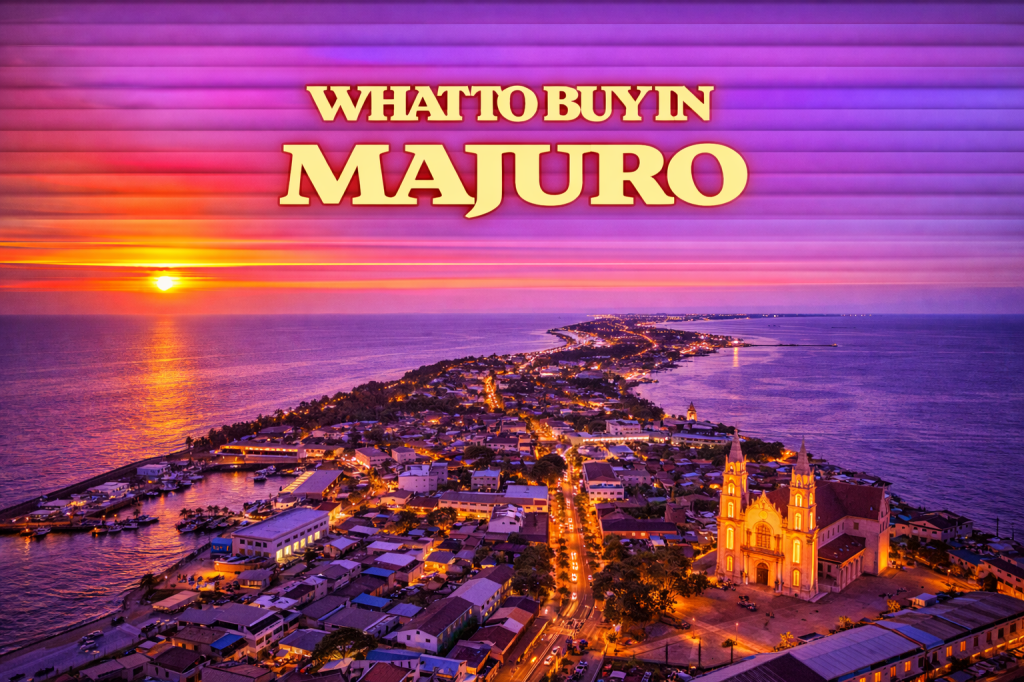
Majuro’s shopping is understated and practical. You won’t find big shopping malls, but the city has markets, a few galleries, and local sellers who make things by hand. This guide looks across the city, not at a single street or store.
Focus is on items that reflect local materials and skills, and that travel well. I’ll point out how to spot quality, where to search generally, and simple packing tips.
1. Shell jewelry
• Why it’s worth buying: Small shell necklaces and bracelets use local shells and local design. They carry a clear island look while staying lightweight.
• Where to look: open-air markets
• Price range: $6–$40
• How to spot a good one: Evenly drilled holes, secure knots, and shells with natural luster show careful work.
• Easy-to-pack tip: Wrap each piece in tissue and place in a zip bag to avoid tangles.
2. Woven pandanus bag
• Why it’s worth buying: Pandanus weaving is a traditional technique that makes useful, everyday bags. They last longer than cheap synthetic versions when tightly plaited.
• Where to look: craft co-ops
• Price range: $20–$70
• How to spot a good one: Check the tightness of the weave and evenness of the edges for durability.
• Easy-to-pack tip: Flatten gently and place between clothes to keep shape without creasing.
3. Artisanal sea salt
• Why it’s worth buying: Small-batch sea salt tastes different from supermarket salt and reflects local waters. It’s lightweight and travel-friendly when sealed.
• Where to look: small independent shops
• Price range: $5–$18
• How to spot a good one: Look for clear labeling of origin and coarse, crystalline texture rather than damp clumps.
• Easy-to-pack tip: Keep sealed jars upright in checked luggage, or transfer to a sealed plastic bag for carry-on.
4. Small tapa cloth panel
• Why it’s worth buying: Tapa panels show printed or painted traditional motifs and make compact wall art. A small panel captures local patterns without needing large storage.
• Where to look: artist-run galleries
• Price range: $25–$100
• How to spot a good one: Even pigment application and neat edge finishing suggest more careful handiwork.
• Easy-to-pack tip: Roll the panel loosely with paper inside and put it in a tube or between clothes.
5. Packaged coconut sweets
• Why it’s worth buying: Coconut-based candies or brittle showcase a common island flavor and store well. Prepackaged sweet snacks make easy, shareable gifts.
• Where to look: local markets
• Price range: $3–$12
• How to spot a good one: Choose sealed packages with a clear ingredient list and recent expiry date.
• Easy-to-pack tip: Put wrapped sweets into a hard-sided container to avoid crushing.
6. Seafood seasoning blend
• Why it’s worth buying: Blends made for island fish dishes carry flavors you won’t find at home. They’re compact and useful for cooks.
• Where to look: food halls
• Price range: $4–$15
• How to spot a good one: Fresh aroma and identifiable spices, rather than a single indistinct powder, indicate care.
• Easy-to-pack tip: Keep in original sealed packaging or transfer to a small airtight tin for carry-on.
7. Mini carved canoe or paddle ornament
• Why it’s worth buying: Small wooden models reflect local boatcraft and are hand-carved keepsakes. They’re symbolic and fit on a shelf easily.
• Where to look: small galleries
• Price range: $10–$60
• How to spot a good one: Smooth carving, balanced proportions, and no loose paint denote quality.
• Easy-to-pack tip: Wrap in bubble wrap and tuck into clothing layers in your carry-on.
8. Mother-of-pearl or shell buttons and trinkets
• Why it’s worth buying: Shell inlay pieces show natural color and make practical additions to clothing or crafts. They’re subtle and long-lasting.
• Where to look: small independent shops
• Price range: $5–$30
• How to spot a good one: Uniform hole placement and intact polish on shell surfaces are signs of care.
• Easy-to-pack tip: Store in a small padded box to prevent scratching.
9. Small handmade ceramics
• Why it’s worth buying: Locally made ceramic cups or bowls can carry island glazes and simple shapes. Choose small pieces for easier transport.
• Where to look: community co-ops
• Price range: $15–$80
• How to spot a good one: Even glaze, no hairline cracks, and a stable base mean the piece is well-fired.
• Easy-to-pack tip: Wrap with soft clothing and place in the middle of your suitcase for protection.
10. Local art prints and postcards
• Why it’s worth buying: Prints show island scenes or motifs and are affordable ways to take home original designs. Postcards are light and shareable.
• Where to look: market stalls
• Price range: $2–$35
• How to spot a good one: Look for artist signature, paper weight, and printing clarity rather than photocopied images.
• Easy-to-pack tip: Keep flat in a folder or a zippered document sleeve to prevent bending.
11. Coconut oil skincare product
• Why it’s worth buying: Small jars of virgin coconut oil or locally made balms are practical and reflect local ingredients. They serve as useful gifts too.
• Where to look: food halls
• Price range: $6–$25
• How to spot a good one: Simple ingredient lists and opaque containers that protect oils from light show better quality.
• Easy-to-pack tip: Place liquids in sealed bags and follow airline liquid rules for carry-on items.
12. Cultural books or pamphlets
• Why it’s worth buying: Short books and pamphlets explain local history, language, and customs. They are durable, informative, and help remember the place.
• Where to look: local markets or stalls with printed materials
• Price range: $8–$40
• How to spot a good one: Check author or institution credits, publication dates, and clear sourcing.
• Easy-to-pack tip: Slip books between clothes to protect the spine and corners in your suitcase.
Quick buying tips for Majuro
• Carry small bills; many stalls accept cash far more easily than cards.
• Confirm card acceptance before buying larger crafts to avoid surprises.
• Haggling is usually limited to market stalls; be polite and reasonable when negotiating.
• Wrap fragile items in clothing or bubble wrap and place in central suitcase area.
• Ask vendors how to ship oversized items; many offer local shipping arrangements.
• Look for “made locally” labels, material notes, and artist names on food packages.
Where to shop in Majuro
Shopping spreads across Delap and nearby small clusters, with markets, a museum, and a few gallery spaces to explore. For souvenirs, focus on the public market and the waterfront stalls, and check the museum and craft co-ops for higher-quality items.
- Delap commercial strip for daily shops, small galleries, and market stalls selling crafts and snacks.
- Majuro Public Market for packaged sweets, local produce, and small woven items.
- Alele Museum and cultural center area for books, cultural prints, and museum-quality crafts.
- Harbor and waterfront area where vendors sell shell items and nautical ornaments near the docks.
- Community craft co-ops that showcase woven goods, tapa panels, and artist-made ceramics.
- Market stalls along main roads for postcards, art prints, and affordable trinkets.
- Airport gift area for last-minute packaged foods and travel-friendly souvenirs.
What to skip (common tourist traps)
• Plastic trinkets with “island” labels; they are mass-produced and lack local craftsmanship.
• Unlabeled food items without ingredient lists or expiry dates; they may not travel well.
• Large carved wood pieces that are hard to pack and expensive to ship home.
• “Authentic” tags without artist names or origin details; those can be misleading.
• Bundles that mix handmade and machine-made goods; quality can be inconsistent.
• Single-use shell items lacking provenance, which may be fragile or improperly sourced.
If you only buy three things
Woven pandanus bag — practical, durable, and clearly tied to local craft traditions.
Artisanal sea salt — compact, travel-friendly, and a taste you can use at home.
Local art print or postcard — lightweight, affordable, and captures local imagery.
FAQ
-
What is Majuro known for making?
Majuro and the Marshall Islands are known for pandanus weaving, shell jewelry, and tapa cloth traditions. Local makers also work with wood, shells, and simple ceramics for everyday objects. -
What are the best edible souvenirs from Majuro?
Packaged coconut sweets, artisanal sea salt, and bottled seasoning blends are reliable edible souvenirs. Choose sealed packages with clear labels and check expiry dates before buying. -
Are souvenirs expensive in Majuro?
Prices range widely; market goods and postcards tend to be inexpensive while handmade crafts and framed art cost more. Expect to pay higher prices for items with clear provenance or museum-quality finishes. -
What is the easiest souvenir to pack from Majuro?
Prints, postcards, and small packets of sea salt pack easily and fit into carry-on luggage. They are lightweight and unlikely to break during travel. -
How do I know if something is truly local?
Check for an artist’s name, a “made locally” note, or materials sourced from the islands. Ask where and how the piece was made; sellers who can explain production are usually more reliable.
Tip: Save your receipts, and keep fragile items in your carry-on.
About the Author
Colin is the founder of SouvenirsIdeas.com and a passionate traveller with a soft spot for ceramics, markets, and food tours. He writes practical, first-hand guides to help you bring home souvenirs that actually mean something — not just more clutter!
Let us know in the comments if this has been useful or if you’ve got suggestions we can include


 Souvenir Ideas to Take Home from Every Country and City
Leave a comment