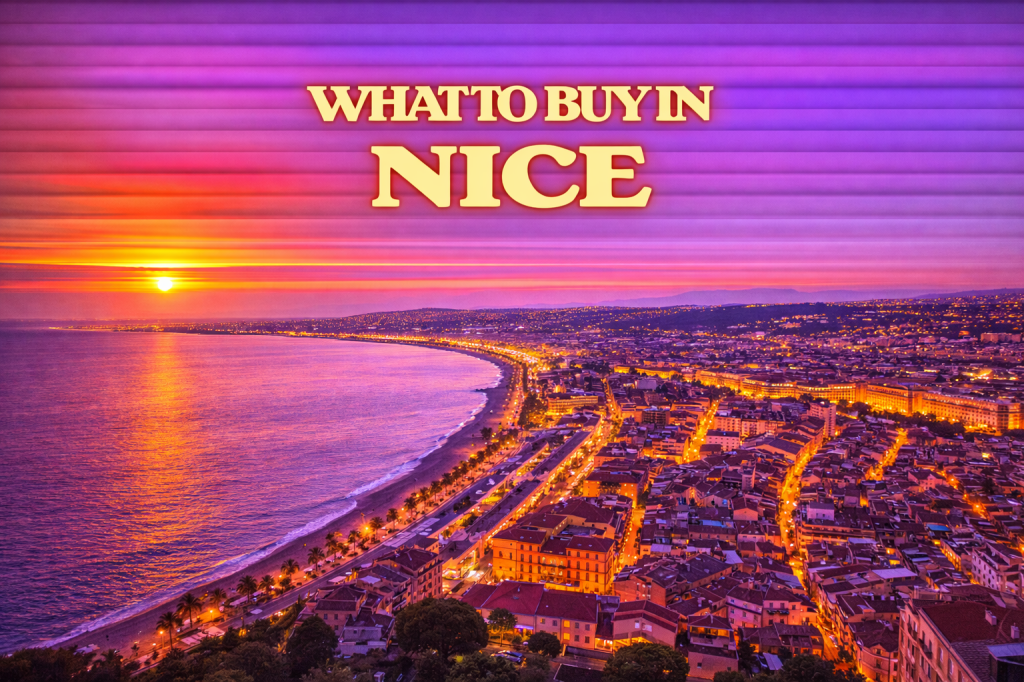
Nice offers a mix of Mediterranean flavors, handcrafts, and design influenced by both French and Italian traditions. Shopping here tends to be local and practical — many souvenirs are small, useful, and carry a strong sense of place.
This guide covers items you can find across the city, not a single street or store. It focuses on things that travel well, show real local skill, and avoid mass-produced tourist trinkets.
1. Extra-virgin olive oil
• Why it’s worth buying: Olive oil from the region has a fresh, peppery flavor that recalls local cooking. A small bottle brightens salads and keeps well.
• Where to look: markets
• Price range: $8–$30
• How to spot a good one: Choose oils labeled with harvest year and a producer’s name.
• Easy-to-pack tip: Wrap the bottle in clothing and place it in the center of your suitcase.
2. Fleur de sel or flavored sea salt
• Why it’s worth buying: Sea salt harvested from nearby coasts adds a subtle mineral finish to dishes. Flavored varieties with herbs or lemon capture the Mediterranean taste.
• Where to look: independent shops
• Price range: $5–$20
• How to spot a good one: Look for small-batch jars and clear ingredient lists without additives.
• Easy-to-pack tip: Put jars in a zip-top bag to prevent spills and cushion with soft items.
3. Herbes de Provence or spice blends
• Why it’s worth buying: These blends simplify local cooking and are easy to use at home. They’re lightweight and last through travel.
• Where to look: markets
• Price range: $3–$12
• How to spot a good one: Prefer glass jars or paper bags with simple ingredient lists and no fillers.
• Easy-to-pack tip: Remove bulky packaging and transfer spices into a small tin or plastic container.
4. Socca mix (chickpea pancake mix)
• Why it’s worth buying: Socca is a traditional Niçois street food, and a dry mix lets you recreate it at home. A small package keeps well in luggage.
• Where to look: food halls
• Price range: $4–$10
• How to spot a good one: Look for a single-ingredient label showing only chickpea flour, or a local brand name.
• Easy-to-pack tip: Keep the packet with your pantry items in checked luggage or carry-on.
5. Local honey
• Why it’s worth buying: Wildflower honey reflects the region’s plants and pairs well with cheese or tea. Jars are a small luxury that travel reasonably well.
• Where to look: co-ops
• Price range: $6–$25
• How to spot a good one: Choose honey labeled with floral source and producer contact information.
• Easy-to-pack tip: Place jar in a sealed plastic bag and cushion with socks inside your carry-on.
6. Provençal textiles (linen or printed cotton)
• Why it’s worth buying: Linen napkins, table runners, or printed cotton bring home traditional patterns. They’re lightweight and useful around the house.
• Where to look: independent shops
• Price range: $12–$60
• How to spot a good one: Check stitching and fabric weight; natural fibers last longer than synthetics.
• Easy-to-pack tip: Roll textiles to save space and prevent creases.
7. Ceramic dishware with Mediterranean motifs
• Why it’s worth buying: Small plates or bowls show local color and work for serving or display. Hand-painted pieces carry more character than factory-made ones.
• Where to look: galleries
• Price range: $15–$80
• How to spot a good one: Inspect glaze for evenness and look for a maker’s mark on the base.
• Easy-to-pack tip: Wrap each piece in soft clothing and use a hard-sided bag if possible.
8. Solid perfume or small eau de parfum
• Why it’s worth buying: The Nice area has close ties to regional perfume traditions, offering floral and citrus scents. Small formats are ideal for travel and plane rules.
• Where to look: perfumeries
• Price range: $10–$50
• How to spot a good one: Sample on skin to make sure it evolves well and avoids overpowering notes.
• Easy-to-pack tip: Choose solid perfume tins or under-100ml bottles for carry-on compliance.
9. Handmade jewelry (silver or enamel)
• Why it’s worth buying: Local artisans mix Mediterranean themes with simple designs that feel personal. Jewelry is compact and keeps its value in transit.
• Where to look: galleries
• Price range: $20–$150
• How to spot a good one: Check clasps and settings; hallmarks or signatures often indicate quality.
• Easy-to-pack tip: Store pieces in a small padded pouch to prevent tangling or scratches.
10. Art prints or small posters
• Why it’s worth buying: Prints capture local scenes and are easier to transport than framed originals. Rolled prints fit easily into luggage tubes.
• Where to look: independent shops
• Price range: $8–$60
• How to spot a good one: Look for archival paper and a clear artist credit or signature.
• Easy-to-pack tip: Roll prints with the image facing outward and protect with a cardboard tube.
11. Local chocolate or candied fruit
• Why it’s worth buying: Small-batch sweets show regional flavors and are good gifts that don’t take much space. Many items keep several weeks if unopened.
• Where to look: patisseries
• Price range: $5–$25
• How to spot a good one: Prefer items with short ingredient lists and a production date.
• Easy-to-pack tip: Pack in carry-on to avoid crushing and to keep chocolates from melting.
12. Nautical-themed woven bag or small straw basket
• Why it’s worth buying: A compact woven bag mixes seaside style with practical use for shopping at home. Natural fibers dry quickly and fold slightly for packing.
• Where to look: waterfront stalls
• Price range: $15–$60
• How to spot a good one: Inspect tight weaving and reinforced handles for longevity.
• Easy-to-pack tip: Stuff the bag with soft items to keep its shape and save space.
Quick buying tips for Nice
• Carry some euros in cash; small markets and stalls may prefer it over cards.
• Haggling is rarely expected in shops, but you can ask for small discounts at market stalls.
• Wrap glass and ceramics in clothing and keep them cushioned to avoid breakage.
• Many vendors offer shipping; confirm costs and insurance before deciding.
• Look for a producer name, harvest date, or regional certification to confirm “made locally.”
• Pack liquids and jars in sealed bags and follow airline limits for carry-on bottles.
Where to shop in Nice
Shopping options are spread across the city, from the old town lanes to the promenade by the sea. Markets and museum shops both focus on local producers, while certain districts have clusters of artisans and galleries.
• Vieux Nice (Old Town) for food stalls, small craft shops, and plenty of edible souvenirs
• Cours Saleya market for fresh food, spices, and seasonal flowers in a lively open-air setting
• Avenue Jean Médecin and central shopping streets for textiles, fashion accessories, and department stores
• Promenade des Anglais and waterfront stalls for nautical crafts and woven beach accessories
• Museum shops at local museums for quality design items, books, and art prints
• Port area for ceramics, maritime-themed gifts, and small independent ateliers
• Seasonal fairs and craft markets for one-off jewelry and handmade home goods
What to skip (common tourist traps)
• Plastic keychains with generic city names — they’re mass-made and short-lived.
• “Local” jars without producer names — labels without origin often indicate bulk imports.
• Low-priced leather goods with thin stitching — they wear out quickly and show poor craft.
• Unlisted ingredients on food packaging — avoid items where producers aren’t clear.
• Cheaply painted ceramics with rough glaze — these often chip and contain low-grade materials.
• Perfume minis without scent testing — many are factory blends that don’t represent local scents.
If you only buy three things
Olive oil — it captures local flavor and has long shelf life.
Fleur de sel — small, portable, and distinctly regional for cooking.
Art print — easy to transport and a lasting reminder of place.
FAQ
-
What is Nice known for making?
Nice is known for Mediterranean food products, artisan textiles, and ceramics. The city also has a strong craft tradition in jewelry and small-scale design objects. -
What are the best edible souvenirs from Nice?
Choose olive oil, sea salt, spice blends, and small-packaged sweets like chocolates. These items travel well and bring local flavors home. -
Are souvenirs expensive in Nice?
Prices vary widely; market goods and food items are generally affordable while handcrafted ceramics and jewelry cost more. Expect to pay higher prices for signed or certified artisan pieces. -
What is the easiest souvenir to pack from Nice?
Prints, textiles, and spices are the simplest to pack because they are flat or soft and take little space. They also withstand handling better than glass or fragile ceramics. -
How do I know if something is truly local?
Look for a producer’s name, harvest or production date, and a clear ingredient list or maker’s signature. If those details are missing, ask where it was made and who made it.
Tip: Save your receipts, and keep fragile items in your carry-on.
About the Author
Colin is the founder of SouvenirsIdeas.com and a passionate traveller with a soft spot for ceramics, markets, and food tours. He writes practical, first-hand guides to help you bring home souvenirs that actually mean something — not just more clutter!
Let us know in the comments if this has been useful or if you’ve got suggestions we can include

 Souvenir Ideas to Take Home from Every Country and City
Leave a comment