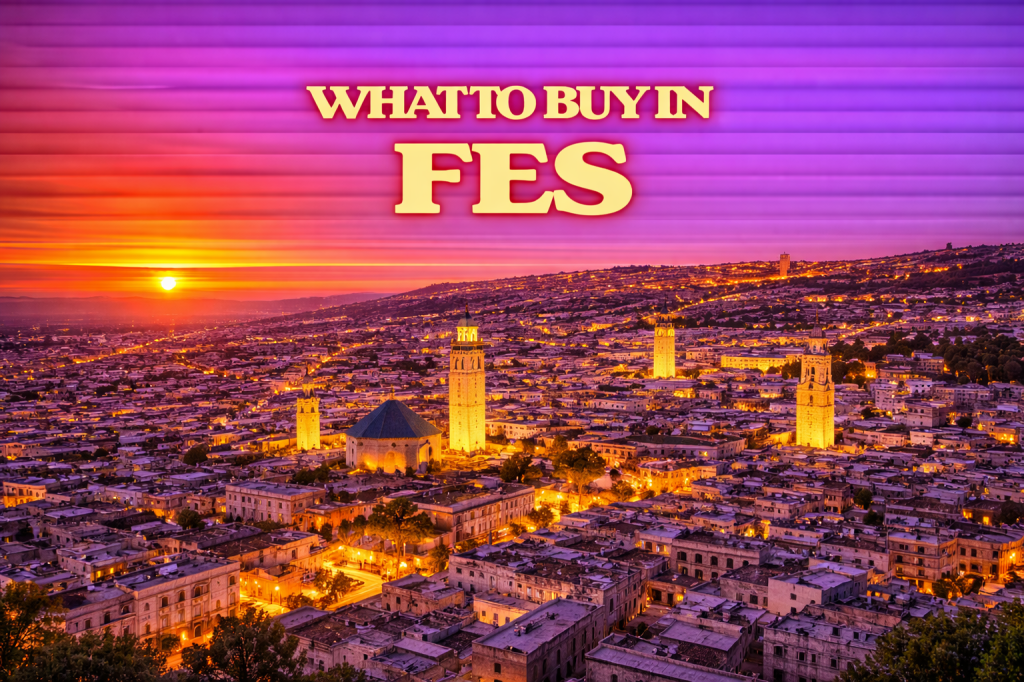
Fes is one of Morocco’s oldest cities and a good place to look for craft-made souvenirs. The medina and nearby streets offer items that reflect local materials and traditional techniques.
This guide covers things you can commonly find across the city, not a single shop or street. It focuses on items that travel well, how to tell if they are authentic, and simple packing tips.
1. Leather coin pouch
• Why it’s worth buying: Small leather pouches show the city’s long leatherworking history. They are useful every day and last if made well.
• Where to look: Find them at independent shops around the medina.
• Price range: $5–$25
• How to spot a good one: Look for even stitching, a natural leather smell, and tight seams.
• Easy-to-pack tip: Slip one inside a shoe or jacket pocket to protect it in transit.
2. Hand-painted ceramic tile
• Why it’s worth buying: Tiles show classic geometric patterns used in local architecture. They make low-cost, decorative keepsakes.
• Where to look: Buy from markets and stalls near craft areas.
• Price range: $10–$60
• How to spot a good one: Check for sharp lines in the paint and a flat, even back.
• Easy-to-pack tip: Sandwich tiles between two shirts and place in the middle of your suitcase.
3. Handwoven scarf
• Why it’s worth buying: Scarves use natural fibers and local dye styles that handle daily wear. They are useful, light, and wearable.
• Where to look: Purchase at independent shops or artisan co-ops.
• Price range: $8–$70
• How to spot a good one: Feel for consistent weave and read fiber content if labeled.
• Easy-to-pack tip: Roll scarves tightly to save space and avoid wrinkles.
4. Silver or silver-plated jewelry
• Why it’s worth buying: Small pieces carry traditional motifs and can be worn immediately. Quality silver holds value and cleans easily.
• Where to look: Seek pieces in markets and small galleries.
• Price range: $15–$120
• How to spot a good one: Look for hallmarks, solid clasps, and tidy soldering points.
• Easy-to-pack tip: Store jewelry in a soft pouch inside your carry-on to prevent tangling.
5. Ras el hanout or saffron
• Why it’s worth buying: These spices add authentic Moroccan flavor to home cooking. Small jars last long when stored properly.
• Where to look: Look in food halls and spice markets for sealed containers.
• Price range: $3–$40
• How to spot a good one: Fresh aroma and visible threads for saffron; avoid powder for premium saffron.
• Easy-to-pack tip: Keep spices in sealed plastic bags to prevent leaks and odors.
6. Mint tea glasses
• Why it’s worth buying: Decorating on tea glasses reflects local patterns and they make distinctive tableware. They’re lighter than full tea sets.
• Where to look: Pick them up from independent shops or markets and stalls.
• Price range: $12–$50
• How to spot a good one: Even paintwork and smooth rims show better workmanship.
• Easy-to-pack tip: Wrap each glass in clothing and carry them in your hand luggage if fragile.
7. Leather babouches (slippers)
• Why it’s worth buying: Traditional slippers are comfortable and show handcrafted leather work. They pack flat and can be practical wear.
• Where to look: Find styles at markets and local independent shops.
• Price range: $12–$60
• How to spot a good one: Soft leather, neat stitching, and a slightly flexible sole indicate durability.
• Easy-to-pack tip: Stuff each slipper with socks or small items to keep shape while packing.
8. Brass or copper decorative piece
• Why it’s worth buying: Small metal pieces display local engraving and add character to a room. They age well with simple care.
• Where to look: Purchase from galleries or independent shops that show metalwork.
• Price range: $20–$150
• How to spot a good one: Clear, consistent engraving and a solid feel usually mean better quality.
• Easy-to-pack tip: Wrap in soft fabric and place in the center of checked luggage for padding.
9. Zellij pattern art print
• Why it’s worth buying: Prints reproduce the city’s tile patterns in an easy-to-pack form. They are inexpensive and decorative.
• Where to look: Look in galleries and markets for prints on quality paper.
• Price range: $2–$25
• How to spot a good one: Crisp lines, artist credit, and thicker paper suggest better printing.
• Easy-to-pack tip: Roll prints into a tube or keep flat in a document folder.
10. Woven palm basket bag
• Why it’s worth buying: These bags use local weaving skills and work for markets or beach trips. They are sturdy and natural.
• Where to look: Buy at markets or artisan co-ops.
• Price range: $10–$50
• How to spot a good one: Tight, even weave and secure handles mean longer use.
• Easy-to-pack tip: Collapse the bag and stuff with soft clothing to keep form.
11. Boxed Moroccan sweets
• Why it’s worth buying: Packaged sweets give an immediate taste of local flavors and travel well when sealed. They make reliable edible gifts.
• Where to look: Pick sealed boxes from food halls and market vendors.
• Price range: $5–$25
• How to spot a good one: Factory-sealed packaging and ingredient lists indicate safer travel quality.
• Easy-to-pack tip: Pack boxed sweets in checked luggage or ship them home for longer shelf life.
12. Mini ceramic tagine
• Why it’s worth buying: Mini tagines are a small symbol of Moroccan cooking and can be used as serving dishes. They keep the look while saving space.
• Where to look: Find mini tagines at markets and artisan co-ops.
• Price range: $8–$35
• How to spot a good one: A snug lid and even glaze show better craftsmanship.
• Easy-to-pack tip: Nest the lid inside the base and pad with clothing when packing.
Quick buying tips for Fes
• Bring small bills; many stalls prefer cash, cards accepted at larger shops.
• Haggling is common in markets; offer about 30–50% lower politely.
• Wrap fragile ceramics in clothing and carry them in your carry-on.
• Many vendors can ship purchases; ask for shipping options before buying.
• Look for “made locally” tags, natural fibers, hand stitching, or artist signatures.
• Pack liquids and oils in sealed bags and declare them for flights.
Where to shop in Fes
Shopping is spread across the old medina and a few nearby districts. Souks and open squares focus on crafts, while some streets and museum shops carry higher-end, vetted pieces.
- Fes el-Bali (old medina): Central souks for leather goods, ceramics, and everyday craft items.
- The tannery district near the dye pits: Leather goods and small workshops produce pouches and slippers.
- The spice market area: Sealed jars of spices, teas, and other packaged foodstuffs.
- Place Seffarine and metalworking streets: Brass and copper items from local metalworkers.
- The Mellah (old Jewish quarter): Silver jewelry and antiques offered by several stalls.
- Museum shops and cultural centers: Higher-quality prints, books, and curated crafts.
- Artisan co-ops and cooperative stalls: Textiles and woven goods made by local makers.
What to skip (common tourist traps)
- Cheap mass-produced leather goods: They look like leather but use weak glues and thin hides.
- Painted pottery with sloppy brushwork: Poor paint and uneven glazes chip quickly at home.
- Unlabeled spice bags with bright color but no ingredient list: They may contain fillers or low-quality spice.
- Very low-priced “silver” jewelry without hallmarks: It often wears off and is merely plated.
- Over-polished brass items hiding poor engraving: Heavy polishing can hide casting flaws and low skill.
- “Antique” claims without provenance: Sellers may mislabel age to raise the price.
If you only buy three things
Leather coin pouch — small, useful, and shows local leatherwork quality.
Hand-painted ceramic tile — decorative, compact, and representative of local patterns.
Ras el hanout or saffron — easy to pack and brings Moroccan flavor home.
FAQ
-
What is Fes known for making?
Fes is known for traditional crafts like leatherwork, ceramics, metal engraving, and textiles. Many items are still made by small workshops and family artisans throughout the city. -
What are the best edible souvenirs from Fes?
Packaged spices such as ras el hanout and saffron are popular, plus sealed boxes of sweets and dried tea blends. Choose sealed containers with ingredient lists for safer travel. -
Are souvenirs expensive in Fes?
Prices range widely; small items are inexpensive while handcrafted pieces can cost more. Bargaining is normal in many markets, which can significantly affect the final price. -
What is the easiest souvenir to pack from Fes?
Small scarves, prints, and leather coin pouches are the easiest to pack and unlikely to break during travel. Roll textiles and tuck them into shoes or corners of your suitcase. -
How do I know if something is truly local?
Look for “made locally” tags, visible handwork like uneven tiny variations, artist signatures, and natural materials. Ask about the maker or workshop and compare similar items for consistency.
Tip: Save your receipts, and keep fragile items in your carry-on.
About the Author
Colin is the founder of SouvenirsIdeas.com and a passionate traveller with a soft spot for ceramics, markets, and food tours. He writes practical, first-hand guides to help you bring home souvenirs that actually mean something — not just more clutter!
Let us know in the comments if this has been useful or if you’ve got suggestions we can include

 Souvenir Ideas to Take Home from Every Country and City
Leave a comment