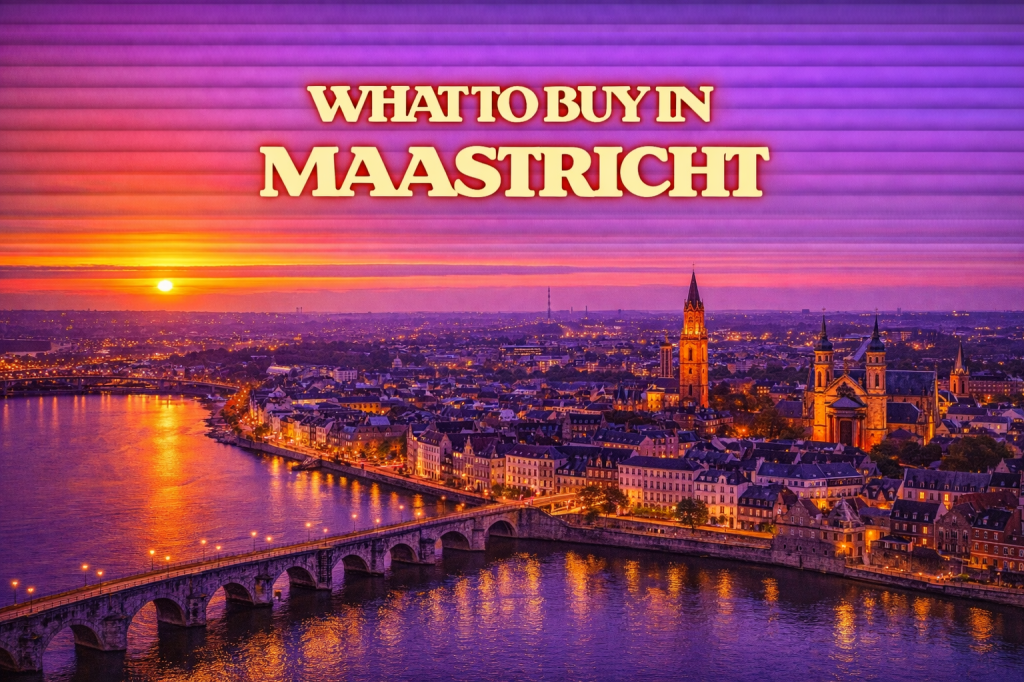
Maastricht’s mellow streets make for easy, practical souvenir shopping. Craft studios, food stalls, and small design shops all turn out things you can actually use at home. This guide covers items you can find across the city, not a single street or shop.
Focus is on locally made goods, regional food, and items that travel well. I’ll include simple ways to judge quality and how to avoid mass-produced tourist fare.
1. Vlaai (Limburg fruit tart)
• Why it’s worth buying: A regional specialty tied to local celebrations and family recipes. It tastes different from supermarket pastries and reflects local baking traditions.
• Where to look: markets.
• Price range: $8–$20
• How to spot a good one: Look for a bakery label with a clear ingredient list and no long industrial ingredient names.
• Easy-to-pack tip: Buy a small individual tart or ask the bakery for vacuum-sealing if available.
2. Dutch jenever (local gin)
• Why it’s worth buying: Jenever has a long history in the region and shows local distilling styles. A well-made bottle keeps well and is compact.
• Where to look: independent shops.
• Price range: $20–$45
• How to spot a good one: Check for a distillery name and production notes on the label rather than generic branding.
• Easy-to-pack tip: Place the bottle in clothing inside your checked luggage, and seal it in a plastic bag.
3. Vacuum-packed regional cheeses
• Why it’s worth buying: Aged cheeses show regional milk and aging techniques and travel better when sealed. They represent local food culture.
• Where to look: food halls.
• Price range: $8–$40
• How to spot a good one: Look for vacuum-sealed packaging with production or farm origin information.
• Easy-to-pack tip: Carry vacuum-packed cheeses in insulated bags or declare them at customs if required.
4. Hand-thrown ceramics
• Why it’s worth buying: Small studio ceramics reflect maker skill and are often one-off pieces. They make practical gifts and tableware.
• Where to look: galleries.
• Price range: $25–$120
• How to spot a good one: Check for a maker’s stamp or signature on the base and smooth, even glazing.
• Easy-to-pack tip: Wrap pieces in sweaters or towels inside your suitcase for padding.
5. Linen table linens and scarves
• Why it’s worth buying: Natural-fiber textiles last and often feature local colorways or simple woven patterns. They are useful at home.
• Where to look: independent shops.
• Price range: $15–$80
• How to spot a good one: Inspect stitching and selvedge edges; loose threads or uneven hems suggest lower quality.
• Easy-to-pack tip: Fold linens flat and roll to save space and prevent deep creases.
6. Small leather wallets or coin purses
• Why it’s worth buying: Compact leather goods are practical and last years when well made. Local craftsmen often use vegetable-tanned leather.
• Where to look: craft fairs.
• Price range: $25–$120
• How to spot a good one: Look for solid stitching, evenly cut edges, and minimal glue residue.
• Easy-to-pack tip: Pack leather in a breathable cloth bag and avoid tight compression.
7. Handmade silver or metal jewelry
• Why it’s worth buying: Small, handcrafted pieces carry an artist’s mark and are easier to repair than mass-produced jewelry. They often reflect regional styles.
• Where to look: galleries.
• Price range: $40–$200
• How to spot a good one: Examine solder joints and closures for secure fastening and consistent finishing.
• Easy-to-pack tip: Store jewelry in a small soft pouch inside your carry-on to avoid tangles.
8. Local art prints and postcards
• Why it’s worth buying: Prints capture local scenes or artist perspectives and are simple to frame at home. Postcards are lightweight keepsakes.
• Where to look: markets.
• Price range: $5–$60
• How to spot a good one: Look for artist signatures, edition numbers, or quality paper stock.
• Easy-to-pack tip: Carry prints flat in a rigid folder or tube to prevent bending.
9. Artisan mustards, jams, and preserves
• Why it’s worth buying: Small-batch condiments show local fruit and spice combinations that vary by producer. They last well when sealed.
• Where to look: co-ops.
• Price range: $4–$15
• How to spot a good one: Read the ingredient list—short, recognizable ingredients usually mean fewer additives.
• Easy-to-pack tip: Wrap jars in clothing and place in a sealed plastic bag to contain leaks.
10. Hand-forged spoons or small metalware
• Why it’s worth buying: Functional metal items show traditional skills and make durable kitchen gifts. They age with use.
• Where to look: museum shops.
• Price range: $20–$90
• How to spot a good one: Feel the weight and balance; a solid, comfortable handle suggests quality.
• Easy-to-pack tip: Wrap metalware in soft clothing and separate pieces to avoid scratching.
11. Letterpress cards and design stationery
• Why it’s worth buying: High-quality paper goods showcase local designers and make thoughtful, lightweight gifts. They travel easily.
• Where to look: design stores.
• Price range: $8–$35
• How to spot a good one: Look for textured paper, crisp impressions, and clear print registration.
• Easy-to-pack tip: Keep cards flat between stiff boards to avoid bending.
12. Carnival pins and small masks
• Why it’s worth buying: Carnival is a strong local tradition, and small pins or masks are seasonal, collectible keepsakes. They connect to city events.
• Where to look: seasonal markets.
• Price range: $3–$25
• How to spot a good one: Check for enamel work, secure fastenings, and labels indicating local maker or event.
• Easy-to-pack tip: Slip pins into a small pouch and masks into garment pockets to save space.
Quick buying tips for Maastricht
• Carry some cash for market stalls; cards accepted in most shops.
• Don’t expect to haggle in boutiques; modest bargaining can happen at open-air markets.
• Wrap ceramics in clothing and seal with tape for checked baggage protection.
• Many shops offer shipping if bulky; ask about prices and packaging options.
• Look for “made locally” tags, workshop addresses, or artist signatures on items.
• Liquids and open jars must follow airline rules; reseal and declare if required.
Where to shop in Maastricht
Shopping is spread across the compact city center, with different streets and squares specializing in food, crafts, or design. Spend time in both riverfront districts and the historic heart; each area hosts a mix of market stalls, galleries, and independent stores.
- Vrijthof and the historic center for local bakeries, small boutiques, and craft stalls.
- Markt (Market Square) for weekend food stalls, cheeses, flowers, and packaged delicacies.
- Wyck district along the Meuse for design shops, jewelry makers, and artisanal homewares.
- Stokstraat and nearby gallery streets for contemporary art, ceramics, and prints.
- Museum shops at major museums for higher-end design objects and exhibition catalogs.
- Seasonal markets and carnival fairs for masks, pins, sweets, and local festive items.
- Riverside promenades for occasional craft stalls and regional food vendors.
What to skip (common tourist traps)
- Cheap plastic souvenirs sold near transport hubs; they rarely reflect local craft quality.
- Unmarked “Delft” ceramics without maker marks; these are often printed copies from factories.
- Food sold without ingredient lists or producer information; provenance matters for taste and safety.
- Overpriced leather labeled “handmade” with visible machine stitching and no maker ID.
- Fragile ceramics offered with no packing advice or visible repair flaws; avoid breakable bargains.
- Art prints sold in bulk with no artist signature or edition number; likely mass-printed.
If you only buy three things
Maastricht ceramics: Durable, locally made tableware that represents regional craft skills.
Local art prints: Lightweight, easy to pack, and a clear reminder of local artists.
Jenever: Compact bottle that captures regional flavor and travels well when packed properly.
FAQ
-
What is Maastricht known for making?
Maastricht is known for regional foods like vlaai and for a range of crafts from ceramics to small-batch metalwork. The city also supports local designers and makers who produce textiles, prints, and jewelry. -
What are the best edible souvenirs from Maastricht?
Look for vlaai from reputable bakeries, vacuum-packed cheeses, and sealed jams or mustards. These items show regional flavors and usually travel well if packaged and declared correctly. -
Are souvenirs expensive in Maastricht?
Prices vary: market stalls and co-ops tend to be more affordable, while galleries and museum shops carry higher-end pieces. Shipping and packaging can add to the cost for larger items. -
What is the easiest souvenir to pack from Maastricht?
Prints, postcards, cards, and small textile items are the simplest to carry and rarely break. Pack them flat in a folder or between clothing for protection. -
How do I know if something is truly local?
Look for maker names, workshop addresses, artist signatures, or “made locally” tags with contact details. Ask sellers about production methods and where the materials came from.
Tip: Save your receipts, and keep fragile items in your carry-on.
About the Author
Colin is the founder of SouvenirsIdeas.com and a passionate traveller with a soft spot for ceramics, markets, and food tours. He writes practical, first-hand guides to help you bring home souvenirs that actually mean something — not just more clutter!
Let us know in the comments if this has been useful or if you’ve got suggestions we can include
 Souvenir Ideas to Take Home from Every Country and City
Leave a comment