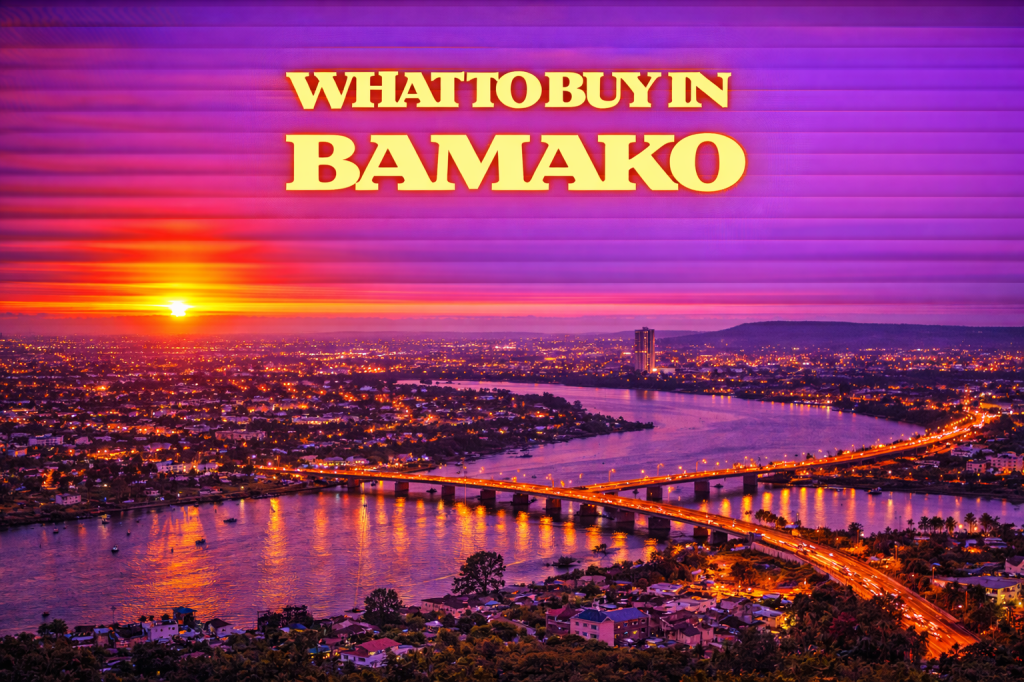
Bamako offers a wide range of handmade goods and local foods that make sensible souvenirs. The city’s markets, artisan spaces, and museum shops carry items you can actually use at home, not just things that sit on a shelf.
This guide covers souvenirs you can find across the city, not a single street or shop. It focuses on items that travel well, how to check quality, and what to avoid.
1. Bogolan (mud cloth)
• Why it’s worth buying: Bogolan is a traditional cotton cloth dyed with local pigments and clay. It carries recognizable patterns made by skilled craftspeople.
• Where to look: Browse covered markets and open-air market stalls for authentic examples.
• Price range: $25–$150
• How to spot a good one: Check for uneven hand-dyed marks and natural colors rather than perfectly even prints.
• Easy-to-pack tip: Fold tightly and roll inside a sweater to protect the surface during travel.
2. Lightweight woven scarf or wrap
• Why it’s worth buying: Woven scarves are practical and usually made from locally spun cotton or silk blends. They show traditional weaving patterns without taking much space.
• Where to look: Find them in small independent shops and artisan kiosks.
• Price range: $8–$40
• How to spot a good one: Look for tight, even weaving and natural fibers that don’t feel plasticky.
• Easy-to-pack tip: Wear it on the plane or pack it flat between clothes to avoid creasing.
3. Small leather coin pouch
• Why it’s worth buying: Local leatherwork often uses goat or cowhide made into durable small goods. A coin pouch is useful and compact.
• Where to look: Seek out covered markets with leather stalls and craft sections.
• Price range: $6–$30
• How to spot a good one: Smell and feel the leather; genuine pieces feel natural and have consistent stitching.
• Easy-to-pack tip: Tuck it in a pocket or cushion with socks to keep shape.
4. Silver or brass pendant
• Why it’s worth buying: Metal pendants reflect local styles and can be worn every day. They are small but carry craft detail.
• Where to look: Check contemporary galleries and jewelry displays for artisan pieces.
• Price range: $15–$120
• How to spot a good one: Solid metal weight and clear hallmarks or maker’s marks suggest quality.
• Easy-to-pack tip: Wrap in tissue or a soft cloth and place in your carry-on.
5. Beaded necklace or bracelet
• Why it’s worth buying: Beadwork shows regional color choices and traditional patterns in a wearable form. It’s produced by many independent artisans.
• Where to look: Look in artisan co-ops and cooperative stalls for ethical, signed pieces.
• Price range: $5–$50
• How to spot a good one: Check for secure knotting and uniform bead sizes on finished pieces.
• Easy-to-pack tip: Lay flat in a small pouch so clasps don’t tangle.
6. Small wood carving
• Why it’s worth buying: Carved figures or masks display local carving skills and make unique decorative objects. They come in many styles and sizes.
• Where to look: Visit busy market sections where carvers sell directly from their stalls.
• Price range: $10–$70
• How to spot a good one: Look for smooth carving marks and stable, crack-free wood.
• Easy-to-pack tip: Wrap in clothing and place in the center of your suitcase for padding.
7. Hand-thrown ceramic cup
• Why it’s worth buying: Local potters produce simple cups and bowls with individual glazes and shapes. They’re useful at home.
• Where to look: Find pieces in small independent pottery shops and studio galleries.
• Price range: $12–$60
• How to spot a good one: Even rims, a smooth glaze, and no hairline cracks indicate careful firing.
• Easy-to-pack tip: Nest cups with soft clothing and place in a shoe or padded section.
8. Original art print or postcard
• Why it’s worth buying: Prints are a low-cost way to bring home local scenes or artists’ work. They are light and easy to transport.
• Where to look: Browse art galleries and museum shop print sections for signed works.
• Price range: $3–$50
• How to spot a good one: Look for artist signatures, clean printing, and acid-free paper for longer life.
• Easy-to-pack tip: Flatten between cardboard sheets and carry in your hand luggage if possible.
9. Dried hibiscus (bissap)
• Why it’s worth buying: Dried hibiscus makes a tart, refreshing tea typical across the region. It stores well and keeps its flavor.
• Where to look: Purchase at food halls and large market produce sections in sealed packs.
• Price range: $3–$12
• How to spot a good one: Deep red color and a clean, floral smell indicate freshness.
• Easy-to-pack tip: Put sealed bags in a zip-top bag to protect against spills.
10. Baobab powder
• Why it’s worth buying: Baobab powder is versatile, used in drinks and cooking, and represents a local ingredient. It’s lightweight and shelf-stable.
• Where to look: Find it at cooperative food stalls and some independent shops selling local produce.
• Price range: $4–$20
• How to spot a good one: Choose sealed packaging with clear ingredient listings and no moisture.
• Easy-to-pack tip: Keep in original sealed container and place in checked luggage within a plastic bag.
11. Shea butter or local soap
• Why it’s worth buying: Unrefined shea butter is useful as skincare and often produced by women’s cooperatives. Local soaps feature natural scents.
• Where to look: Look in artisan co-ops and some markets that sell beauty products.
• Price range: $4–$25
• How to spot a good one: Natural color and minimal added fragrances suggest less processing.
• Easy-to-pack tip: Wrap jars in clothing and declare solid balms if asked at security.
12. Local spice blends
• Why it’s worth buying: Blends capture regional flavors for cooking and are easy to use at home. They are compact and aromatic.
• Where to look: Purchase from market spice stalls or food halls where spices are sold by weight.
• Price range: $2–$15
• How to spot a good one: Fresh aroma and vibrant color show recent grinding and quality ingredients.
• Easy-to-pack tip: Seal spices in airtight bags and cushion in the middle of your suitcase.
Quick buying tips for Bamako
- Carry small bills; know cash vs card use varies widely by vendor and market.
- Politely ask starting price, then negotiate; haggling is normal at many stalls.
- Use clothing and bubble wrap as fragile packing advice before checking bags.
- Ask vendors about shipping availability; some co-ops offer international shipping options.
- Look for “made locally” labels, artisan signatures, or natural materials to confirm origin.
- Pack liquids and oils in checked luggage or follow airport food or liquid packing rules.
Where to shop in Bamako
Shopping in Bamako is spread between busy market districts, museum areas, and artisan quarters. Markets near the river and central market halls are good for food and everyday crafts, while galleries and museum shops offer higher-quality art and prints.
- Riverside market areas along the Niger River for woven baskets, woodwork, and fresh produce.
- Central covered market districts for textiles, leather goods, and spice stalls in bulk.
- The National Museum and its shop for curated prints, books, and well-made replicas.
- Cultural and gallery districts for contemporary jewelry, metalwork, and signed art prints.
- Cooperative stalls near artisan quarters where women’s groups sell shea products and textiles.
- Open-air weekend craft fairs and public squares offering a range of small carvings and jewelry.
- Food halls and larger produce markets for packaged bissap, spices, and baobab products.
What to skip (common tourist traps)
- Cheap plastic souvenirs sold at tourist stands, because materials and finish are low quality.
- Items labeled broadly “African” without maker information, since origin and technique are unclear.
- Mass-produced printed fabrics claiming traditional dyes, as they often use synthetic inks.
- Overpriced versions of common goods near landmarks; prices often double for tourists.
- Unfinished wood carvings with splits or rough sanding, indicating poor workmanship.
- Unsealed or homemade food packages without clear ingredients, which may fail customs checks.
If you only buy three things
Bogolan mud cloth — it represents local technique and makes a strong statement piece.
Dried hibiscus (bissap) — lightweight and uniquely tied to local flavors.
Small silver or brass pendant — compact, wearable, and reflective of local metalwork.
FAQ
-
What is Bamako known for making?
Bamako is known for textiles, leather goods, beadwork, and carved wood items. Local artisans also produce metal jewelry and pottery using traditional methods. -
What are the best edible souvenirs from Bamako?
Dried hibiscus (bissap), baobab powder, and local spice blends travel well and keep their flavor. Buy sealed packages from reputable market stalls or food halls. -
Are souvenirs expensive in Bamako?
Prices vary widely; many daily goods are affordable, while gallery-quality pieces cost more. Expect to negotiate in markets but pay set prices in museum shops. -
What is the easiest souvenir to pack from Bamako?
Art prints, beads, and dried hibiscus are the easiest to pack and carry in hand luggage. They are light, flat, or sealed and rarely break. -
How do I know if something is truly local?
Ask for the artisan’s name, look for a cooperative stamp, or check for natural materials and hand-finished details. Provenance and a clear maker’s mark usually indicate local production.
Tip: Save your receipts, and keep fragile items in your carry-on.
About the Author
Colin is the founder of SouvenirsIdeas.com and a passionate traveller with a soft spot for ceramics, markets, and food tours. He writes practical, first-hand guides to help you bring home souvenirs that actually mean something — not just more clutter!
Let us know in the comments if this has been useful or if you’ve got suggestions we can include

 Souvenir Ideas to Take Home from Every Country and City
Leave a comment