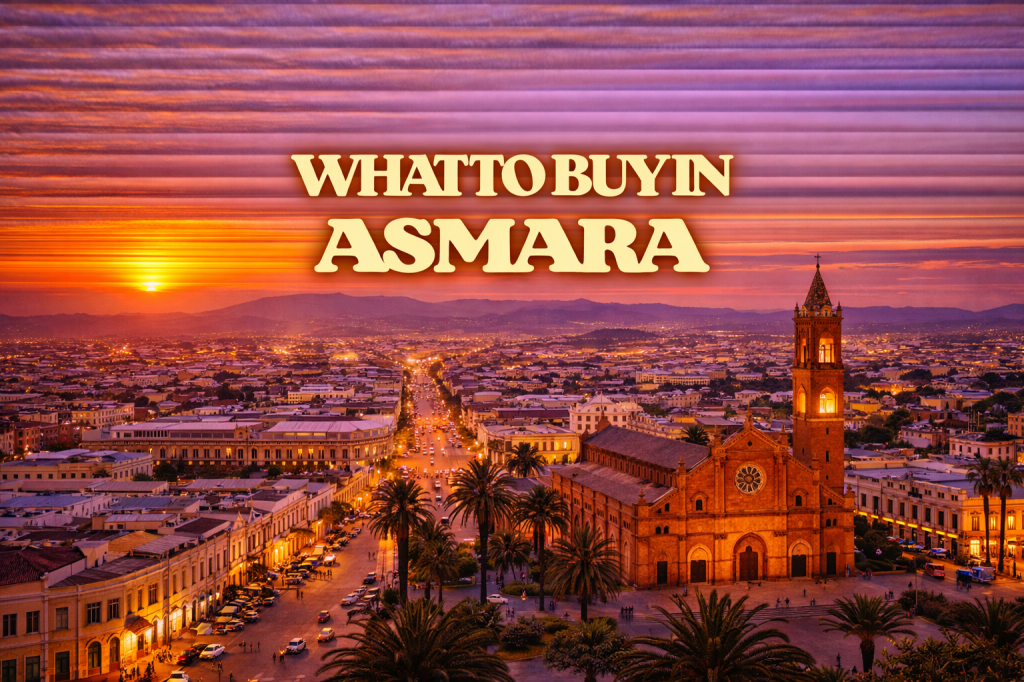
Asmara is an easy city to shop in if you know what to look for. The city mixes long-standing craft traditions with strong Italian design influence, so souvenirs can range from handwoven cloth to neat paper goods.
This guide covers items you can find across Asmara, not in one street or a single store. It focuses on locally made or regionally linked things that travel well and show clear signs of quality.
1. Roasted Eritrean coffee beans
• Why it’s worth buying: Coffee is central to local hospitality and has a distinct, rich roast. It gives a real taste of Asmara at home.
• Where to look: open-air markets often sell freshly roasted beans.
• Price range: $4–$15
• How to spot a good one: Choose beans sold in sealed bags or freshly roasted on-site.
• Easy-to-pack tip: Put beans in a vacuum-sealed bag or carry-on to preserve aroma.
2. Small jebena or coffee pot replica
• Why it’s worth buying: The jebena is part of the coffee ceremony and makes a memorable decorative item. A small replica captures the shape without being bulky.
• Where to look: art galleries and craft stalls sometimes carry miniature versions.
• Price range: $12–$45
• How to spot a good one: Look for even seams and a solid spout that isn’t cracked.
• Easy-to-pack tip: Wrap in clothing and keep in your carry-on to avoid breakage.
3. Handwoven gabi or shawl
• Why it’s worth buying: Gabi are versatile and show traditional weaving patterns and techniques. They are warm and useful at home.
• Where to look: small independent shops sell locally woven textiles.
• Price range: $15–$60
• How to spot a good one: The weave should be tight and edges neatly finished.
• Easy-to-pack tip: Roll the shawl to save space and avoid creases.
4. Hand-tooled leather sandals
• Why it’s worth buying: Handmade sandals are durable and reflect local shoemaking skills. They can be useful immediately during travel.
• Where to look: artisan co-ops often stock locally made footwear.
• Price range: $20–$80
• How to spot a good one: Check stitching at the sole and feel for flexible, not stiff, leather.
• Easy-to-pack tip: Wear them on the plane or pack in shoe bags to protect other items.
5. Small ceramic espresso cups
• Why it’s worth buying: Ceramics pair with the city’s coffee culture and show local glazing styles. Cups are compact and practical.
• Where to look: independent shops that carry home goods often have small sets.
• Price range: $8–$30
• How to spot a good one: Look for smooth glazing and no hairline cracks on the base.
• Easy-to-pack tip: Cushion cups in soft clothing and place in your carry-on.
6. Silver or brass handmade jewelry
• Why it’s worth buying: Pieces often use local motifs and metalwork techniques. Jewelry is small and carries local character.
• Where to look: markets and jewelry stalls offer a range of handcrafted items.
• Price range: $10–$90
• How to spot a good one: Inspect joins and clasps for solid soldering and clear marks of hand finishing.
• Easy-to-pack tip: Store jewelry in a small padded pouch inside your carry-on.
7. Berbere spice blend (sealed)
• Why it’s worth buying: Berbere is a staple seasoning and brings authentic flavors home. Sealed packages are stable for travel.
• Where to look: food halls and packaged-food stalls carry pre-sealed spices.
• Price range: $3–$12
• How to spot a good one: Prefer sealed containers with a clear list of ingredients and recent packaging date.
• Easy-to-pack tip: Place jars in a plastic bag to prevent spills in luggage.
8. Architectural prints or postcards
• Why it’s worth buying: Asmara’s architecture is distinctive and prints capture specific buildings. They make light, easy mementos.
• Where to look: art galleries and museum shops often stock signed or quality prints.
• Price range: $3–$40
• How to spot a good one: Look for clear printing, artist credit, and decent paper weight.
• Easy-to-pack tip: Slip prints into a flat folder or tube to avoid bending.
9. Local sweets or halva (vacuum-packed)
• Why it’s worth buying: Confectionery represents local tastes and is easy to share on return. Vacuum packs keep them fresher.
• Where to look: food halls typically sell packaged sweets and snacks.
• Price range: $2–$10
• How to spot a good one: Choose sealed packs with ingredient lists and firm texture on inspection.
• Easy-to-pack tip: Pack fragile sweets in a box inside checked baggage or carry-on if fragile.
10. Minimalist stationery and notebooks
• Why it’s worth buying: Simple, well-made notebooks reflect the city’s design-influenced shops. They’re useful and light.
• Where to look: independent stationery shops sell local paper goods.
• Price range: $4–$25
• How to spot a good one: Check paper thickness and neat binding that holds pages firmly.
• Easy-to-pack tip: Nest notebooks between clothes to keep corners crisp.
11. Woven grass basket or small tote
• Why it’s worth buying: Natural-fiber baskets show local handwork and are practical for home use. They compress slightly for packing.
• Where to look: open-air markets typically have a selection of woven goods.
• Price range: $6–$30
• How to spot a good one: The weave should feel tight and the base sit flat without wobble.
• Easy-to-pack tip: Stuff with soft items to keep the shape while inside luggage.
12. Engraved brass coffee scoop or small tool
• Why it’s worth buying: Practical and decorative, these pieces link to local coffee habits. They’re small and durable.
• Where to look: artisan co-ops or metalwork stalls sometimes sell engraved utensils.
• Price range: $5–$20
• How to spot a good one: Look for solid weight and clear, even engraving without rough edges.
• Easy-to-pack tip: Wrap in a sock or layered clothing to prevent scratches.
Quick buying tips for Asmara
• Always carry some cash; cards are accepted less often outside larger shops.
• Bargaining is common at markets, so offer a polite counter-price if appropriate.
• Wrap fragile ceramics or glass in clothing and place in a carry-on for safety.
• Ask about shipping options at cooperatives if your purchase is oversized.
• Look for a “made locally” label, signatures, or natural-material evidence as clues.
• For food or liquid purchases, prefer sealed packaging and follow airline rules.
Where to shop in Asmara
Shopping is distributed across the central boulevards, the market areas, and near cultural institutions. Different places specialize in food items, textiles, or design goods, so visit more than one area to compare quality and prices.
• Central Market (Mercato) for spices, packaged foods, and everyday textiles.
• The old Italian-era boulevards for small boutiques and mid-century influenced design items.
• Open-air market stalls around the city center for woven baskets and leather goods.
• Museum shops and cultural centers for curated prints, books, and small design objects.
• Weekend artisan markets for handmade jewelry and metalwork directly from makers.
• Food halls or covered food markets for sealed sweets, coffee, and local packaged products.
• Craft co-ops and cooperative workshops near downtown for verified locally made textiles.
• Art galleries in the central area for limited-run prints and small ceramics.
What to skip (common tourist traps)
• Cheap plastic trinkets labeled “traditional” that melt and show poor material quality.
• Mass-produced ‘heritage’ items with no maker information or generic stamps.
• Clothes with weak stitching sold at market stalls that won’t survive frequent wear.
• Unsealed food or spice sachets that lack packaging dates or ingredient lists.
• Heavy decorative ceramics without packing options, which risk breaking in transit.
• Items touted as “authentic” but clearly imported fabric or hardware from abroad.
If you only buy three things
Roasted Eritrean coffee beans — compact, highly representative of local taste.
Handwoven gabi or shawl — shows traditional weaving and is useful on return.
Architectural print — lightweight reminder of Asmara’s distinctive buildings.
FAQ
What is Asmara known for making?
Asmara is known for its strong tradition of textiles and skilled metalwork, plus a design heritage from its Italian-era buildings. Local craftspeople produce woven cloth, leather goods, and small metal items.
What are the best edible souvenirs from Asmara?
Packaged coffee, sealed berbere spice, and vacuum-packed sweets are the most travel-friendly choices. They are stable, clearly labeled, and reflect local flavors.
Are souvenirs expensive in Asmara?
Prices vary widely: basic items are affordable while handcrafted goods command higher prices. Always check materials and workmanship to judge whether a higher price is justified.
What is the easiest souvenir to pack from Asmara?
Flat items like prints, postcards, or notebooks travel best and take up little space. Keep them in a protective folder or a carry-on to avoid bending.
How do I know if something is truly local?
Ask about who made the piece and where materials come from, and look for maker marks or labels. Purchases from cooperatives or markets with direct craftspeople are more likely to be locally produced.
Tip: Save your receipts, and keep fragile items in your carry-on.
About the Author
Colin is the founder of SouvenirsIdeas.com and a passionate traveller with a soft spot for ceramics, markets, and food tours. He writes practical, first-hand guides to help you bring home souvenirs that actually mean something — not just more clutter!
Let us know in the comments if this has been useful or if you’ve got suggestions we can include

 Souvenir Ideas to Take Home from Every Country and City
Leave a comment