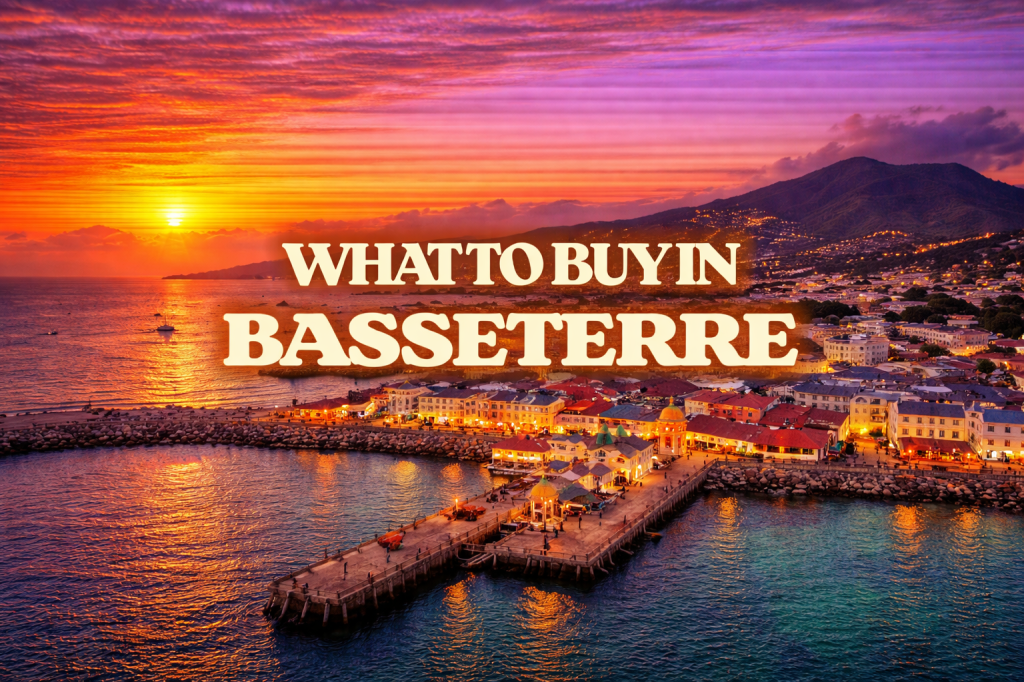
Basseterre is the capital of Saint Kitts and Nevis and a convenient place to pick up island-made souvenirs. Walking the city and its markets delivers many small, packable items that show local flavors and craft skills.
This guide covers souvenirs you’ll find across Basseterre, not a single street or shop. The suggestions focus on items made locally or tied closely to the island, with practical tips for judging quality and packing.
1. Bottled local rum
• Why it’s worth buying: Rum is a central Caribbean product with local distillation traditions. A bottle holds a taste of regional flavors and aging styles.
• Where to look: Pick bottles up at open-air markets or liquor counters near the waterfront.
• Price range: $15–$60
• How to spot a good one: Look for age statements or clear notes about production on the label.
• Easy-to-pack tip: Wrap the bottle in clothing and place it in the center of your suitcase.
2. Sea salt harvested locally
• Why it’s worth buying: Sea salt reflects local waters and seasoning preferences. Small jars keep freshness and are useful in the kitchen.
• Where to look: Local markets and food stalls often sell sealed packets or jars.
• Price range: $4–$15
• How to spot a good one: Choose jars with simple ingredient lists and a production place listed.
• Easy-to-pack tip: Pack sealed containers in a plastic bag to prevent spillage.
3. Hot pepper sauce
• Why it’s worth buying: Hot sauces show local spice blends and island heat levels. They’re lightweight and give cooking a Caribbean kick.
• Where to look: Find bottled sauces in food halls or market stalls focused on local foods.
• Price range: $3–$12
• How to spot a good one: Prefer sauces with clear ingredient lists and a visible bottling date.
• Easy-to-pack tip: Cushion bottles with soft items and keep them upright if possible.
4. Packaged Kittitian coffee
• Why it’s worth buying: Local coffee captures regional roasting styles and makes a practical gift. Small bags stay fresh for travel.
• Where to look: Look for packaged beans or ground coffee in specialty market stalls.
• Price range: $6–$20
• How to spot a good one: Choose sealed bags with a roast date and origin information.
• Easy-to-pack tip: Put bags in carry-on to avoid crushing and to keep aroma intact.
5. Coconut candy or local sweets
• Why it’s worth buying: Traditional sweets reflect local ingredients and simple techniques. They travel well when vacuum-sealed or in jars.
• Where to look: Seek out packaged treats at central markets or food halls.
• Price range: $5–$20
• How to spot a good one: Prefer items with ingredient lists and clean, intact packaging.
• Easy-to-pack tip: Keep sweets in a cooler part of luggage if they contain coconut oil that could melt.
6. Woven straw bag or hat
• Why it’s worth buying: Handwoven straw items use local plant fibers and practical island skills. They last longer than cheap imitations.
• Where to look: Browse stalls and independent shops selling handicrafts.
• Price range: $20–$80
• How to spot a good one: Check tight, even weave and secure stitching on straps or brims.
• Easy-to-pack tip: Stuff bags or hats with clothing to help them keep their shape.
7. Hand-printed textile or scarf
•Why it’s worth buying: Printed fabrics often show local motifs and are lighter than framed art. Scarves work as gifts or travel accessories.
•Where to look: Find artisans and co-op stalls that sell textiles and printed cloth.
•Price range: $15–$60
•How to spot a good one: Look for consistent printing, clean edges, and natural fibers listed.
•Easy-to-pack tip: Roll textiles tightly to minimize creases and save suitcase space.
8. Small wood carvings
• Why it’s worth buying: Woodwork reflects local materials and carving styles. Small pieces make meaningful, compact keepsakes.
• Where to look: Purchase carved items at markets or from independent craft sellers.
• Price range: $8–$50
• How to spot a good one: Choose carvings with smooth finishes and no loose paint or splinters.
• Easy-to-pack tip: Wrap carvings in soft clothing and place in the center of luggage.
9. Shell or nautical jewelry
• Why it’s worth buying: Jewelry made from shells or small nautical elements highlights coastal craft. Pieces are lightweight and easy to gift.
• Where to look: Small galleries and market stalls sell handmade jewelry.
• Price range: $10–$35
• How to spot a good one: Inspect clasps and stringing; natural shells should be securely mounted.
• Easy-to-pack tip: Keep jewelry in a small hard case or a zip bag inside carry-on.
10. Ceramic mug or small pottery
• Why it’s worth buying: Handmade pottery carries character and daily usefulness. Small mugs or bowls are travel-friendly.
• Where to look: Shop at galleries or independent ceramic studios when available.
• Price range: $12–$45
• How to spot a good one: Check for uniform glaze and soundness—no hairline cracks or chips.
• Easy-to-pack tip: Wrap pottery in clothes and place it in the center of your suitcase.
11. Local spice blends and seafood seasoning
• Why it’s worth buying: Blends capture island flavors and are simple to use at home. They’re small and stable if dry.
• Where to look: Pick up sealed jars and pouches in food halls or central markets.
• Price range: $4–$15
• How to spot a good one: Prefer sealed packaging with ingredient lists and production details.
• Easy-to-pack tip: Place spice packets in a sealed plastic bag to avoid leaks or scent transfer.
12. Art prints or postcards by local artists
• Why it’s worth buying: Prints and postcards are affordable ways to support local artists. They’re flat and easy to pack.
• Where to look: Browse museum shops and galleries for signed prints or cards.
• Price range: $3–$40
• How to spot a good one: Look for artist signature, clear printing, and good paper weight.
• Easy-to-pack tip: Slide prints between cardboard and keep them flat in carry-on.
Quick buying tips for Basseterre
- Carry small bills; some market sellers prefer cash over cards.
- Haggling is sometimes acceptable at market stalls, keep offers polite.
- Wrap fragile items in clothing and use a middle suitcase layer for cushioning.
- Ask at shops about shipping services if you need bulky items sent home.
- Look for “made locally” tags, maker names, or listed production locations on labels.
- Pack liquids in sealed plastic and declare alcohol according to airline rules.
Where to shop in Basseterre
Shopping spreads from the waterfront into the historic center, with markets, small shops, and a few museum or gallery outlets. Waterfront areas and the central market are practical starting points for food items, crafts, and small artworks.
- Port Zante waterfront for duty-free items and packaged foods near the harbor.
- Basseterre Public Market for fresh ingredients, spices, and local food products.
- Independence Square and surrounding streets for small craft stalls and street vendors.
- Museum shops for curated prints, books, and higher-quality souvenirs.
- Waterfront and cruise terminal area for quick buys like rum bottles and packaged sweets.
- Seasonal craft fairs and island festivals for direct purchases from makers and artisans.
- Small galleries scattered in the town center for prints, ceramics, and signed work.
What to skip (common tourist traps)
- Cheap plastic trinkets labeled “authentic” with no maker or origin listed; they age poorly.
- Items claiming to be rare antiques without documentation; provenance matters for value.
- Mass-produced “handmade” goods shipped in from overseas rather than made locally.
- Overloaded bottles of unknown liquor with no labels or production information.
- Fragile ceramics sold without proper packaging at low prices; they may arrive damaged.
- Jewelry advertised as “natural shell” that is actually dyed or heavily treated.
If you only buy three things
Bottled local rum — represents regional flavor and stores well.
Sea salt or spice blend — brings island taste to your kitchen.
Art print or postcard — supports artists and is easy to pack.
FAQ
-
What is Basseterre known for making?
Basseterre is a hub where island products are sold, such as rum, spice blends, and woven items. Crafts, small artworks, and packaged food products are commonly available in the city. -
What are the best edible souvenirs from Basseterre?
Packaged rum, local spice blends, bottled hot sauce, coffee, and sealed sweets are good choices. Pick items with clear labels and production dates for best freshness. -
Are souvenirs expensive in Basseterre?
Prices vary; small food items and postcards are inexpensive while handmade crafts or larger textiles cost more. Expect to pay premium prices at tourist-focused stalls compared with local market vendors. -
What is the easiest souvenir to pack from Basseterre?
Flat items like prints and postcards, small spice jars, and packaged sweets are easiest to pack. These items fit in carry-on and are less likely to break. -
How do I know if something is truly local?
Check for a maker’s name, a production location on the label, or a co-op tag showing local origin. Ask sellers who made the item and how it was produced for clearer provenance.
Tip: Save your receipts, and keep fragile items in your carry-on.
About the Author
Colin is the founder of SouvenirsIdeas.com and a passionate traveller with a soft spot for ceramics, markets, and food tours. He writes practical, first-hand guides to help you bring home souvenirs that actually mean something — not just more clutter!
Let us know in the comments if this has been useful or if you’ve got suggestions we can include

 Souvenir Ideas to Take Home from Every Country and City
Leave a comment