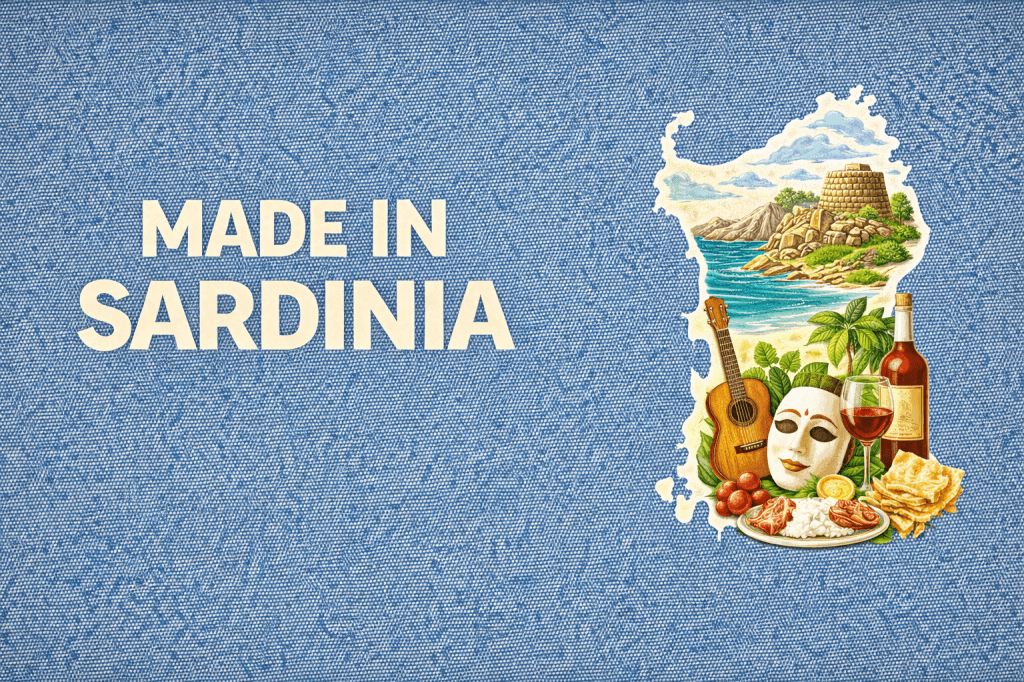
Sardinia scents of sun-baked maquis, salt-bright sea air and the smokey tang of wood-fired smokehouses. It’s low stone nuraghi puncture the hills and shepherds still move flocks across granite pastures.
From cork oak stands and thyme-covered ridges to the coral-rich coves of the northwest, local materials such as sheeps’ milk, myrtle berries, Mediterranean coral, hand-spun wool and cork bark, shape a distinctive artisanal language you can taste, wear and play.
Here are the best things truly made in Sardinia, products that reflect its heritage, creativity, and everyday life. Made in Sardinia, these items carry place, process and stories worth taking home.
1. Pecorino Sardo (including Fiore Sardo)
Why it’s made here:
Sheep have grazed Sardinia’s rocky pastures for millennia; the island’s native breeds and aromatic herbs eaten on the hills give the milk a characteristic intensity. Fiore Sardo, a smoked, sheep’s-milk cheese, and the fresher Pecorino Sardo PDO are expressions of that pastoral economy.
What to look for:
Look for the PDO (Protected Designation of Origin) stamp for authenticity and ask whether the wheel is smoked (Fiore Sardo) or aged (stagionato). A rich, nutty aroma and slightly grainy texture are good signs.
Price bracket (2025):
€8–€40 per wheel or portion depending on age and size.
Where to find it:
Local markets, dairy cooperatives, farm shops in Barbagia and Montiferru, and the deli counters of Cagliari and Sassari.
2. Pane Carasau
Why it’s made here:
This wafer-thin, paper-crisp bread was invented for shepherds who needed a loaf that kept well on long transhumance journeys. Its longevity and crunch owe to simple durum wheat and a traditional baking technique.
What to look for:
Authentic carasau is ultra-thin, slightly browned, and breaks with a crisp snap; avoid overly oily or machine-sealed varieties that lack texture.
Price bracket (2025):
€1–€6 per package for artisanal batches.
Where to find it:
Bakery stalls at markets, artisanal bakeries in inland towns, and village panetterias.
3. Bottarga di Muggine (cured mullet roe)
Why it’s made here:
Sardinia’s lagoons and coastal fisheries — notably around Cabras and Oristano — have long produced mullet. Salt-curing and sun‑ageing roe concentrates the sea’s flavor into a treasured delicacy.
What to look for:
Firm, slightly oily slabs with a deep amber color; higher-quality bottarga will be dense and aromatic, often sold vacuum-packed with origin noted.
Price bracket (2025):
€20–€150 (small pieces to premium slabs by weight).
Where to find it:
Fish markets, artisanal delis, lagoon towns near Oristano and specialty counters in coastal fishmongers.
4. Mirto (myrtle liqueur)
Why it’s made here:
Myrtle shrubs are everywhere on Sardinia’s coasts; their berries have been macerated in spirits for generations to make a fragrant, bittersweet digestif associated with island hospitality.
What to look for:
Deep purple (berry) or pale gold (leaf) versions; check for artisanal distillation notes and small-batch labels rather than mass-produced supermarket brands.
Price bracket (2025):
€10–€35 per 500 ml bottle.
Where to find it:
Bar counters, winery and distillery shops, local markets and cooperative cellars across the island.
5. Cannonau di Sardegna (red wine)
Why it’s made here:
Cannonau (Grenache) thrives in Sardinia’s warm, sun-drenched interior where poor soils concentrate flavors; the grape is linked to traditional viticulture and the island’s long-lived communities.
What to look for:
Look for DOC/DOCG labeling (Cannonau di Sardegna DOC) and vineyards’ names; tannic, fruity wine with herbal Mediterranean notes signals regional character.
Price bracket (2025):
€8–€40 for everyday bottles; reserve wines €40+.
Where to find it:
Wineries in the Ogliastra, Nuoro and the Campidano plains, wine shops and enotecas, and local agriturismi.
6. Vermentino di Gallura (white wine, DOCG)
Why it’s made here:
Vermentino excels in the granite soils and sea breezes of Gallura; the resulting wines are aromatic, saline and crisp — a true coastal expression.
What to look for:
The DOCG seal (Vermentino di Gallura DOCG) ensures region-specific production; bright acidity and mineral notes indicate a good bottle.
Price bracket (2025):
€10–€30 for quality bottles.
Where to find it:
Gallura wineries, Olbia and Costa Smeralda enotecas, and wine fairs.
7. Fregola Sarda
Why it’s made here:
This toasted semolina pearl pasta reflects local grain production and traditional hand-rolling methods; frying or toasting gives fregola its nutty, slightly smoky character.
What to look for:
Hand-rolled, irregular beads with a warm toasted aroma; check for artisanal labels rather than industrial pellet shapes.
Price bracket (2025):
€3–€8 per 500 g package.
Where to find it:
Grocery markets, artisan food stalls, and producers’ shops across the island.
8. Sardinian Honey (thyme, arbutus, eucalyptus)
Why it’s made here:
The island’s maquis — thyme, rosemary, and Mediterranean shrubs — gives bees a distinctive forage; mountain and coastal hives produce varietal honeys prized for flavor and medicinal qualities.
What to look for:
Single-flower labeling (e.g., thyme, eucalyptus) and transparent origin. Crystallization patterns and aroma help distinguish genuine raw honey.
Price bracket (2025):
€6–€25 per jar depending on rarity.
Where to find it:
Local markets, beekeeper cooperatives, agriturismi and specialty food shops.
9. Corallo di Alghero (Alghero coral jewelry)
Why it’s made here:
Alghero’s coral beds have long supplied red Mediterranean coral; local goldsmiths transform coral into necklaces and cameos, combining Catalan and Sardinian influences.
What to look for:
Deep, uniform red color and classic mounting styles from Alghero; ask for provenance certificates and avoid impossibly cheap pieces.
Price bracket (2025):
€100–€2,000+ depending on quality and weight.
Where to find it:
Jewellery workshops and galleries in Alghero’s historic center and certified artisan stalls.
10. Filigrana sarda (Sardinian filigree silver)
Why it’s made here:
Sardinian filigree — delicate silver worked into lace-like motifs — is a centuries-old island craft, often used in traditional costume and ecclesiastical pieces.
What to look for:
Look for hand-soldered fine-wire patterns, hallmark stamps on silver, and motifs tied to local iconography (cornices, hearts, crosses).
Price bracket (2025):
€40–€600 depending on complexity and materials.
Where to find it:
Workshops in Castelsardo and coastal artisan quarters, museum shops, and craft fairs.
11. Samugheo handwoven textiles (rugs, tapestries, belts)
Why it’s made here:
Samugheo in central Sardinia is known for its wool-weaving tradition — geometric motifs and natural dyes reflect pastoral life and clan identities.
What to look for:
Hand-spun wool, natural dye irregularities, tight warp-and-weft, and signature Samugheo patterns; machine-made imitations are too uniform.
Price bracket (2025):
€30 for small pieces to €300+ for large rugs or tapestries.
Where to find it:
Weaving cooperatives in Samugheo, craft markets, and cultural workshops in Nuoro and Oristano.
12. Launeddas (traditional reed instruments)
Why it’s made here:
Launeddas — three-channeled reed pipes played with circular breathing — are uniquely Sardinian and accompany folk dances and ritual celebrations; makers use local reeds and seasoned wood.
What to look for:
Hand-carved mouthpieces, reed quality, and tuning by known makers; ask for demonstrations and maker attribution.
Price bracket (2025):
€300–€2,000 for handcrafted instruments depending on maker and tuning.
Where to find it:
Ethnographic museums, luthiers and craft workshops in Nuoro and Barbagia, and at folk festivals.
13. Cork crafts (bags, coasters, textiles)
Why it’s made here:
Sardinia is one of Europe’s main cork producers; artisans transform resilient cork bark into lightweight, water-resistant goods with a modern aesthetic.
What to look for:
Natural cork grain, stitched seams, and eco-friendly labels; handmade finishing differs from glued factory veneers.
Price bracket (2025):
€5–€200 (small accessories to designer bags).
Where to find it:
Cork cooperatives, artisan markets, and boutique workshops in rural cork-harvesting areas.
Local Makers & Traditions
Sardinia’s craft heritage is rooted in pastoralism, coastal fishing and island trade.
Centuries-old techniques from the smoked cheeses of shepherding valleys to the filigree silver of Castelsardo and the bobbin-lace and weaving of inland towns, persist in family workshops and cooperatives.
Coastal towns like Alghero developed coral-working traditions through Mediterranean commerce, while Gallura’s vineyards and the nuraghe-rich interior shaped wine and woodcraft practices. Many villages host seasonal fairs where generations of makers sell directly and demonstrate techniques.
Workshops, cooperative dairies, and family-staffed distilleries are common; craftsmen often learn by apprenticeship and maintain regional motifs and methods. Look for cultural associations and museum-run ateliers that both preserve and teach these skills.
How to Spot Genuine Local Products
- Check provenance labels and protected-status stamps: PDO/PGI for cheeses, DOC/DOCG for wines (e.g., Pecorino Sardo PDO, Vermentino di Gallura DOCG, Cannonau DOC).
- Inspect materials closely: natural cork grain, hand-spun wool, uneven hand-rolled fregola, and tool marks on silver filigree are signs of handcraft.
- Ask for a maker’s name or certificate for coral and filigree pieces; established workshops will provide attribution.
- Beware of uniformity and perfect symmetry — mass-produced copies are too regular. Plastic packaging, suspiciously low prices and overseas-brand tags often indicate imports.
- Taste and smell: real mirto, fresh pecorino and artisanal bottarga have distinct aromas and textures absent in industrial imitations.
Where to Buy Made-in-Sardinia Goods
- Local markets and weekend artisan fairs across towns like Cagliari, Sassari and Alghero.
- Cooperative dairies, agriturismi and winery cellars for cheeses, wines and mirto.
- Museum shops and cultural centers that partner with authenticated artisans.
- Historic town centers and artisan quarters (Castelsardo, Samugheo, Alghero).
- Certified airport stores and regional food boutiques for sealed, transport-friendly products.
FAQs
Q: Are products in Sardinia expensive?
A: Prices range widely — staple foods like pane carasau and fregola are inexpensive, while coral jewelry, aged pecorino and handcrafted launeddas can be pricey; buying directly from makers often offers better value.
Q: How can I tell if something is authentically made here?
A: Look for regional certifications (PDO, DOCG), maker attribution, hallmarks on metalwork, natural-material evidence (cork grain, hand-spun wool) and purchase from known artisans or cooperatives.
Q: What is the best made-in-Sardinia gift to bring home?
A: Choose something that travels well and tells a story: a vacuum-packed portion of bottarga, a bottle of mirto or Vermentino, a piece of filigree jewelry or a small Samugheo woven mat — each is distinctively Sardinian.
Explore local workshops, markets and cellars to find authentic examples of products truly Made in Sardinia.
Let me know in the comments if you have any other top ‘what to buy’ ideas!
About the Author
Colin is the founder of SouvenirsIdeas.com and a passionate traveller with a soft spot for ceramics, markets, and food tours. He writes practical, first-hand guides to help you bring home souvenirs that actually mean something — not just more clutter!


 Souvenir Ideas to Take Home from Every Country and City
Leave a comment