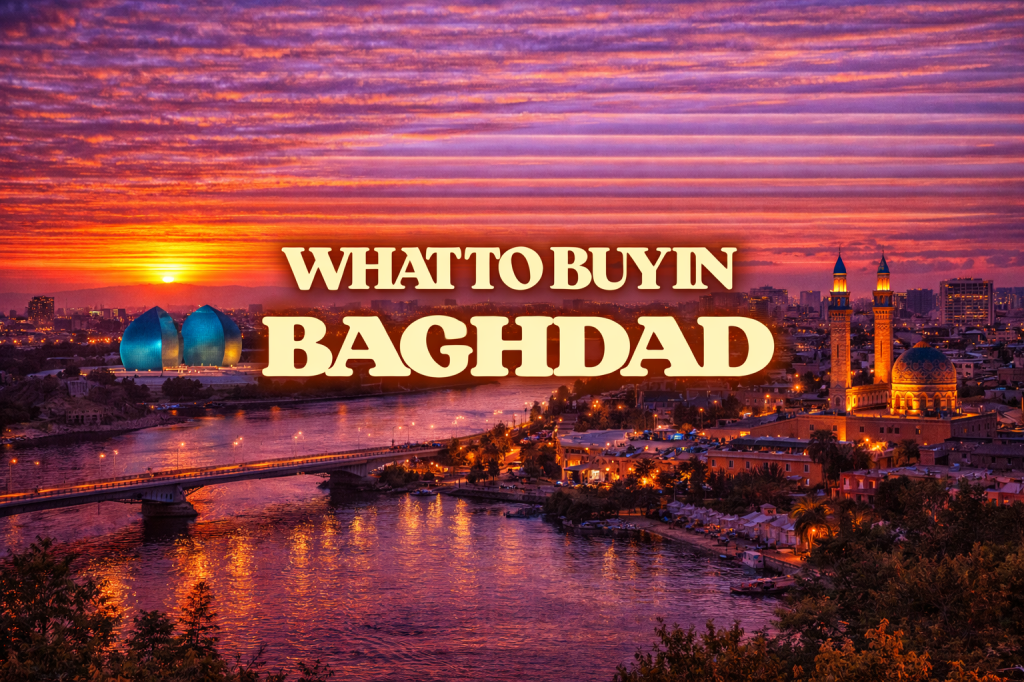
Baghdad has a long craft and food tradition, and many everyday items make better souvenirs than glossy mass-produced gifts. This guide points to things you can actually buy across the city, not a single street or shop.
The picks below focus on locally made or regionally meaningful items that travel well. I explain where to find them, how to judge quality, and simple packing tips.
1. Iraqi dates
• Why it’s worth buying: Dates are a staple food with clear local varieties and flavors. They travel well and are a practical taste of the region.
• Where to look: Often sold at food halls or central market stalls.
• Price range: $5–$25
• How to spot a good one: Choose vacuum-sealed packs with a visible harvest or packaging date.
• Easy-to-pack tip: Keep in their sealed bag and pack among soft clothing to prevent crushing.
2. Sumac spice
• Why it’s worth buying: Sumac gives a lemony, tart flavor typical of local cooking. It’s lightweight and useful back home.
• Where to look: Pick it up in open-air markets with spice stalls.
• Price range: $3–$12
• How to spot a good one: Look for deep red granules and a clean, dry aroma from a small sample packet.
• Easy-to-pack tip: Put the spice jar in a sealed plastic bag to stop spills.
3. Pomegranate molasses
• Why it’s worth buying: A common syrup for dressings and marinades, it captures a local taste in one bottle. It lasts well when sealed.
• Where to look: Available at food halls and packaged food counters.
• Price range: $4–$15
• How to spot a good one: Prefer dark, thick bottles with a clear ingredient list and no additives.
• Easy-to-pack tip: Wrap the bottle in clothes and place in checked luggage, or ship home.
4. Small decorated tea glasses
• Why it’s worth buying: Slim tea glasses reflect daily tea culture and make a compact souvenir. They add character without taking much space.
• Where to look: Found in independent shops selling household goods.
• Price range: $5–$20 (set)
• How to spot a good one: Check for smooth rims and consistent glazing or etching on each glass.
• Easy-to-pack tip: Nest glasses in socks or scarves, then put in a hard-sided carry-on.
5. Hand-painted ceramics (small plates or bowls)
• Why it’s worth buying: Local ceramics show regional colors and glazing techniques. Small pieces are useful and decorative.
• Where to look: Browse independent shops that specialize in pottery and homeware.
• Price range: $12–$60
• How to spot a good one: Tap lightly—clear ringing sound and even glaze indicate good firing.
• Easy-to-pack tip: Pack between folded garments and label as fragile for baggage handlers.
6. Embroidered scarves or shawls
• Why it’s worth buying: Hand-stitched textiles carry visible craftwork and wear well in many climates. They are a wearable reminder.
• Where to look: See galleries and cultural centers that promote textile makers.
• Price range: $10–$70
• How to spot a good one: Inspect stitching density and thread quality; machine-made stitching is overly regular.
• Easy-to-pack tip: Roll scarves tightly to save space and avoid creasing.
7. Small leather coin purse or wallet
• Why it’s worth buying: Leather goods combine daily use with local finishing techniques. Small wallets are practical and light.
• Where to look: Look in co-ops that support local leather workers.
• Price range: $8–$40
• How to spot a good one: Check stitching, smell the leather, and test the zipper or closure.
• Easy-to-pack tip: Insert a paper roll inside to keep shape during travel.
8. Copper or brass serving tray (small)
• Why it’s worth buying: Metal trays show hammered or chased work common in local metalcraft. Small trays make attractive serving pieces.
• Where to look: Find them in galleries that feature traditional metalwork.
• Price range: $20–$100
• How to spot a good one: Look for visible hammer marks and even weight; plated cheap pieces feel too light.
• Easy-to-pack tip: Wrap metal in cloth and pack near heavier items to avoid bending.
9. Handmade filigree-style jewelry (small pieces)
• Why it’s worth buying: Jewelry can show local techniques without being overly bulky. Small pieces travel easily.
• Where to look: Offered through artisan co-ops or craft stalls.
• Price range: $15–$120
• How to spot a good one: Check clasps, solder points, and the presence of consistent handcrafted detail.
• Easy-to-pack tip: Keep jewelry in a small hard case in your carry-on.
10. Calligraphy prints or small paper artworks
• Why it’s worth buying: Calligraphy reflects local visual language and makes lightweight wall art. Paper pieces are easy to fold or roll.
• Where to look: Available at galleries and book market stalls.
• Price range: $8–$50
• How to spot a good one: Choose good-quality paper and clear ink lines; originals will show hand brushwork.
• Easy-to-pack tip: Roll prints in a stiff tube to prevent creases.
11. Packaged traditional sweets (small boxes)
• Why it’s worth buying: Sweets preserve local recipes and are an easy, shareable taste of the city. Choose sealed packs for travel safety.
• Where to look: Look in food markets and covered market stalls.
• Price range: $4–$30
• How to spot a good one: Prefer airtight packaging and clear ingredient information for freshness.
• Easy-to-pack tip: Keep sealed boxes upright and cushion them among clothing.
12. Small inlaid wood box or carved souvenir
• Why it’s worth buying: Inlaid boxes show woodworking skills and store small items at home. Compact sizes pack easily.
• Where to look: Sold in markets and some independent craft shops.
• Price range: $10–$60
• How to spot a good one: Inspect joints and inlay edges for tight fit and solid glue work.
• Easy-to-pack tip: Wrap corners with soft clothing to protect delicate inlays.
Quick buying tips for Baghdad
• Carry a mix of cash and card; some stalls accept only cash.
• Bargaining is common in markets; offer a respectful lower price and listen.
• Wrap fragile items in soft clothing and label them fragile when checking.
• Many shops offer shipping for bulky purchases; ask about insured delivery options.
• Look for “made locally” clues: artisan signatures, irregularities, and material provenance.
• Pack foods and liquids in checked baggage or ship them; adhere to airline rules.
Where to shop in Baghdad
Shopping options spread across different parts of the city, from book streets to market halls. Historic streets, central markets, and museum shops each tend to specialize in certain types of souvenirs.
• Al-Mutanabbi Street for printed calligraphy, book stalls, and paper artworks.
• Central market halls for spices, dates, packaged foods, and sweets.
• Old city souks for textiles, leather goods, and metal trays.
• Museum shops inside cultural institutions for curated ceramics and small design objects.
• Riverfront bazaars along the Tigris for household brass and everyday craft items.
• Seasonal handicraft fairs for co-op-made jewelry and textiles from local makers.
• Historic districts near major mosques for embroidered textiles and ritual objects.
• Covered market alleys for small packaged goods and traditional snacks.
What to skip (common tourist traps)
• Low-cost “antique” labeled pieces that are machine-made and lack real patina.
• Plastic or resin trinkets sold near tourist sites that imitate traditional crafts.
• Food without clear sealing or expiry information; freshness and safety matters.
• Items marked as “silver” without hallmarks; plating is common and cheaper.
• Large carpets offered at high prices without documentation of weave or origin.
• Overpriced souvenirs near major landmarks where prices target visitors.
If you only buy three things
Iraqi dates — they travel well and are instantly recognizable as a local taste.
Sumac spice — compact, versatile seasoning that changes familiar recipes.
Calligraphy print — lightweight art that represents local visual culture.
FAQ
-
What is Baghdad known for making?
Baghdad has a long tradition of metalwork, textiles, ceramics, and calligraphic arts. Local markets also trade spices, sweets, and other foodstuffs that reflect regional cuisine. -
What are the best edible souvenirs from Baghdad?
Packaged dates, dried spices like sumac, and sealed pomegranate molasses are among the easiest to bring home. Choose properly sealed products with clear ingredient lists and expiry dates. -
Are souvenirs expensive in Baghdad?
Prices vary by item and where you buy. Small goods and spices are generally affordable, while handcrafted metalwork, ceramics, and larger textiles cost more. -
What is the easiest souvenir to pack from Baghdad?
Spices, sealed dates, and small paper prints are the simplest to pack and carry. They are light, compact, and usually fit in carry-on luggage. -
How do I know if something is truly local?
Ask about the maker, check for handwork irregularities, and look for material clues like natural dye or hand-stitching. Co-op labels or a seller’s willingness to explain the process are good signs.
Tip: Save your receipts, and keep fragile items in your carry-on.
About the Author
Colin is the founder of SouvenirsIdeas.com and a passionate traveller with a soft spot for ceramics, markets, and food tours. He writes practical, first-hand guides to help you bring home souvenirs that actually mean something — not just more clutter!
Let us know in the comments if this has been useful or if you’ve got suggestions we can include
 Souvenir Ideas to Take Home from Every Country and City
Leave a comment