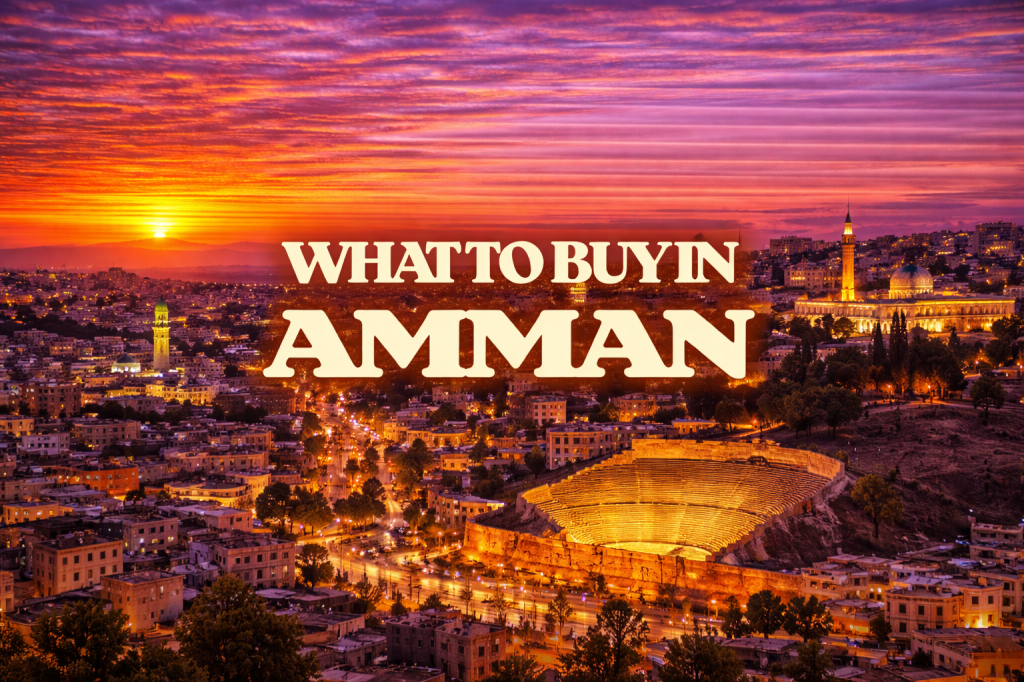
Amman mixes old and new styles of craft and food. You can find small, well-made items that reflect local ingredients, techniques, and designs without hunting a single shopping street. This guide covers things commonly available across the city, not one store.
Whether you want something edible or a small craft, focus on pieces that travel well and show clear local origins. Each entry explains where to look, how to judge quality, and how to pack it for the trip home.
1. Olive oil
• Why it’s worth buying: Jordanian olive oil is often cold-pressed and used daily in local cooking. It reflects the region’s agriculture and tastes fresher than many supermarket imports.
• Where to look: food halls.
• Price range: $8–$30
• How to spot a good one: Choose bottles labeled first cold-pressed with a recent harvest date.
• Easy-to-pack tip: Put the sealed bottle in a plastic bag and wrap it in clothes inside checked luggage.
2. Za’atar blend
• Why it’s worth buying: Za’atar is a local herb-and-spice mix used on bread and salads. It’s lightweight and immediately useful at home.
• Where to look: markets.
• Price range: $4–$15
• How to spot a good one: Look for a mix with visible thyme, sumac, and sesame seeds, not just powder.
• Easy-to-pack tip: Store in a sealed tin or vacuum pouch to protect flavor and prevent spills.
3. Arabic coffee (ground or beans)
• Why it’s worth buying: Jordanian-style coffee is flavored differently than Western roasts and makes a distinctive gift. It stores well and provides a taste memory.
• Where to look: independent shops.
• Price range: $6–$20
• How to spot a good one: Fresh roast date and an aroma of cardamom or light roast notes show quality.
• Easy-to-pack tip: Keep beans whole and sealed; grind at home for best freshness.
4. Packaged sweets (halva, ma’amoul)
• Why it’s worth buying: Traditional sweets reflect local recipes and make convenient, sharable gifts. They often have stable shelf life if packaged.
• Where to look: markets.
• Price range: $5–$25
• How to spot a good one: Check ingredient lists and look for minimal preservatives and clear packaging dates.
• Easy-to-pack tip: Use a box or plastic container inside luggage to avoid crushing.
5. Hand-painted ceramics (small plates or cups)
• Why it’s worth buying: Ceramics show regional patterns and are made by local potters using traditional glazes. Small pieces add color without too much weight.
• Where to look: galleries.
• Price range: $10–$60
• How to spot a good one: Inspect the glaze for even coverage and a stable base without cracks.
• Easy-to-pack tip: Wrap each piece in clothing and place in the center of a suitcase for cushioning.
6. Embroidered textiles or keffiyeh
• Why it’s worth buying: Hand embroidery and woven scarves carry local motifs and practical use as scarves or wall hangings. Fabrics pack down well for travel.
• Where to look: independent shops.
• Price range: $8–$50
• How to spot a good one: Look for tight, even stitches and natural fiber labels like cotton or wool.
• Easy-to-pack tip: Roll textiles to minimize creases and save space in a soft-sided bag.
7. Handmade jewelry
• Why it’s worth buying: Small silver or beaded pieces reflect regional styles and make lightweight keepsakes. They’re easy to wear and gift-ready.
• Where to look: galleries.
• Price range: $15–$120
• How to spot a good one: Check metal stamps for silver content and examine clasps for secure fittings.
• Easy-to-pack tip: Store jewelry in a small pouch or pillbox to avoid tangles.
8. Leather goods (wallets, small bags)
• Why it’s worth buying: Local leatherwork can be practical and lasts longer than cheap imitations. Small items balance authenticity and portability.
• Where to look: co-ops.
• Price range: $20–$80
• How to spot a good one: Smell and touch the leather; genuine pieces feel supple and have natural grain.
• Easy-to-pack tip: Stuff items with tissue or socks to keep shape while packing.
9. Mosaic prints or small tile replicas
• Why it’s worth buying: Prints and mini tiles reference regional mosaic traditions without the weight of full tiles. They make simple, framed souvenirs.
• Where to look: covered markets.
• Price range: $10–$40
• How to spot a good one: Choose prints on heavy paper or tiles with clear, crisp patterns and sealed surfaces.
• Easy-to-pack tip: Carry prints flat in a folder or wrap tiles individually in bubble wrap.
10. Small brass or copper ornaments
• Why it’s worth buying: Miniature dallah shapes or stamped brass pieces echo local metalworking traditions. Small ornaments are decorative and durable.
• Where to look: co-ops.
• Price range: $12–$70
• How to spot a good one: Look for solid joins and consistent patina rather than loose plating.
• Easy-to-pack tip: Wrap metal items in soft cloth to prevent scratching other items in your bag.
11. Olive-oil soap and scented skincare
• Why it’s worth buying: Natural soaps and balms use local olive oil and herbs and are easy to gift. They’re smaller than many craft items and avoid breakage.
• Where to look: food halls.
• Price range: $4–$25
• How to spot a good one: Prefer products listing olive oil high in the ingredient list and few artificial additives.
• Easy-to-pack tip: Keep bars in sealed plastic to prevent residue on clothing.
12. Arabic calligraphy prints or stationery
• Why it’s worth buying: Calligraphy pieces make distinctive, lightweight art and practical stationery keepsakes. They show local design without heavy weight.
• Where to look: independent shops.
• Price range: $6–$35
• How to spot a good one: Look for clear printing, artist attribution, or hand-signed pieces for authenticity.
• Easy-to-pack tip: Slip prints into a rigid folder or tube to avoid folding.
Quick buying tips for Amman
• Carry some cash for small stalls; cards work at larger shops and galleries.
• Try gentle haggling at markets; keep offers polite and start below the asking price.
• Wrap fragile ceramics in clothing when packing; use carry-on for very delicate pieces.
• Many shops can ship larger purchases home; confirm costs and delivery times before buying.
• Look for ‘made locally’ tags, artisan signatures, or labels listing local materials and origin.
• Pack foods and liquids according to airline rules; sealed containers often must go in checked luggage.
Where to shop in Amman
Shopping is spread across older shopping streets, modern commercial areas, and museum or craft centers. Each area tends to specialize: foodstuffs and spices in markets, design objects in galleries, and everyday crafts in street shops.
- Downtown around the Roman Theatre and Citadel for spices, sweets, and brassware in long-standing market lanes.
- Jabal Amman and Rainbow Street for independent boutiques, contemporary crafts, and small galleries.
- The city’s covered souks for packaged foods, ceramics, and everyday textiles sold by weight or package.
- Museum shops at cultural museums for books, prints, and responsibly made design objects.
- Seasonal open-air craft fairs and weekend markets for direct purchases from makers.
- New commercial districts and food halls for boutique food products, artisanal coffee, and packaged gifts.
- Co-op stalls and cultural centers where you can often meet cooperative artisans and see production details.
What to skip (common tourist traps)
- Mass-produced ‘antique’ brass items labeled as vintage; poor metalwork and thin plating.
- Perfume oils sold without ingredient lists or clear origin; may be mixed or low-quality.
- Cheap leather labeled as real without texture or smell; often bonded or synthetic.
- Jewelry lacking metal stamps or firm clasps; risk of discoloration and breakage.
- Packaged foods with no ingredient list or unclear packaging dates; freshness matters.
- Large, heavy ceramics with thin glaze or visible cracks; difficult and risky to transport.
If you only buy three things
Olive oil — It represents local agriculture and is useful at home.
Za’atar blend — Lightweight seasoning that immediately changes your cooking.
Hand-painted ceramic cup — Small, handmade, and clearly tied to local craft traditions.
FAQ
What is Amman known for making?
Amman and the surrounding region are known for food products like olive oil and spice blends, as well as traditional crafts such as embroidered textiles and metalwork. The city also supports contemporary makers who produce prints, ceramics, and jewelry.
What are the best edible souvenirs from Amman?
Olive oil, za’atar, locally roasted coffee, and packaged sweets are reliable choices. Pick sealed packages with ingredient lists and recent dates for best results.
Are souvenirs expensive in Amman?
Prices vary widely; markets and co-ops offer affordable options while galleries and museum shops are pricier. Bargaining can lower costs in market settings, but displayed prices in galleries are usually fixed.
What is the easiest souvenir to pack from Amman?
Spices, small prints, jewelry, and olive-oil soaps are among the easiest to pack and carry home. These items are lightweight, less fragile, and usually fit in carry-on luggage.
How do I know if something is truly local?
Ask the seller where the item was made and for maker information or labels. Look for artisan signatures, ‘made locally’ tags, and material lists that match regional traditions.
Tip: Save your receipts, and keep fragile items in your carry-on.
About the Author
Colin is the founder of SouvenirsIdeas.com and a passionate traveller with a soft spot for ceramics, markets, and food tours. He writes practical, first-hand guides to help you bring home souvenirs that actually mean something — not just more clutter!
Let us know in the comments if this has been useful or if you’ve got suggestions we can include

 Souvenir Ideas to Take Home from Every Country and City
Leave a comment