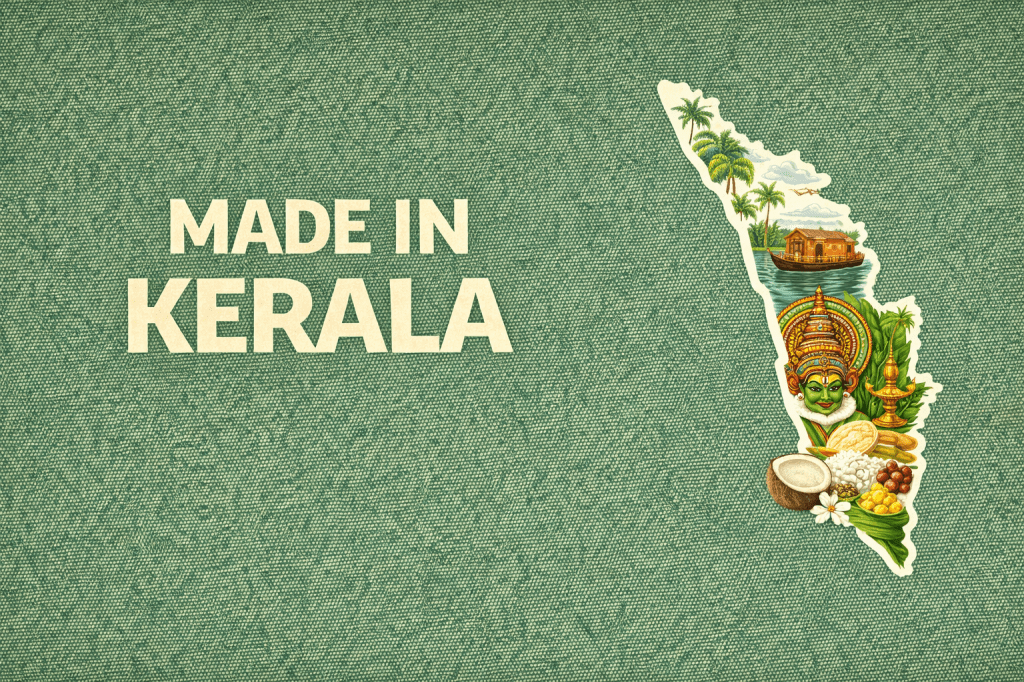
Kerala unfurls as a tapestry of backwaters, coconut groves, misty tea gardens and bustling spice bazaars, a coastal, tropical landscape that has shaped the island-state’s crafts.
From coir spun on family looms in Alappuzha to temple metalwork hammered in inland villages, the raw materials and rhythms of daily life are woven into every handmade object here.
Here are the best things truly Made in Kerala, products that reflect its heritage, creativity, and everyday life.
1. Kasavu Saree (and Mundu)
Why it’s made here: Kasavu — handwoven cotton with a distinctive gold or zari border — grew from Kerala’s temple and festival traditions. The state’s wet climate suits cotton cultivation and its long-standing handloom communities perfected the plain-weave cloth and the technique for attaching the gleaming border.
What to look for: Even, handloom weave with a soft drape; real zari will have a warm, slightly muted sheen (not plastic glitter). Look for the unmistakable narrow golden border and hand-stitched hem; machine-made dupes often have printed or glued borders.
Price bracket (2025): INR 1,200–25,000 (USD ~15–300) depending on yarn quality and zari content.
Where to find it: State handloom cooperatives, weaver villages around Palakkad and Chendamangalam, and traditional shops in Thrissur and Fort Kochi.
2. Aranmula Kannadi (metal mirror)
Why it’s made here: Forged in Aranmula using a rare metallurgical finishing process, these polished metal mirrors are unique to this part of Pathanamthitta district — a craft tied to temple rituals and specialist smithing knowledge passed down generations.
What to look for: A slightly convex mirror with a deep, warm reflection (not glass). Surface may show fine radial tool marks from polishing; ask where it was made — genuine Aranmula pieces are still hand-formed by artisans.
Price bracket (2025): INR 3,500–30,000 (USD ~45–400) depending on size and finish.
Where to find it: Artisan workshops in Aranmula, select craft fairs and museum shops in Kochi/Thiruvananthapuram.
3. Coir Mats, Ropes and Homewares
Why it’s made here: Kerala’s abundant coconut palms supply the husk fiber that fuels a centuries-old coir industry. The backwater districts — especially Alappuzha — specialize in spinning, weaving and braiding coir into durable goods.
What to look for: Dense, coarse natural fiber, even braiding and tight stitching in mats; avoid products that smell strongly of glue or have visible synthetic fibers.
Price bracket (2025): INR 150–3,500 (USD ~2–45).
Where to find it: Coir cooperatives and production units in Alappuzha, local markets and eco-focused boutiques in beach towns.
4. Nendran Banana Chips
Why it’s made here: The robust Nendran banana is native to Kerala and makes a uniquely thick, crisp chip — a staple snack perfected in household kitchens and small factories across the state.
What to look for: Thick, evenly fried slices with a slightly sweet, plantain flavor; check packaging for maker information and hygiene certification. Freshly packed chips will still smell of coconut oil.
Price bracket (2025): INR 50–300 per pack (USD ~0.65–4).
Where to find it: Local sweet shops, dry goods stalls, airport kiosks and packaged snack counters in cities and towns.
5. Munnar Orthodox Tea
Why it’s made here: The high-elevation plantations of Munnar and Devikulam produce orthodox black tea and specialty small-lot teas thanks to cooler temperatures, mist and well-drained soils that concentrate flavor.
What to look for: Whole-leaf, tightly rolled leaves; fragrant, bright liquor and clear notes (citrus, floral or brisk malt). Avoid generic tea dust blends labelled vaguely as “tea.”
Price bracket (2025): INR 200–1,200 per 250g (USD ~2.50–15).
Where to find it: Tea-estate shops in Munnar, specialty tea merchants in Kochi and boutique hotel shops.
6. Wayanad Coffee (single-origin beans)
Why it’s made here: Wayanad’s red laterite soils and highland climate suit Arabica cultivation; smallholdings and estate roasters produce distinct single-origin beans with forest-forward, fruity notes.
What to look for: Whole beans with farm/estate name and roast date; local roasters often sell small-batch bags with tasting notes. Avoid anonymous supermarket blends.
Price bracket (2025): INR 350–900 per 250g (USD ~4–11).
Where to find it: Wayanad estate shops, farmer co-ops, specialty cafés in Kozhikode and Kochi.
7. Cold‑Pressed Coconut Oil & Coconut-Based Beauty Products
Why it’s made here: Kerala’s coconut abundance fuels traditional oil extraction and modern small-scale cosmetic producers who combine cold-pressed oil with ayurvedic botanicals.
What to look for: Natural aroma, cloudy appearance when cool (unrefined), clear labeling of “cold-pressed” and no chemical additives. For cosmetics, look for small-batch artisan brands and ingredient lists.
Price bracket (2025): INR 150–1,200 (USD ~2–15).
Where to find it: Local oil presses, ayurvedic stores, farmer markets and health-focused boutiques.
8. Palakkad & Chendamangalam Handloom Textiles
Why it’s made here: Kerala’s weaving hubs, like Palakkad and Chendamangalam, preserve distinctive handloom techniques — plain weaves, small motifs and soft cottons suited to the humid climate and ceremonial uses.
What to look for: Handloom irregularities (slight slubs), strong selvage, and hand-block or hand-printed motifs. Ask if the piece is handloom (power-loom copies exist).
Price bracket (2025): INR 300–12,000 (USD ~4–150).
Where to find it: Weaver co-operatives, village workshops, and artisan cluster markets near Palakkad and Ernakulam districts.
9. Brass Lamps, Urulis and Temple Metalware (Nilavilakku)
Why it’s made here: Temple rituals and domestic worship in Kerala have driven a long tradition of brass and bell-metal casting — from the tall nilavilakku lamps to ritual vessels — often made by hereditary metalworker families.
What to look for: Even tooling marks, solid weight and a warm patina; genuine cast brass/brass-alloy pieces will sound slightly hollow when tapped. Beware thin, plated decorative pieces.
Price bracket (2025): INR 500–40,000 (USD ~6–500).
Where to find it: Metal-smith villages, temple towns like Guruvayur, craft bazaars and heritage museum shops.
10. Wooden Carvings and Miniature Snake‑boat Models
Why it’s made here: Kerala’s abundant tropical hardwoods and a tradition of temple ornamentation produced a rich school of woodcarving — from ornate furniture to small-scale models of chundan vallams (snake boats) crafted by coastal artisans.
What to look for: Tight carving detail, natural wood grain, and joinery rather than glued laminates. For boat models, look for hand-applied paint and small tool marks.
Price bracket (2025): INR 250–25,000 (USD ~3–300).
Where to find it: Village workshops in Kollam and Alleppey, coastal craft markets and art galleries.
11. Tholpavakoothu Shadow Puppets & Kathakali Masks
Why it’s made here: Kerala’s performance arts — shadow puppetry (tholpavakoothu) and Kathakali dance-drama — require handcrafted leather puppets and masks. Artisans in Palakkad and nearby pockets preserve these ritual forms.
What to look for: Vegetable-tanned leather for puppets, intricate painted faces with traditional iconography; Kathakali masks should show vivid natural pigments and hand-painted braces.
Price bracket (2025): INR 200–8,000 (USD ~2.50–100).
Where to find it: Cultural centres, performance venues, artist cooperatives and temple festival bazaars.
12. Banana‑fiber Handicrafts and Handmade Paper
Why it’s made here: Banana cultivation produces fiber-rich stems that crafters turn into sustainable textiles, bags and handmade papers — a low-waste tradition aligning with Kerala’s craft ethos.
What to look for: Fibrous texture, visible plant fibers in paper, earthy tones and natural dyes; seams and joints should be hand-stitched or hand-glued.
Price bracket (2025): INR 150–3,000 (USD ~2–40).
Where to find it: Eco-craft workshops, artisan studios in Thrissur and Alappuzha, and fair-trade stalls.
13. Malabar Spice Blends and Single-Spice Packs
Why it’s made here: Kerala long sat at the center of global spice routes; local blends (fish curry powders, meat masalas) and prized single spices — Malabar pepper and green cardamom — are produced, processed and packed by regional mills.
What to look for: Whole pods or whole pepper corns for maximum aroma, clear roast/pack dates, and small-batch labels. Avoid vague “spice mix” packaging with no origin.
Price bracket (2025): INR 100–1,500 per pack (USD ~1.25–20).
Where to find it: Spice markets (Thekkady, Kochi), plantation shops, and co-operative spice stores.
14. Nettipattam (Elephant Forehead Ornaments) and Temple Embellishments
Why it’s made here: Ornamental beaded and gilt caparisons for temple elephants are a distinctive Kerala craft tied to festivals like Thrissur Pooram. Skilled artisans weave brass studs, beads and motifs into traditional patterns.
What to look for: Brass studs set into stitched leather or backing, symmetrical bead work and traditional motifs; small decorative versions for homes are more practical and lawful to buy than full ceremonial pieces.
Price bracket (2025): INR 500–30,000 (USD ~6–400) depending on size and materials.
Where to find it: Temple-town craftsmen, festival markets and cultural craft fairs.
Local Makers & Traditions
Kerala’s artisan scene is anchored in family-run workshops, co-operative weaving societies and temple-based guilds.
Townships such as Aranmula, Alappuzha, Palakkad and Munnar each developed specialisms such as metal-mirror polishing, coir weaving, handloom cloth and hill tea respectively. Performance arts like Kathakali and tholpavakoothu have not only shaped costume and prop-making but also sustained leather workers.
Mask painters and puppet-makers who still pass techniques orally from one generation to the next. Seasonal festivals and backwater trade historically kept demand steady, helping artisans refine local techniques rather than adopt industrial shortcuts.
How to Spot Genuine Local Products
- Look for provenance on labels: village or estate names, artisan signatures, cooperative stamps, and harvest/pack dates for foods.
- Inspect materials up close: handloom textiles show slight irregularities and a soft hand; hand-forged metal pieces have tool marks and weight; natural fibers smell and feel different from synthetics.
- Ask about process: genuine makers will describe materials, dye sources (natural vs. chemical) and where the piece was produced.
- Avoid overly glossy perfection: mass-produced imitations often have perfect uniformity, printed “gold” borders, or plastic fittings.
- For spices and foods, prefer whole forms and vacuum-sealed packs from known estates or cooperatives. For performance-related items, confirm ethical sourcing and cultural context before purchase.
Where to Buy Made-in-Kerala Goods
- Local markets and fish-and-spice bazaars (Thekkady, Fort Kochi, Alleppey)
- Weaver cooperatives and handloom emporia in Palakkad and Chendamangalam
- Craft fairs and seasonal festival bazaars (e.g., Thrissur Pooram stalls for traditional metalwork)
- Estate shops in Munnar and Wayanad (tea, coffee, spices)
- Museum and cultural centre shops that curate verified artisan pieces
- Airport shops that stock responsibly sourced regional products and packaged food items
FAQs
Q: Are products in Kerala expensive?
A: Prices vary widely — small food items and coir goods are inexpensive, while handloom sarees, large metal lamps and specialty wood or metalwork can be costly depending on materials and artisan labor.
Q: How can I tell if something is authentically made here?
A: Ask where the raw materials came from, look for artisan or cooperative names on labels, inspect for handcraft marks and irregularities, and buy from reputable village workshops, cooperative stores or cultural centres.
Q: What is the best made-in-Kerala gift to bring home?
A: A small, well-packed jar of single-origin Munnar tea or Wayanad coffee, a pack of whole Malabar spices, or a modest handloom kasavu scarf — each travels well and showcases Kerala’s sensory traditions.
Explore the markets, meet the makers and seek out authentic crafts to fully appreciate what is truly Made in Kerala.
Let me know in the comments if you have any other top ‘what to buy’ ideas!
About the Author
Colin is the founder of SouvenirsIdeas.com and a passionate traveller with a soft spot for ceramics, markets, and food tours. He writes practical, first-hand guides to help you bring home souvenirs that actually mean something — not just more clutter!


 Souvenir Ideas to Take Home from Every Country and City
Leave a comment