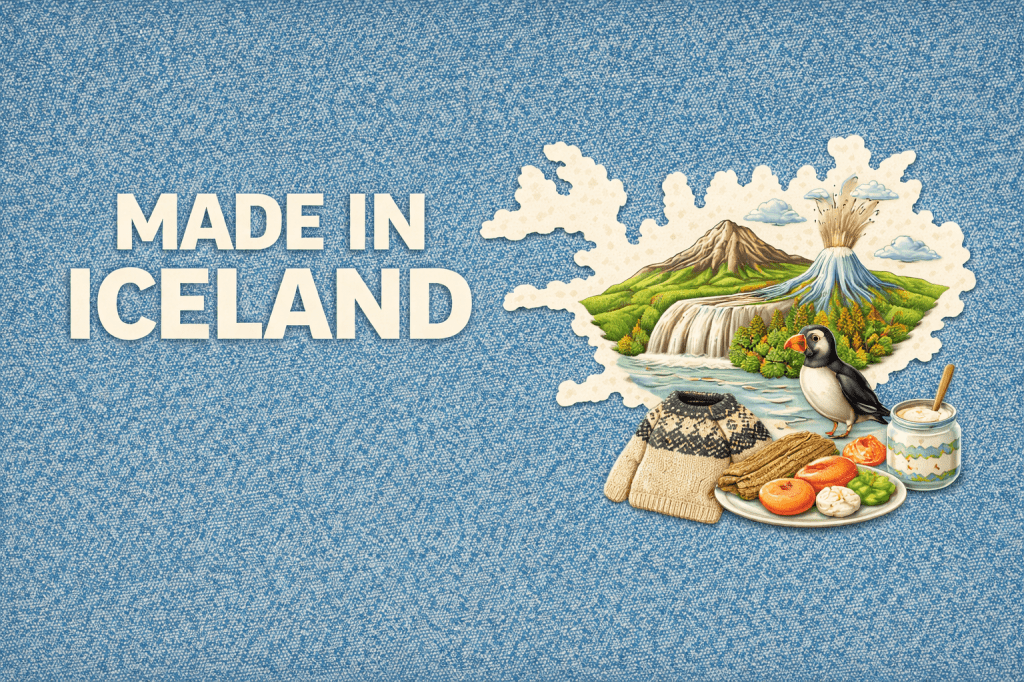
Iceland’s landscape reads like a geologist’s dream—black lava fields, steaming hot springs, wind-swept moors and glaciers that tilt into the sea. Small fishing villages cling to fjords, highland sheep graze on mineral-rich grass, and a long winter has shaped a culture of handcrafting, thrift and inventive use of local materials like wool, basalt and seaweed.
Here are the best things truly Made in Iceland — products that reflect its heritage, creativity, and everyday life.
1. Lopapeysa (Icelandic Wool Sweater)
Why it’s made here:
The lopapeysa grew from Iceland’s unique native sheep and a climate that demands warm, breathable outerwear. Traditional circular yoke patterns echo regional motifs and the dual-layer structure of Icelandic wool (thin protective outer fibers and a soft insulating undercoat) performs naturally in wind and damp.
What to look for:
Seek sweaters made from 100% Icelandic wool or “lopi,” with hand-finished seams and natural, undyed colorways or traditional yoke patterns. Hand-knit items will show slight irregularities and a dense, lightly water-resistant fabric.
Price bracket (2025):
€120–€450
Where to find it:
Knitting cooperatives, rural wool workshops, Reykjavik craft shops and weekend markets.
2. Lopi Yarn (Icelandic Wool Yarn)
Why it’s made here:
Kept for generations, the fleece from Icelandic sheep is carded and spun locally into lopi yarn—airy yet insulating—perfect for cold-weather garments that don’t overheat.
What to look for:
Single-origin or single-breed lopi labelled as 100% Icelandic wool; unspun and lightly processed skeins with a halo typical of lopi fiber.
Price bracket (2025):
€6–€30 per skein
Where to find it:
Wool mills, yarn shops, craft fairs and farm outlets across Iceland.
3. Hand‑knitted Mittens, Hats and Accessories
Why it’s made here:
Hand-knitting is a practised domestic craft in Icelandic homes. Small workshops and community knitters make durable mittens and hats tuned to local weather conditions.
What to look for:
Dense stitches, reinforced palms or thumbs, traditional patterns and natural Icelandic wool. Ask whether the maker used locally spun lopi.
Price bracket (2025):
€20–€150
Where to find it:
Village markets, knitting guild sales, museum craft stalls and independent knitwear ateliers.
4. Wool Blankets and Rya‑style Rugs
Why it’s made here:
Sheep’s wool and Scandinavian weaving traditions meet in heavy blankets and long‑pile rugs that trap warmth and bring color to simple, stone‑walled homes.
What to look for:
Thick hand‑loomed construction, natural lanolin scent, and clearly defined pile in rya-style rugs. Labels stating Icelandic wool or local weaving studio are a plus.
Price bracket (2025):
€150–€900
Where to find it:
Weaving studios, heritage museums, and artisan cooperatives.
5. Fish Leather Goods
Why it’s made here:
With a long fishing heritage, Icelanders turned abundant cod and salmon skins into durable, attractive leather—an ecological way to valorize by-products.
What to look for:
Smooth, thin leather with visible fish scale texture, quality tanning (no fishy odor), and local maker marks. Products include wallets, belts and small bags.
Price bracket (2025):
€60–€350
Where to find it:
Specialist leather studios, design markets and coastal craft shops.
6. Lava and Basalt Jewelry
Why it’s made here:
Volcanic stone is as Icelandic as glaciers—local jewelers set lava rock, basalt and obsidian into minimalist pieces that link jewelry to the island’s geology.
What to look for:
Natural, unpolished volcanic beads or locally cut obsidian, paired with handcrafted silver or braided wool details. Ask about the stone’s origin region.
Price bracket (2025):
€20–€200
Where to find it:
Craft fairs, gallery boutiques and silversmith workshops in towns and tourist routes.
7. Silver and Norse‑inspired Metalwork
Why it’s made here:
Local silversmiths draw on Viking-age motifs and coastal metalworking traditions to create pieces rooted in Icelandic history.
What to look for:
Hallmarks or maker’s stamp, solid silver (925) or mixed-metal work with clear hand-tooling, and motifs that reference local flora, fauna or Norse iconography.
Price bracket (2025):
€50–€600
Where to find it:
Gallery stores, craft festivals and studio shops in Reykjavik and heritage towns.
8. Harðfiskur (Dried Fish)
Why it’s made here:
Dried fish has been an Icelandic staple for centuries—simple preservation methods using wind and cold create a high-protein snack that’s still made in traditional ways.
What to look for:
Clean, white fillets with a firm texture, minimal additives and vacuum packing for freshness. Regional varieties (cod, haddock, wolffish) vary in flavor.
Price bracket (2025):
€5–€25 per pack
Where to find it:
Fish markets, grocery co-ops, ferry ports and specialty food stalls.
9. Hangikjöt and Smoked Lamb Products
Why it’s made here:
Icelandic lamb, raised on open pasture, is traditionally smoked (hangikjöt) or preserved—smoking techniques come from rural communities and yield a distinctive, slightly sweet flavor.
What to look for:
Smoked cuts labeled with producer or farm name, good fat marbling and traditional methods (wood- or peat-smoked) rather than industrial processing.
Price bracket (2025):
€12–€60 per package
Where to find it:
Butchers, farmers’ markets and seasonal food festivals.
10. Artisanal Skyr (Farm Skyr)
Why it’s made here:
Skyr is a cultured dairy staple with centuries of farmhouse production; small creameries still make thick, strained skyr with live cultures and local milk.
What to look for:
Small-batch labelling, farmer or creamery name, simple ingredient lists (milk, cultures), and creamy texture without stabilizers.
Price bracket (2025):
€3–€12 per tub
Where to find it:
Farm shops, farmers’ markets and independent dairies.
11. Seaweed‑based Foods and Skincare
Why it’s made here:
Iceland’s cold, clean waters yield nutrient-rich seaweeds used both in traditional cuisine and modern skincare—harvested sustainably by small producers.
What to look for:
Locally harvested kelp varieties, transparent harvesting practices, and minimal processing for food; for skincare, look for clear ingredient lists and small-batch production.
Price bracket (2025):
€6–€120
Where to find it:
Health food stores, coastal harvesters’ stalls and spa/museum shops.
12. Artisanal Sea Salt
Why it’s made here:
Iceland’s mineral-rich seawater and artisanal evaporation techniques produce distinct salts—some smoked over local wood, others blended with Arctic herbs.
What to look for:
Small-batch labels, origin of seawater or bay, and flavor descriptions (smoked, mineral, herb-infused). Coarse and fine grinds available.
Price bracket (2025):
€5–€30
Where to find it:
Food markets, gourmet stores and producer stalls near fishing harbors.
13. Geothermally Baked Rye Bread (Hverabrauð)
Why it’s made here:
Where the earth steams, bread is baked: dense, sweet rye loaves slow-baked in geothermal vents are a uniquely Icelandic bake—often packaged for visitors.
What to look for:
Dark, moist crumb, subtle caramelization from long baking, and producer or farm labelling. Some versions include buttered packs for gifting.
Price bracket (2025):
€4–€15
Where to find it:
Local bakeries, farm stalls and geothermal bakery sites that sell packaged loaves.
14. Craft Spirits (Brennivín, Gin, Vodka)
Why it’s made here:
Small distilleries distil local grain, potatoes and botanicals (including angelica and sea buckthorn) and sometimes use glacial or geothermal water, creating spirits with a clear sense of place.
What to look for:
Small-batch labels, distillery name, use of local botanicals and limited editions. Brennivín and craft gins often highlight Icelandic herbs.
Price bracket (2025):
€20–€80 per bottle
Where to find it:
Distillery shops, regional festivals, specialty liquor stores and Keflavík International Airport duty‑free.
Local Makers & Traditions
Iceland’s craft heritage is rooted in necessity—wool from hardy sheep, preserved fish from coastal hauls and metalwork inspired by Norse forms. Knitting circles and family-run spinning mills still underpin wool production, while small coastal smokehouses and fish-drying racks preserve traditional flavors. Contemporary artisans often blend old techniques (hand-loom weaving, hand-tanning fish skins, silver forging) with modern design to make practical items that carry clear provenance.
Annual markets, such as summer craft fairs and winter festivals, bring makers from remote fjords to Reykjavik. Workshops in towns and villages welcome visitors for demonstrations—knitters, silversmiths and potters often show a visible link to region and material, from yarn marked with the farm name to jewelry set with locally sourced lava.
How to Spot Genuine Local Products
- Look for explicit origin labels: “100% Icelandic wool,” maker or farm names, and small-batch or studio marks.
- Inspect the craft: hand-stitched seams, slight irregularities in knit or weave, visible maker stamps on silver and leather, and natural textures in fish leather or lava beads.
- Ask questions: where was the raw material sourced? Who processed it? Local producers will happily explain techniques and point to the region of origin.
- Check packaging and barcodes: brandless, minimal packaging often indicates small-scale production; imported souvenirs will usually state a different country of manufacture.
- Smell and feel: genuine wool retains a faint lanolin scent and resilience; fish leather should be supple and properly tanned without a strong fishy odor.
Where to Buy Made-in-Iceland Goods
- Local farmers’ markets and weekly craft markets in Reykjavík and regional towns
- Artisanal fairs and seasonal festivals that gather rural makers
- Museum shops and cultural centers with curated local crafts
- Small studio workshops and cooperative galleries in fishing and farming communities
- Specialty food halls, fish markets and geothermal bakery sites
- Keflavík International Airport duty-free and gift stores for regional foods and spirits
FAQs
Q: Are artisan products in Iceland expensive?
A: Prices vary widely—small knitted goods and food items are affordable, while hand-woven blankets, silver jewelry and full‑handmade lopapeysur can be pricy because of material costs and labour.
Q: How can I tell if something is authentically made here?
A: Look for clear origin labels, maker stamps, and local materials (Icelandic wool, lava, fish leather). Ask the seller about the supply chain; genuine producers gladly share details.
Q: What is the best made-in-Iceland gift to bring home?
A: A small hand-knit accessory (mittens or hat) or a skein of lopi yarn pairs practicality with clear provenance—easy to pack, immediately useful and evocative of Icelandic craft.
Made in Iceland goods reward curiosity—seek out makers, ask about materials and bring home something authentically of the place.
Let me know in the comments if you have any other top ‘what to buy’ ideas!
About the Author
Colin is the founder of SouvenirsIdeas.com and a passionate traveller with a soft spot for ceramics, markets, and food tours. He writes practical, first-hand guides to help you bring home souvenirs that actually mean something — not just more clutter!


 Souvenir Ideas to Take Home from Every Country and City
Leave a comment