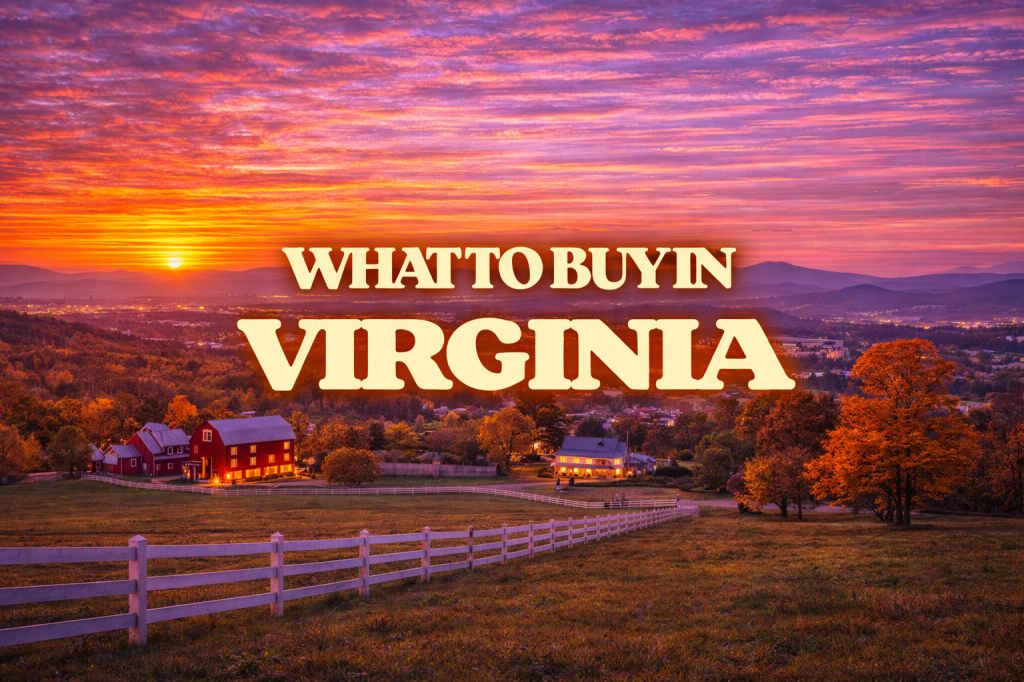
From the mist that lifts off the Blue Ridge at first light to the salty tang carried inland from the Chesapeake Bay, Virginia hands you scents and textures as soon as you step off the highway.
Walk a cobbled street in Colonial Williamsburg, run your fingers over weathered barnwood in the Shenandoah, or inhale the sweet fried scent at a Richmond farmers’ market – Virginia souvenirs spring from landscapes, old homesteads, and centuries of farm-to-table tradition.
Markets hum with conversation, vendors trade jars of apple butter and Monticello honey. Potters wheel clay near the Roanoke River, and roadside stands sell boiled peanuts under bright tin roofs.
Whether you’re tracing a Skyline Drive vista or drifting through Old Town Alexandria, look for the mark of the maker such as hand-lettered labels, cured hams glazed by smoke, and quilts stitched in the mountain hollows. These make Virginia souvenirs worth bringing home. Here’s what to buy in Virginia to bring a piece of its spirit back home.
1. Smithfield Ham
Why pick this up:
Smithfield ham is a salt-cured, aged ham with a deep smoky flavor rooted in Isle of Wight County tradition; it’s a culinary icon you can slice thin at home to taste Virginia’s curing techniques. Aged and often glazed, it carries the history of colonial smokehouses and coastal salt trade.
What to look for:
Seek hams labeled “Smithfield” or “Virginia-cured,” with a firm texture, natural rind, and clear production dates—look for family butchers or smokehouses that cure on-site. Smaller, “picnic” cuts are easier to pack; whole hams will have a production label showing proper curing.
Price bracket (2025):
$40–$160 (depending on size and heritage cure)
Where to find it:
Smithfield ham shops, Colonial Williamsburg specialty stores, regional farmers’ markets, and meat counters in Richmond and Norfolk.
2. Virginia Peanuts
Why pick this up:
Virginia peanuts—famous for their large kernels—are a crunchy, portable taste of the peanut belt that runs through Suffolk and the Hampton Roads region. They’re perfect as snack packs, peanut brittle, or specialty roasted flavors unique to the area.
What to look for:
Look for “Virginia grade” labeling and whole-kernel roasted or in-shell varieties; boiled peanuts are a seasonal treat sold fresh at roadside stands in summer. Avoid generic vacuum-packed mixes that lack a local brand name like The Virginia Diner or regional cooperatives.
Price bracket (2025):
$4–$15 per bag
Where to find it:
Roadside stands on U.S. 58, The Virginia Diner (Suffolk/Smithfield), farmers’ markets, and specialty food shops.
3. Monticello Honey & Lavender Products
Why pick this up:
Harvested from hives around Monticello and the Piedmont, raw honey and lavender goods evoke Jefferson’s kitchen garden and the fragrant orchards of Charlottesville. These products carry terroir—the floral notes of local clover and mountain blooms.
What to look for:
Choose raw, minimally processed honey with a harvest date or location; lavender sachets, soaps, and lavender-infused vinegars from local growers are excellent. Monticello-branded jars or labels from small apiaries signal provenance.
Price bracket (2025):
$8–$25
Where to find it:
Monticello gift shop, Charlottesville City Market, local farm stands and boutique food stores.
4. Virginia Wine (Shenandoah & Monticello AVAs)
Why pick this up:
Virginia’s wine country—from the rolling vineyards of the Shenandoah Valley to the Monticello AVA—produces robust Viognier, Bordeaux blends, and emerging Cabernet Francs that reflect the state’s limestone soils. A bottle captures a vineyard view and a tasting-room story.
What to look for:
Bottles labeled with AVA (Monticello, Shenandoah Valley, or Northern Neck) and tasting notes; limited-release or single-vineyard bottlings from Barboursville, King Family, or smaller Charlottesville producers offer local character. Check vintage and cork condition for safe transport.
Price bracket (2025):
$12–$45 per bottle
Where to find it:
Winery tasting rooms in Charlottesville, Loudoun County, and Shenandoah; wine shops in Richmond and Alexandria; airport wine boutiques.
5. Virginia Whiskey & Bourbon
Why pick this up:
A new generation of Virginia distillers—Middleburg, Richmond, and Fredericksburg among them—are crafting grain-to-glass whiskies and bourbons that blend Appalachian tradition with modern methods. Bottles from small-batch distilleries tell the story of local grain and barrel aging.
What to look for:
Small-batch or single-barrel labels, proof and mash bill details, and tasting notes; distillery bottlings with a clear origin and tasting-room acceptance are preferable to generic labels. Limited releases or commemorative releases often show place-based grains.
Price bracket (2025):
$30–$85
Where to find it:
Distillery tasting rooms (e.g., Middleburg distillers), specialty liquor stores in Richmond and Charlottesville, and craft spirit shops.
6. Shenandoah Apple Products (Cider, Apple Butter, Jams)
Why pick this up:
The orchards of the Shenandoah Valley and Carter Mountain produce intensely flavored apples turned into cider, apple butter, and preserves—sweet, spiced, and very Virginia. These condiments brighten winter toast and roast meats alike.
What to look for:
Look for small-batch, preservative-free labels and harvest dates; raw-pressed cider and slow-cooked apple butter with visible spices are hallmarks of quality. Avoid overly sweet, mass-produced jars that lack orchard information.
Price bracket (2025):
$6–$20
Where to find it:
Orchard stands (Carter Mountain), Saturday farmers’ markets, roadside farm stores, and gift shops in Shenandoah towns.
7. Handmade Pottery from the Piedmont
Why pick this up:
Virginia’s potters—clustered around Charlottesville, Crozet, and Lucketts—shape local clays into utilitarian bowls and glazes that echo farmhouse kitchens. Each piece wears the fingerprint of its maker and the Piedmont’s earthy color palette.
What to look for:
Hand-thrown kiln marks, potter’s signature or stamp, and natural glazes; denser stoneware is travel-friendlier than thin porcelain. Ask about firing temperature and glaze ingredients to ensure food-safe finishes.
Price bracket (2025):
$30–$200
Where to find it:
Lucketts craft markets, Charlottesville galleries and the Downtown Mall, weekend craft fairs, and studio outlets.
8. Appalachian Quilts & Textiles
Why pick this up:
Quilting is alive in Southwest Virginia—Floyd and Abingdon workshops preserve patterns and hand-quilting techniques passed down through generations. A quilt or embroidered runner is a tactile piece of mountain life and regional motifs.
What to look for:
Hand-stitched seams, natural cotton or wool batting, and provenance tags citing county or maker; machine-made reproductions lack the small irregularities that show handwork. Inspect backing and stitching density for durability.
Price bracket (2025):
$75–$600
Where to find it:
Appalachian craft centers, regional galleries in Abingdon and Floyd, heritage festivals, and craft co-ops.
9. Chesapeake Bay Maritime Crafts (Mini Crab Pots, Ropework, Blown Glass Floats)
Why pick this up:
From Tangier Island to Norfolk’s shipyards, maritime crafts celebrate the Chesapeake—mini crab pots, hand-tied rope work, and recycled-glass buoys capture coastal life. These pieces make striking décor and conversation starters.
What to look for:
Hand-tied knots, locally harvested rope materials, and mouth-blown glass with small bubbles and color variance; provenance from Tangier or Eastern Shore makers signals authenticity. Beware mass-produced “nautical” decor with perfect uniformity.
Price bracket (2025):
$15–$80
Where to find it:
Chincoteague, Tangier Island stands, Norfolk waterfront markets, and Eastern Shore craft fairs.
10. Regional Art Prints & Photography (Blue Ridge, Skyline Drive, Luray Caverns)
Why pick this up:
Local photographers and printmakers capture Virginia’s light—fog over Skyline Drive, blue ridgelines, and the cathedral-like chambers of Luray Caverns—so a print is an instant postcard of place. Framed or unframed, these images are easy to travel with.
What to look for:
Limited-edition prints, artist signatures, archival paper, and local scene identification; buy from the artist or museum shop for provenance. Avoid uninspired mass prints sold at tourist traps.
Price bracket (2025):
$10–$150
Where to find it:
Museum shops (Virginia Museum of Fine Arts, Taubman Museum), local galleries in Charlottesville and Roanoke, art walks and festival booths.
Tip: Pack breakables with clothing and put jars in sealed plastic bags—and always ask vendors about shipping options for larger items ✨
Local Shopping Culture & Traditions
Virginia shopping blends Colonial-era craft with mountain and coastal traditions. In Colonial Williamsburg and Old Town Alexandria, you’ll find craftspeople demonstrating historic trades such as silversmithing, coopering, and colonial-era foodways.
While the Shenandoah and Appalachians host roadside orchard stands, craft fairs, and quilt guild sales. Weekend markets like Charlottesville City Market and Richmond’s Carytown area hum with local producers selling honey, preserves, and handmade goods. Artisan villages in Floyd, Abingdon, and Lucketts (Leesburg) are hubs for weekend makers and antique hunters.
Bargaining is rare in boutiques and tasting rooms but more common at flea markets, antique fairs, and some summertime craft fairs; vendors typically post fixed prices at galleries and winery shops.
Seasonal rhythms matter here, apple and orchard products peak in fall, boiled peanuts and roadside seafood in summer, and craft festivals cluster on warm weekends.
How to Spot Genuine Local Souvenirs
Look for maker marks, provenance labels, and specific regional indicators: “Smithfield” or “Virginia-cured” on hams, AVA or vineyard names on wine, and producer or harvest dates on honey and preserves.
Handcrafted pottery will show a signature or stamp and irregularities in the glaze; quilts will have uneven stitch lengths and natural fibers. Avoid uniform, glossy mass-produced items; when buying food, check packaging dates, ingredient lists, and whether the seller provides a small-business or farm origin.
When in doubt, ask producers where materials were sourced, local glass, Piedmont clay, and Appalachian wool are good signs of authenticity.
Where to Shop in Virginia
- Colonial Williamsburg markets and historic shops
- Monticello gift shop and Charlottesville’s Downtown Mall & City Market
- Lucketts Spring Market (Leesburg) and Crozet artisan fairs
- Richmond’s Carytown and Scott’s Addition, and the Virginia Museum of Fine Arts shop
- Tangier Island and Chincoteague/Eastern Shore stands for maritime crafts
- Shenandoah Valley orchards and farmers’ markets (Carter Mountain, Staunton)
- Airport gift shops (Richmond International Airport, Norfolk) and museum shops for locally curated goods
FAQs
Q: Are souvenirs in Virginia expensive?
A: Prices vary widely—market goods, peanuts, and prints are inexpensive, while quilts, whole Smithfield hams, and limited pottery can be pricier; expect artisan goods to reflect the maker’s labor.
Q: Is bargaining common in Virginia?
A: Bargaining is uncommon in boutiques, wineries, and tasting rooms but may be possible at flea markets, antique fairs, or with street vendors—always be polite and reasonable.
Q: How do I know if food items are allowed through customs?
A: For domestic U.S. travel, check airline rules for liquids and perishable items; for international flights, consult your destination country’s customs site—sealed, commercially packaged goods with ingredient labels are easiest to transport.
Explore Virginia’s local shopping scene and bring a few true Virginia souvenirs home to remember the state’s landscapes and hands-on traditions.
Let me know in the comments if you have any other top ‘what to buy’ ideas!
About the Author
Colin is the founder of SouvenirsIdeas.com and a passionate traveller with a soft spot for ceramics, markets, and food tours. He writes practical, first-hand guides to help you bring home souvenirs that actually mean something — not just more clutter!

 Souvenir Ideas to Take Home from Every Country and City
Leave a comment