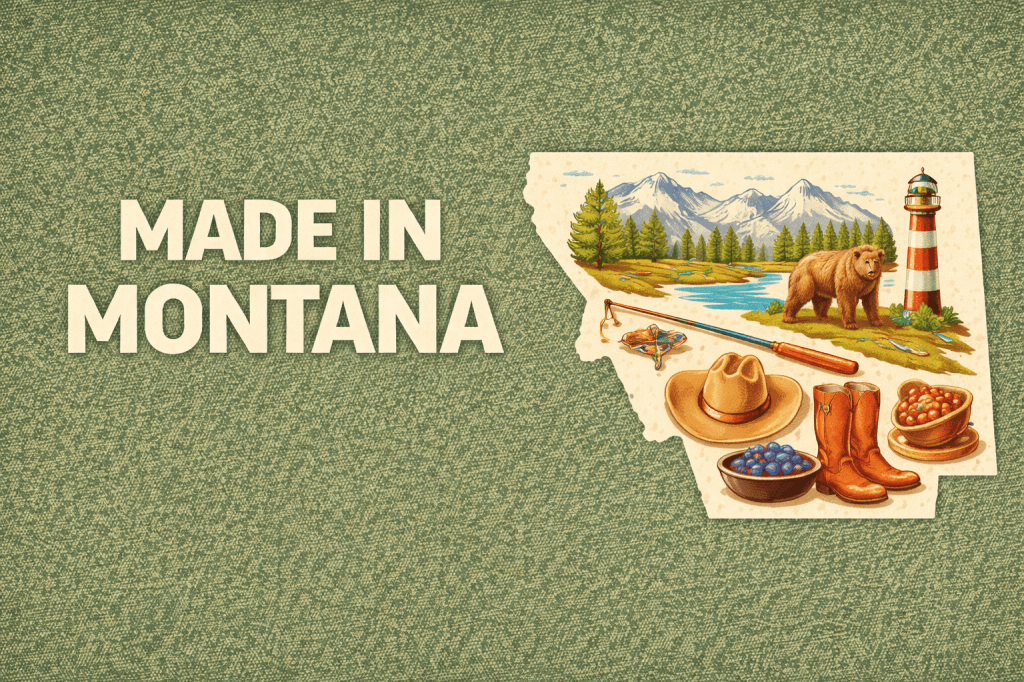
Big skies, sage-scented wind, and the slow geometry of mountain ranges shape a distinct material culture in Montana: cottonwood root bowls polished by hand, wool born on high-ridge sheep, and berries that grow wild along creek banks.
The landscape, from prairie grasses and ponderosa to glacial rivers and basalt outcrops, supplies materials and inspiration, while ranching, Indigenous traditions, and frontier trades keep old techniques alive.
Here are the best things truly made in Montana, products that reflect its heritage, creativity, and everyday life. This round-up focuses on authentic, locally crafted goods to help you bring a piece of Montana home.
1. Huckleberry Preserves and Syrups
Why it’s made here:
Huckleberries grow in alpine meadows and subalpine slopes across Montana; foragers and small producers collect them in late summer. The berries’ tart-sweet flavor and low commercial yield make small-batch jams and syrups a natural local specialty.
What to look for:
Single-ingredient labels (huckleberry only) or mixtures listing local cane sugar; short ingredient lists and small jar sizes; hand-written or stamped harvest dates. Look for producers who list the valley or watershed where the berries were foraged.
Price bracket (2025):
$8–$25 for jams or syrups, depending on jar size and rarity.
Where to find it:
Farmers’ markets, roadside stands, national-park gateway stores, and regional food co-ops.
2. Yogo Sapphire and Montana Agate Jewelry
Why it’s made here:
Montana is one of the few places in the world that produces Yogo sapphires and rich agate seams; local lapidaries cut and set these stones into jewelry that celebrates their unique color and patterns.
What to look for:
Certificates of origin for Yogo sapphires; natural, untreated stones; sterling or hand-hammered silver settings; maker’s stamp or hallmark on the metalwork.
Price bracket (2025):
$75–$2,500+, with simple agate pieces at the low end and certified Yogo sapphire settings toward the higher end.
Where to find it:
Artisan galleries, jeweler studios in mountain towns, and museum gift shops that feature regional gemstones.
3. Hand-Tooled Leather Saddles, Belts & Gear
Why it’s made here:
A working ranching culture demands durable tack and leatherwork; Montana saddle makers and leather artisans combine old-school tooling with rugged materials sourced nearby.
What to look for:
Full-grain leather, hand-stitching, reinforced rivets, and a craftsman’s stamp. On saddles, check tree quality, saddle fit notes, and leather conditioning.
Price bracket (2025):
Belts and small goods $40–$250; custom saddles $1,200–$6,000+.
Where to find it:
Saddlery workshops, ranch outfitter stores, and Western arts booths at county fairs.
4. Bison Meat & Leather Goods
Why it’s made here:
Bison are raised across Montana’s plains and high pastures; local abattoirs and tanneries turn that supply into jerky, cured meats, and durable leather for wallets, bags, and jackets.
What to look for:
USDA or state-graded meat labels for bison meat; for leather, reputable tanning notes, vegetable-tanned options, and stitch quality. Meat packaging should list ranch of origin.
Price bracket (2025):
Bison jerky $8–$20; leather goods $60–$700. Where to find it:
Ranch stores, farmers’ markets, specialty meat shops, and leatherwork boutiques.
5. Hand-Spun Wool Blankets, Socks & Yarns
Why it’s made here:
Sheep and woolly mountain climates are central to Montana’s agricultural life; small-scale mills and fiber artists process fleece into heavyweight blankets, socks, and hand-spun yarns.
What to look for:
Labels indicating local flock or mill, natural-dyed options using local plants, and hand-finished hems. Density and loft are good indicators of warmth and quality.
Price bracket (2025):
Socks and hats $20–80; blankets $150–900; skeins of artisanal yarn $18–60. Where to find it:
Fiber festivals, cooperative yarn shops, ranch-sourced mill outlets, and craft fairs.
6. Cottonwood Root Bowls & Burl Wood Crafts
Why it’s made here:
Montana’s cottonwoods and other hardwoods produce dramatic root burls prized by carvers. Artisans hollow, sand, and finish these roots into organic bowls and furniture that showcase unique grain and knots.
What to look for:
Hand-tool marks, solid finishes (food-safe oils if intended for serving), a maker’s signature, and no synthetic veneers. Natural irregularities are a sign of authenticity.
Price bracket (2025):
Small bowls $40–200; larger tables or furniture $400–5,000+.
Where to find it:
Woodworkers’ studios, gallery co-ops, craft markets, and log-cabin gift shops.
7. Handmade Cowboy Boots
Why it’s made here:
Bootmaking is part of Western tradition across Montana: local cobblers craft boots suited to ranch life with high-quality leathers and custom fits.
What to look for:
Goodyear or hand-welted soles, genuine leather uppers, custom lasts, and clear maker identification. Break-in patterns and construction details indicate a hand-built pair.
Price bracket (2025):
$300–1,500 for custom or small-batch boots.
Where to find it:
Independent bootmakers’ workshops, Western outfitters, and specialty leather studios.
8. Small-Batch Whiskey & Craft Spirits
Why it’s made here:
Montana’s distillers use regional barley, high-altitude water, and small copper stills to create single-batch whiskies, rye, and flavored spirits that reflect local grains and climate.
What to look for:
Tasting-room bottlings or numbered small runs, label transparency about mash bills and aging, and tasting notes that reference local ingredients.
Price bracket (2025):
$35–120 for bottles from local distilleries; special editions higher.
Where to find it:
Distillery tasting rooms, regional liquor stores, and farmers’ market spirit booths.
9. Artisanal Cheeses & Creamery Products
Why it’s made here:
Dairy farms and creamery co-ops in mountain valleys produce small lots of cheese, cultured butter, and crème fraîche, often using milk from heritage or grass-fed herds.
What to look for:
Short provenance details, small-batch language, plant-based rennet or traditional cultures, and refrigeration dates. Flavor notes reflecting alpine pastures are a plus.
Price bracket (2025):
$8–$30 per wedge or wheel portion.
Where to find it:
Farmers’ markets, creamery storefronts, seasonal cheese festivals, and hotel breakfast tables that source local.
10. Indigenous Beadwork, Quillwork & Regalia
Why it’s made here:
Native nations in Montana — including Blackfeet, Crow, Salish, and Kootenai — maintain living traditions of beadwork, quillwork, moccasin-making, and ribbonwork that convey cultural stories and ceremonial use.
What to look for:
Artist names, tribal affiliation, provenance documentation, and high-quality backing and stitching. Avoid mass-produced “Native-style” imitations; ask about materials and intended use.
Price bracket (2025):
Earrings and small pieces $30–200; ceremonial items and larger regalia $200–several thousand.
Where to find it:
Tribal cultural centers, powwows, Indigenous co-ops, and museum-curated craft markets.
11. Handmade Knives & Bladesmithing
Why it’s made here:
Montana’s hunting and outdoor culture supports a community of bladesmiths who craft folding knives, hunting knives, and custom blades—often using local hardwoods for handles and traditional forging techniques.
What to look for:
Stamped maker’s mark, hand-forged blades, full tang construction, and quality steel type listed on the knife. Custom sheath work is a good sign of local craftsmanship.
Price bracket (2025):
$80–1,200+, depending on materials and maker reputation.
Where to find it:
Knife shows, makers’ booths at festivals, sporting goods artisans’ sections, and bladesmith studios.
12. Hand-Blown Glass Art
Why it’s made here:
Glass studios in Montana take inspiration from river stones and sky colors, producing hand-blown vessels, paperweights, and lighting pieces in small runs that echo the region’s palette.
What to look for:
Pontil marks, artist signatures, thickness and weight consistent with hand-blown work, and studio provenance.
Price bracket (2025):
Small pieces $40–300; larger art pieces $300–3,000+.
Where to find it:
Gallery districts, studio open houses, and arts festivals in mountain towns.
13. Local Honey, Beeswax Candles & Apitherary Goods
Why it’s made here:
Montana’s wildflower meadows and open rangeland produce distinctive honey; small apiaries turn surplus into raw honey, beeswax candles, and balms with traceable floral notes.
What to look for:
Raw or unfiltered labels, varietal honey (e.g., clover, wildflower), beekeeper or apiary name, and natural beeswax purity for candles.
Price bracket (2025):
Honey jars $8–30; beeswax candles and balms $6–40. Where to find it:
Farmers’ markets, roadside farm stands, co-ops, and local food shops.
Local Makers & Traditions
Montana’s artisan scene grows from ranch kitchens, tribal communities, and mountain studios. Ranching traditions keep leatherwork, saddlery, and wool crafts in daily use.
Indigenous nations sustain beadwork, quillwork, and regalia-making through intergenerational practice and contemporary commissions. Small mills and studio craft labs near valleys and gateway towns support fiber, wood, and metalwork, while lapidaries in GEM country turn Yogo sapphires and Montana agates into wearable pieces.
Seasonal markets, county fairs, powwows, and studio open houses are where makers gather: you’ll often meet the person who raised the sheep, foraged the berries, or cut the stone, a direct link between landscape and craft.
How to Spot Genuine Local Products
Look for provenance: maker names, ranch or apiary origin, tribal affiliation, and studio locations. Handcrafted goods usually bear small irregularities such as slight asymmetry, tool marks, or hand-signed labels which indicate human production rather than machine uniformity.
For gemstones, ask for origin certificates (Yogo sapphire provenance is a common query). For Native-made art, request artist attribution and cultural context rather than anonymous “tribal-style” labeling. Beware polished tourist racks selling identical mass-produced items without maker details, generic “Made in China” tags, or stickered prices with no information about materials.
Where to Buy Made-in-Montana Goods
- Farmers’ markets and roadside stands in valley towns
- Tribal cultural centers and powwows for Indigenous arts
- Artisan co-ops and gallery districts in historic downtowns
- Distillery and brewery tasting rooms and creamery storefronts
- County fairs, fiber festivals, and craft markets
- Museum shops and national-park gateway stores
FAQs
Q: Are products in Montana expensive?
A: Prices range widely — small-batch preserves, honey, and jewelry starters are affordable, while custom saddles, furniture, and commissioned regalia can be costly; you’re paying for local materials and hand labor.
Q: How can I tell if something is authentically made here?
A: Ask for the maker’s name, a description of materials, and where it was produced; look for hallmarks, certificates, and clear labels that reference a Montana town, ranch, tribe, or studio.
Q: What is the best made-in-Montana gift to bring home?
A: Choose something that travels well and captures place: small-batch huckleberry preserves, a piece of Montana agate or Yogo sapphire jewelry, or a hand-turned cottonwood root bowl — all carry a clear local story.
Explore local workshops and markets to find genuine craft and bring a piece of Made in Montana home.
Let me know in the comments if you have any other top ‘what to buy’ ideas!
About the Author
Colin is the founder of SouvenirsIdeas.com and a passionate traveller with a soft spot for ceramics, markets, and food tours. He writes practical, first-hand guides to help you bring home souvenirs that actually mean something — not just more clutter!


 Souvenir Ideas to Take Home from Every Country and City
Leave a comment