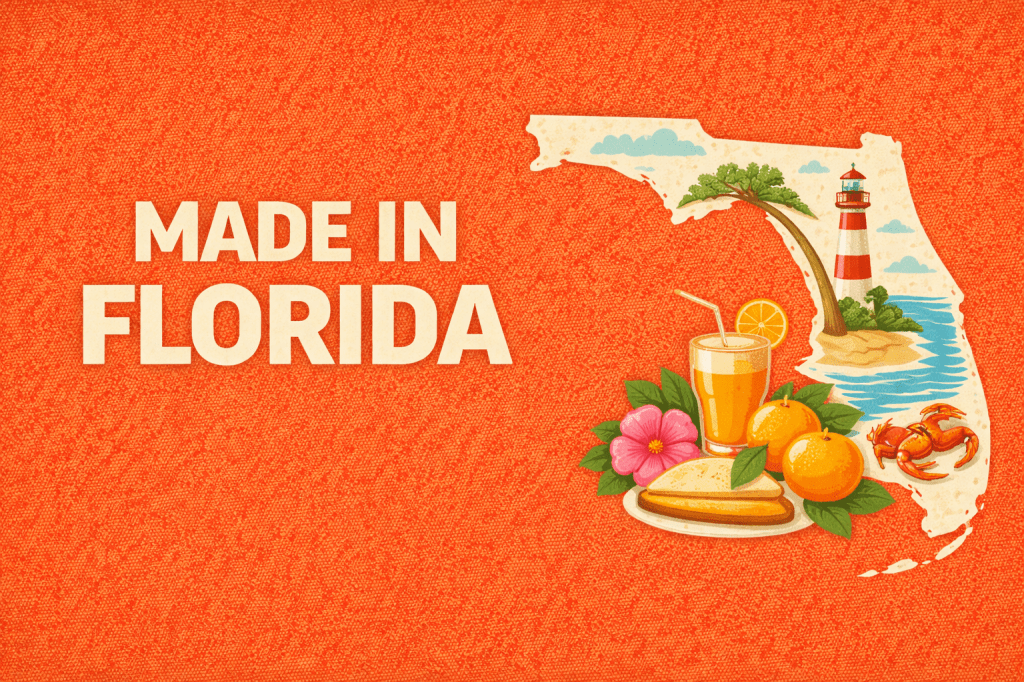
Sunlight sharpened against palmettos, salt on the air and the low, citrus-sweet scent of groves—Florida’s landscapes read like a recipe for hands-on making.
From the Greek sponge docks of Tarpon Springs to the Seminole patchwork of the southern glades, local materials (citrus, sea salt, natural sponges, alligator leather) and immigrant traditions shape objects that smell, sound and look like this place.
Here are the best things truly Made in Florida, products that reflect its heritage, creativity, and everyday life.
1. Key Lime Curd & Preserves
Why it’s made here:
Key limes are a Florida specialty—small, aromatic and higher in acidity than Persian limes—so artisans in the Keys and along the Gulf Coast turn them into curds, preserves and bottled pie fillings to capture that distinctive tartness.
What to look for:
Look for products that list “Key lime” (not just “lime”), use Florida citrus on the label, and show a short ingredient list (lime, sugar, eggs/butter). Avoid neon-green colorings and industrial-sounding additives.
Price bracket (2025):
$8–$25 for jars (small-batch curds command the higher end).
Where to find it:
Farmers’ markets in the Keys and Gulf Coast towns, specialty food stalls in Key West and St. Augustine, and artisanal food sections at larger coastal markets.
2. Florida Orange Blossom Honey
Why it’s made here:
When citrus trees bloom across central and south Florida, migratory beekeepers bring hives to capture the orange blossom nectar—giving honey a floral, citrusy perfume unique to the state.
What to look for:
Single-origin or varietal honey labeled “orange blossom” with a harvest year and beekeeper or cooperative name; creamed or raw options indicate small-scale processing.
Price bracket (2025):
$10–$35 per jar depending on jar size and whether raw/organic.
Where to find it:
County farmers’ markets, roadside citrus stands, and food festivals during the spring bloom.
3. Tarpon Springs Natural Sponges
Why it’s made here:
Tarpon Springs has a century-old sponge-diving history brought by Greek immigrants; the Gulf’s natural sponges are prized for durability and softness and remain a true local product.
What to look for:
Real sponges feel springy when wet, have natural irregular shapes and are labeled as natural sea sponge (not synthetic). Sellers who can explain harvest methods and species are preferable.
Price bracket (2025):
$8–$60 depending on size and type.
Where to find it:
Tarpon Springs sponge docks and coastal flea markets; select marina-side shops in Gulf communities.
4. Seminole Patchwork Textiles & Beadwork
Why it’s made here:
Seminole patchwork is a living Indigenous textile tradition from the Miccosukee and Seminole peoples of southern Florida—brightly colored bands stitched into garments, bags and accessories; beadwork accompanies ceremonial and everyday items.
What to look for:
Pieces attributed to recognized Seminole or Miccosukee artists or tribal cooperatives; authentic patchwork is hand-sewn with geometric banding, not printed fabric.
Price bracket (2025):
$35–$400, from small accessories to wearable garments.
Where to find it:
Tribal art centers, museum shops focused on Native American arts, and authorized cooperative booths at regional festivals.
5. Alligator Leather Goods
Why it’s made here:
Florida’s regulated alligator farms supply hides that local tanneries turn into wallets, belts and small goods—an industry tied to wildlife management and state regulations.
What to look for:
Products stamped with origin and compliance (state/farm identifiers), neat stitching and full-grain scutes rather than embossed calfskin imitations; ask about CITES paperwork if you plan to export.
Price bracket (2025):
$45–$600 depending on item size and finish.
Where to find it:
Craft markets near the Everglades and Central Florida, accredited leather workshops, and boutique souvenir sections in eco-tourism zones.
6. Florida Sea Salt (Small-batch)
Why it’s made here:
Evaporated from Gulf and Keys seawater, Florida sea salts capture local mineral profiles and are often finished with citrus zest, smoked wood or native herbs.
What to look for:
Small-batch labels, origin (e.g., “Florida Keys” or “Gulf”), visible crystal size, and minimal additives; flavored salts should list natural flavoring agents.
Price bracket (2025):
$6–$20 for specialty jars.
Where to find it:
Farmers’ markets, distillery and distillery gift shops, and coastal artisan booths.
7. Small-Batch Florida Rum & Sugarcane Spirits
Why it’s made here:
Florida’s sugarcane yields and subtropical climate lend themselves to rum-making; craft distillers often use local cane or unique barrels, producing spirits with regional character.
What to look for:
Clear labeling of distillation and bottling sites, batch numbers, and tasting notes; proof and age statements indicate small-batch care.
Price bracket (2025):
$25–$60 per bottle for craft rums; limited editions higher.
Where to find it:
Distillery tasting rooms, coastal liquor shops with local sections, and food-and-drink festivals.
8. Hand-Blown Glass from Florida Studios
Why it’s made here:
Studios around Tampa Bay and coastal cities have vibrant glassblowing scenes—artists use local marine and tropical colors to make vases, ornaments and functional art.
What to look for:
Irregularities that show handwork (pontil marks, slight asymmetry), artist signatures or studio stamps, and explanations of technique (lampwork, furnace-blown).
Price bracket (2025):
$30–$500 depending on complexity and artist.
Where to find it:
Glass studio galleries and open workshops, arts districts in St. Petersburg and Sarasota, and craft festivals.
9. Florida Craft Beer & Barrel-Fermented Ales
Why it’s made here:
Florida’s craft beer scene draws on local ingredients—citrus peels, honey, and regional yeast strains—producing beers that reflect coast, swamp and orchard terroir.
What to look for:
Brewery name and brew date on the can/bottle, small-batch or limited-run labels, and local ingredient callouts; most breweries will also have tasting-room-only releases.
Price bracket (2025):
$8–$20 per four-pack or bomber; specialty bottles higher.
Where to find it:
Brewery taprooms, brewery bottleshops, and regional beer festivals.
10. Hand-Assembled Shellwork & Nautical Décor
Why it’s made here:
Coastal crafters use locally collected, legal shells and drift materials to make frames, lamps and decorative pieces that echo seaside Florida aesthetics.
What to look for:
Ask that shells are responsibly sourced (avoid protected species and live-collection); pieces should show hand-assembly and secure mounting rather than glued, mass-produced panels.
Price bracket (2025):
$15–$250 depending on size and intricacy.
Where to find it:
Boardwalk artisan stalls, coastal galleries, and historic harbour craft markets.
11. Florida-Made Chocolate & Citrus Confections
Why it’s made here:
Local chocolatiers and confectioners frequently pair single-origin cacao with Florida citrus, sea salt or honey, producing bonbons and bars that showcase regional flavors.
What to look for:
Bean-to-bar claims, explicit citrus or honey sourcing, and short ingredient lists; single-origin cacao and hand-packaged boxes signal craft production.
Price bracket (2025):
$6–$45 for bars and assorted boxes.
Where to find it:
Specialty food shops, farmers’ markets, and chocolate-makers’ tasting rooms in tourist centres.
Local Makers & Traditions
Florida’s artisan story is a patchwork. Indigenous Seminole and Miccosukee textiles and beadwork, Greek sponge diving traditions in Tarpon Springs. Cuban-influenced coffee culture in Miami and Ybor City, and small coastal studios turning sea-harvested materials into usable goods.
The state’s craft markets and heritage festivals, in summer and spring in many towns,offer direct access to makers. Techniques vary from hand-sewn patchwork and traditional tanning for alligator hides to furnace and lampwork glassblowing. Many workshops run demonstrations so visitors can watch techniques passed between generations.
Agricultural traditions also shape products: citrus groves support preserves and perfumed honeys, while small salt producers and distillers apply age-old evaporation and fermentation practices with modern food-safety standards.
Conservation-minded harvesting, licensed sponge divers, regulated alligator farms, and protected-species rules, plays a major role in maintaining authenticity.
How to Spot Genuine Local Products
- Check provenance labels: artisan name, town or cooperative, and harvest or production dates are good signs.
- Seek short ingredient lists and clear descriptions for foods (no industrial stabilizers) and batch numbers for spirits and cosmetics.
- For wildlife-based goods (alligator, sponge), ask for legal compliance: permits, farm or cooperative names and, if exporting, CITES documentation where required.
- Inspect workmanship: hand-blown glass will show tiny irregularities; textiles will have visible stitches or hand-finished hems; genuine seashell items use whole shells and neat secure fittings.
- Avoid glossy, mass-produced-looking items sold only in bulk at tourist traps; if the seller can’t explain how or where it was made, that’s a red flag.
Where to Buy Made-in-Florida Goods
- Local farmers’ markets and seaside Saturday markets
- Artisan fairs and seasonal craft festivals across coastal towns
- Museum and cultural center shops that curate regional makers
- Distillery and brewery tasting rooms and workshop galleries
- Historic districts and waterfront promenades in Key West, St. Augustine, Tarpon Springs and Tampa Bay
- Airport specialty stores and curated gift shops for last-minute, certified regional items
FAQs
Are products in Florida expensive?
Prices range widely—many handcrafted foods and small gifts are affordable ($5–$30), while leather goods, art glass and limited-run spirits command higher prices; purchasing directly from makers often gives the best value.
How can I tell if something is authentically made here?
Look for local place names, maker signatures, batch numbers and short ingredient lists; ask vendors about harvest/production methods and for documentation on regulated materials like alligator leather or natural sponges.
What is the best made-in-Florida gift to bring home?
Small-batch Key lime curd or preserves, a jar of orange blossom honey, or a locally made chocolate bar featuring Florida citrus are compact, transportable and unmistakably Floridian.
Explore regional workshops and markets to find authentic treasures that tell Florida’s story—Made in Florida.
Let me know in the comments if you have any other top ‘what to buy’ ideas!
About the Author
Colin is the founder of SouvenirsIdeas.com and a passionate traveller with a soft spot for ceramics, markets, and food tours. He writes practical, first-hand guides to help you bring home souvenirs that actually mean something — not just more clutter!


 Souvenir Ideas to Take Home from Every Country and City
Leave a comment