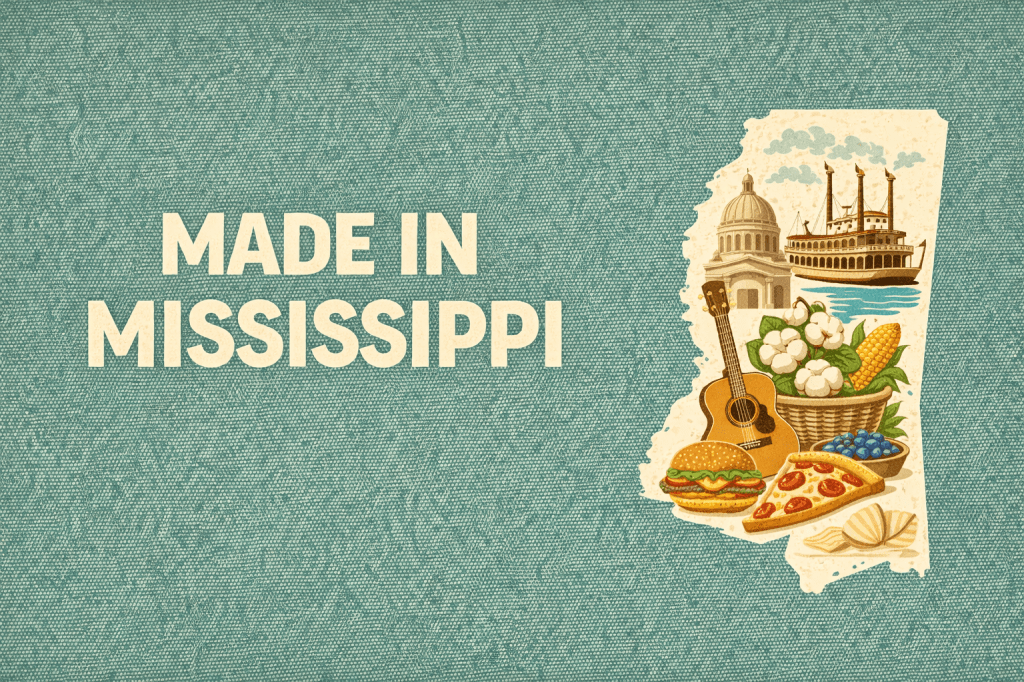
Mississippi’s landscapes are a study in contrasts. The broad, loamy Delta where cotton and pecan groves meet the slow ribbon of the Mississippi River, the pine and hardwood uplands of north Mississippi; and the briny marshes and Gulf beaches along the coast.
That variety shows up in the senses like the mineral tang of river clay under a potter’s thumb, the sweet snap of candied pecans, the smoke and corn of small-batch spirits, and the rough-smooth of quilts stitched from feed-sack cotton.
Local traditions such as Choctaw beadwork, Delta blues, sorghum-cooking on wood fires, and Southern quilting shape what artisans make here.
Here are the best things truly Made in Mississippi, products that reflect its heritage, creativity, and everyday life.
1. Delta Hot Tamales
Why it’s made here:
The Delta hot tamale is a culinary tradition born in the Mississippi Delta’s working kitchens and street stands — a spiced, hand-rolled corn masa tamale often made with locally raised pork and a pepper-forward sauce. It’s tied to the region’s African American and Mexican-influenced foodways and the Delta’s abundance of corn and peppers.
What to look for:
Firm, hand-rolled masa texture, a pronounced pepper and vinegar tang, traditional pork filling (or clearly labeled alternatives), and local producer labels or farmers’ market packaging. Avoid factory-sealed, syrupy versions marketed as “Delta-style.”
Price bracket (2025):
$6–$18 for a ready-to-eat pack or vacuum-sealed half-dozen; $10–$25 for artisanal frozen batches.
Where to find it:
Delta farmers’ markets, roadside stands, regional food halls, and specialty food booths at blues and heritage festivals.
2. Pecan Pralines and Candied Pecans
Why it’s made here:
Mississippi is one of the South’s pecan-growing states; pecan trees thrive in the warm, long-growing seasons. Local confectioners turn fresh pecans into pralines, brittles, and spiced candied varieties using cane syrup or brown sugar.
What to look for:
Whole pecans (not chopped), a glossy caramel or cane-syrup finish, short ingredient lists (pecans, sugar/syrup, butter, cream), and production dates. Freshness is noticeable in crunch and aroma.
Price bracket (2025):
$8–$25 for small gift boxes; larger tins $25–$60. Where to find it:
Roadside farm stands, historic town center candy shops, festival stalls, and airport concessionaires that stock regional specialties.
3. Sorghum (Cane) Syrup
Why it’s made here:
Sorghum — “cane” — has a long agrarian history in Mississippi. Small farms still boil sap in iron kettles to make thick, molasses-like syrup used on biscuits, cornbread, and as a sweetener in preserves.
What to look for:
Dark amber to nearly black color, full-bodied earthy sweetness, simple labeling showing farm origin and vintage year; beware generic “sorghum flavor” syrups.
Price bracket (2025):
$6–$18 per pint jar depending on producer and rarity.
Where to find it:
County fairs and harvest markets, farm co-ops, and producer stalls at agricultural shows.
4. Gulf Sea Salt and Smoked Salts
Why it’s made here:
Mississippi’s Gulf Coast provides briny seawater and seafood-smoking traditions; small producers evaporate seawater or smoke local sea salt over pecan or oak for distinctive coastal flavors.
What to look for:
Clear labeling that lists source (Gulf Coast), method (evaporated, smoked), and, for smoked salts, the wood used. Crystal size and a clean, mineral finish are signs of care.
Price bracket (2025):
$8–$20 for small jars of specialty salts.
Where to find it:
Coastal farmers’ markets, maritime museums’ gift shops, and culinary co-ops near the Gulf.
5. Small-Batch Whiskey and Moonshine
Why it’s made here:
Mississippi has a growing craft-distilling scene that draws on corn, rye, and local grain, as well as the moonshine traditions of the rural South. Distillers interpret local flavors — corn-forward mash bills or smoked-barrel aging — that echo the state’s agrarian roots.
What to look for:
State tasting-room bottlings, small-batch or single-barrel indications, transparent mash-bill and aging notes, and official state label stamps. Avoid anonymous bottles without producer information.
Price bracket (2025):
$30–$70 for craft bottles; limited releases can reach $100+.
Where to find it:
Distillery tasting rooms, regional liquor stores that specialize in craft spirits, and festival pop-ups.
6. Handmade Resonator and Acoustic Guitars
Why it’s made here:
Mississippi’s blues legacy — from Clarksdale to the Delta juke joints — fuels demand for wooden instruments tuned for slide and country blues. Local luthiers build resonator and acoustic guitars using regional hardwoods and traditional techniques.
What to look for:
Solid-wood tops and bodies, visible hand-tool marks, builder’s signature or serial number, and materials listed (local maple, walnut, or cypress). Playability and tone are the best authenticity signs.
Price bracket (2025):
$600–$3,500 depending on maker and materials; custom commissions higher.
Where to find it:
Luthier workshops, music co-ops, blues festivals, and artisan fairs in music towns.
7. Rivercane Basketry and Choctaw Beadwork
Why it’s made here:
Mississippi is homeland to the Choctaw and other Southeastern tribes; traditional basketry using rivercane and beadwork remain living arts. These pieces carry cultural designs, natural materials, and techniques passed down through generations.
What to look for:
Natural materials like rivercane or reed, tight even weaving, documented tribal attribution (when applicable), and artist names. Beadwork with culturally specific patterns and quality threaded backing is a good sign.
Price bracket (2025):
$30–$400+ depending on size and intricacy.
Where to find it:
Tribal cultural centers, Native craft fairs, museum shops with indigenous collections, and heritage festivals.
8. Mississippi Clay Stoneware and Pottery
Why it’s made here:
Alluvial river clay and red upland clays give Mississippi pottery a distinct texture and hue. Potters here use local clays and glazes, making functional stoneware, cups, and decorative pieces with Southern forms and glazes.
What to look for:
Density and weight (stoneware should feel substantial), maker’s mark or stamp, variations in glaze from small-batch firing, and evidence of wheel or handwork.
Price bracket (2025):
$20–$250 for functional pieces; larger or artist-signed works higher.
Where to find it:
Artist co-ops, pottery studios with open houses, craft trails in arts counties, and museum craft shops.
9. Hand-Stitched Quilts and Southern Patchwork
Why it’s made here:
Quilting is woven into Mississippi’s domestic art history — patchwork, appliqué, and story quilts made from feed sacks and cotton reflect both necessity and creativity. Local quilters continue these techniques in contemporary designs.
What to look for:
Hand stitching, cotton batting, traditional patterns (nine-patch, log cabin, crazy quilt), provenance notes about maker and date, and high thread-count backing fabrics.
Price bracket (2025):
$80–$1,200 depending on size, materials, and whether hand-stitched.
Where to find it:
Quilt guild shows, historic house gift shops, artisan markets, and community craft centers.
10. Hand-Turned Hardwood Bowls and Woodwork
Why it’s made here:
Mississippi’s forests supply cherry, oak, maple, and magnolia. Woodturners and furniture makers use these local species to produce bowls, utensils, and furniture with warm grain patterns and Southern design sensibilities.
What to look for:
Continuous grain flows, well-finished interiors, maker’s stamp or signed base, and use of local hardwood species listed on tags.
Price bracket (2025):
$25–$500 depending on size and complexity.
Where to find it:
Craft guild shops, woodworking co-ops, county artisan trails, and galleries in historic town squares.
11. Small-Batch Hot Sauces, Preserves, and Pickled Okra
Why it’s made here:
The Delta and Gulf Coast made use of garden harvests: hot peppers, okra, figs, and muscadines. Artisans turn them into shelf-stable condiments — fiery pepper sauces, fruity preserves, and vinegary pickles — that capture local flavors.
What to look for:
Short ingredient lists, acidity and salt levels appropriate for preservation, labeled farm or maker, and safe preservation notes (canning date, pasteurization or refrigeration instructions).
Price bracket (2025):
$6–$20 per jar depending on rarity and ingredients.
Where to find it:
Farmers’ markets, cooperative grocery shelves, specialty food events, and roadside produce stands.
Local Makers & Traditions
Mississippi’s craft heritage is tied to place – the river, the woods, and the coast. Choctaw basketmakers and beadworkers maintain indigenous patterns. Delta cooks preserve tamale and sorghum traditions. Potters and woodworkers source clay and timber from nearby soils and forests.
Towns host annual events like quilt shows, pottery trails, and blues festivals, where makers sell directly from studios and stalls. Many workshops are family-run, passing techniques down through generations while also embracing new materials and markets.
Contemporary artisan networks like craft trails, co-ops, and museum craft programs, help connect visitors to makers. Look for studio open days or heritage festivals where demonstrations show how goods are made, from hand-turning bowls to kettle-boiling sorghum.
How to Spot Genuine Local Products
- Look for provenance: tags that name the farm, cooperative, or maker and include dates or batch numbers.
- Check materials: authentic goods list local ingredients (e.g., Gulf sea salt, Mississippi pecans, river clay) and show natural variation.
- Inspect workmanship: hand-stitched seams, tool marks, uneven glaze pooling, and signed bases are signs of handcrafted work.
- Avoid glossy mass-market packaging: generic “Delta-style” or “Southern-inspired” labels without maker information often indicate outsourced manufacturing.
- Ask questions: producers at markets should explain methods (kettle boiled, small-batch, wheel-thrown) and offer receipts or business cards. For indigenous crafts, look for tribal attribution or verification from cultural centers.
Where to Buy Made-in-Mississippi Goods
- Regional farmers’ markets and produce co-ops in Delta towns and the Gulf Coast.
- Artisan fairs, blues festivals, and county agricultural shows during spring–fall seasons.
- Museum gift shops and cultural heritage centers that curate local crafts.
- Studio trails and open-studio weekends where potters, woodworkers, and quilters sell directly.
- Airport shops and curated regional boutiques that stock packaged foods and small handicrafts.
FAQs
Q: Are products in Mississippi expensive?
A: Prices vary widely — pantry items like sorghum and salts are affordable ($6–$25), while handcrafted furniture, custom guitars, or labor-intensive quilts can be several hundred to thousands of dollars. Buying direct from makers often gives the best value.
Q: How can I tell if something is authentically made here?
A: Authentic items will identify the maker or farm, list local materials, show evidence of handwork, and usually be sold in-person at markets, studios, or verified regional retailers. If provenance is missing, ask the seller for details.
Q: What is the best made-in-Mississippi gift to bring home?
A: Edible gifts like pralines, pecans, or small jars of sorghum and Gulf sea salt are easy to pack and share; for a lasting keepsake, a small handmade pottery mug, a hand-turned bowl, or Choctaw beadwork tells a more personal regional story.
Explore the markets, studios, and festivals that keep these traditions alive and bring home something truly Made in Mississippi.
Let me know in the comments if you have any other top ‘what to buy’ ideas!
About the Author
Colin is the founder of SouvenirsIdeas.com and a passionate traveller with a soft spot for ceramics, markets, and food tours. He writes practical, first-hand guides to help you bring home souvenirs that actually mean something — not just more clutter!


 Souvenir Ideas to Take Home from Every Country and City
Leave a comment