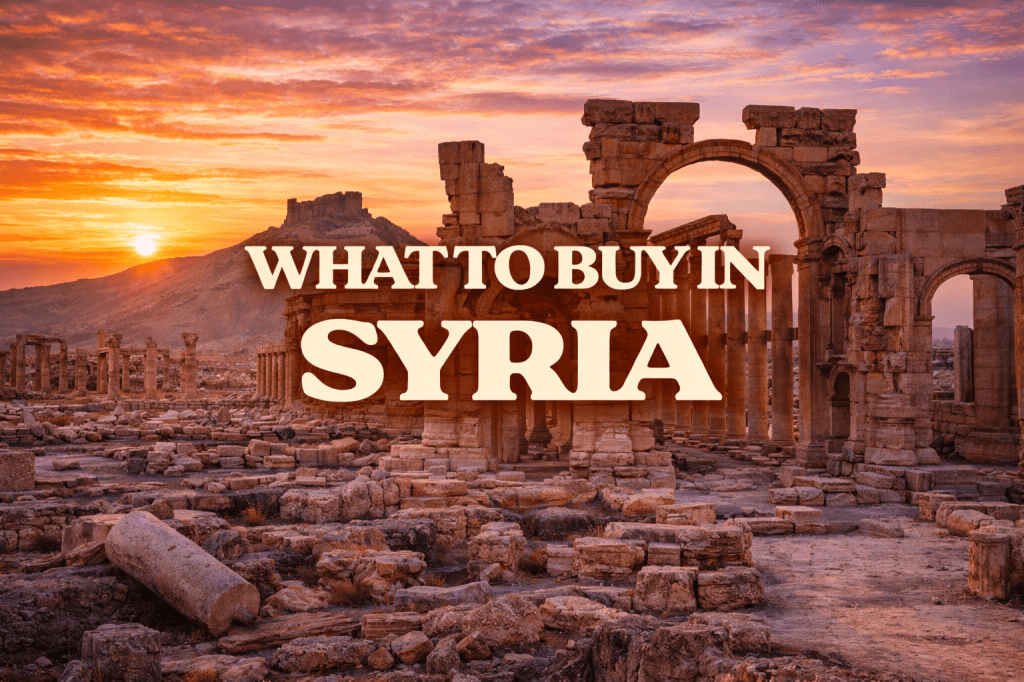
From the citrus-scented alleys of Old Damascus to the sun-baked olive groves around Idlib and Hama, Syria greets the senses with a layered palette of scent, texture and sound.
Lantern-glass sparkles under low souk roofs, the rattle of copper hammers echoes down caravanserais, and piles of pistachios, rosewater-soaked pastries and red Aleppo pepper paint market stalls in jewel tones.
Wandering through Souq al-Hamidiyya or the covered lanes of Al-Madina in Aleppo, you can feel centuries of craft under your fingertips such as hand-stitched damask, hand-cut mother-of-pearl inlay, and soaps perfumed with laurel and olive oil.
If you’re thinking about gifts, think local and storied: Syria souvenirs tell a tactile story of place and technique. Here’s what to buy in Syria to bring a piece of its spirit back home.
1. Aleppo Soap (Saboun Halab)
Why pick this up:
Aleppo soap is one of the oldest cold‑process soaps in the world, made from olive oil and a touch of laurel oil that leaves a warm, herbaceous scent. It’s practical, long‑lasting, and a genuine piece of Syrian everyday craft.
What to look for:
Choose blocks stamped with the maker’s mark and a higher percentage of laurel oil (they’re darker and more fragrant). Look for uneven cuts and natural color variations — signs of traditional production.
Price bracket (2025):
SYP 2,000–8,000 per bar
Where to find it:
Cooperatives and soap stalls in Al-Madina Souq (Aleppo), Souq al-Hamidiyya (Damascus), and local village workshops around Idlib.
2. Damask Textiles (Damascus silk & brocade)
Why pick this up:
Damask fabric, historically woven in Damascus, offers rich reversible patterns that make elegant cushion covers, table linens, or scarves. The soft sheen and dense weave are unmistakably luxurious.
What to look for:
Seek natural silk or linen blends and clearly visible damask motifs woven into the cloth rather than printed. Ask about hand-finishing and look for small irregularities that show handwork.
Price bracket (2025):
SYP 15,000–120,000 per piece (depending on size and material)
Where to find it:
Textile shops and tailors in Bab Touma and the old city markets of Damascus, and textile stalls in Aleppo’s covered souks.
3. Mother-of-Pearl Inlaid Boxes & Marquetry
Why pick this up:
Aleppo and Damascus craftsmen are known for delicate wood marquetry and mother‑of‑pearl inlay that produce ornate jewelry boxes and tabletops. These pieces carry geometric patterns rooted in Ottoman and Levantine aesthetics.
What to look for:
Inspect the tightness of the inlay, the symmetry of repeating motifs, and the use of walnut or rosewood with mother‑of‑pearl highlights. Hand-signed or workshop-stamped pieces are more likely to be authentic.
Price bracket (2025):
SYP 10,000–75,000
Where to find it:
Carpenter and inlay workshops in Old Aleppo and the antique and craft lanes of Damascus’ souks.
4. Brass Lanterns and Copperware
Why pick this up:
Hand‑hammered brass lanterns and trays bring the glow of Syrian souks into your home and are a classic souvenir from Damascus’s metalworkers. Their decorative chasing and patina are distinctly local.
What to look for:
Prefer pieces with visible hammer marks and fine engraving; solid brass or copper feels heavy. Check soldered seams and the quality of fittings if it’s a lamp.
Price bracket (2025):
SYP 25,000–200,000
Where to find it:
Metalworkers’ alleys around Souq al-Hamidiyya (Damascus) and the covered metal stalls of Al-Madina Souq (Aleppo).
5. Damascene Jewelry & Patterned Blades
Why pick this up:
Damascene metalwork — inlaid gold or silver on dark steel — and patterned blades are part of Syria’s storied metallurgical tradition and make striking keepsakes. Jewellery often replicates motifs from historical antagonies and palaces.
What to look for:
Look for fine inlay work, a clear contrast between metals, and provenance from a named workshop. For blades, request information about steel type and tempering rather than just decorative finish.
Price bracket (2025):
SYP 50,000–400,000
Where to find it:
Specialist metalwork stalls in Aleppo and Damascus, and established artisan workshops in old-city quarters.
6. Extra‑Virgin Olive Oil & Preserved Olives
Why pick this up:
Syria’s olive groves — particularly in Idlib and the Hama countryside — yield robust, peppery oils and preserved olive pastes that are central to local cuisine. Bottles make tasty, practical gifts.
What to look for:
Choose cold‑pressed, single-origin oils in sealed bottles and clay‑style containers; look for cooperative or mill labels indicating harvest year. For preserved goods, pick vacuum‑sealed jars for travel.
Price bracket (2025):
SYP 8,000–40,000 for 500ml–2L
Where to find it:
Food stalls in Al-Buzuriyah Souq (Aleppo), specialty shops in Damascus, and cooperatives selling regional oils.
7. Aleppo Pepper (Pul Biber) & Regional Spices
Why pick this up:
Aleppo pepper is prized for its fruity, moderate heat and is a signature spice in Syrian cooking — a pantry item that instantly evokes Levantine flavors. Spice mixes also reflect local taste profiles.
What to look for:
Look for deep-red flakes with a slight oil sheen, sealed packets or tins labeled for origin, and ask vendors about harvest year for freshness. Buy small quantities to ensure potency on return.
Price bracket (2025):
SYP 5,000–18,000 per 100–250g
Where to find it:
Spice stalls in Al-Madina Souq (Aleppo) and Souq al-Hamidiyya (Damascus), and markets around the citadel districts.
8. Sweets: Baklava, Ma’amoul & Vacuum‑Packed Halva
Why pick this up:
Syrian patisseries from Damascus to Aleppo craft pistachio-stuffed baklava, date‑filled ma’amoul, and dense sesame halva — sweets that travel well when properly packaged. They capture local flavor profiles like rosewater and orange blossom.
What to look for:
Buy vacuum‑packed boxes from reputable shops (Straight Street in Damascus and sweet shops in Aleppo’s bazaars are famous). Check ingredient lists and request travel‑ready packing.
Price bracket (2025):
SYP 8,000–35,000 per box
Where to find it:
Patisseries on Straight Street (Damascus), Al-Buzuriyah Souq (Aleppo), and established confectioners in old-city quarters.
9. Hand‑Blown Glassware & Mosaic Lamps
Why pick this up:
Vivid, hand‑blown glass and mosaic‑tiled lamps reflect Ottoman and Levantine lighting traditions and make colorful, tactile souvenirs. Their jewel-like fragments catch light in a way factory glass cannot.
What to look for:
Choose pieces with small bubbles and slight asymmetry (signs of hand-blowing) and secure brass fittings for lamps. Examine mosaic grout and soldering on lamp frames.
Price bracket (2025):
SYP 12,000–120,000
Where to find it:
Glassblowers’ stalls in Damascus’ old city and lantern alleys of Souq al-Hamidiyya.
10. Musical Instruments: Oud or Travel‑Size Darbuka
Why pick this up:
An oud or a small darbuka drum connects you directly to Syria’s music traditions; even a modest instrument can be a meaningful cultural keepsake. Instruments are often made by families of luthiers over generations.
What to look for:
For an oud, check the wood joinery and soundboard; for darbuka, look for tight skin and a resonant sound. Ask vendors about the maker and try the instrument if possible.
Price bracket (2025):
SYP 80,000–500,000 (oud), SYP 10,000–60,000 (darbuka)
Where to find it:
Music shops and instrument makers in Damascus and artisan quarters in Aleppo.
11. Traditional Embroidered Textiles (Tatreez & Regional Stitchwork)
Why pick this up:
Hand‑embroidered shawls, belts and pillow covers show regional motifs from Hama, Aleppo and the surrounding countryside, each stitch carrying symbolic meaning. These pieces preserve patterns used in wedding dresses and everyday wear.
What to look for:
Inspect the density of stitching, natural-dye colors, and recognizable regional motifs; hand-stitched edges are a hallmark of authenticity. Ask for the artisan’s village or workshop for provenance.
Price bracket (2025):
SYP 10,000–90,000
Where to find it:
Handicraft stalls in old souks, cooperatives, and weekend maker markets near historic quarters.
Tip: Carry small bills, ask for provenance or maker names, and pack delicate items in soft clothing for the flight home. 👜
Local Shopping Culture & Traditions
Markets in Syria grew from caravan trade routes, so shopping remains a social, sensory ritual where the souk is both marketplace and public square.
In Damascus and Aleppo the covered souks like Souq al-Hamidiyya and Al-Madina cluster by craft. Metalworkers, glassblowers, textile stalls and pastry shops each occupy lanes that have specialized for centuries.
Artisan workshops often operate family-run, passing skills generation to generation, and many cooperatives still sell directly to visitors.
Bargaining is common but respectful: prices are expected to start higher for tourists, and the rhythm of negotiation is part of the experience. In addition to daily markets, look for weekend maker markets and museum craft fairs that showcase newer designers working with traditional techniques.
How to Spot Genuine Local Souvenirs
Check materials and technique: true Aleppo soap will list olive and laurel oils and show irregular cuts; marquetry should reveal tiny, hand-cut veneers and slight asymmetry. Hand-blown glass contains small bubbles and uneven rims. Ask where items were made, genuine pieces are often sold straight from workshops or cooperatives that will name the village or artisan.
Watch for red flags: overly uniform patterns, machine-perfect repetition, or “Made in” stickers from other countries indicate mass-produced imports. For foodstuffs, insist on sealed, labeled packaging with producer details and a clear harvest or production date; avoid loose, unlabelled jars if you plan to take them through customs.
Where to Shop in Syria
- Souq al-Hamidiyya, Old Damascus — the most famous covered market with metalwork, sweets and textiles.
- Al-Madina Souq (Old Aleppo) — a historic network of covered lanes for spices, inlay, and textiles.
- Al-Buzuriyah (Aleppo food and spice market) — renowned for sweets and spices.
- Straight Street and Bab Touma (Damascus) — artisan quarters and patisseries.
- Museum shops (e.g., National Museum of Damascus) and established cooperatives — for certified handicrafts.
- Weekend maker markets and craft cooperatives in historic quarters — where contemporary artisans exhibit traditional techniques.
FAQs
Q: Are souvenirs in Syria expensive?
A: Prices vary widely; small items like soap and spices are inexpensive, while textiles, inlay work and instruments can be costly depending on materials and artisan reputation.
Q: Is bargaining common in Syrian souks?
A: Yes — friendly, respectful haggling is expected in most souk stalls, though cooperatives and museum shops tend to have fixed prices.
Q: How do I know if food items will pass customs?
A: Buy commercially sealed, labeled products and keep receipts; many countries restrict fresh produce, so prefer vacuum‑packed sweets, sealed oils and spice tins.
Explore Syria’s markets and workshops to discover crafts tied to place and practice, and bring home a true story in every piece of Syria souvenirs.
Let me know in the comments if you have any other top ‘what to buy’ ideas!
About the Author
Colin is the founder of SouvenirsIdeas.com and a passionate traveller with a soft spot for ceramics, markets, and food tours. He writes practical, first-hand guides to help you bring home souvenirs that actually mean something — not just more clutter!

 Souvenir Ideas to Take Home from Every Country and City
Leave a comment