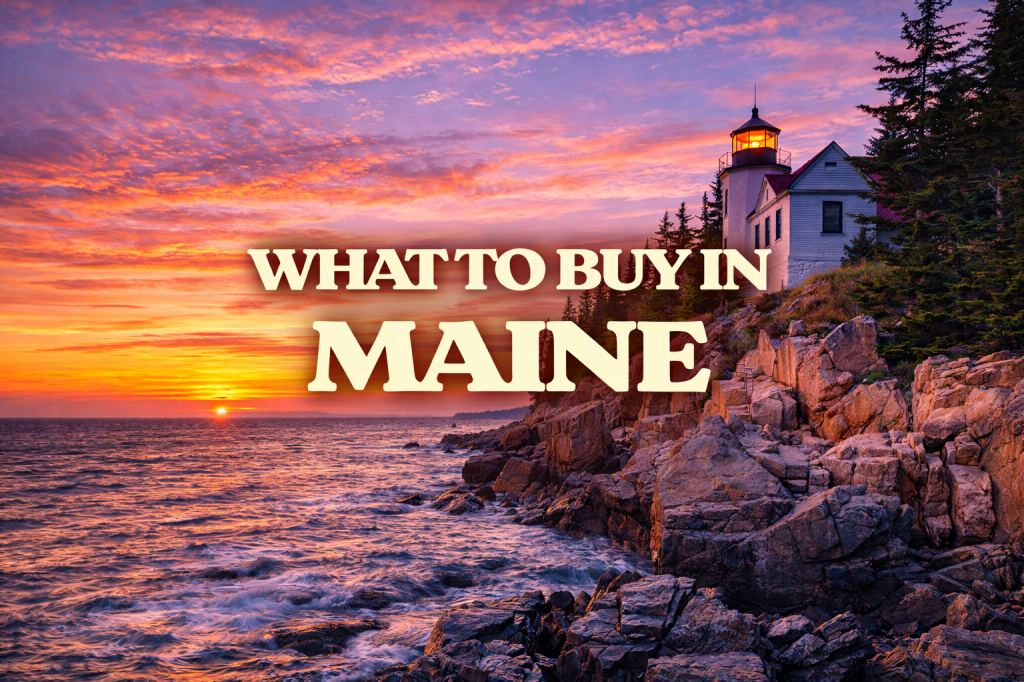
From the salt-bright tang of Casco Bay to the resinous snap of a pine cone underfoot on a Katahdin trail, Maine greets the senses in immediate, unmistakable ways.
Cobblestone streets in Portland’s Old Port rattle with the footsteps of fishermen and shoppers, while the air around Bar Harbor carries the smoke of wood-fired lobsters and the soft, mineral whisper of sea glass tumbling on sand.
If you’re wondering what to buy in Maine, let the scents, textures and small-town rhythms guide you.
Inside clam shacks, artisan studios and Saturday markets the state’s handcrafted voice is clear: hand-stitched wool hats knit in a Downeast cottage, salt-preserved seaweed from local harvesters, and painted lobster buoys nailed to the doors of working harbors.
From Freeport outlets to the summer craft fairs of Camden and the Common Ground Country Fair in Unity, each souvenir is a story folded around a place, a season, and a maker. Here’s what to buy in Maine to bring a piece of its spirit back home.
1. Hand-Painted Lobster Buoy
Why pick this up:
These oak or pine buoys, once used to mark lobster pots, are iconic symbols of Maine’s working waterfronts and make striking wall art or garden décor. Their bright colors and weathered paint patterns tell the story of the lobsterman or harbor they came from.
What to look for:
Seek hand-painted buoys with visible brushstrokes and aged patina; smaller, repurposed buoys are easier to transport. Ask if the buoy was reclaimed from a local trap to ensure authenticity.
Price bracket (2025):
$40–$250
Where to find it:
Boothbay Harbor, Rockland artisan shops, Portland’s Old Port galleries, and harbor-side stands in Bar Harbor.
2. Wild Maine Blueberry Jam
Why pick this up:
Maine’s lowbush wild blueberries are intensely flavored and sweeter than cultivated berries, making jams and preserves uniquely local. They capture a taste of the blueberry barrens of Downeast or Washington County.
What to look for:
Buy jars labeled “wild” or “lowbush” with a local farm or co-op name—small-batch, glass-jared preserves will taste fresher. Check for minimal added sugar and whole-fruit texture.
Price bracket (2025):
$6–$18 per jar
Where to find it:
Farm stands on Route 1, Portland Farmers’ Market, Common Ground Country Fair, and specialty food shops in Bar Harbor.
3. L.L.Bean Boots or Outerwear
Why pick this up:
L.L.Bean’s Maine-made heritage items—especially the classic Bean Boot—are practical, durable pieces tied to the state’s outdoor culture and Freeport flagship store. They’re both an icon and a genuinely useful keepsake.
What to look for:
Authentic Bean boots or gear with the brand’s tags; consider purchasing at the Freeport flagship for the full experience and repairs service. Try them on—fit and comfort matter.
Price bracket (2025):
$80–$220
Where to find it:
Freeport L.L.Bean flagship store and outlet shops, select outdoor outfitters.
4. Pemaquid Pottery (or Local Stoneware)
Why pick this up:
Hand-thrown stoneware from coastal studios like Pemaquid is practical art—mugs and plates glazed in ocean-toned finishes that recall Maine’s tides. Each piece carries the maker’s unique marks and the irregularities that come with handcraft.
What to look for:
A potter’s stamp or signature on the base, subtle glaze variations, and a sturdy feel. Small studios around the midcoast often produce the most distinctive glazes.
Price bracket (2025):
$25–$150
Where to find it:
Pemaquid, Rockland galleries, Camden artisan co-ops, and summer studio tours.
5. Wabanaki Birchbark or Ash-Splint Basket
Why pick this up:
Wabanaki tribal crafts—like birchbark containers and ash-splint baskets—are centuries-old traditions from the Penobscot, Passamaquoddy and Maliseet peoples and connect directly to Maine’s Indigenous heritage. These pieces are both functional and culturally meaningful.
What to look for:
Confirm Indigenous provenance and ask for maker information; authentic pieces use local birchbark or ash and show traditional weaving techniques. Avoid mass-produced imitations that lack tribal attribution.
Price bracket (2025):
$75–$600
Where to find it:
Tribal craft markets, museum shops showcasing Native art, and Certified Indigenous artists at Portland events and the Common Ground Fair.
6. Moxie Soda
Why pick this up:
Moxie is the original Maine soft drink with a bittersweet, aromatic flavor—an acquired taste that many Mainers adore and visitors find delightfully distinct. A bottle is a small, quirky piece of state identity.
What to look for:
Original glass bottles or locally canned versions; special-edition labels from Maine celebrations are collectible. Try a bottle chilled from a local grocer first if you haven’t tasted it.
Price bracket (2025):
$1.50–$5 per bottle/can; specialty packs $10–$25
Where to find it:
Local grocery stores, Portland deli counters, and gift shelves in Freeport and Bar Harbor.
7. Hand-Knit Wool Hat or Fisherman’s Sweater
Why pick this up:
Hand-knit wool hats and sweaters made from Maine fleece or regional yarns are both practical against coastal winds and evocative of New England knit traditions. They make warm, wearable souvenirs with visible stitch-work and island-inspired patterns.
What to look for:
Natural wool fiber content, a maker’s label or tag, and tightly worked, even stitches; look for local yarn brands or spinning farms. Lighter handwashing instructions and small repairs are signs of hand-knit quality.
Price bracket (2025):
$30–$250
Where to find it:
Fiber festivals, Portland craft markets, Camden studio shops, and barn-stand craft booths around midcoast Maine.
8. Vacuum-Sealed Smoked Salmon or Canned Seafood
Why pick this up:
Maine’s cold, clean waters produce distinct seafood flavors—vacuum-sealed smoked salmon or artisan canned lobster and scallops let you bring that coastal taste home. These items travel well when packed properly and often come from small smokehouses.
What to look for:
USDA or state inspection labels, vacuum-sealed packaging with harvest dates, and clear origin listings (e.g., “caught in Downeast Maine”). Ask sellers about customs-friendly packing if flying internationally.
Price bracket (2025):
$8–$40
Where to find it:
Fish markets in Portland’s waterfront, Rockland, Bar Harbor, and specialty grocers.
9. Sea Glass Jewelry
Why pick this up:
Jewelry made from recovered sea glass carries the colors and grit of Maine’s beaches—greens, blues and soft milky whites polished by tides. Small, locally made pieces often incorporate local silver or driftwood accents.
What to look for:
Pieces labeled as hand-collected Maine sea glass with a maker’s signature; avoid perfectly smooth, mass-produced “sea glass” which can be tumbled glass. Check for sturdy settings and reputable artisans.
Price bracket (2025):
$20–$150
Where to find it:
Bar Harbor boutiques, Portland art fairs, and craft tables at coastal galleries.
10. Hand-Carved Wooden Oar or Model Boat
Why pick this up:
Carved oars, miniature dories, and model lobster boats reflect Maine’s centuries of boatbuilding and maritime craft. They’re tactile reminders of working harbors and make dramatic mantel or wall displays.
What to look for:
Solid wood construction, signed or stamped by the maker, and finish that shows hand-sanding or traditional varnish. Smaller models are better for travel; larger oars may require shipping.
Price bracket (2025):
$45–$650
Where to find it:
Boothbay Harbor boatyards, Rockland galleries, and artisan studios along the midcoast and Penobscot Bay.
11. Maine Maple Syrup (Small-Batch)
Why pick this up:
While New England as a region is known for maple, Maine producers produce small-batch syrups with distinct terroir—lighter spring runs and darker, robust late-season boils. They’re a sweet, shelf-stable souvenir tied to sugarhouse seasons and wood-fired expertise.
What to look for:
Pure maple syrup labeled by grade and producer, preferably in glass bottles; look for farm names and small-batch notes. Avoid syrup blends or high-fructose corn syrup products labeled as maple.
Price bracket (2025):
$10–$40 per bottle
Where to find it:
Farm stands, Portland Farmers’ Market, Kennebunkport shops, and sugarhouses offering tours in spring.
Tip: Pack fragile or perishable food purchases in a small insulated cooler and buy larger wooden or pottery pieces from shops that will help ship them home safely. 📦🧊
Local Shopping Culture & Traditions
Maine’s shopping culture is seasonal and community-rooted: island and coastal towns swell with summer artisans, while winter festivals and indoor craft shows keep makers working year-round.
Famous markets, like Portland’s Old Port stalls, the Portland Farmers’ Market at Deering Oaks and the Common Ground Country Fair in Unity draw both local buyers and visitors hunting for handcrafts, produce and preserved foods.
Midcoast towns such as Rockland, Camden and Boothbay Harbor host boatyards and galleries that reflect a long history of shipbuilding and maritime trade.
Bargaining is uncommon in most Maine shops, prices in galleries and farm stands tend to be fixed, though occasional flea markets or roadside stalls may welcome polite offers.
Artisan villages and studio trails (especially during summer open-studio weekends) are the best places to meet makers, learn about materials like birchbark and ash, and commission custom work.
How to Spot Genuine Local Souvenirs
Look for maker information like stamped pottery bases, woven signatures in baskets, or business cards tucked into packaging to confirm local origin. For Indigenous crafts like Wabanaki baskets, ask directly about tribal affiliation and maker provenance; authentic pieces will be sold by tribal artisans or through museum-trusted sources.
Natural materials matter: birchbark should show grain and variation, wool should be labeled with fiber content and origin, and sea glass should have irregular, frosted edges rather than uniform shapes.
For food items, check for state or USDA inspection marks, vacuum-sealed packaging, and clear ingredient lists; small-batch producers usually list a farm or smokehouse name and production date. Avoid shiny, perfectly identical items that suggest factory-made imports, and when in doubt, ask the seller about where and how the item was made.
Where to Shop in Maine
- Portland’s Old Port and the Portland Farmers’ Market (Deering Oaks and Monument Square)
- Freeport (L.L.Bean flagship and outlet district)
- Bar Harbor and Acadia-area gift shops and galleries
- Rockland, Camden and Boothbay Harbor artisan districts and boatyards
- Common Ground Country Fair in Unity (annual) and local summer craft fairs
- Portland Museum of Art shop and other museum stores; Portland International Jetport (PWM) gift shops
FAQs
Q: Are souvenirs in Maine expensive?
A: Prices vary—farm-stand foods and small crafts are affordable, while handcrafted furniture, large oil paintings, and bespoke baskets can be pricier; expect to pay more for provenance and small-batch items.
Q: Is bargaining common in Maine?
A: Not generally—most galleries, farm stands, and specialty shops have fixed prices, though occasional outdoor markets or flea vendors may accept reasonable offers.
Q: How do I know if food items are safe to bring home?
A: Look for vacuum-sealed packaging, clear producer labels, and USDA/state inspection marks; ask vendors about shelf life and customs rules for international travel.
Explore Maine’s markets, studios and harbors—each purchase tells the story of its maker and place, so seek out the local voices behind the goods and enjoy the hunt for authentic finds like those listed above. what to buy in Maine
Let me know in the comments if you have any other top ‘what to buy’ ideas!
About the Author
Colin is the founder of SouvenirsIdeas.com and a passionate traveller with a soft spot for ceramics, markets, and food tours. He writes practical, first-hand guides to help you bring home souvenirs that actually mean something — not just more clutter!

 Souvenir Ideas to Take Home from Every Country and City
Leave a comment