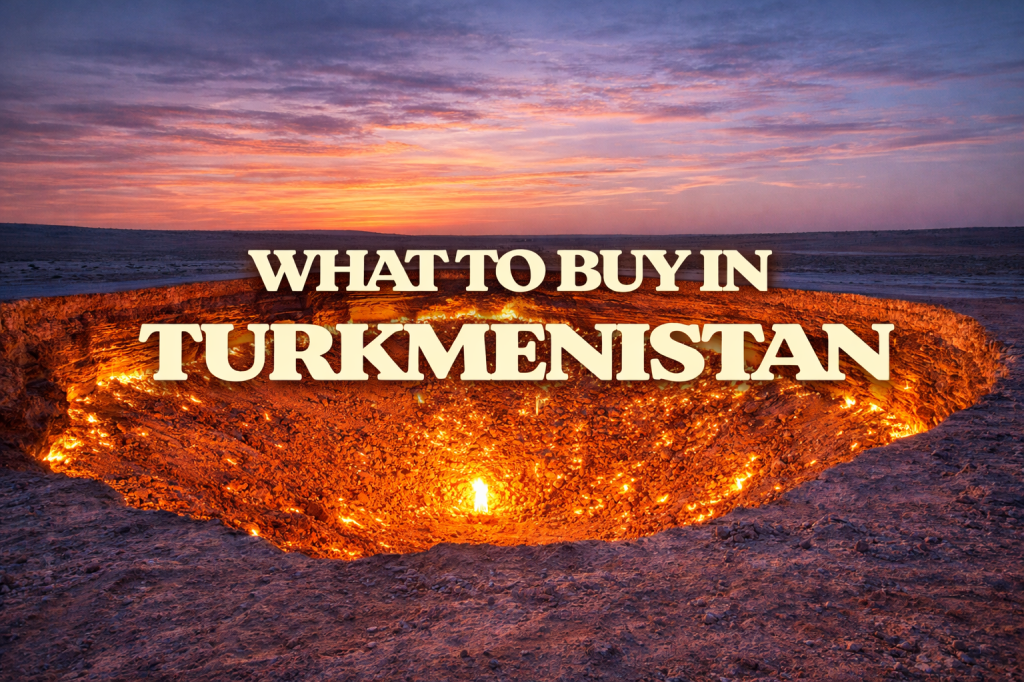
From the wind-swept dunes of the Karakum Desert to the white-marble squares of Ashgabat, Turkmenistan unfolds in sharp contrasts. The metallic gleam of Akhal-Teke horses’ coats, the soft pile of hand-knotted rugs, and the faint tang of black tea steaming in teapots at the Altyn Asyr (Tolkuchka) bazaar.
Walk a market lane and you’ll feel sun-warmed wool, see saffron-gold ikat silk catching the light, and hear spindly looms tapping out century-old patterns, the sensory map of a nomadic past woven into everyday craft.
In villages around Ahal and Mary, women still tie ikat threads by hand and card wool from local sheep; in Ashgabat museum shops, silver filigree and horsehair bracelets sit alongside stacks of dried apricots from Lebap.
Whether you’re drawn to the rough texture of a telpek or the glossy finish of a copper samovar, Turkmenistan souvenirs taste, touch, and look like the landscapes that made them. Here’s what to buy in Turkmenistan to bring a piece of its spirit back home.
1. Hand-knotted Turkmen Carpet (Tekke or Yomud)
Why pick this up:
Turkmen carpets are living history—dense wool, traditional guls (medallions), and colors derived from local dyes tell family and tribal stories. A small prayer rug or a larger floor carpet makes a dramatic, tactile reminder of the country’s nomadic heritage.
What to look for:
Seek natural wool with slightly uneven knots and strong, deep reds made from madder root; Tekke and Yomud guls are distinctive and signal authentic tribal weaving. Avoid perfectly uniform machine-made pieces and ask about the knot count and the dyestuff.
Price bracket (2025):
TMT 800–TMT 20,000 (small mats to large hand-knotted carpets).
Where to find it:
Altyn Asyr (Tolkuchka) Bazaar in Ashgabat, Turkmen Carpet Museum shop, and weaving villages in Ahal Province.
2. Telpek (Traditional Sheepskin Hat)
Why pick this up:
The telpek, a voluminous curly sheepskin hat, is a striking symbol of Turkmen identity and makes a warm, textural souvenir with real local provenance. Its tactile quality and dramatic silhouette are instantly recognizable.
What to look for:
Choose dense, soft sheepskin with neat stitching and a leather or felt lining; authentic telpeks come from local breeds and vary by region. Beware of synthetics that mimic texture but lack weight and warmth.
Price bracket (2025):
TMT 200–TMT 1,200. Where to find it:
Altyn Asyr Bazaar, craft stalls near Ashgabat’s parks, and markets in Mary and Dashoguz.
3. Akhal-Teke Horse Miniatures & Horsehair Jewelry
Why pick this up:
The Akhal-Teke is Turkmenistan’s national horse—its metallic sheen inspires everything from brass statuettes to braided horsehair bracelets that carry cultural symbolism. These pieces are elegant reminders of the country’s equestrian pride.
What to look for:
Look for finely worked bronze or brass miniatures stamped with maker marks and horsehair items braided into neat, stable patterns. Ask whether the hair is genuine and if the metal is hand-finished rather than cast cheaply.
Price bracket (2025):
TMT 50–TMT 900. Where to find it:
Souvenir stalls at Ashgabat’s monuments, Tolkuchka Bazaar, and handicraft markets near equestrian centers in Ahal.
4. Ikat Silk Scarf (Local “ikat” Textiles)
Why pick this up:
Turkmen ikat—its blurred, feathered patterns—reflects centuries of Silk Road dyeing techniques; a scarf or shawl is wearable art that carries vivid color and a distinctive hand-dyed edge. The shimmer of silk ikat catches light like a desert mirage.
What to look for:
Seek scarves where the dye shows characteristic ikat “blurs” and unevenness—signs of hand-resist dyeing—and confirmed silk content. Avoid printed imitations with perfect edges and identical repeats.
Price bracket (2025):
TMT 150–TMT 1,200. Where to find it:
Textile stalls at Altyn Asyr, museum gift shops in Ashgabat, and artisan workshops in Mary.
5. Silver Filigree Jewelry with Coral or Turquoise
Why pick this up:
Delicate silver filigree and coral beadwork are staples of Turkmen female dress; a pendant or pair of earrings carries tribal motifs and makes a meaningful wearable memento. Jewelry often blends silverwork with red coral—a color traditionally prized in the region.
What to look for:
Look for hand-chased motifs, hallmarks or maker’s stamps, and natural coral/turquoise rather than plastic imitations. Small imperfections in filigree indicate handwork; ask about silver purity.
Price bracket (2025):
TMT 200–TMT 3,000. Where to find it:
Altyn Asyr Bazaar, antique stalls near old bazaars, and museum shops in Ashgabat.
6. Hand-hammered Copper Teapots & Samovars
Why pick this up:
Tea culture is central in Turkmenistan; a copper teapot or small samovar is both practical and decorative, perfect for reproducing the ceremonial tea ritual at home. The warm glow of hammered metal feels like the bazaars’ late afternoon light.
What to look for:
Prefer pieces with visible hammer marks and solid handles, and ask whether the interior is tin-lined (for safety). Avoid thin, stamped items that feel lightweight and hollow.
Price bracket (2025):
TMT 300–TMT 2,000. Where to find it:
Metalwork stalls at Tolkuchka and specialty artisans around Ashgabat.
7. Felt Yurt Decorations & Small Shyrdak Rugs
Why pick this up:
Felt appliqué and small shyrdak-style rugs reflect nomadic yurt decoration—bright geometric motifs made from layered felt are excellent wall hangings or table pieces. They’re portable, colorful, and rooted in pastoral craft.
What to look for:
Look for layered felting with clean hand-cut motifs and dense stitching; authentic pieces use sheep’s wool and natural dyes. Beware of machine-pressed felt and printed designs.
Price bracket (2025):
TMT 100–TMT 1,500. Where to find it:
Craft stalls in regional bazaars, artisan workshops in Ahal and Dashoguz, and market stalls in Mary.
8. Dried Fruits, Local Honey & Traditional Sweets (Chak-chak)
Why pick this up:
Lebap and Mary produce plump dried apricots, figs, and fragrant honey that capture the agricultural taste of Turkmenistan; chak-chak and other sweets make for delightful edible gifts. These edible souvenirs bring the country’s flavors straight to your kitchen.
What to look for:
Choose sealed packs with local origin labels, bright color (no excessive sugar coating), and ask vendors about packing dates for freshness. Avoid loose, dusty displays that lack hygienic packaging.
Price bracket (2025):
TMT 20–TMT 180. Where to find it:
Altyn Asyr Bazaar, produce aisles in city markets, and specialty food counters at Ashgabat airport.
9. Painted Ceramics & Pottery (Regional Styles)
Why pick this up:
Hand-painted plates, bowls, and decorative tiles show regional motifs and color palettes that echo historic Silk Road pottery. They make striking display pieces and carry local glaze techniques.
What to look for:
Choose hand-painted surfaces with slight brushstroke variations and a stable glaze; check for cracks or hairlines by tapping gently. Avoid mass-produced, uniformly perfect ceramics without kiln marks.
Price bracket (2025):
TMT 80–TMT 900. Where to find it:
Pottery stalls in Ashgabat bazaars, craft markets in Dashoguz and Mary, and museum shops.
10. Embroidered Door Hangings & Suzani-style Textiles
Why pick this up:
Rich, hand-embroidered textiles—used historically to decorate yurts and doors—burst with color and floral motifs that are quintessentially Central Asian. These pieces are great as wall art or throws.
What to look for:
Inspect tight hand-stitching, natural threads, and traditional patterns; authentic embroideries show small irregularities that confirm handwork. Beware of cheaply printed textiles labeled as “embroidered.”
Price bracket (2025):
TMT 150–TMT 2,000. Where to find it:
Altyn Asyr Bazaar, artisan cooperatives in provincial towns, and the Turkmen Carpet Museum shop.
Tip: When buying larger textiles or carpets, ask the vendor to show the loom or photographs of the workshop—seeing the process is the best proof of authenticity. 🧭
Local Shopping Culture & Traditions
Shopping in Turkmenistan follows a mix of formal and informal customs: city stores and museum shops tend to have fixed prices, while open-air bazaars like Altyn Asyr (Tolkuchka) encourage conversation, friendly haggling, and the chance to meet artisans.
Many crafts, especially carpet weaving and ikat dyeing are family or village enterprises, passed down through generations in Ahal, Mary, and Dashoguz regions. Weekend bazaars and seasonal fairs near regional centers often display the freshest produce, wool goods, and handmade jewelry.
Cultural influences come from nomadic Turkic roots and centuries on the Silk Road, layered with Soviet-era manufacturing and modern urban tastes in Ashgabat.
It’s common to be offered tea when negotiating a price, accepting the cup is as much a social bridge as a courtesy, and a good way to learn the story behind an item.
How to Spot Genuine Local Souvenirs
Look for small imperfections that signal handcraft: slightly irregular knotting on carpets, ikat “blurs” where resist-dyeing met hand-tying, and visible hammer marks on metalwork.
Ask about materials, natural madder reds, sheep’s wool, silk, tin-lined copper, and real coral or turquoise are hallmarks of authenticity.
For textiles, request to see the reverse side to confirm hand-stitching; for jewelry, ask about hallmarks or the artisan’s name.
Avoid overly uniform, glossy items with “Made in” labels from elsewhere, and be cautious of identical pieces sold across many stalls (often imports).
For food items, choose sealed packaging with origin labels and clear packing dates, and ask vendors for storage recommendations to ensure freshness through your travels and customs clearance.
Where to Shop in Turkmenistan
- Altyn Asyr (Tolkuchka) Bazaar, Ashgabat — the largest open-air bazaar for carpets, textiles, and foodstuffs.
- Turkmen Carpet Museum shop, Ashgabat — for certified carpets and curated textile pieces.
- Bazaars in Mary and Dashoguz — strong regional craft traditions, especially ikat and felt work.
- Artisan villages in Ahal Province — visit workshops to see carpet weaving and telpek-making firsthand.
- Ashgabat city-center shops and museum boutiques — fixed prices and quality-controlled souvenirs.
- Ashgabat International Airport gift shops — good last-minute options for packaged foods and small crafts.
FAQs
Q: Are souvenirs in Turkmenistan expensive?
A: Prices vary widely—museum stores and high-quality carpets are pricier, while small textiles, sweets, and handcrafted trinkets are modestly priced at local bazaars.
Q: Is bargaining common in Turkmenistan?
A: Yes—haggling is expected at open-air bazaars like Altyn Asyr, but shopfronts and museum stores typically have fixed prices.
Q: How do I know if food items will pass customs?
A: Choose commercially sealed packages with clear labeling and avoid fresh unsealed products; check your destination country’s import rules before packing.
Explore Turkmenistan’s markets and workshops to discover stories woven into every object, and bring home a piece of the country’s rich tradition of craft and hospitality through Turkmenistan souvenirs.
Let me know in the comments if you have any other top ‘what to buy’ ideas!
About the Author
Colin is the founder of SouvenirsIdeas.com and a passionate traveller with a soft spot for ceramics, markets, and food tours. He writes practical, first-hand guides to help you bring home souvenirs that actually mean something — not just more clutter!


 Souvenir Ideas to Take Home from Every Country and City
Leave a comment