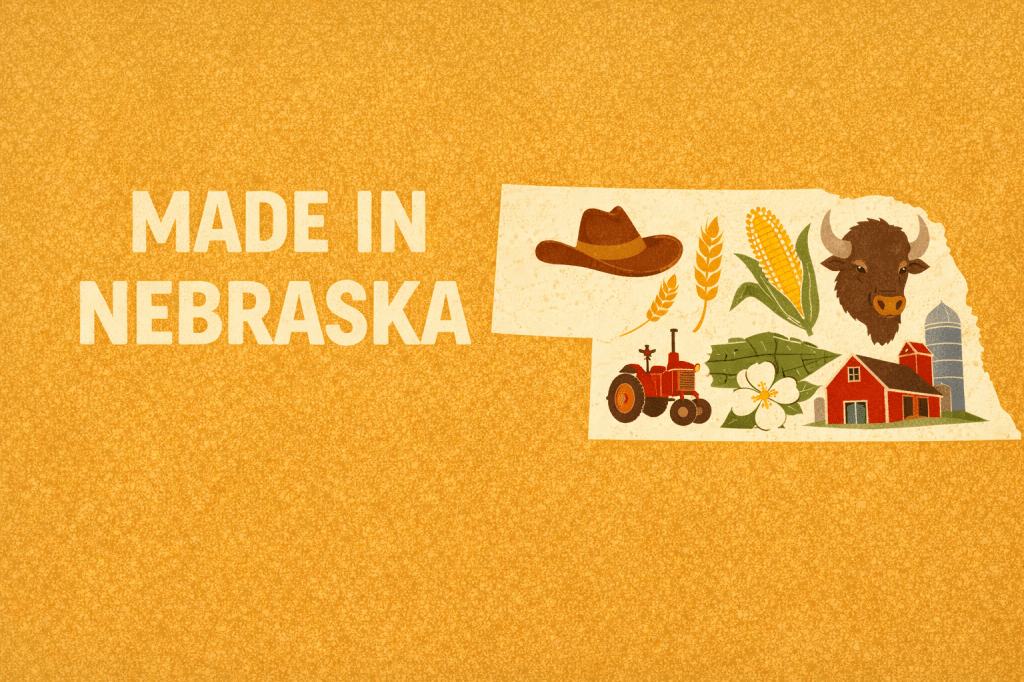
Nebraska unfolds as a wide, wheat-gold landscape punctuated by Sandhills ridges, rippling cornfields, and river valleys where grapes cling to limestone bluffs.
The state’s artisan scene draws on ranching, immigrant bakery traditions, Indigenous beadwork, and prairie-grown ingredients. All shaped by long winters, community gatherings, and a hands-on relationship with land and livestock.
Here are the best things truly Made in Nebraska, products that reflect its heritage, creativity, and everyday life.
1. Corn‑Fed Nebraska Beef
Why it’s made here: Cattle and corn are the backbone of Nebraska agriculture; abundant siloed cornfields and feedlots around the Platte and Republican river basins produce the high‑energy grain finishing that defines the state’s rich, well‑marbled beef.
What to look for: Look for ranch or cooperative names, an origin statement (“Born, Raised, and Finished in Nebraska”), and cuts butchered to local preferences (ribeye, hanger, brisket). Ask about finishing practices (corn‑finished vs. grass‑fed).
Price bracket (2025): $8–$25 per pound for primal and retail cuts; premium dry‑aged or grass‑finished steaks can reach $30+ per pound.
Where to find it: Farmers markets, farm stores, ranch direct sales, local butcher shops, and select restaurant menus in Omaha, Lincoln, and smaller towns.
2. Small‑Batch Artisan Cheeses
Why it’s made here: Dairy farms and creameries across Nebraska experiment with European and American styles using local milk, from sharp cheddars to washed‑rind cheeses that reflect seasonal forage.
What to look for: Hand‑stamped rounds, affineur notes, milk source listed on the label, and limited‑run seasonal varieties (herb, smoked, or raw‑milk offerings where legal).
Price bracket (2025): $8–$30 per wedge/round depending on age and style.
Where to find it: Creameries, farmers markets, regional food co‑ops, and museum or farmstead shops.
3. Kolaches and Czech Pastries
Why it’s made here: Southeastern Nebraska hosts strong Czech and Central European heritage (towns like Wilber and surrounding counties), preserving bakery techniques that produce tender kolaches and filled sweet breads.
What to look for: Yeasted dough with fruit or cheese fillings made the day of purchase, not factory‑sealed packaging; baker’s signature, scratch‑made texture, and traditional fillings like prune or poppy seed.
Price bracket (2025): $2–$6 per pastry depending on size and filling.
Where to find it: Local bakeries, bakery stalls at county fairs, Czech heritage festivals, and bakery counters in small towns.
4. Sandhills Wool Blankets & Yarn
Why it’s made here: The Sandhills region supports sheep grazing and a prairie wool tradition; local shepherds and small mills turn native fleece into rustic blankets and hand‑dyed yarns with durable, insulating qualities.
What to look for: Natural fiber content (100% wool), mill or shepherd name, hand‑spun or hand‑dyed notes, and simple loom or blanket patterns typical of ranch use.
Price bracket (2025): $40–$350 (yarn skeins to heavyweight blankets).
Where to find it: Fiber festivals, farm outlets, craft fairs, and cooperative shops in rural communities.
5. Prairie Wildflower Honey
Why it’s made here: Nebraska’s mixed prairie and riverine flora (clover, goldenrod, and wildflower stands) produces distinct, slightly floral honeys from small apiaries and farm pollination operations.
What to look for: Single‑source or floral‑source labeling, hive or beekeeper name, and small glass jars rather than bulk plastic; crystallization is a sign of pure, unprocessed honey.
Price bracket (2025): $8–$20 per 8–16 oz jar.
Where to find it: Farmers markets, roadside farm stands, and agricultural fairs.
6. Niobrara‑Valley & Platte River Wines
Why it’s made here: Cold‑climate vineyards planted along river corridors and in the Niobrara Valley AVA take advantage of microclimates and limestone soils to produce hybrid and cold‑hardy varietals as well as boutique dry and fruit wines.
What to look for: AVA or vineyard designation, small production notes, grape varietal adapted to the northern plains (e.g., Marquette, Frontenac), and tasting‑room bottlings.
Price bracket (2025): $12–$35 per bottle for local labels; reserve bottlings higher.
Where to find it: Tasting rooms, winery events, regional wine trails, and farm‑to‑table restaurants.
7. Small‑Batch Distilled Spirits
Why it’s made here: Craft distilleries take Nebraska grains, corn, and sorghum as base ingredients for whiskeys, moonshine‑style corn spirits, and flavored liqueurs that echo frontier distilling traditions.
What to look for: Distillery origin, mash bill listed on the label, small batch or numbered bottles, and local grain sourcing statements.
Price bracket (2025): $30–$80 per 750ml bottle for craft whiskeys and specialty spirits.
Where to find it: Distillery tasting rooms, specialty liquor stores, and farmers markets that permit alcohol sales.
8. Native American Beadwork and Regalia
Why it’s made here: Nebraska is home to the Omaha, Ponca, Winnebago (Ho‑Chunk), Santee Sioux and other communities with living beadwork, quillwork, and ribbonwork traditions passed down through generations.
What to look for: Artist or tribal attribution, natural materials, hand‑stitched backing, signature patterns or clan motifs, and provenance or artist contact for commissioned pieces.
Price bracket (2025): $25 for small earrings up to several hundred or thousands for ceremonial pieces or elaborate panels.
Where to find it: Tribal artisan markets, powwows, cultural centers, and reservation gift shops.
9. Hand‑Thrown Prairie Pottery
Why it’s made here: Local potters use Nebraska clays and glazes inspired by prairie hues and river silt, producing functional dinnerware, crocks, and sculptural pieces rooted in utilitarian traditions.
What to look for: Potter’s mark or signature, wheel‑thrown irregularities, local clay or glaze descriptions, and kiln‑fired labels (cone info).
Price bracket (2025): $15–$300 depending on size and artist reputation.
Where to find it: Pottery studios, regional art centers, craft shows, and museum shops.
10. Hand‑Tooled Leather Saddles & Ranch Gear
Why it’s made here: With a strong ranching and rodeo culture, Nebraska supports leatherworkers who craft saddles, bridles, and hand‑tooled belts tailored to working needs and Western form.
What to look for: Full‑grain leather, hand‑stitching, maker’s mark, custom fit or tooling patterns, and hardware rated for ranch use.
Price bracket (2025): $150–$3,000 (accessories to custom saddles).
Where to find it: Tack shops, ranch saddler workshops, rodeos, and farm supply co‑ops.
11. Nebraska Popcorn and Heirloom Corn Products
Why it’s made here: Nebraska is one of the nation’s major popcorn producers and also preserves heirloom corn varieties used for specialty grits and flours, reflecting the state’s agrarian seed diversity.
What to look for: Variety name (butterfly, mushroom popcorn), single‑farm labeling, heirloom or non‑GMO statements, and small‑batch microwave or stovetop packs.
Price bracket (2025): $3–$12 per bag; heirloom flours higher.
Where to find it: Farmers markets, farm stores, specialty food shops, and roadside stands.
Local Makers & Traditions
Nebraska’s craft heritage is braided from ranch life, immigrant kitchens, Indigenous arts, and prairie resourcefulness. The Sandhills shepherds and cattle ranchers, Czech bakers in southeast Nebraska, and Native American communities around reservation. They all have long sustained distinct methods, from hand‑quilted blankets and saddle tooling to beadwork and kolache recipes.
Cities like Omaha and Lincoln host cooperative studios, while county fairs and events such as state fair exhibitions keep practical craft skills visible and evolving. Potters often source river clays, distillers highlight local grain, and winemakers leverage river bluffs and sheltered valleys for vine cultivation.
How to Spot Genuine Local Products
- Check provenance: a maker’s name, farm or studio, and a brief origin statement are strong indicators.
- Inspect for handwork: small irregularities, hand‑stitching, potter’s marks, and signed pieces usually mean a product is handmade.
- Read labels carefully: look for “Produced in Nebraska,” “family farm,” or the specific town/estate. Beware generic “Midwest” tags without maker info.
- Materials matter: natural wool, full‑grain leather, named grape varietals, single‑source honey, and whole‑kernel corn signal local production; shiny perfect uniformity and low prices often indicate mass production or imports.
- Ask questions: reputable makers will explain sourcing and process — if the seller is evasive about origin, treat the item skeptically.
Where to Buy Made‑in‑Nebraska Goods
- Farmers markets in Omaha, Lincoln, and regional county seats
- County and state fairs, and artisan craft shows
- Museum shops and cultural centers that highlight regional makers
- Winery and distillery tasting rooms along river corridors
- Historic shopping districts (Old Market in Omaha; Haymarket in Lincoln) and rural farm stands
- Airport shops that curate regional food and beverage offerings
FAQs
Q: Are products in Nebraska expensive?
A: Prices range widely — farmstand foods and small bakery goods are affordable, while handcrafted saddles, large pottery, and ceremonial beadwork can be costly due to materials and labor.
Q: How can I tell if something is authentically made here?
A: Look for maker attribution, origin statements, natural material evidence, and small‑batch indicators; ask the seller about the farm, studio, or tribal artist.
Q: What is the best made‑in‑Nebraska gift to bring home?
A: Pick something tied to place and use — a jar of prairie honey, a wedge of local cheese, a bag of Nebraska popcorn, or a piece of signed beadwork all travel well and tell a local story.
Explore local workshops and markets to experience the craft and taste behind every item made in Nebraska.
Let me know in the comments if you have any other top ‘what to buy’ ideas!
About the Author
Colin is the founder of SouvenirsIdeas.com and a passionate traveller with a soft spot for ceramics, markets, and food tours. He writes practical, first-hand guides to help you bring home souvenirs that actually mean something — not just more clutter!


 Souvenir Ideas to Take Home from Every Country and City
Leave a comment