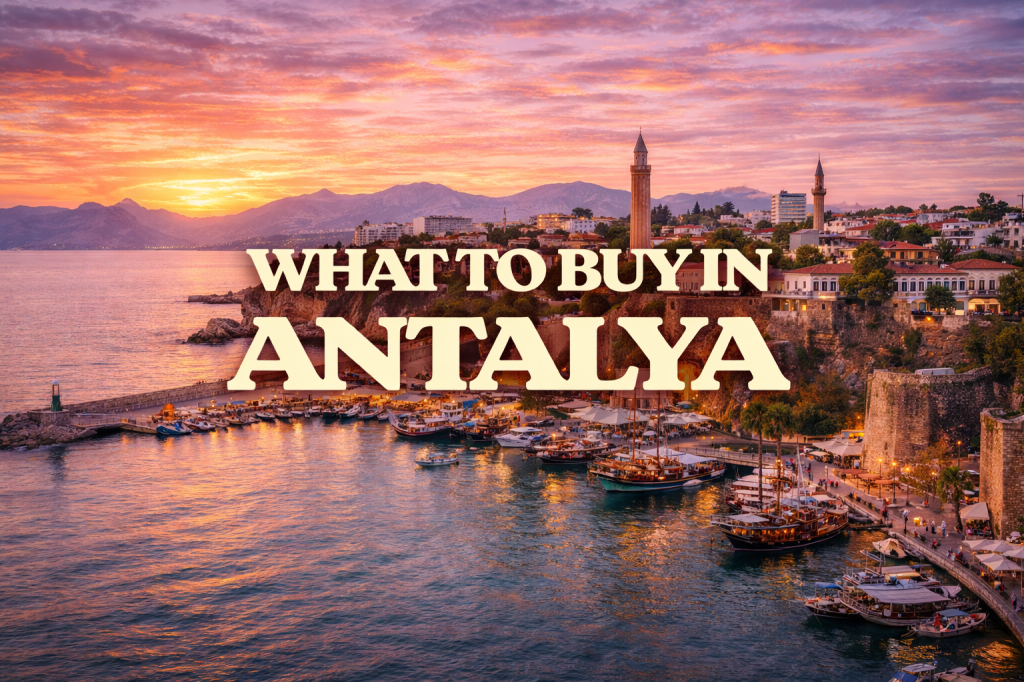
Antalya is a coastal city with long craft traditions and a lively market culture. Shopping here mixes foods, handcrafted items, and things shaped by the sea and history.
This guide covers souvenirs you can find across Antalya, not a single street or shop. It focuses on locally linked items, how to judge their quality, and simple packing tips for travelers.
1. Kilim textile
• Why it’s worth buying: Kilims show local patterns and traditional weaving techniques. They carry regional colors and motifs found in older Antalya textiles.
• Where to look: Open-air markets are common places to find smaller kilims and cushion covers.
• Price range: $20–$250
• How to spot a good one: Check for tight, even weave and natural dyes that don’t rub off when damp.
• Easy-to-pack tip: Roll a small kilim and slide it into a soft duffel or suitcase corner.
2. Hand-painted ceramics
• Why it’s worth buying: Local ceramics often use Mediterranean glazes and familiar Ottoman motifs. A painted plate or tile makes a clear reminder of the region.
• Where to look: Independent shops near tourist routes often stock hand-painted bowls and tiles.
• Price range: $10–$120
• How to spot a good one: Look for a clear glaze, hand-painted brushstrokes, and an artist’s mark on the bottom.
• Easy-to-pack tip: Wrap pieces in clothing and place them in the center of your luggage.
3. Copperware (hand-hammered)
• Why it’s worth buying: Hammered copper tea trays and serving pieces reflect a long metalworking tradition. They patina attractively and last for years.
• Where to look: Galleries that show traditional crafts sometimes sell hammered copper items.
• Price range: $25–$200
• How to spot a good one: Even hammer marks and solid seams show honest handwork rather than machine stamping.
• Easy-to-pack tip: Fill hollow items with soft clothing to protect them from dents.
4. Artisanal olive oil
• Why it’s worth buying: Antalya’s coastal olive groves produce mild, fruity oils used in local cooking. A good bottle is useful and lasts well.
• Where to look: Food halls carry sealed bottles and can tell you about harvest dates and press methods.
• Price range: $8–$45
• How to spot a good one: Look for harvest date, single-origin label, and a dark glass bottle to protect flavor.
• Easy-to-pack tip: Put bottles in sealed plastic bags and surround them with clothes inside checked baggage.
5. Turkish delight (lokum)
• Why it’s worth buying: Lokum is a regional sweet with many flavors and long shelf life when sealed. It’s an easy, locally linked edible gift.
• Where to look: Co-ops and specialty food counters sell packaged lokum with clear ingredient lists.
• Price range: $5–$25
• How to spot a good one: Pick boxes with preservative-free recipes and a clear production or cooperative label.
• Easy-to-pack tip: Keep vacuum-sealed boxes in your carry-on to avoid crushing.
6. Spice mixes and single spices
• Why it’s worth buying: Spices such as sumac, pul biber, and regional blends bring Antalya flavors back to your kitchen. They’re small and durable.
• Where to look: Bazaar stalls typically sell spices in measured bags or tins.
• Price range: $3–$20
• How to spot a good one: Fresh aroma and bright color signal freshness; avoid dusty, faded powders.
• Easy-to-pack tip: Use airtight tins or zip bags to prevent leaks and odor transfer.
7. Sea salt
• Why it’s worth buying: Local sea salt has a coarser texture and different mineral notes than table salt. It’s practical and lightweight.
• Where to look: Covered markets offer packaged sea salt from local producers.
• Price range: $3–$12
• How to spot a good one: Choose labeled packaging with origin information and no additives.
• Easy-to-pack tip: Put the salt package inside a sealed bag and place it in checked luggage.
8. Handmade silver jewelry
• Why it’s worth buying: Silver pieces often combine local motifs with simple designs and wearable forms. They make personal, lasting souvenirs.
• Where to look: Galleries that represent local metalsmiths offer a range of handcrafted jewelry.
• Price range: $20–$300
• How to spot a good one: Look for hallmarks or maker’s stamps and consistent soldering on joins.
• Easy-to-pack tip: Store jewelry in a small pouch inside your carry-on to avoid tangling.
9. Leather sandals
• Why it’s worth buying: Well-made leather sandals reflect long shoemaking traditions and handle warm weather well. They are practical for travel home.
• Where to look: Independent shops near main streets often carry handmade leather footwear.
• Price range: $25–$80
• How to spot a good one: Check stitching, sole attachment, and flexibility of the leather for comfort.
• Easy-to-pack tip: Wear your sandals on travel days to save luggage space.
10. Ebru marbling prints
• Why it’s worth buying: Ebru art uses floating dyes to create unique paper prints tied to regional craft practices. Each piece is one-of-a-kind.
• Where to look: Craft fairs and seasonal markets display marbling prints and small framed works.
• Price range: $10–$150
• How to spot a good one: Look for vivid, layered colors and a certificate or artist name when available.
• Easy-to-pack tip: Carry flat prints in a portfolio or a rigid folder in your carry-on.
11. Turkish tea glass set
• Why it’s worth buying: Slim tea glasses and saucers are central to local drink culture and fit into many kitchens. They’re lightweight and useful.
• Where to look: Food halls often sell boxed tea glass sets with saucers and small plates.
• Price range: $8–$40
• How to spot a good one: Choose sets with even glass thickness and well-glazed saucers that sit flat.
• Easy-to-pack tip: Nest glasses with paper towels and pack saucers between layers of clothing.
12. Nautical-themed handicrafts
• Why it’s worth buying: Small rope decor, model boats, or shell ornaments reflect Antalya’s coastal life. They carry local character with low weight.
• Where to look: Harbor stalls near the marina sell maritime-inspired crafts and small souvenirs.
• Price range: $5–$60
• How to spot a good one: Solid construction and natural materials indicate better quality than painted plastic.
• Easy-to-pack tip: Small rope items compress well; wrap delicate parts and tuck them into shoe gaps.
Quick buying tips for Antalya
• Carry small bills, but most shops accept cards; markets sometimes prefer cash.
• Ask politely if haggling is acceptable; many market stalls expect friendly negotiation.
• Wrap fragile ceramics in clothing and use bubble wrap or purchased sleeves.
• Ask about shipping from shops for heavy or fragile items to avoid baggage issues.
• Look for ‘made locally’ stickers, artisan signatures, or provenance labels on crafts.
• Pack oils, honey, and liquids in checked luggage in sealed bags per airline rules.
Where to shop in Antalya
Shopping is spread across the city, from the old town alleys to the modern waterfront. Visit covered bazaars for food items, small craft shops for metalwork and textiles, and the marina area for coastal goods.
- Kaleiçi (Old Town) for traditional crafts, small galleries, and vintage-style textiles.
- Antalya Old Bazaar for spices, sweets, and everyday kitchenware sold in close stalls.
- The marina and waterfront promenades for nautical-inspired trinkets and seaside ceramics.
- Central covered markets for olives, olive oil, wrapped sweets, and packaged local foods.
- Museum shops at cultural centers for curated prints, books, and higher-quality replicas.
- Weekly open-air pazarlar for fresh herbs, spice sacks, and inexpensive textile accessories.
- Seasonal handicraft fairs in summer for direct contact with makers and unique pieces.
What to skip (common tourist traps)
- Cheaply made carpets with vague origin labels; quality requires visible weave and fiber info.
- Unbranded spice mixes sold loose without scent; freshness and cleanliness are unclear.
- Fragile ceramics sold without packing help or protective wrapping for travel.
- Jewelry without hallmarks or clear metal content; it may be low-grade plating.
- Items labeled “made locally” with no artisan name or production details.
- Mass-produced souvenir sets with generic symbols but no local craftsmanship.
If you only buy three things
Kilim textile — It shows local weaving styles and packs into a suitcase if small.
Artisanal olive oil — It’s useful, long-lasting, and brings local flavor home.
Hand-painted ceramic tile — A small tile is a clear, decorative reminder of the region.
FAQ
What is Antalya known for making?
Antalya is known for combining coastal food products and traditional crafts. Crafts include textiles, ceramics, and metalwork tied to regional styles.
What are the best edible souvenirs from Antalya?
Olive oil, packaged lokum (Turkish delight), and regional spice blends are good choices. They travel well when sealed and labeled.
Are souvenirs expensive in Antalya?
Prices vary widely; markets offer budget options while galleries and museum shops charge more. Expect to pay extra for handcrafted or signed pieces.
What is the easiest souvenir to pack from Antalya?
Spices or packaged sweets are light and compress well, making them the easiest to pack. They usually fit into carry-on bags without trouble.
How do I know if something is truly local?
Look for an artisan name, production date, or origin label and ask where it was made. Shops or co-ops that explain the maker and materials usually offer more reliable local goods.
Tip: Save your receipts, and keep fragile items in your carry-on.
About the Author
Colin is the founder of SouvenirsIdeas.com and a passionate traveller with a soft spot for ceramics, markets, and food tours. He writes practical, first-hand guides to help you bring home souvenirs that actually mean something — not just more clutter!
Let us know in the comments if this has been useful or if you’ve got suggestions we can include

 Souvenir Ideas to Take Home from Every Country and City
Leave a comment