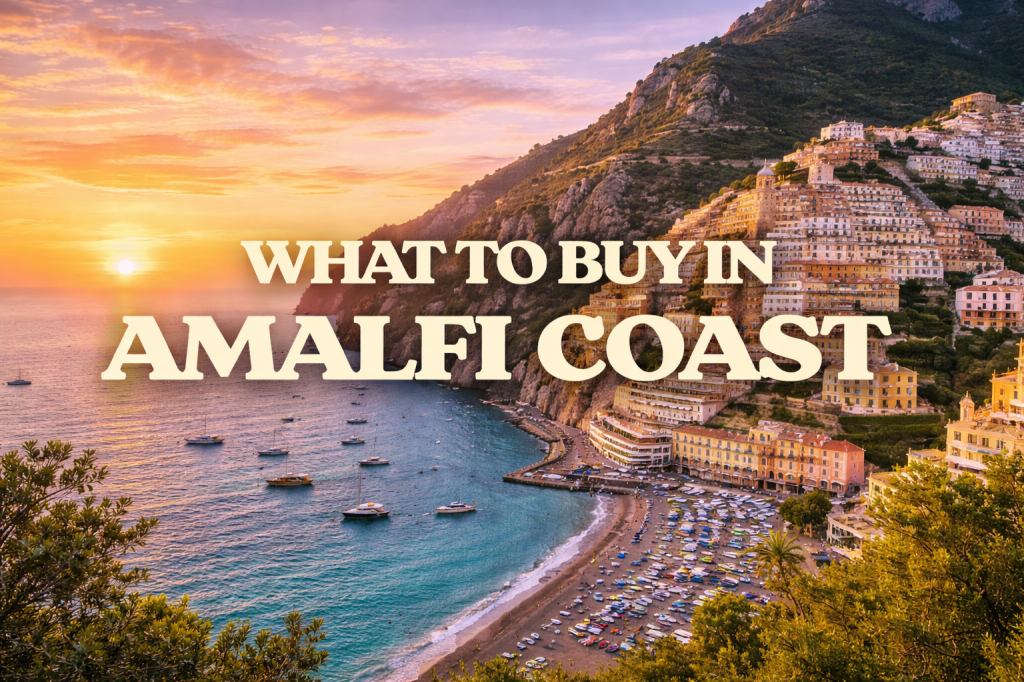
The Amalfi Coast is a great place to shop for items that show the region’s flavors, colors, and craft traditions. This guide looks at souvenirs you can find across the whole coast, not just in one town.
You’ll find food, ceramics, textiles, and small crafts made by local artisans or sold at markets and cooperatives. The focus here is on locally made, easy-to-pack choices and how to tell good quality from touristy mass production.
What to Buy in Amalfi Coast: 12 Souvenirs Worth Bringing Home
1. Hand-painted majolica plate
• Why it’s worth buying: Plates show classic Amalfi colors and local painting styles. They make attractive keepsakes for the home.
• Where to look: Find them at artisan studios and craft shops along the coast.
• Price range: $20–$150
• How to spot a good one: Look for clear brush strokes, even glaze, and a firm weight.
• Easy-to-pack tip: Wrap plates individually in clothing and place them at the center of your suitcase.
2. Limoncello (local lemon liqueur)
• Why it’s worth buying: Limoncello captures the region’s famous lemons and makes a lively souvenir. It’s a small taste of local tradition.
• Where to look: Sold at specialty food shops and market stalls across the coast.
• Price range: $10–$35
• How to spot a good one: Choose bottles with clear labeling of ingredients and no artificial coloring.
• Easy-to-pack tip: Wrap the bottle in bubble wrap and pack in your carry-on if possible.
3. Candied lemon peel and lemon candies
• Why it’s worth buying: These sweet treats are made from local citrus and travel well. They are a tasty, compact reminder of the coast.
• Where to look: Available in food markets, specialty grocery shops, and farm stalls.
• Price range: $4–$15
• How to spot a good one: Check for natural ingredients and minimal preservatives on the label.
• Easy-to-pack tip: Put packs in a sealed plastic bag to protect against spills.
4. Sea salt infused with herbs or lemon
• Why it’s worth buying: Local sea salt carries coastal flavor and enhances cooking at home. Small jars are very practical to carry.
• Where to look: Look for it in food markets or specialty food shops by the harbor.
• Price range: $3–$12
• How to spot a good one: Choose coarse grains with visible herbs or citrus flakes, not powdery mixes.
• Easy-to-pack tip: Wrap jars in clothing and place them upright in a hard-sided compartment.
5. Woven straw or raffia bag
• Why it’s worth buying: Woven bags are practical and reflect seaside style. They make useful day bags or market totes.
• Where to look: Find them at craft shops, markets, and small coastal boutiques.
• Price range: $15–$80
• How to spot a good one: Check tight, even weaving and neat stitching at handles.
• Easy-to-pack tip: Stuff the bag with soft items to keep its shape during travel.
6. Nautical rope keychain or small boat model
• Why it’s worth buying: These items echo the region’s fishing and boating culture in compact form. They are small and light to carry.
• Where to look: Found at craft shops, seaside markets, and artisan stalls near marinas.
• Price range: $6–$25
• How to spot a good one: Look for secure knots and natural materials rather than cheap plastic parts.
• Easy-to-pack tip: Tuck small rope items into a padded pouch inside your bag.
7. Extra virgin olive oil
• Why it’s worth buying: Local olive oil offers genuine flavor from nearby groves and lasts well. It’s useful in the kitchen back home.
• Where to look: Buy from cooperatives, specialty food shops, or farmers’ stands.
• Price range: $10–$40
• How to spot a good one: Look for harvest date, cold-press notes, and simple ingredient lists.
• Easy-to-pack tip: Seal bottles and wrap in layers of clothing to prevent breakage.
8. Handmade silver or coral jewelry
• Why it’s worth buying: Jewelry reflects local metalwork and coastal motifs, and it’s easy to wear home. It can be a special, small memento.
• Where to look: Sold at artisan studios, galleries, and craft markets along the coast.
• Price range: $25–$200
• How to spot a good one: Inspect clasps, soldering points, and genuine material markings.
• Easy-to-pack tip: Keep jewelry in a small hard case or a padded pouch in your carry-on.
9. Linen scarf or lightweight textile
• Why it’s worth buying: Textiles show local patterns and are useful year-round. Scarves pack flat and are easy to carry.
• Where to look: Available at markets, textile shops, and craft stalls across the region.
• Price range: $15–$60
• How to spot a good one: Feel the fabric for softness and even weave; check for natural fibers.
• Easy-to-pack tip: Fold scarves flat between layers of clothing to avoid wrinkles.
10. Wooden kitchen utensils or spoons
• Why it’s worth buying: Well-made wooden tools are practical and last years with care. They fit in most suitcases.
• Where to look: Find them at craft shops, markets, and woodworker stalls.
• Price range: $8–$45
• How to spot a good one: Choose smooth finishes, no rough edges, and stable joins.
• Easy-to-pack tip: Wrap handles in clothing and place in the suitcase’s center.
11. Art prints or small lithographs
• Why it’s worth buying: Prints capture coastal scenes and are easy to frame later. They make lightweight, personal souvenirs.
• Where to look: Buy from galleries, print shops, or market stalls that sell local art.
• Price range: $10–$60
• How to spot a good one: Look for clear print quality and a noted local artist or studio.
• Easy-to-pack tip: Roll prints in a protective tube or carry flat in a portfolio.
12. Local honey or jam
• Why it’s worth buying: Honey and jam use regional fruit and flowers, offering true local taste. Small jars are stable and delicious gifts.
• Where to look: Purchase at farm shops, markets, and food cooperatives around the coast.
• Price range: $6–$25
• How to spot a good one: Choose minimal ingredient lists and visible fruit content when possible.
• Easy-to-pack tip: Seal jars in plastic bags and pad with clothing for travel.
Quick buying tips for Amalfi Coast
• Carry small bills; many market vendors prefer cash over cards.
• Haggling is rarely expected in shops, but polite offers work at outdoor markets.
• Wrap glass bottles in clothes and secure with bubble wrap for safe packing.
• Many shops offer reliable shipping; ask about insurance and delivery estimates.
• Look for labels stating ‘made locally’, artisan stamps, or workshop provenance details.
• Seal liquids and jars in plastic bags, then mark them in checked luggage.
Where to shop in Amalfi Coast
Shops range from open-air markets to small artisan studios and specialty food stores. Walking along the coast, you will often find clusters of craftspeople and market stalls near main viewpoints and harbors.
Start your search at:
• Coastal open-air markets selling food, textiles, and small crafts.
• Artisan studios where pieces are painted or made on-site.
• Specialty food shops and grocers for limoncello, olive oil, and salts.
• Small galleries and print shops featuring local artists’ work.
• Cooperatives and farm stalls that sell honey, jam, and oils.
• Seaside boutiques offering woven bags and nautical accessories.
What to skip (common tourist traps)
• Mass-produced ceramics with identical patterns — they lack local craftsmanship.
• Bottles sold without ingredient lists — may be mixed or low-quality liqueurs.
• Cheap metal jewelry that tarnishes quickly and uses base alloys.
• Generic “made in” labels that don’t indicate a local workshop or origin.
• Overly glossy postcards printed far from the region, signed by no local artist.
• Imitation coral pieces labeled as natural without certification or proof.
If you only buy three things
Hand-painted majolica plate — It represents local craft and is a strong visual reminder.
Limoncello — It’s a classic edible souvenir unique to the region’s lemons.
Extra virgin olive oil — It’s useful, durable, and brings regional flavor to your kitchen.
FAQ
What is Amalfi Coast known for making?
The Amalfi Coast is known for its citrus products, especially lemons, and for painted ceramics. The area also has artisan textiles, handmade jewelry, and coastal food products.
What are the best edible souvenirs from Amalfi Coast?
Limoncello, candied lemon peel, local honey, and quality olive oil are top edible picks. They showcase local ingredients and travel well when properly packed.
Are souvenirs expensive in Amalfi Coast?
Prices vary from budget-friendly market items to higher-end artisanal pieces. Expect to pay more for hand-painted ceramics and handmade silver than for small food souvenirs.
What is the easiest souvenir to pack from Amalfi Coast?
Small items like candies, sea salt, art prints, and jewelry are easiest to pack and carry. They are light, flat, and unlikely to break in transit.
How do I know if something is truly local?
Ask about the maker and where it was produced, check labels for provenance, and look for artisan stamps. Buying directly from studios, cooperatives, or markets increases the chance of genuine local goods.
Tip: Save your receipts, and keep fragile items in your carry-on.
About the Author
Colin is the founder of SouvenirsIdeas.com and a passionate traveller with a soft spot for ceramics, markets, and food tours. He writes practical, first-hand guides to help you bring home souvenirs that actually mean something — not just more clutter!
Let us know in the comments if this has been useful or if you’ve got suggestions we can include


 Souvenir Ideas to Take Home from Every Country and City
Leave a comment