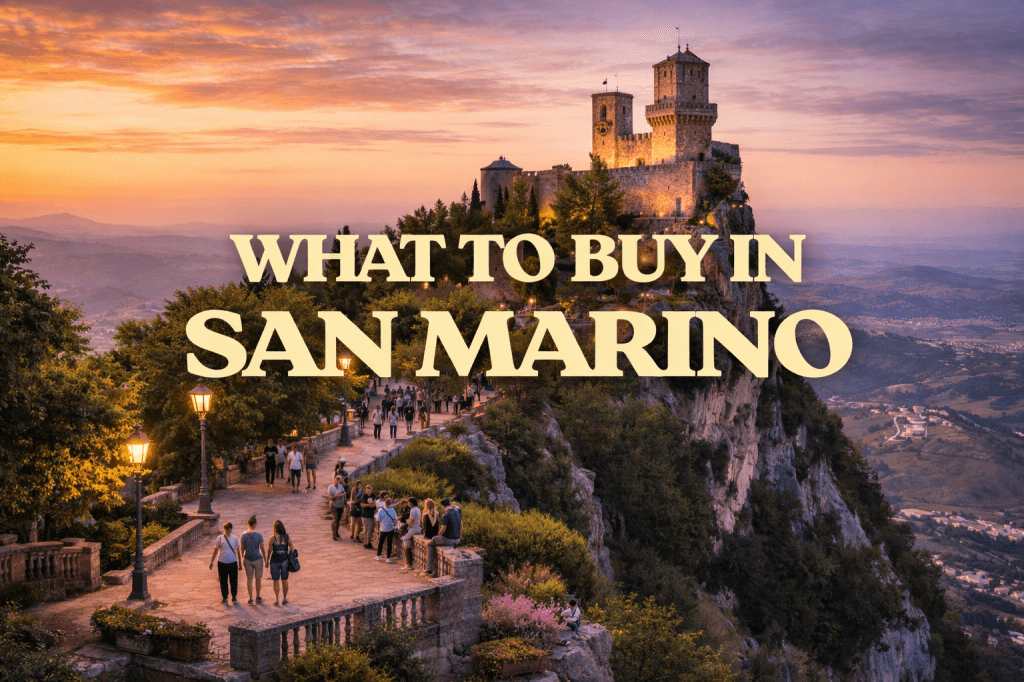
From the wind-whipped ramparts of Monte Titano you can see olive terraces tumbling toward the Adriatic and the three crenellated towers, Guaita, Cesta and Montale standing like sentinels over cobbled alleys.
In the shade of Piazza della Libertà the air smells of roasted chestnuts in autumn, dark chocolate from shop windows and the faint, herbal tang of local olive oil being sampled at enoteca counters.
Step into Borgo Maggiore on a Saturday and the market unfurls in a kaleidoscope of textiles, honey jars, hand-painted ceramics and piles of Tre Monti wafers; the stone facades and quiet artisan workshops in Faetano and Domagnano hum with centuries of craft.
Here’s what to buy in San Marino to bring a piece of its spirit back home, and a guide to finding the very best San Marino souvenirs.
1. Torta Tre Monti (Tre Monti Cake)
Why pick this up:
The layered wafer cake coated in chocolate is an emblem of San Marino—crunchy, rich and proudly local. It’s a taste of the Republic that travels well and tells the story of Sammarinese confectionery tradition.
What to look for:
Choose nicely boxed versions from established producers labeled with the Tre Monti seal and a clear production date to ensure freshness. Avoid unlabeled cakes from generic stalls.
Price bracket (2025):
€4–€12
Where to find it:
Specialty pastry shops in Città di San Marino, Borgo Maggiore market stalls, and the food sections of Musei di Stato gift shops.
2. San Marino Stamps (Philatelic Issues)
Why pick this up:
San Marino’s tiny post office produces highly collectible stamps with unique designs—ideal for collectors or as framed keepsakes. The philatelic tradition here stretches back over a century and is internationally respected.
What to look for:
Ask for unopened mint sheets or first-day covers from the Ufficio Filatelico; look for the “Repubblica di San Marino” inscription and official cancellation marks. Beware of secondhand sheets without provenance.
Price bracket (2025):
€2–€80
Where to find it:
San Marino Post Office (Centro Storico) and the official philatelic counter.
3. Commemorative Euro Coins
Why pick this up:
San Marino issues limited-run €2 and collector coins that feature local icons and anniversaries—small, legal-tender mementos with strong resale and sentimental value. They make compact, elegant souvenirs.
What to look for:
Buy coins in original mint packaging or with a certificate of authenticity, especially for silver or gold issues. Check the year and mint mark.
Price bracket (2025):
€15–€250
Where to find it:
Official sales at the Post Office and authorized numismatic outlets in Città di San Marino and Serravalle.
4. Sammarinese Wine
Why pick this up:
Vines cling to the slopes of Monte Titano and nearby hills, producing fresh whites and earthy Sangiovese-based reds that reflect the microclimate. Bottles from small producers capture the terroir of the enclave.
What to look for:
Look for local estate labels and harvest year; small-batch producers often hand-label bottles. Ask enotecas for producer recommendations and tasting notes.
Price bracket (2025):
€8–€35
Where to find it:
Enotecas in the historic center, agriturismi around the castelli, and wine stalls at Borgo Maggiore market.
5. Extra Virgin Olive Oil
Why pick this up:
Cold-pressed olive oil from Monte Titano’s groves has a grassy, peppery finish and is a pantry staple that carries the hills’ scent. It’s a practical, delicious souvenir that uses local olives.
What to look for:
Choose oil bottled within the last year, labeled “produzione locale” or with a harvest date; dark glass bottles preserve quality. Avoid unlabeled bulk oil.
Price bracket (2025):
€8–€30
Where to find it:
Local mills, enotecas, farmers’ stalls at Borgo Maggiore and producers’ shops in the surrounding villages.
6. Local Honey and Jams
Why pick this up:
Mountain chestnut and wild-flower honeys condense the flora of the Titano slopes into a spoonful of deep flavor, while seasonal jams showcase local fruit. These are authentic edible gifts with clear regional provenance.
What to look for:
Buy jars with producer labels, harvest dates and no added preservatives; raw honey retains more flavor. For jams, check fruit content and sugar percentage.
Price bracket (2025):
€6–€20
Where to find it:
Farmers’ stalls at Borgo Maggiore, specialty food shops in Città di San Marino and weekend artisan markets.
7. Hand-Painted Ceramics (Three Towers Motif)
Why pick this up:
Ceramic plates, tiles and decorative pieces painted with the Three Towers or the Sammarinese coat of arms make vivid souvenirs rooted in place. The local motifs translate beautifully into home décor.
What to look for:
Seek visible brushstrokes, slight imperfections and artist signatures to confirm hand-painting rather than mass-printed designs. Larger pieces should be well-packed for travel.
Price bracket (2025):
€15–€120
Where to find it:
Artisan workshops and galleries in the historic center, stalls near the towers, and boutique shops in Borgo Maggiore.
8. Leather Goods by Local Artisans
Why pick this up:
Hand-finished belts, wallets and small bags reflect regional leatherwork techniques and make durable, everyday reminders of your trip. San Marino’s proximity to Italian leathercraft centers informs the quality.
What to look for:
Inspect stitching, lining and edges; genuine vegetable-tanned leather will have natural variations and a rich smell. Avoid overly glossy synthetic finishes.
Price bracket (2025):
€30–€150
Where to find it:
Craft shops in Serravalle, market stalls in Borgo Maggiore, and boutique retailers in Città di San Marino.
9. Handcrafted Jewellery Featuring the Three Towers
Why pick this up:
Silver and bronze pendants, cufflinks and pins with tower or Republic motifs are wearable reminders of the city atop the rock. Many pieces are made by local goldsmiths inspired by medieval designs.
What to look for:
Look for hallmarks, metal purity stamps and artisan signatures; ask about materials (silver vs. plated base metal) before you buy. Small boxes and certificates add confidence for higher-value pieces.
Price bracket (2025):
€25–€250
Where to find it:
Jewelry ateliers in Città di San Marino, souvenir boutiques near the Three Towers, and fair stalls during festivals.
10. Hand-Embroidered Linens & Lace
Why pick this up:
Delicate table linens and doilies echo needlework traditions from the surrounding region and make elegant, traditional gifts. They show a patient, domestic craft culture still alive in small workshops.
What to look for:
Inspect the stitching for evenness, fine thread and natural fibers like linen or cotton; hand-embroidered pieces will have tiny irregularities that prove they’re not machine-made. Ask about care instructions.
Price bracket (2025):
€20–€100
Where to find it:
Craft stalls at Borgo Maggiore, artisan studios in Faetano and Domagnano, and museum shops.
11. Wrought-Iron & Wood Carvings
Why pick this up:
Small decorative ironwork—keys, hooks, candle holders—and carved wooden figures reflect long-standing metalwork and carpentry skills in the region. These tactile pieces age well and feel rooted in place.
What to look for:
Check welds, finishes and patina on iron pieces; for wood, look for solid blocks, hand-tool marks and natural finishes. Avoid pieces that rattle or feel hollow.
Price bracket (2025):
€15–€200
Where to find it:
Artisan workshops around the castelli, the Borgo Maggiore market, and craft fairs in the historic center.
Tip: Pack fragile ceramics and Tre Monti cakes in bubble wrap or a padded box purchased at the market for safe travel 🧳
Local Shopping Culture & Traditions
Shopping in San Marino mixes tourist-friendly souvenir lanes around the Three Towers with authentic weekly rhythms, most notably the busy Borgo Maggiore market every Saturday. Here farmers and makers set out honey, oils, linens and handicrafts.
The Republic’s long philatelic and numismatic history means the Post Office is more than a counter; it’s a destination for stamp collectors and coin buyers, while local enotecas and agriturismi welcome visitors for tastings of small-batch wine and oil made on Titano’s slopes.
Artisan villages in the castelli, such as Faetano and Domagnano, host small workshops where traditional metalwork, embroidery and woodworking continue to be taught within families.
Bargaining is modest: fixed-price boutiques in Città di San Marino and museum shops rarely haggle, but you can politely negotiate at open-air market stalls or when buying multiple items from the same artisan.
Seasonal events like Christmas Mercatino di Natale and summer craft fairs are prime times to find unique handmade gifts and meet the makers behind them.
How to Spot Genuine Local Souvenirs
Look for provenance: labels that state “Prodotto a San Marino,” producer names, harvest dates on oils/honeys, and artist signatures on ceramics indicate local origin.
For stamps and coins, insist on mint packaging or official Post Office receipts; philatelic counters provide certificates and cancellations that prove authenticity. With food items, check production and expiry dates, ask whether honey is raw, and prefer dark-glass bottles for olive oil to ensure little light exposure.
For textiles and ceramics, visible hand-tool or brush marks, irregularities in stitch or paint, and signed pieces are positive signs you’re buying handmade rather than mass-produced imports.
Where to Shop in San Marino
- Borgo Maggiore market (Saturday market and producers’ stalls)
- Città di San Marino (souvenir lanes near the Three Towers and Piazza della Libertà)
- San Marino Post Office / Philatelic Office (official stamps and coins)
- Musei di Stato museum shop (historical replicas and local crafts)
- Serravalle shopping area and boutique streets for leather and fashion goods
- Agriturismi and enotecas in the surrounding hills for wine and olive oil tastings
- Seasonal craft fairs and the Mercatino di Natale for artisan gifts
FAQs
Q: Are souvenirs in San Marino expensive?
A: Prices vary—mass-market souvenirs near the towers are affordable, while genuine artisan goods, collector stamps and commemorative coins command higher prices; expect a mix to suit most budgets.
Q: Is bargaining common in San Marino?
A: Bargaining is limited; it’s more acceptable at open-air stalls and with independent artisans, but not typical in fixed-price shops, museum stores or the Post Office.
Q: How do I know if a food souvenir is safe to bring home?
A: Choose sealed, labeled jars and bottles with producer information and dates; ask vendors for export packaging and check your home country’s customs rules for honey, oils and alcohol before traveling.
Explore San Marino’s markets, ateliers and post office to discover authentic, story-rich keepsakes—San Marino souvenirs are waiting to be found.
Let me know in the comments if you have any other top ‘what to buy’ ideas!
About the Author
Colin is the founder of SouvenirsIdeas.com and a passionate traveller with a soft spot for ceramics, markets, and food tours. He writes practical, first-hand guides to help you bring home souvenirs that actually mean something — not just more clutter!


 Souvenir Ideas to Take Home from Every Country and City
Leave a comment