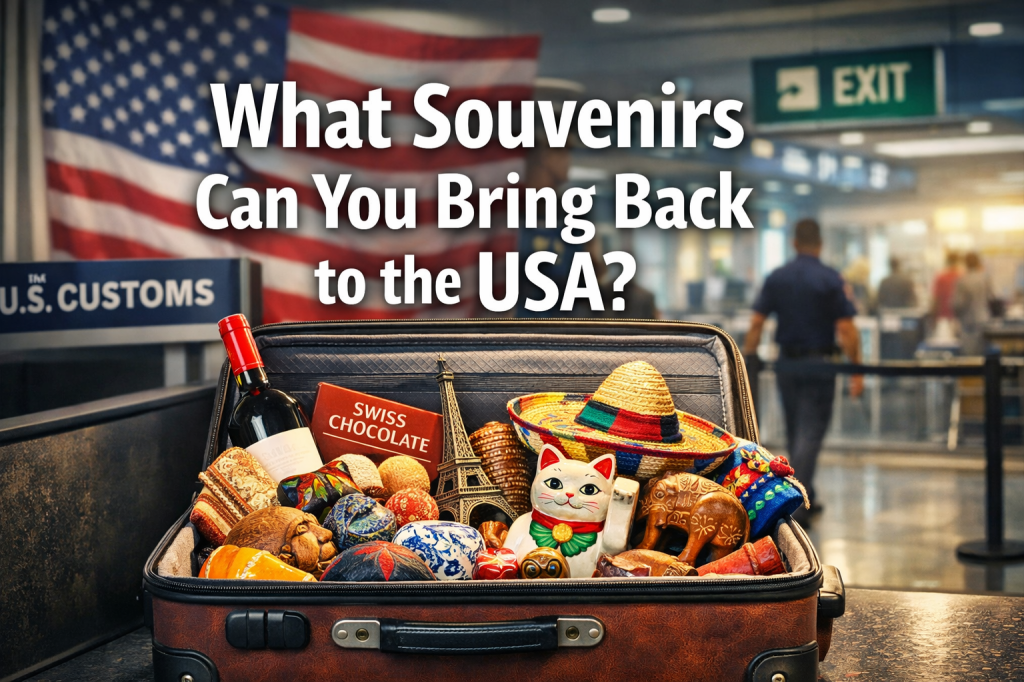
Bringing home souvenirs is one of the best parts of traveling. But many travelers worry about buying the “wrong” thing and having it confiscated at US customs.
The good news is that most souvenirs are allowed into the United States. The problems usually come from food, alcohol, plant materials, animal products, and antiques. This guide explains what you can bring back, what to declare, and what commonly gets taken away — using plain English and real examples.
Quick Answer: Can You Bring Souvenirs Into the USA?
Yes. Most souvenirs are allowed into the USA, including clothing, jewelry, art, crafts, and packaged goods. Items that cause issues are usually food, alcohol over limits, fresh plants, animal products, and undeclared items.
If you are unsure, declare it. Declaring an item rarely causes trouble. Not declaring it often does.
Souvenirs That Are Almost Always Allowed
These items rarely cause problems when entering the USA:
- Clothing, shoes, scarves, and textiles
- Jewelry and watches
- Artwork, paintings, and prints
- Pottery and ceramics
- Souvenir magnets, ornaments, and postcards
- Toys and non-commercial gifts
These types of souvenirs are commonly brought back from places like Italy, Mexico, and Japan without any issues.
Food Souvenirs: What’s Allowed and What’s Not
Food souvenirs are the number one cause of confiscation at US customs.
Usually Allowed (If Commercially Packaged)
- Chocolate and candy
- Coffee beans and ground coffee
- Tea
- Spices and dried herbs
- Cookies, crackers, and packaged snacks
These should be factory sealed, clearly labeled, and not homemade.
Sometimes Allowed (Declare These)
- Cheese (hard cheeses are usually allowed; soft cheeses may not be)
- Dried meats (often restricted)
- Nuts and seeds (rules vary by origin)
Almost Always Confiscated
- Fresh fruit or vegetables
- Homemade food
- Fresh meat or cured meats
- Open or unpackaged food
For example, chocolate from Switzerland is usually fine, but fresh cheese or sausage from France often gets taken.
Can You Bring Alcohol Into the USA?
Yes, but there are limits.
- 1 liter per adult (21+) is typically duty-free
- More than that is allowed, but you may pay duty
- Alcohol must be declared
Alcohol should be packed in checked luggage and well protected to prevent leaks or breakage.
Souvenirs That Often Cause Problems
Some souvenirs look harmless but are restricted.
Natural Items
- Seashells
- Coral
- Sand
- Rocks
Many of these are illegal to remove from certain countries or protected areas.
Animal and Plant Products
- Leather goods
- Fur items
- Feathers
- Wooden carvings
- Items made from bone or horn
Some are restricted under wildlife protection laws, even if sold openly abroad.
Antiques
- Items over 100 years old may need documentation
- Cultural artifacts can be restricted
Antique items from countries like Egypt or Peru can trigger extra scrutiny.
Real Examples: Can You Bring These Back to the USA?
| Bought Abroad | Item | Allowed? | Notes |
| Chocolate | Packaged chocolate | Yes | Declare if unsure |
| Italy | Leather bag | Usually | Depends on materials |
| Japan | Ceramics | Yes | Safely pack |
| Caribbean | Seashells | Often no | May be protected |
| France | Cheese | Sometimes | Hard cheese more likely |
| Mexico | Wooden mask | Usually | Declare if untreated |
Do You Have to Declare Souvenirs?
Yes. You must declare all food, alcohol, and purchased goods on your customs form.
Declaring an item does not mean it will be taken. It simply allows customs officers to decide whether it is allowed.
What Happens If You Don’t Declare an Item?
If you fail to declare something:
- The item may be confiscated
- You could face a fine
- You may experience delays at customs
In most cases, honest mistakes lead to confiscation, not serious penalties. Intentional non-declaration is treated more harshly.
Tips to Avoid Problems at US Customs
- Keep receipts for expensive items
- Pack food separately so it’s easy to declare
- When unsure, always declare
- Avoid buying fresh food or animal products
- Ask sellers if items are export-approved
Final Takeaway
Most souvenirs are perfectly fine to bring back into the USA. Problems usually come from food, alcohol limits, and natural or animal-based items. When in doubt, declare what you bought and let customs decide.
If you enjoy shopping abroad, you may also find these guides helpful:
- What to Buy in Mexico: 15 Souvenirs Full of Color, Craft & Flavor
- What to Buy in Italy: 15 Souvenirs That Bring La Dolce Vita Home
- What to Buy in Japan: 15 Souvenirs Full of Style, Flavor & Tradition
About the Author
Colin is the founder of SouvenirsIdeas.com and a passionate traveller with a soft spot for ceramics, markets, and food tours. He writes practical, first-hand guides to help you bring home souvenirs that actually mean something — not just more clutter!
Note: US customs rules can change, and some items are assessed case by case. This guide is based on current general regulations and traveler experiences. Always declare items and follow instructions from US Customs and Border Protection when you arrive.
 Souvenir Ideas to Take Home from Every Country and City
Leave a comment