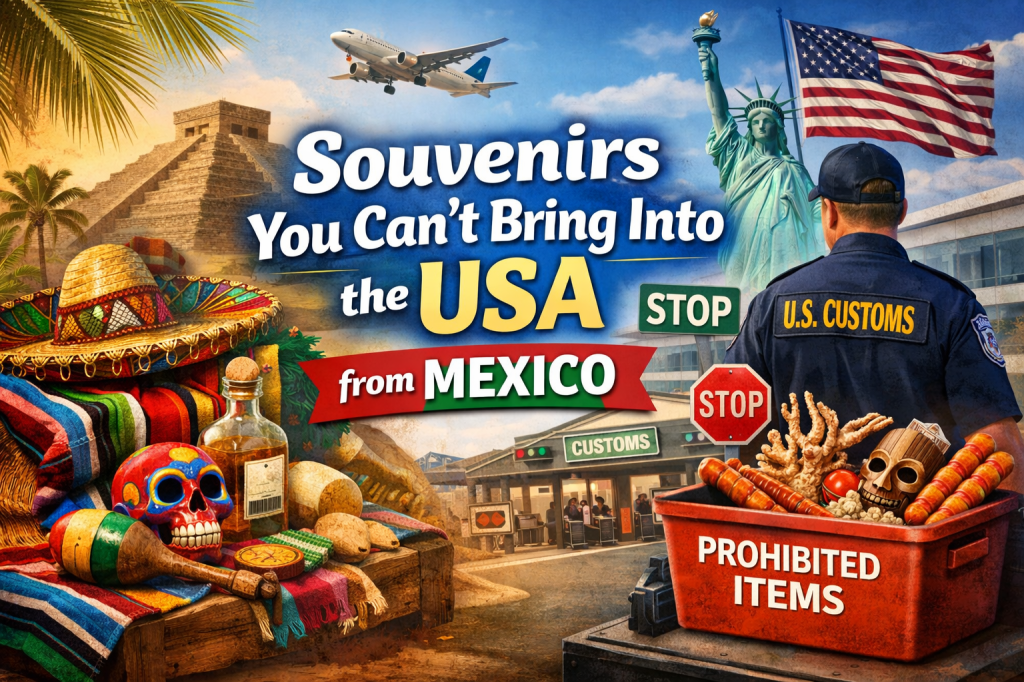
Mexico is the most visited foreign country by Americans, and it’s also one of the places where travelers most often have souvenirs confiscated at U.S. customs. Many popular Mexican souvenirs are restricted, regulated, or banned when entering the United States, even if they’re sold openly to tourists.
This guide explains, in plain English, what you can’t bring into the USA from Mexico, what items are commonly taken at the airport, and what to buy instead so you don’t lose your souvenirs.
Why Souvenirs From Mexico Get Confiscated
U.S. entry rules focus on:
- Agriculture protection (food, plants, seeds)
- Wildlife protection (animal products, coral, shells)
- Public safety & fraud (counterfeit goods)
Enforcement is handled by U.S. Customs and Border Protection, and tourists are not exempt just because an item was bought in a market or gift shop.
Souvenirs You Cannot Bring Into the USA From Mexico
Fresh Food & Agricultural Products
These are the most commonly confiscated items.
You cannot bring:
- Fresh fruit or vegetables
- Homemade salsas or sauces
- Fresh cheese or dairy
- Meat products (including dried meats)
Even sealed items may be taken if they contain restricted ingredients or lack proper labeling.
Animal Products & Wildlife Souvenirs
Many traditional-looking souvenirs fall into this category.
Banned or commonly confiscated:
- Coral, shells, or sand
- Items made from reptile skin
- Animal teeth, bones, or horns
- Feathers from protected birds
Even small decorative items can be illegal if they contain protected materials.
Seeds, Plants & Wooden Items
These are tightly controlled to prevent pests and disease.
You generally cannot bring:
- Seeds or bulbs
- Live plants
- Untreated wooden carvings or masks
- Items with bark attached
Some wooden items may be allowed only if treated and declared, but many are still seized.
Counterfeit & Imitation Goods
Tourist markets often sell lookalike products.
Items likely to be confiscated:
- Fake designer bags or wallets
- Imitation watches
- Pirated DVDs or software
Buying them in Mexico does not make them legal to import.
Restricted Items (Must Be Declared)
Some souvenirs are allowed only within strict limits and must be declared.
Common examples:
- Alcohol over personal limits
- Commercial food products (sealed, labeled)
- Animal-derived items with permits
Failure to declare can result in confiscation even if the item itself is legal.
Common Tourist Mistakes From Mexico
These are the items travelers most often lose:
- Chili sauces made with fresh ingredients
- Tequila bottles packed incorrectly
- Shell jewelry sold as “beach souvenirs”
- Wooden masks bought from artisan stalls
- Candy containing fruit pulp or seeds
Most confiscations happen because travelers assume items sold to tourists are automatically allowed.
What Happens If Customs Confiscates Your Souvenir?
In most cases:
- The item is taken and destroyed
- You are not fined if it’s a first-time, honest mistake
- Failure to declare can lead to penalties or delays
Confiscated items are not returned or shipped later.
Safe Mexican Souvenirs You Can Bring Home
If you want souvenirs with no hassle, these are usually safe:
- Talavera pottery
- Textiles and embroidered clothing
- Silver jewelry
- Art prints and paintings
- Sealed, commercially packaged candy (declared)
Should You Declare Souvenirs From Mexico?
For ideas, see: What to Buy in Mexico
Yes. Always declare:
- Food items
- Alcohol
- Anything made from animals or plants
Declaring does not automatically mean confiscation, but failing to declare often does.
Quick Summary
- Many popular Mexican souvenirs are not allowed into the USA
- Food, animal products, plants, and wood are the biggest risks
- Declaring items protects you from fines
- Buying “safe” souvenirs avoids problems entirely
This page is informational only. Rules can change, and enforcement varies by item and quantity.
About the Author
Colin is the founder of SouvenirsIdeas.com and a passionate traveller with a soft spot for ceramics, markets, and food tours. He writes practical, first-hand guides to help you bring home souvenirs that actually mean something — not just more clutter!
 Souvenir Ideas to Take Home from Every Country and City
Leave a comment