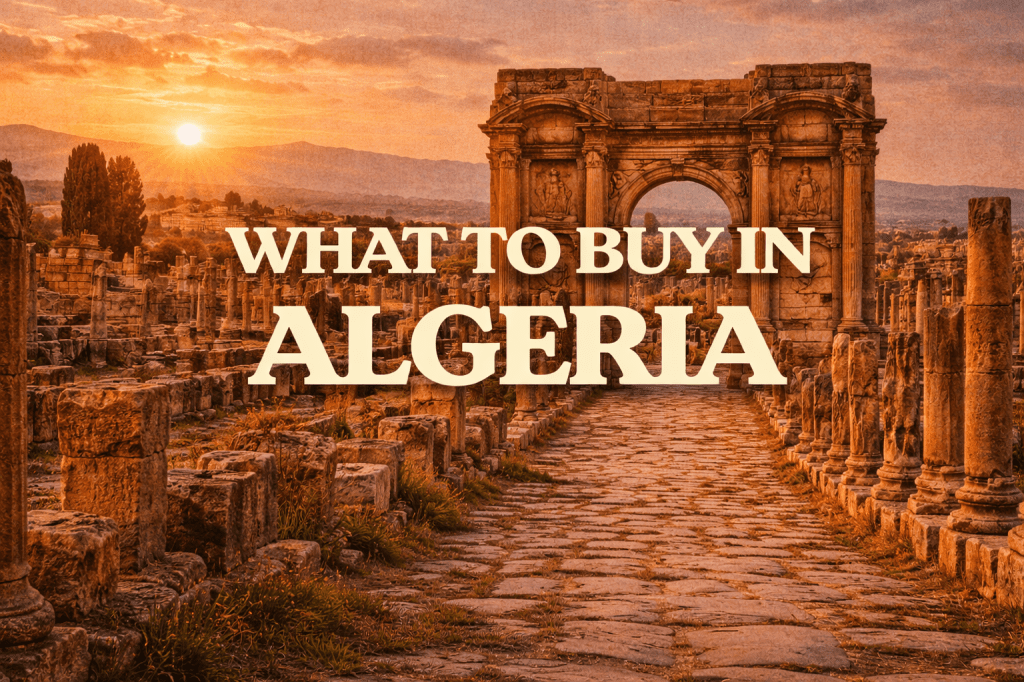
From the wind-sanded red walls of the Sahara to the salt-snap air off the Mediterranean, Algeria greets you with texture and spice: the leather tang of a market stall, the soft wool of a handloom, the citrus perfume of an Algerian orange grove.
Strolling the narrow alleys of the Casbah of Algiers or the sunbaked lanes of Ghardaïa, you hear merchants call out over piles of indigo textiles and tins of saffron-bright spices while the distant Atlas foothills shimmer in heat.
The country’s history is stitched into its objects, Berber silver catches the low light of Kabylie, palm-leaf baskets recall oasis life around Timimoun, and Deglet Nour dates from Tolga taste like concentrated sunshine.
If you’re wondering what to bring home, think tactile, edible, and story-rich: Algeria souvenirs are pieces of landscape and craft you can keep. Here’s what to buy in Algeria to bring a piece of its spirit back home.
1. Kabyle Silver Jewelry
Why pick this up:
Filigree and triangular motifs from Kabylie carry centuries of Amazigh symbolism and wear well as statement pieces. They’re both decorative and historically meaningful, linking you to mountain communities around Tizi Ouzou and Bejaia.
What to look for:
Look for hand-punched filigree, small solder marks, and slightly irregular patterns — signs of genuine handwork rather than machine stamping. Traditional pieces include fibula pins, crosses and pendants with granulation typical of Kabyle smithing.
Price bracket (2025):
DZD 6,000–45,000 for pendants and small necklaces; larger antique pieces can reach higher prices depending on silver purity. Prices vary with silver weight, age and whether stones are included.
Where to find it:
Artisan stalls in the Casbah of Algiers, the markets of Tizi Ouzou, and souks in Bejaia all sell Kabyle silver; museum shops sometimes stock authenticated pieces.
2. M’zab (Ghardaïa) Wool Rugs
Why pick this up:
M’zab rugs are dense, hand-knotted wool pieces from the M’zab Valley with geometric patterns that reflect Saharan life and the UNESCO-listed architecture around Ghardaïa. They make compact, durable decor with a desert palette.
What to look for:
Check the back for tight, uneven knotting, natural wool dyes, and a slightly irregular edge that signals hand-weaving. Ask about provenance — genuine M’zab rugs come from local cooperative weavers.
Price bracket (2025):
DZD 18,000–200,000 depending on size and age; small prayer rugs start at the lower end. Higher prices reflect larger pieces and antique condition.
Where to find it:
Souks and cooperative workshops in Ghardaïa and Bou Saâda, plus specialist carpet sellers in Algiers.
3. Traditional Burnous (Wool Cloak)
Why pick this up:
The burnous, a hooded wool cloak from the Atlas and Aurès regions, is elegant, warm, and deeply emblematic of Algerian dress. It’s practical for cooler evenings and makes a memorable textile keepsake.
What to look for:
Seek dense, heavy wool with hand-stitched seams and a neatly finished hood; natural off-white, black or indigo-dyed versions are traditional. Ask whether the wool is locally spun and whether the lining is hand-sewn.
Price bracket (2025):
DZD 8,000–45,000 for quality new burnous; artisanal or antique examples cost more. Prices reflect wool quality and embroidery.
Where to find it:
Tlemcen and Aurès region markets, Casablanca-style artisans in Algiers, and weekend craft bazaars.
4. Leather Balgha Slippers
Why pick this up:
Soft, durable balgha slippers (traditional North African leather footwear) are comfortable, lightweight and travel-friendly while showcasing classic regional tanning techniques. They’re everyday souvenirs that are easy to pack.
What to look for:
Look for supple, full-grain leather with hand-stitched soles and minimal synthetic lining; a faint tannery scent and uneven stitching often mean handmade. Check the sole thickness for travel durability.
Price bracket (2025):
DZD 1,500–6,000 per pair for good handmade balghas; bespoke or decorated pairs cost more. Prices depend on leather grade and decoration.
Where to find it:
Shoe stalls in the Casbah, markets in Oran and Tlemcen, and craft stands in coastal medinas.
5. Bou Saâda Pottery and Ceramics
Why pick this up:
Bou Saâda produces bold, hand-painted ceramics and glazed earthenware with geometric and vegetal motifs inspired by Saharan trade routes. They’re sturdy, colorful and carry a small-town artisan charm.
What to look for:
Pick pieces with brushstroke variation, slightly uneven glazing and traditional motifs — these signal hand-painted work. Avoid perfectly uniform, glossy pieces that look factory-made.
Price bracket (2025):
DZD 800–8,000 depending on size and complexity; small bowls start low while larger serving dishes cost more. Hand-painted work commands a premium.
Where to find it:
Workshops and markets in Bou Saâda, Algiers artisan stalls and regional craft cooperatives.
6. Deglet Nour Dates (Tolga/Biskra)
Why pick this up:
Tolga and Biskra dates — especially Deglet Nour — are internationally prized for their honeyed texture and long shelf life, making them a delicious, portable taste of the Algerian oases. They’re an edible souvenir that’s easy to share.
What to look for:
Choose firm, glossy dates without crystallization and ask if they’re sun-dried naturally; premium packs are often hand-sorted and vacuum-sealed for travel. Ask for sample tasting at market stalls.
Price bracket (2025):
DZD 400–3,000 per kg depending on grade and packaging; gift boxes cost more. Freshly packed, higher-grade Deglet Nour sit at the upper end.
Where to find it:
Date markets in Tolga and Biskra, southern oasis souks, and packaged selections at Algiers airport shops.
7. Tuareg Silver and Leather Goods (Tamanrasset)
Why pick this up:
Tuareg metalwork — bold silver cuffs, crosses and leather satchels from Tamanrasset — reflects Saharan nomadic aesthetics with hammered surfaces and geometric motifs. These items tell a story of desert travel and craftsmanship.
What to look for:
Seek tempered silver with patina rather than plated metals, and leather goods with braided seams and vegetable-tanned hides. Tuareg symbols and hand-hammered textures are markers of authenticity.
Price bracket (2025):
DZD 8,000–60,000 for silver pieces; leather bags DZD 3,000–18,000. Complex pieces and authentic antique silver draw higher prices.
Where to find it:
Markets in Tamanrasset, southern caravan-town souks, and specialized stalls in Algiers’ historic quarter.
8. Olive-Wood Kitchenware
Why pick this up:
Polished olive-wood bowls, spoons and serving boards are aromatic and durable, reflecting Algeria’s Mediterranean agricultural traditions. They make practical gifts that age beautifully.
What to look for:
Look for tight grain, smooth polish and no varnish that chips easily; genuine olive wood has a warm, varied grain and a subtle natural scent. Inspect for tool marks that indicate hand-turning.
Price bracket (2025):
DZD 1,200–8,000 depending on size and finish; small utensils are at the low end. Custom or larger serving pieces cost more.
Where to find it:
Craft stalls in coastal towns, markets near olive groves (Kabylie and Tipaza regions), and artisan bazaars in Algiers.
9. Makroud and Other Saharan Pastries
Why pick this up:
Makroud — semolina pastries filled with dates and often lightly fried — capture Sahara-sweet traditions, alongside honeyed chebakia and almond confections from Constantine and Tlemcen. These treats are intensely local and make lovely edible souvenirs.
What to look for:
Buy from well-known patisseries or market stalls with visible production; choose vacuum-packed boxes for travel and check sell-by dates. Freshness and even frying indicate quality.
Price bracket (2025):
DZD 200–1,200 per box depending on size and packaging; specialty gift tins cost more. Expect higher prices in tourist-focused shops.
Where to find it:
Patisseries in Constantine and Tlemcen, souks in Algiers and Biskra’s date markets.
10. Palm-Leaf Baskets and Oases Weaving
Why pick this up:
Woven palm baskets, mats and fans from oasis towns like Timimoun and Ghardaïa are lightweight, practical and richly patterned with subtle color. They’re sustainable souvenirs that reflect oasis craftsmanship.
What to look for:
Check for tight, even weaving and treated, flexible palm fronds; sturdier pieces use thicker weaves and natural dyes. Ask about the palm variety — local oasis palms make for stronger baskets.
Price bracket (2025):
DZD 300–3,000 depending on size and intricacy; large market baskets are at the higher end. Prices are modest but vary by region.
Where to find it:
Oasis markets in Ghardaïa and Timimoun, cooperative stalls in southern towns, and craft sections of Algiers bazaars.
Tip: Haggle politely in souks, ask about materials and provenance, and try small tastings before buying edible goods — a friendly smile goes a long way. 🧭
Local Shopping Culture & Traditions
Markets in Algeria are social places where goods and stories change hands: the Casbah of Algiers hums with narrow-stall life, Ghardaïa’s market reflects centuries-old M’zab exchange, and southern oases like Tolga and Tamanrasset keep caravan-era trading traditions alive.
Crafts are shaped by Amazigh (Berber), Arab, Ottoman and Saharan influences, you’ll find Kabyle embroidery, Tuareg silver motifs, Ottoman ceramic echoes and French-era boutique sensibilities woven into local production.
Bargaining is common but respectful; prices can vary by season and your willingness to buy multiple items. Artisan villages and cooperatives (for carpets, pottery and weaving) are important.
Many towns host weekly markets or weekend bazaars where makers themselves sell directly, offering better provenance and the chance to see technique firsthand.
How to Spot Genuine Local Souvenirs
Genuine pieces show small imperfections: slightly uneven stitching on textiles, hand-punched filigree in silver, irregular knotting on rugs and brushstroke variance on pottery.
Ask vendors where materials come from, local wool, vegetable-tanned leather, natural indigo or palm fronds point to authentic sourcing. For silver, look for weight and tarnish rather than too-bright plating; for carpets, check the back for hand-knotted irregularities and natural dyes that fade unevenly.
When buying food items, prefer vacuum-sealed packaging and ask about humidity and storage. Dates and pastries should be dry and firm, not sticky or moldy.
Beware of overly uniform, mass-produced versions of traditional crafts; if a “handmade” item looks machine-perfect and cheap, it likely is imported.
Where to Shop in Algeria
- Casbah of Algiers (historic alleys and craft stalls)
- Souks of Ghardaïa (M’zab Valley markets and cooperative weavers)
- Biskra and Tolga date markets (for Deglet Nour)
- Tlemcen and Oran artisan souks (textiles and embroidery)
- Bou Saâda and Timimoun craft towns (pottery and oasis weaving)
- National museums and the Musée National des Beaux-Arts d’Alger for curated pieces and museum-quality prints
- Houari Boumediene International Airport gift shops for packaged foods and small crafts
FAQs
Q: Are souvenirs in Algeria expensive?
A: Prices vary widely — everyday items like baskets and sweets are affordable, while silver jewelry and large hand-knotted rugs can be costly; bargaining and buying direct from cooperatives help manage cost.
Q: Is bargaining common in Algerian markets?
A: Yes, friendly bargaining is expected in souks and street stalls; start lower than the asking price and be polite — many vendors expect to negotiate.
Q: How do I know if food items are safe to bring home?
A: Choose vacuum-sealed or factory-packed goods, check sell-by dates, and ask vendors about storage; for international travel, also check customs rules for fruit, meat and dairy.
Explore Algeria’s markets and makers for souvenirs that map the country’s landscapes and histories — Algeria souvenirs offer tangible memories of its deserts, mountains and coasts.
Let me know in the comments if you have any other top ‘what to buy’ ideas!
About the Author
Colin is the founder of SouvenirsIdeas.com and a passionate traveller with a soft spot for ceramics, markets, and food tours. He writes practical, first-hand guides to help you bring home souvenirs that actually mean something — not just more clutter!


 Souvenir Ideas to Take Home from Every Country and City
Leave a comment