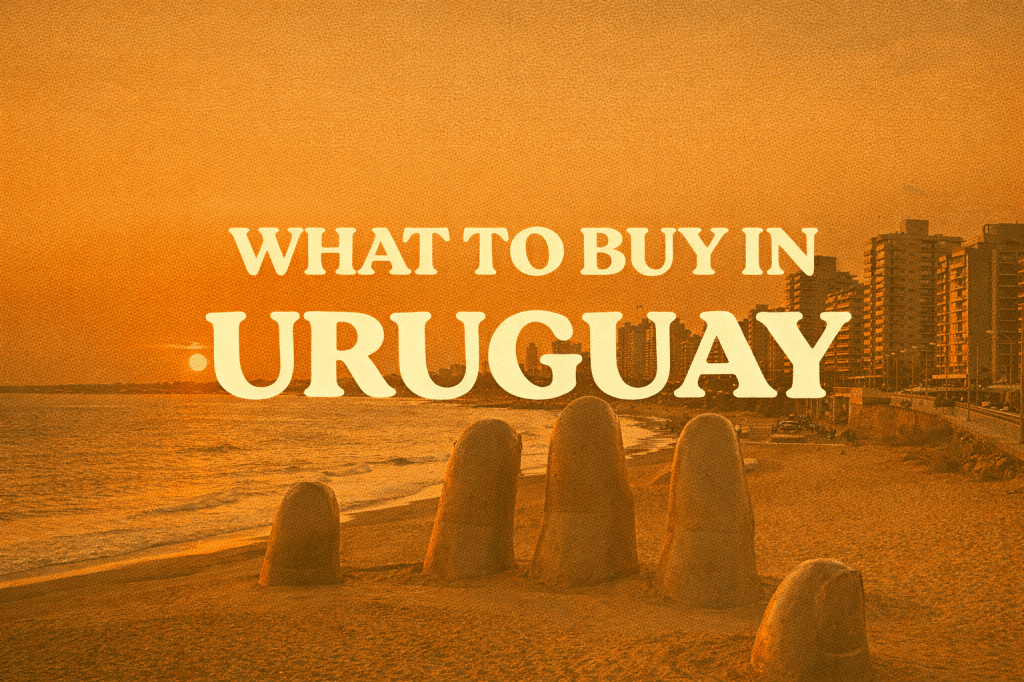
From the wind-tumbled beaches of Rocha to the wide, grassy pampas around Tacuarembó, Uruguay greets you with salt air, aromatic yerba smoke, and the low thrum of guitars at a parrillada.
Walk through Montevideo’s Ciudad Vieja and you’ll feel sun-warmed leather, hear the clink of mate bombillas, and smell dulce de leche and roasting coffee from the Mercado del Puerto; the country’s craft and flavor are rooted in those textures and tastes.
Markets like Feria de Tristán Narvaja on a Sunday and the artisan stalls of Colonia del Sacramento brim with handmade textiles, local Tannat bottles, and ceramics glazed with coastal blues.
Whether you’re after a piece of gaucho clothing or a jar of artisanal dulce de leche, these souvenirs in Uruguay carry the landscapes and traditions of the Río de la Plata with them. Here’s what to buy in Uruguay to bring a piece of its spirit back home.
1. Mate set (calabash gourd + bombilla)
Why pick this up:
Mate is the social ritual of Uruguay — gifting a gourd and bombilla brings home a daily habit and a story about shared afternoons on the rambla. A well-made set becomes an object of memory that’s both decorative and practical.
What to look for:
Seek calabash gourds (porongo) or hand-thrown ceramic mates with smooth rims and a fitted stainless-steel bombilla; artisanal sets often have leather holders or hand-tooled covers. Check for soldered seams on the bombilla and a clean bore to ensure longevity.
Price bracket (2025):
UYU 1,200–4,000
Where to find it:
Artisan stalls at Feria de Tristán Narvaja, Mercado del Puerto, and craft fairs in Colonia del Sacramento.
2. Yerba mate (local blends)
Why pick this up:
The flavor of Uruguayan mate is a direct taste of daily life — grassy, sometimes smoky, and often blended locally to regional preferences. A good pouch is lightweight and easy to pack, and it keeps the ritual alive long after you return.
What to look for:
Choose packages from established local brands or small-batch producers; check roast levels and whether the blend includes stems (con palo) or is leaf-only (sin palo). Look for vacuum-sealed bags with production dates to ensure freshness.
Price bracket (2025):
UYU 200–700
Where to find it:
Supermarkets, Mercado Agrícola de Montevideo, and specialty tea shops across Montevideo and Punta del Este.
3. Alfajores (artisan varieties)
Why pick this up:
These dulce-de-leche–filled cookies are an edible emblem of the Río de la Plata and make a delicious, shareable souvenir. Artisanal alfajores highlight regional chocolate and local dulce de leche techniques.
What to look for:
Pick artisanal brands or small-batch producers who use real dulce de leche and quality chocolate coatings rather than mass-produced factory versions. Check expiry dates and packaging for travel-friendly tins.
Price bracket (2025):
UYU 250–900 (box)
Where to find it:
Feria de Tristán Narvaja, Mercado del Puerto, specialty patisseries in Montevideo and Colonia.
4. Jarred dulce de leche (gourmet)
Why pick this up:
Dulce de leche is Uruguay’s sweet signature; thick, caramelized, and soulful, it captures local dairy tradition in a jar. It’s versatile for breakfasts, desserts, or as a gift that travels well when sealed.
What to look for:
Seek artisanal dairies or labels specifying slow-cooked methods and natural ingredients; glass jars with tamper seals are easiest for customs and freshness. Avoid unlabelled or poorly sealed containers.
Price bracket (2025):
UYU 300–1,200
Where to find it:
Mercado Agrícola de Montevideo, regional farm shops in Canelones, and gourmet stores in Punta del Este.
5. Bottle of Tannat wine
Why pick this up:
Uruguay’s signature grape, Tannat, yields bold, tannic wines that have become a national pride and an excellent souvenir for wine lovers. A bottle from a boutique bodega carries the terroir of Canelones or Maldonado with it.
What to look for:
Look for single-vineyard or reserve Tannat labels from respected bodegas and check vintage and storage recommendations. Smaller boutique labels often offer a more distinctive taste than mass-market bottles.
Price bracket (2025):
UYU 700–2,500
Where to find it:
Wineries in Canelones (small tastings), wine shops in Montevideo, and airport wine boutiques.
6. Leather goods (wallets, belts, boots)
Why pick this up:
Uruguayan leatherwork is durable and often handcrafted in Montevideo and interior workshops, reflecting the country’s ranching heritage. A well-made wallet or belt is both practical and a stylish reminder of time spent by the estancia.
What to look for:
Choose full-grain or vegetable-tanned leather with solid stitching and hand-finished edges; avoid glossy, plastic-feeling imitations. Ask about local tanning methods and look for maker stamps.
Price bracket (2025):
UYU 2,500–8,000
Where to find it:
Boutiques in Ciudad Vieja, Mercado del Puerto stalls, and artisanal leather workshops in Montevideo.
7. Gaucho poncho (handwoven wool blanket)
Why pick this up:
A heavy wool poncho or blanket speaks of the pampas and gaucho culture — it’s warm, decorative, and unmistakably Uruguayan. These textiles are practical for chilly evenings and make striking décor.
What to look for:
Opt for 100% wool, tight hand-weave patterns, and natural dyes where possible; check for even selvedges and traditional motifs. Avoid acrylic blends if you want authentic warmth and longevity.
Price bracket (2025):
UYU 6,000–20,000
Where to find it:
Artisan cooperatives in the interior, markets in Paysandú or Tacuarembó, and weekend fairs in Punta del Este.
8. Colonia ceramics and pottery
Why pick this up:
Colonia del Sacramento’s workshops produce ceramics that echo the town’s colonial colors and coastal motifs — practical, ornamental, and perfect for home use. Each painted plate or mug often shows a local flourish that mass imports lack.
What to look for:
Hand-thrown pieces with visible kiln marks, lead-free glazes, and artists’ signatures are best; unevenness often indicates handmade authenticity. Choose pieces with sturdy glaze for daily use.
Price bracket (2025):
UYU 800–4,000
Where to find it:
Studios in Colonia’s historic quarter, artisan stalls along the waterfront, and craft fairs.
9. Silver jewelry and local metalsmithing
Why pick this up:
Uruguayan silversmiths craft subtle, wearable pieces inspired by coastal lines and gaucho motifs; small silver works travel easily and age well. Jewelry offers a personal keepsake that often supports independent artisans.
What to look for:
Look for sterling marks (.925) or maker stamps, hand-hammered finishes, and simple closures; ask about the metal source if authenticity is important. Avoid plated or overly polished costume pieces.
Price bracket (2025):
UYU 1,500–6,000
Where to find it:
Craft markets in Montevideo, artisan boutiques in Colonia, and gallery shops near Museo Torres García.
10. Local art prints and linocuts
Why pick this up:
Prints by contemporary Uruguayan artists or lithographs inspired by Joaquín Torres García capture the nation’s visual spirit and are easier to pack than originals. They offer an immediate cultural snapshot to frame at home.
What to look for:
Choose signed prints or limited editions and ask for provenance; look for paper quality and edition numbers to ensure value. Small-format linocuts and digital prints are traveler-friendly.
Price bracket (2025):
UYU 1,500–6,000
Where to find it:
Museo Torres García shop, independent galleries in Ciudad Vieja, and weekend artisan markets.
Tip: Wrap fragile ceramics and your mate set in clothing and mark them as fragile to protect them in checked luggage 🧳
Local Shopping Culture & Traditions
Uruguayan shopping often blends the slow rhythms of gaucho life with seaside market bustle.
Weekend traditions like Feria de Tristán Narvaja (a sprawling Sunday market in Montevideo) and the Mercado del Puerto’s midday parrilla create communal hubs where food, antiques, and crafts meet.
In smaller towns and the interior, artisan cooperatives and family-run talleres keep weaving, leatherwork, and silversmithing techniques alive; visiting a bodega in Canelones or a ceramist in Colonia connects you with makers rather than mass retail.
Bargaining isn’t aggressive in Uruguay’s fixed-price stores, but at flea markets and some stalls it’s normal to haggle gently, especially when buying multiple items.
Expect honest, polite transactions and sellers happy to explain techniques, asking about a piece’s origin often leads to the best stories and provenance.
How to Spot Genuine Local Souvenirs
Look for maker marks, signatures, or labels that indicate a small atelier or cooperative rather than imported mass goods.
Genuine leather will have a scent and texture of natural hide and irregular grain; full‑grain hides feel substantial and have a stamped or branded maker’s mark.
For textiles, handwoven ponchos display slight inconsistencies in weave and natural-dye variations; machine-perfect regularity often signals a factory product.
With food items like alfajores, dulce de leche, or yerba, check packaging dates, ingredient lists, and sealed jars; local producers often list their town or bodega on the label, which is a good sign of authenticity.
For ceramics and prints, ask about the kiln, paper, or edition size, true artisans will happily explain techniques and provenance. If something seems suspiciously cheap compared with comparable items at established markets like Mercado del Puerto or Feria de Tristán Narvaja, it’s likely imported.
Where to Shop in Uruguay
- Feria de Tristán Narvaja (Montevideo) — Sunday antiques, books, and local foods.
- Mercado del Puerto (Montevideo) — food, leather stalls, and crafts in Ciudad Vieja.
- Mercado Agrícola de Montevideo — gourmet foods, dulce de leche, and local producers.
- Colonia del Sacramento historic quarter — ceramics, galleries, and artisan boutiques.
- Punta del Este artisan fairs and weekend markets — beachside crafts and textiles.
- Museo Torres García shop and Montevideo galleries — prints and art-focused souvenirs.
- Carrasco International Airport gift shops — last-minute regional specialties.
- Winery tours in Canelones and Maldonado — buy Tannat straight from bodegas.
FAQs
Q: Are souvenirs in Uruguay expensive?
A: Prices vary widely — food items and small crafts are affordable, while handwoven ponchos, fine leather, and limited-edition art can be pricier; expect mid-range to premium pricing for artisanal goods.
Q: Is bargaining common in Uruguay?
A: Bargaining is common at flea markets and among independent stallholders, especially if buying several items, but most shops and boutiques have fixed prices.
Q: How do I know if food items are good for travel?
A: Choose sealed jars or vacuum-packed products with clear expiry dates; ask vendors if items are shelf-stable and declare per customs rules on return.
Go explore Uruguay’s local shopping scene and take home authentic souvenirs in Uruguay.
Let me know in the comments if you have any other top ‘what to buy’ ideas!
About the Author
Colin is the founder of SouvenirsIdeas.com and a passionate traveller with a soft spot for ceramics, markets, and food tours. He writes practical, first-hand guides to help you bring home souvenirs that actually mean something — not just more clutter!


 Souvenir Ideas to Take Home from Every Country and City
Leave a comment