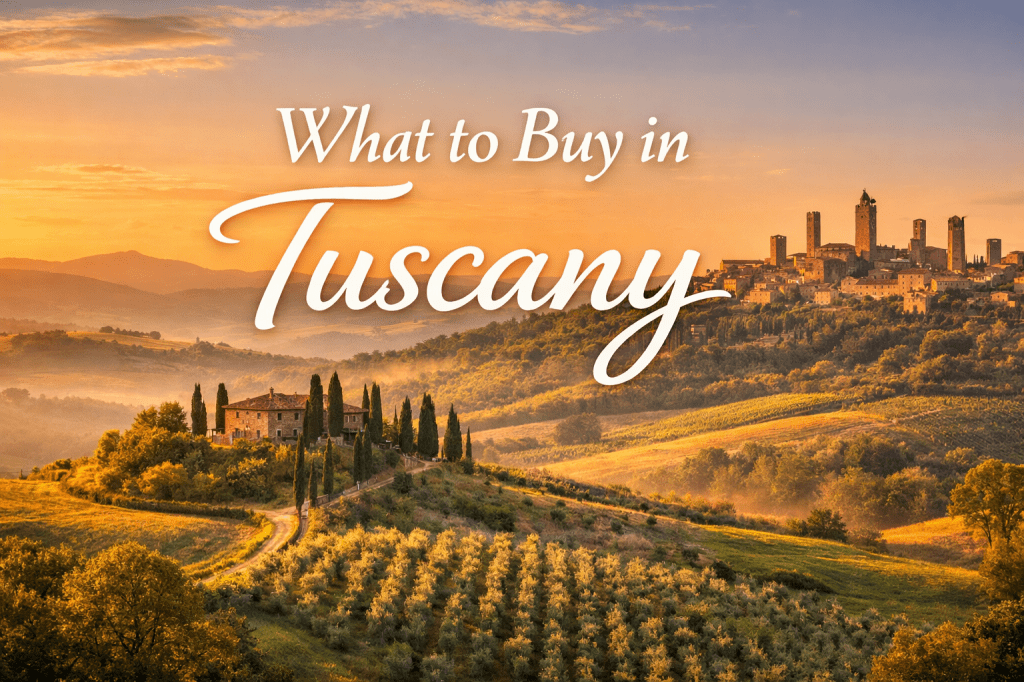
Tuscany is one of Italy’s best regions for shopping because many of its products are still made locally and tied to long-standing traditions. Across towns, countryside markets, and rural workshops, you will find foods, crafts, and everyday items that reflect how people live and work in the region.
This guide focuses on souvenirs you can find throughout Tuscany, not items limited to one city. The emphasis is on practical things you can use at home, items that travel well, and products that clearly show local origin rather than mass production.
Here’s what to buy in Tuscany
1. Chianti or Tuscan red wine
• Why it’s worth buying: Tuscany makes many classic red wines with deep flavor and local character. Bottles make a great reminder of meals and vineyard visits.
• Where to look: Wineries, enoteche (wine shops), and tasting rooms across the region.
• Price range: $12–$60
• How to spot a good one: Look for producer name, vintage year, and regional DOC or IGT designation.
• Easy-to-pack tip: Wrap the bottle in clothing and place in the middle of your suitcase.
2. Extra-virgin olive oil
• Why it’s worth buying: Tuscan olive oil has grassy, peppery notes that reflect local olives and terrain. A small bottle is useful and lasts well if unopened.
• Where to look: Olive mills, farmers’ markets, and specialty food shops.
• Price range: $10–$45
• How to spot a good one: Choose bottles labeled “extra-virgin” with harvest or producer information.
• Easy-to-pack tip: Put the bottle in a resealable bag and cushion with clothes.
3. Cantucci (biscotti) and Vin Santo pairing
• Why it’s worth buying: Cantucci are crunchy almond biscuits that pair traditionally with Vin Santo dessert wine. They travel well and are a tasty local treat.
• Where to look: Bakery stalls, pasticcerie, and food markets.
• Price range: $5–$20
• How to spot a good one: Look for whole almonds and a clear label listing simple ingredients.
• Easy-to-pack tip: Keep biscuits in their original sealed box to avoid crumbs.
4. Olive wood kitchenware
• Why it’s worth buying: Carved olive wood spoons and boards show grain and are very durable. They are both pretty and practical in the kitchen.
• Where to look: Artisan woodworkers, craft stalls, and kitchenware shops.
• Price range: $12–$80
• How to spot a good one: Choose solid, smooth pieces with no rough glue seams or plastic parts.
• Easy-to-pack tip: Wrap in a tea towel and place between folded clothes for protection.
5. Leather goods (wallets, belts, bags)
• Why it’s worth buying: Tuscany, especially Florence, is famous for leather craft and classic designs. A small leather item can last years and looks better with use.
• Where to look: Leather workshops, craft districts, and market stalls in town centers.
• Price range: $25–$180
• How to spot a good one: Check stitching, firm edges, and consistent, natural-looking leather grain.
• Easy-to-pack tip: Store in dust bag and carry in hand luggage to avoid crushing.
6. Maiolica ceramics
• Why it’s worth buying: Hand-painted ceramics show traditional patterns and make colorful tableware or gifts. Small pieces are practical to bring home.
• Where to look: Ceramic studios, craft fairs, and artisan shops.
• Price range: $10–$120
• How to spot a good one: Look for brush marks, signed pieces, and consistent glazing without hairline cracks.
• Easy-to-pack tip: Wrap in bubble wrap or clothing and place in center of suitcase.
7. Sea salt and flavored salts
• Why it’s worth buying: Salt from the Tuscan coast has a clean flavor and can be mixed with herbs for cooking. It’s light and easy to pack.
• Where to look: Salt pans, coastal markets, and gourmet food stores.
• Price range: $4–$20
• How to spot a good one: Prefer coarse crystals with minimal additives and clear producer labeling.
• Easy-to-pack tip: Use sealed jars or vacuum bags to prevent spills.
8. Woven straw or beach bag
• Why it’s worth buying: A handwoven bag is useful for beach days and markets, and reflects coastal craft traditions.
• Where to look: Market stalls near beaches, seaside craft boutiques, and local cooperatives.
• Price range: $15–$60
• How to spot a good one: Check tight, even weaving and sturdy handles that won’t split.
• Easy-to-pack tip: Fold gently and place inside larger luggage pocket; it takes little space.
9. Handmade jewelry (silver or artisan metalwork)
• Why it’s worth buying: Small silver pieces or crafted metal jewelry make elegant keepsakes from local makers. They carry regional motifs and style.
• Where to look: Jewelry ateliers, artisan markets, and small boutiques.
• Price range: $30–$200
• How to spot a good one: Inspect solder joints, hallmarks, and ask about metal purity.
• Easy-to-pack tip: Keep jewelry in a small padded pouch in your carry-on.
10. Linen textiles (tablecloths, napkins, scarves)
• Why it’s worth buying: Tuscan linen is breathable and has a classic look for home or travel. Small linens add a touch of region to your kitchen.
• Where to look: Textile shops, co-ops, and market stalls in town centers.
• Price range: $20–$150
• How to spot a good one: Choose natural fibers with tight weave and even stitching.
• Easy-to-pack tip: Roll linens to save space and reduce creasing.
11. Truffle products (oil, cream, or preserves)
• Why it’s worth buying: Truffles grow in parts of Tuscany and the flavored products capture that earthy aroma. They add strong flavor with small jars.
• Where to look: Specialty food shops, farmers’ markets, and truffle fairs.
• Price range: $8–$50
• How to spot a good one: Prefer short ingredient lists and reputable producers; avoid vague “truffle flavor” labels.
• Easy-to-pack tip: Ensure jars are sealed and pack upright in a cushioned area.
12. Wine tools and corkscrews
• Why it’s worth buying: A high-quality corkscrew or stopper is a useful reminder of Tuscan wine tastings. Good tools last for years.
• Where to look: Wine shops, winery tasting rooms, and specialty stores.
• Price range: $10–$60
• How to spot a good one: Look for sturdy metal, smooth action, and comfortable grip.
• Easy-to-pack tip: Put small tools in carry-on or padded pouch to protect from damage.
Quick buying tips for Tuscany
• Carry some cash for small stalls; cards may not always be accepted.
• Politely haggle at open-air markets; fixed-price shops usually do not negotiate.
• Look for labels like “fatto a mano,” “locale,” or producer names for authenticity.
• Wrap ceramics and glass in clothing or bubble wrap before placing in luggage.
• Many vendors can ship fragile goods home; ask about insurance and delivery timing.
• Check jar and bottle seals, and ask for vacuum-sealed packing for edible items.
Where to shop in Tuscany
Markets and town squares are great starting points. Weekly outdoor markets sell food, leather, textiles, and smaller craft items. You will find many vendors offering local goods and foodstuffs in lively market settings.
For artisan-made items, visit craft districts and studio workshops in cities like Florence, Siena, and smaller hill towns. Wineries and farm shops are best for wine, oil, and truffle products, while coastal salt pans and seaside markets offer salts and woven goods.
Good places to start:
• Morning outdoor markets in main town squares.
• Wineries with tasting rooms in Chianti and surrounding hills.
• Olive mills and farm shops during harvest season.
• Artisan quarters and studio streets in major towns.
• Coastal salt pans and seaside craft stalls.
• Specialty food shops and gourmet stores in city centers.
What to skip (common tourist traps)
• Cheap leather made from bonded or synthetic materials; looks flashy but won’t last.
• Mass-produced ceramics with overly bright, perfect prints; avoid obvious factory finishes.
• “Chianti” labeled wines without producer information or regional designation.
• Truffle oils that list “essence” or artificial flavors instead of real truffle.
• Unsealed or old bottles of olive oil lacking harvest or producer dates.
• Souvenirs with vague labels claiming “local” without maker names or origin details.
If you only buy three things
• Extra-virgin olive oil — It captures the flavor of the land and improves everyday cooking.
• A bottle of Tuscan red wine — It pairs with memories of meals and vineyard visits.
• A small leather wallet — Practical, compact, and a lasting example of local craft.
FAQ
- What is Tuscany known for making?
Tuscany is known for wine, olive oil, leather goods, and a range of handmade crafts. The region also produces ceramics, linens, and many food specialties like cheeses and cured meats. - What are the best edible souvenirs from Tuscany?
Top edible souvenirs include extra-virgin olive oil, local wines, cantucci biscuits, truffle products, and artisan sea salts. Choose sealed jars or bottles and check producer details for quality. - Are souvenirs expensive in Tuscany?
Prices range from very affordable market finds to higher-cost artisan pieces. Expect to pay more for hand-worked leather, real silver jewelry, and well-aged wines or olive oils. - What is the easiest souvenir to pack from Tuscany?
Light items like sea salt, cantucci, small jars of truffle oil, and textiles are easiest to pack. Use sealing and padding for fragile food jars and ceramics. - How do I know if something is truly local?
Ask for producer names, harvest dates, or workshop information and look for “fatto a mano” or similar labels. Buy directly from makers, cooperatives, or reputable shops to reduce the chance of mass-made goods.
Tip: Save your receipts, and keep fragile items in your carry-on.
About the Author
Colin is the founder of SouvenirsIdeas.com and a passionate traveller with a soft spot for ceramics, markets, and food tours. He writes practical, first-hand guides to help you bring home souvenirs that actually mean something — not just more clutter!
Let us know in the comments if this has been useful or if you’ve got suggestions we can include
 Souvenir Ideas to Take Home from Every Country and City
Leave a comment