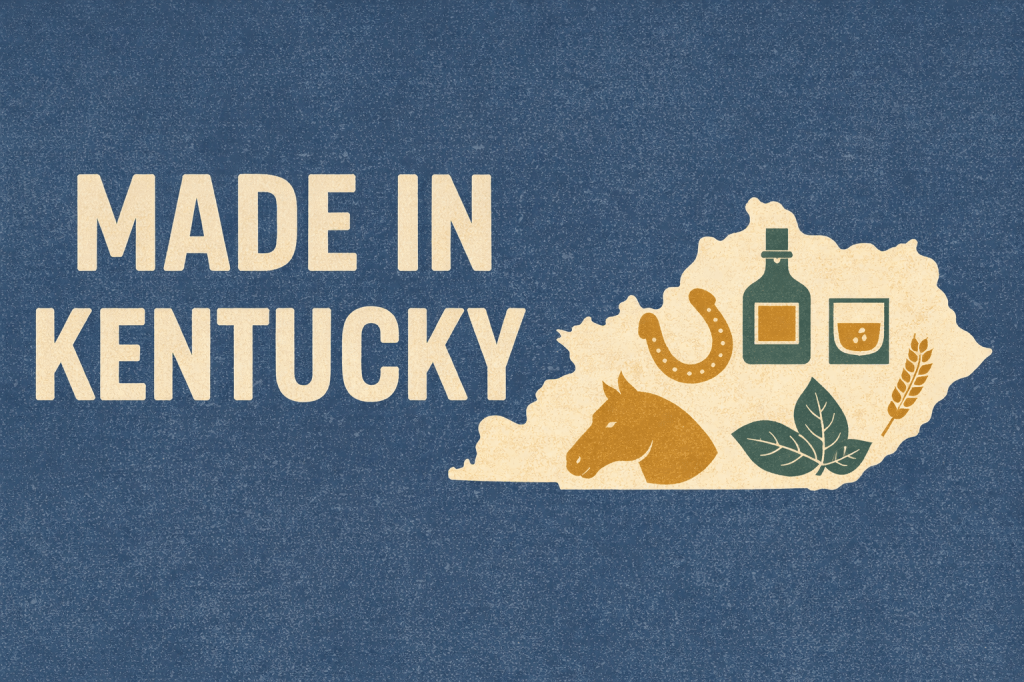
Rolling hills of bluegrass, limestone-filtered springs, and narrow lanes lined with tobacco barns: Kentucky’s landscape and rhythms shape the work of its makers.
From the smoke and char of barrel warehouses to the slow, patient weave of river cane baskets, the state’s crafts reflect horses, hearths, and harvests with hardwoods, grain, and native plants all showing up in the objects people have made here for generations.
Here are the best things truly made in Kentucky, products that reflect its heritage, creativity, and everyday life. Made in Kentucky.
1. Small-Batch Bourbon
Why it’s made here: Kentucky’s limestone-rich water, humid four-season climate and a deep distilling history mean bourbon has been refined here for generations; barrel warehouses and century-old rickhouses produce the amber spirit that defines the region.
What to look for: Bottles from distillery-owned labels or local independent bottlings, age statements or “small batch”/“single barrel” notes, and information about mash bill and cask type on the label.
Price bracket (2025): $30–$200+ (limited releases and older single barrels higher).
Where to find it: Distillery gift shops along the Kentucky Bourbon Trail, local liquor stores, and state-regulated online retailers.
2. Bourbon-Barrel-Aged Coffee
Why it’s made here: Roasters barrel-age green beans in used bourbon casks, marrying Kentucky’s signature spirit with coffee’s aromatics to create smoky, vanilla-rich profiles.
What to look for: Beans aged in authentic bourbon barrels (not just flavored), clear roast date, and small-batch labels from Kentucky roasteries.
Price bracket (2025): $12–$30 per 12 oz bag.
Where to find it: Specialty coffee shops, roaster websites, farmers’ markets and distillery shops.
3. Bourbon-Infused Confections
Why it’s made here: Local chocolatiers and confectioners use bourbon to flavor truffles, caramels, and pecan confections that carry the state’s spirit in a giftable form.
What to look for: Confections listing Kentucky bourbon as an ingredient, artisan packaging, and short ingredient lists (real cream, butter, nuts).
Price bracket (2025): $8–$40 depending on size and maker.
Where to find it: Artisan chocolate shops, food halls, and craft fairs across Lexington, Louisville and small towns.
4. Hand-Tooled Saddles & Equestrian Tack
Why it’s made here: Kentucky’s horse farms and Thoroughbred industry sustain skilled leatherworkers and saddle makers who craft tack for competition and show.
What to look for: Maker’s stamps, full-grain leather, hand-tooling and stitching, custom fit or repair services.
Price bracket (2025): $300–$5,000+ (custom saddles at the high end).
Where to find it: Equestrian supply shops, saddlery workshops and local tack makers around horse-country counties.
5. River Cane & Oak Basketry
Why it’s made here: Native river cane and oak have been woven into baskets for generations in the Appalachian foothills of Kentucky—materials and techniques tied to local ecosystems and craft lineages.
What to look for: Natural materials (river cane, oak splints), slight irregularities from hand-weaving, and maker attribution.
Price bracket (2025): $35–$400 depending on size and intricacy.
Where to find it: Craft markets, Berea artisans, and regional folk-art festivals.
6. Handwoven Appalachian Quilts
Why it’s made here: Quilting is a living Appalachian tradition in Kentucky, using local cottons, woolens and time-honored patterns passed down through families and craft schools.
What to look for: Hand or locally machine-stitched seams, natural dyes or regionally sourced fabrics, and documented provenance if claiming vintage or antique.
Price bracket (2025): $75–$1,200 depending on age and workmanship.
Where to find it: Craft cooperatives, Berea College craft shops, and quilting guild sales.
7. Pawpaw Preserves & Native Fruit Jams
Why it’s made here: The pawpaw—a native Appalachian fruit—produces custard-like flesh with mango-banana notes; local growers and producers turn it into seasonal preserves and syrups unique to the region.
What to look for: Single-fruit preserves, short ingredient lists, and “wild-harvested” or small-farm labeling.
Price bracket (2025): $6–$18 per jar.
Where to find it: Farmers’ markets, specialty food shops and seasonal roadside stands.
8. Salt- or Ash-Glazed Stoneware
Why it’s made here: Kentucky potters produce durable, functional stoneware influenced by Appalachian ceramic traditions—jugs, crocks and dinnerware fired with distinctive glazes.
What to look for: Maker’s mark or signature on the base, uneven glaze pooling that indicates hand throwing, and weight/feel of quality stoneware.
Price bracket (2025): $20–$250. Where to find it: Pottery studios, craft fairs and college craft programs such as Berea.
9. Country Ham and Cured Meats
Why it’s made here: Salt-curing and smoke-curing are traditional preservation techniques in Kentucky’s kitchens; small producers still cure hams, bacon and charcuterie using regional methods.
What to look for: Clearly labeled local curing house, natural casings, and traditional dry-curing notes rather than mass-processed packaging.
Price bracket (2025): $8–$120 depending on cut and age.
Where to find it: Butcher shops, farmers’ markets and specialty grocers.
10. Artisanal Cheeses from Kentucky Creameries
Why it’s made here: Small creameries use local milk to make chèvre, aged cow cheeses and seasonal varieties, reflecting pasture-based flavors.
What to look for: Maker’s name and farm source on the label, pasteurization info, and aging descriptions.
Price bracket (2025): $6–$30 per wedge/round.
Where to find it: Farm stores, farmers’ markets and cheesemongers.
11. Bourbon Barrel Furniture & Homewares
Why it’s made here: Reclaimed bourbon staves and heads are abundant in Kentucky; woodworkers upcycle them into tables, cutting boards and lamps that carry the scent and patina of the distillery.
What to look for: Reclaimed stamp marks, joinery quality, and finishes that preserve wood grain rather than hide it.
Price bracket (2025): $25 for small items–$2,500+ for custom furniture.
Where to find it: Woodshops, maker studios and craft markets.
12. Hand-Forged Knives & Blacksmith Goods
Why it’s made here: Appalachian blacksmithing traditions survive in Kentucky’s rural shops where blades, hooks and tools are forged from regional steels with practical design.
What to look for: Maker’s stamp, visible hammer marks, high-carbon steel notes and a balanced feel.
Price bracket (2025): $40–$800 depending on maker and purpose.
Where to find it: Blacksmith demonstrations, craft fairs and workshop studios.
13. Small-Batch Hot Sauces, Pickles & Preserved Vegetables
Why it’s made here: Kentucky gardens and peppers yield local flavors—producers craft vinegars, pickles and hot sauces that highlight regional produce.
What to look for: Local ingredient sourcing, short ingredient lists, and artisan bottling.
Price bracket (2025): $5–$20 per bottle/jar.
Where to find it: Farmers’ markets, specialty food halls and roadside farm stands.
14. Handcrafted Dulcimers, Fiddles & String Instruments
Why it’s made here: The Appalachian musical tradition fuels luthiers who build mountain dulcimers, fiddles and guitars tuned to bluegrass and old-time styles.
What to look for: Luthier’s signature, quality tonewoods (local maple, cherry), and play-tested sound samples when possible.
Price bracket (2025): $150–$3,000+.
Where to find it: Instrument makers’ shops, music festivals and cultural centers.
15. Hand-Dipped Candles and Beeswax Products
Why it’s made here: Kentucky’s beekeepers turn seasonal honey and beeswax into candles, balms and soaps that capture local nectar profiles.
What to look for: 100% beeswax or clearly labeled soy blends, local apiary names, and natural scents.
Price bracket (2025): $6–$40. Where to find it: Farmers’ markets, apiarist stalls and boutique shops.
Local Makers & Traditions
Kentucky’s craft heritage is regional and specific: distillation and cooperage cluster around Bardstown and the Bourbon Trail, while Appalachian weaving, quilting and basketry remain strong in southeastern counties and craft towns like Berea.
Berea College’s craft schools and Shaker Village of Pleasant Hill preserve woodworking, pottery and textile techniques; meanwhile small cooperatives and independent studios across Lexington, Louisville and rural counties keep metalwork, luthiery and leather craftsmanship alive.
The state’s ecosystems – river cane, hardwoods, clays and pastureland feed the materials and the aesthetics of these makers.
How to Spot Genuine Local Products
Look for provenance: a maker’s name or stamp, a clear ingredient list, and statements like “made in Kentucky,” “locally crafted,” or affiliation with recognized programs such as Kentucky Proud for agricultural goods.
Handcrafted items show small irregularities like tool marks, slight asymmetry, natural wood grain or glaze variations. Beware of glossy gift-shop resellers that sell identical mass-produced items with “Kentucky” stickers; cheap plastic, identical serial numbers across many pieces, and generic “handmade” claims without contact info often signal imports.
When in doubt, ask the maker where materials came from and whether production happened on-site.
Where to Buy Made-in-Kentucky Goods
- Distillery gift shops along the Kentucky Bourbon Trail and boutique distilleries
- Farmers’ markets and seasonal roadside stands across the state
- Craft towns and cooperatives (Berea and nearby craft centers)
- Museum and cultural center shops that stock regional artisans
- Artisan fairs and statewide craft markets
- Small independent workshops and studio storefronts in Lexington, Louisville and rural counties
- Select airport shops and regional food halls that prioritize local producers
FAQs
Q: Are products in Kentucky expensive?
A: Prices vary widely—everyday items like preserves, jams and small crafts are affordable, while antiques, custom saddles, aged bourbons and handbuilt furniture command higher prices due to material and labour.
Q: How can I tell if something is authentically made here?
A: Ask for the maker’s name, look for a maker’s mark or label, check ingredient/source statements (farm or coop names), and prefer purchases made directly from workshops, markets or distillery gift shops.
Q: What is the best made-in-Kentucky gift to bring home?
A: A small-batch bourbon or a handcrafted river cane basket pairs regional identity with portability—choose based on your recipient and look for provenance to ensure authenticity.
Seek out these local finds and support Kentucky’s makers—discover something truly Made in Kentucky.
Let me know in the comments if you have any other top ‘what to buy’ ideas!
About the Author
Colin is the founder of SouvenirsIdeas.com and a passionate traveller with a soft spot for ceramics, markets, and food tours. He writes practical, first-hand guides to help you bring home souvenirs that actually mean something — not just more clutter!

 Souvenir Ideas to Take Home from Every Country and City
Leave a comment