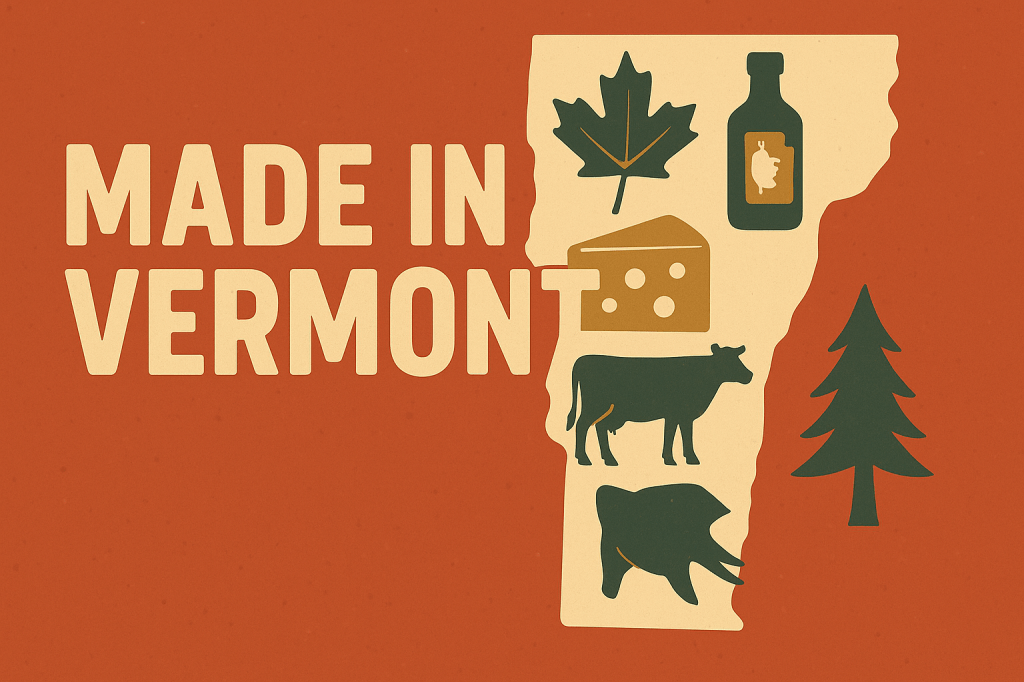
Rolling green mountains, sugar-maple groves, slate rooftops dusted with snow and red barns clustered along narrow country roads. Vermont’s landscape is a patchwork of working farms, cold clear streams, and wood-fired kilns.
The state’s seasons shape everything here: long winters sharpen the need for warm woolens, spring sap runs yield amber maple, and summer pastures feed small dairies that turn milk into memorable cheeses. You can smell wood smoke, hear sheep bells, and watch potters coax local clays into shapes on a potter’s wheel.
Here are the best things truly made in Vermont, products that reflect its heritage, creativity, and everyday life, and celebrate what’s authentically Made in Vermont.
1. Pure Vermont Maple Syrup
Why it’s made here: The state’s sugar maples thrive in cold winters and thawing springs; generations of sugarmakers tap those trees and boil sap in wood-fired evaporators, a practice shaped by climate and forested land stewardship.
What to look for: “100% pure maple syrup” labeling (not “maple-flavored”), a harvest year or vintage, the producer or sugarhouse name, and amber or dark color grades that match your taste preference.
Price bracket (2025): $10–40 for small bottles (250–500 ml); $40–150+ for larger jugs or gift tins depending on grade and rarity.
Where to find it: Sugarhouses and farm stands, farmers markets, co-op grocery stores, and roadside kiosks during sugaring season.
2. Maple Candy & Maple Cream
Why it’s made here: An offshoot of syrup production, candied maple and spreadable maple cream are traditional ways to preserve and enjoy the season’s sap in concentrated form.
What to look for: Smooth texture for maple cream, granular but pure maple composition for candies, and ingredients lists that show only maple (no corn syrup or artificial additives).
Price bracket (2025): $5–20 for small jars or boxes; gift assortments $15–40. Where to find it: Sugarhouses, artisan food stalls at fairs, specialty food counters, and visitor centers.
3. Farmstead Cheddar & Artisan Cheeses
Why it’s made here: Vermont’s cool summers and rich pastures support small dairy farms and a strong cheesemaking tradition that favors milk-to-cheese farmstead production and slow aging.
What to look for: Farm or creamery name, “farmstead” or “made from local milk,” raw milk notes if applicable, natural rinds and visible aging characteristics, and tasting-room provenance.
Price bracket (2025): $8–25 per wedge for younger cheeses; $30–80+ for aged wheels or specialty releases.
Where to find it: Creameries, farmers markets, co-op counters, and tasting rooms at small farms.
4. Hand-knit Wool Sweaters, Hats & Mittens
Why it’s made here: A long history of sheep farming and cold winters created demand for durable, warm knitwear; today small-scale shepherds and knitters keep that tradition alive with locally spun wool.
What to look for: Natural-fiber labels (100% wool or wool blends), uneven stitch patterns that indicate handwork, farm or mill yarn provenance, and sturdy seams and ribbing.
Price bracket (2025): $75–400 for hand-knit sweaters; $25–120 for hats and mittens depending on yarn and craftsmanship.
Where to find it: Wool festivals, fiber co-ops, craft fairs, and studio shops run by local knitters and small mills.
5. Bennington-Style Stoneware & Local Pottery
Why it’s made here: Local clay deposits and a long pottery history around towns like Bennington gave rise to distinctive stoneware glazes and wheel-thrown tableware that suits country kitchens.
What to look for: Potter’s marks or signatures, thick durable stoneware bodies, traditional glaze types (e.g., brown/cream reactive glazes), and evidence of hand-finishing.
Price bracket (2025): $25–80 for mugs and small pieces; $150–600+ for dinnerware sets or larger pieces.
Where to find it: Pottery studios, craft guild galleries, museum shops, and seasonal craft fairs.
6. Small-Batch Rye, Gin & Craft Spirits
Why it’s made here: Vermont’s grain farms and craft-distilling scene produce rye-forward whiskeys, botanical gins, and small-lot vodkas that reflect local grain, water, and creativity.
What to look for: Distillery origin on the label, small-batch or single-barrel markings, tasting notes listed, and limited-release information; many distilleries also offer tasting-room bottlings.
Price bracket (2025): $30–80 for standard bottles; special or barrel-aged releases $100+.
Where to find it: Distillery tasting rooms, local liquor retailers focused on regional products, and farm distiller stands.
7. Craft Beer & Orchard Cider
Why it’s made here: An active craft brewing community and plentiful orchards yield saisons, IPAs, barrel-aged beers and nuanced ciders that make use of local hops, grains and apples.
What to look for: Freshness dates, small-batch or seasonal labels, local fruit or specialty barrel-aging notes for cider, and brewery/taproom provenance.
Price bracket (2025): $9–20 per 4-pack or mixed pack; taproom pours and growler fills vary by brewery.
Where to find it: Brewpubs, taprooms, farmers markets, and regional beer shops.
8. Hand‑turned Maple Furniture & Woodwares
Why it’s made here: Abundant sugar maple forests and a tradition of Yankee woodworking produce finely made tables, bowls, cutting boards and turned objects with warm grain and solid joinery.
What to look for: Solid maple construction (not veneer), visible tool marks or lathe turning on woodwares, dovetail/joinery quality, and a natural finish showing grain.
Price bracket (2025): $40–250 for cutting boards and small wares; $300–3,000+ for handcrafted furniture depending on size and maker.
Where to find it: Woodworker studios, craft galleries, seasonal artisan markets, and studio open houses.
9. Local Honey & Beeswax Products
Why it’s made here: Small mixed farms, orchards and wildflower meadows support apiaries that produce varietal honeys and pure beeswax — staples in rural households and artisan goods.
What to look for: “Raw” or “unfiltered” honey labels, varietal or location notes (wildflower, clover, buckwheat), comb honey or cappings, and pure beeswax listings for candles and balms.
Price bracket (2025): $8–25 per jar of honey; $8–40 for beeswax candles or balms.
Where to find it: Farm stands, farmers markets, apiary shops and cooperative grocery stores.
10. Handmade Soaps & Farm‑to‑Skin Skincare
Why it’s made here: Access to local ingredients — goat’s milk, herbs, maple, honey and beeswax — plus a small-batch maker ethos yields gentle, rustic skincare products made in Vermont studios.
What to look for: Full ingredient lists, cold-process soap labels, small-batch numbering, minimal synthetic preservatives, and references to local ingredients.
Price bracket (2025): $6–18 per soap bar; curated skincare sets $20–60. Where to find it: Farm stores, craft fairs, apothecaries, and cooperative shops.
11. Loom‑woven Blankets, Throws & Textiles
Why it’s made here: A textile tradition—from small mills to independent weavers—turns local wool and blended yarns into warm blankets and throws suited to Vermont’s climate and aesthetic.
What to look for: 100% wool or wool-rich labels, mill or weaver tags, firm selvedge edges, and traditional patterns or plain weaves that show even tension.
Price bracket (2025): $80–600 depending on size, fiber content and maker reputation.
Where to find it: Weaving studios, textile mill outlets, museum shops and seasonal craft shows.
Local Makers & Traditions
Vermont’s craft identity grew from farm life: maple sugarmaking, small dairy operations, shepherding and a hands-on approach to materials.
Historic potteries around Bennington and centuries-old woodworking traditions shaped a studio culture where makers often run both farm and workshop. Seasonal gatherings, from sheep-and-wool festivals to fall harvest fairs are meeting places.
Producers trade knowledge, sell direct and keep techniques alive, whether it’s coopering, small-batch distillation or hand-weaving on floor looms.
Many producers are multi-generational families or small co-ops, and you’ll find workshops with open doors where potters, woodworkers and cheesemakers welcome visitors, explain processes and sell fresh or still-warm products straight from the source.
How to Spot Genuine Local Products
- Check origin labels: “Made in Vermont,” a named sugarhouse, creamery or distillery, and farmstead claims are good signs. Pure maple syrup should say “100% pure maple.”
- Look for maker marks: pottery signatures, weaver or mill tags in textiles, and batch numbers on spirits and soaps show small-batch production.
- Inspect materials and finish: natural fibers, uneven stitches, tool marks, and visible grain or glaze variations indicate handcrafting versus machine-made uniformity.
- Beware of red flags: overly glossy, identical pieces in bulk, “maple-flavored” instead of pure maple, and products with vague “artisan” claims but no local producer listed often indicate imported or mass-produced goods.
- Ask questions: makers at markets are usually happy to explain processes, provenance and whether ingredients are sourced on-site or regionally.
Where to Buy Made-in-Vermont Goods
- Farmers markets and seasonal farm stands across the state
- Studio open houses and craft trails in mountain towns
- Artisan fairs and events (sheep & wool festivals, fall craft weekends)
- Cooperative grocery stores and regional specialty food counters
- Museum shops and historic sites with curated local selections
- Distillery and brewery tasting rooms, and creamery visitor centers
FAQs
Are products in Vermont expensive?
- Prices vary widely: you can buy affordable items like soap or small jars of honey, while handcrafted furniture, aged cheeses and limited spirits command higher prices reflecting materials and labor.
How can I tell if something is authentically made here?
- Look for clear origin labeling, maker signatures, small-batch numbering, ingredient lists that name local sources, and ask the seller about production methods or farm provenance.
What is the best made-in-Vermont gift to bring home?
- For broad appeal, pure Vermont maple syrup or a small batch cheese paired with a handmade maple cutting board or a hand-knit mitten makes a distinctly local and memorable gift.
Made in Vermont is best discovered by visiting farms, studios and markets where makers can tell the story behind each product.
Let me know in the comments if you have any other top ‘what to buy’ ideas!
About the Author
Colin is the founder of SouvenirsIdeas.com and a passionate traveller with a soft spot for ceramics, markets, and food tours. He writes practical, first-hand guides to help you bring home souvenirs that actually mean something — not just more clutter!


 Souvenir Ideas to Take Home from Every Country and City
Leave a comment