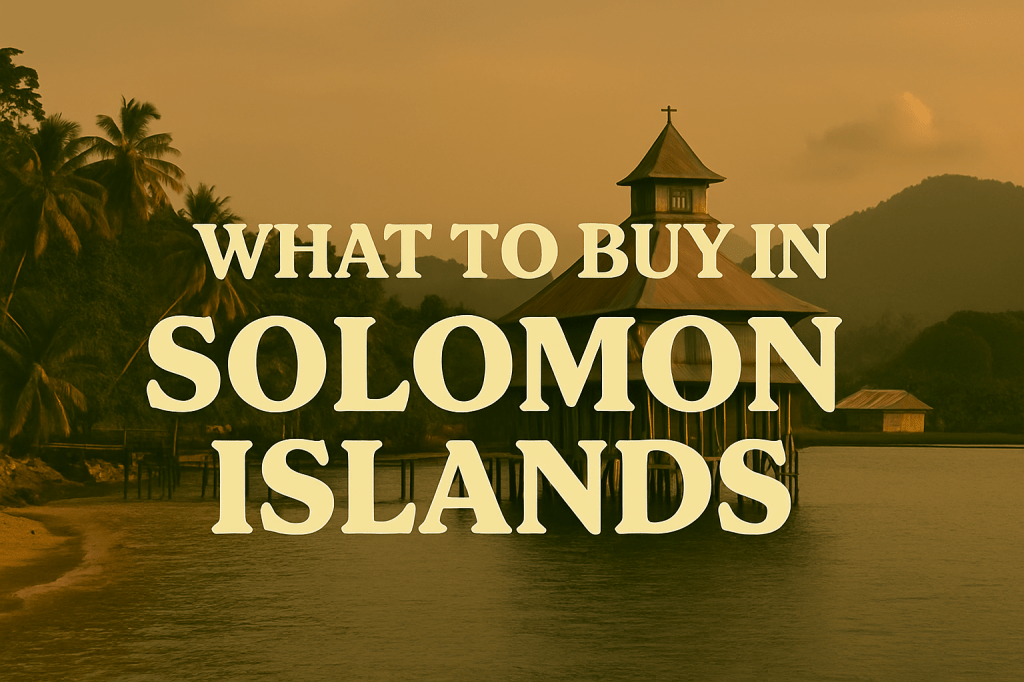
From the salt-stung air of Honiara’s waterfront to the green hush of Guadalcanal’s upland forests, the Solomon Islands feel lived-in and tactile.
At Point Cruz Market vendors arrange strings of shell money and mother‑of‑pearl pendants beneath corrugated awnings while the scent of roasted cocoa and sea smoke drifts from nearby stalls. In the Western Province, Marovo Lagoon artisans sit under pandanus-thatched shelters, fingers moving quickly as knife edges catch the light on unfinished carvings.
The islands’ materials, pandanus leaves, carved tropical hardwoods, mother-of-pearl, and the tiny white shells used for traditional currency give everything a distinct texture and a story in their grain and patina.
Markets in Honiara, the canoe-lined villages of Gizo, and the shell-money makers of Malaita reveal local craft traditions that have changed little in generations; you can hear kastom songs, witness tapa being beaten, and see fresh cocoa beans drying in the sun.
If you want a tangible memory of those moments, think beyond mass-produced trinkets and seek out authentic pieces that speak of place and technique, here’s your guide.
Here’s what to buy in Solomon Islands to bring a piece of its spirit back home.
1. Shell Money (Malaita)
Why pick this up:
Shell money is both currency and ceremonial jewelry on Malaita, carrying ancestral value and a visible link to kastom (traditional law). Owning a strand or a small length connects you with a living tradition unique to the Solomons.
What to look for:
Seek strands with uniform, hand-drilled holes and a warm, aged patina—newly drilled or plastic simulants lack the weight and luster of true shell. Ask which island the shells came from and whether they were strung by a known artisan.
Price bracket (2025):
SI$200–SI$1,800 (depending on length, age, and provenance)
Where to find it:
Malaita markets (Auki), Honiara Central Market, and reputable cultural centers or museum shops.
2. Woven Pandanus Mats & Baskets
Why pick this up:
Pandanus weaving is a daily art across islands like Guadalcanal and Isabel; mats (pandanus mats) and baskets are both utilitarian and decorative, showcasing regional patterns. They flatten and fold easily for travel and make striking table pieces at home.
What to look for:
Tight, even weaving and natural dyes (orange, red, black) indicate handwoven quality; look for signed pieces or ask the vendor which village made them. Beware of machine-made imitations with perfectly uniform stitching.
Price bracket (2025):
SI$60–SI$450
Where to find it:
Honiara Central Market, Gizo waterfront markets, and craft stalls on Isabel and Guadalcanal.
3. Wood Carvings & Canoe Models
Why pick this up:
Carved panels, masks, and miniature war canoe models capture the bold forms and stories of Western Province carvers. They’re a tactile souvenir of mariner culture and ancestral motifs.
What to look for:
Choose carvings showing clear tool marks and wood grain; native timbers like kwila (rosewood) and ironwood have distinct textures and weight. Avoid items labeled “resin” or “plywood” and ask about the species used.
Price bracket (2025):
SI$150–SI$1,500
Where to find it:
Gizo Market, Munda craft stalls, and artisan workshops in Marovo Lagoon.
4. Black‑Lipped Pearl Jewelry
Why pick this up:
The Solomons have boutique pearl farms producing iridescent black‑lipped pearls that are less common than Tahitian varieties and make refined gifts. Local settings often favor simple island-style mounts that highlight the nacre.
What to look for:
Inspect luster, surface blemishes, and symmetry; ask for provenance—pearls from Western Province farms will often have a farm name or certificate. Be cautious of overly cheap “perfect” pearls.
Price bracket (2025):
SI$300–SI$3,000
Where to find it:
Honiara jewelers, market stalls with pearl consignments, and certified pearl farm outlets in the Western Province.
5. Tapa (Barkcloth)
Why pick this up:
Barkcloth—tapa—is a traditional textile beaten from mulberry bark and painted with natural pigments; in the Solomons it’s used in ceremonies and as decorative cloth. Its patterns and pigments tell island-specific stories.
What to look for:
Genuine tapa has irregular edges, visible fiber texture, and hand-painted motifs in earth tones; machine-printed fabric will appear too even. Ask where the cloth was made and whether natural dyes were used.
Price bracket (2025):
SI$80–SI$400
Where to find it:
Art markets in Honiara, museum shops, and craft centers on Santa Isabel and Makira.
6. Cocoa Beans & Artisan Chocolate
Why pick this up:
The Solomons produce high-quality cocoa grown in Makira, Guadalcanal, and Choiseul; small-batch chocolates showcase the islands’ unique flavor profile—earthy with tropical acidity. It’s a delicious way to support local farmers.
What to look for:
Buy single-origin bars or vacuum-sealed fermented beans with a farm name and harvest date; avoid loose, unlabelled bags. Choose bars from reputable Honiara chocolatiers who list percentage and origin.
Price bracket (2025):
SI$15–SI$80
Where to find it:
Honiara specialty stores, Sunday markets, and cocoa cooperatives on island visits.
7. Kava Root & Powder
Why pick this up:
Kava (yaqona) is central to Melanesian social life; bringing powdered kava home lets you recreate island ceremonies and the peppery, earthy flavor that accompanies many meetings. It’s a practical memento for kava lovers.
What to look for:
Buy from known vendors who can confirm the island of origin and drying method; fine, fibrous powder indicates good processing. Check customs rules before you pack—some countries restrict root imports.
Price bracket (2025):
SI$50–SI$250
Where to find it:
Honiara Central Market, Auki market, and kava stalls on Guadalcanal.
8. Mother‑of‑Pearl Jewelry & Buttons
Why pick this up:
Mother-of-pearl items reflect the sea that connects the islands—small pendants, earrings, and artisan buttons make elegant, wearable reminders. The iridescence varies by shell and region, giving each piece character.
What to look for:
Genuine shell pieces have layered iridescence and weight; check the back for tool marks and ask if the shell was locally sourced. Avoid thin, plastic-coated alternatives.
Price bracket (2025):
SI$40–SI$400
Where to find it:
Point Cruz Market, Gizo craft stalls, and museum gift shops.
9. Coconut‑Shell Crafts
Why pick this up:
Coconut shell is transformed into polished bowls, spoons, and decorative items—practical, sustainable souvenirs that showcase local hand polish and carving. They’re both rustic and refined depending on the finish.
What to look for:
Select items with smooth finishing, well-sanded interiors, and visible hand-carving marks; beware of items that smell of industrial varnish. Small bowls and buttons travel well.
Price bracket (2025):
SI$10–SI$120
Where to find it:
Local markets across the islands, Honiara craft tables, and Gizo sellers.
10. Miniature War Canoes & Story Panels
Why pick this up:
Miniature canoe models and carved story panels condense seafaring history and clan stories into display-ready pieces, often made by the same carvers who build full-sized canoes. They’re a compact way to bring Solomon seafaring culture home.
What to look for:
Look for detailed hull lines, hand-carved prow motifs, and authentic paint made from natural pigments; ask if the piece represents a specific province’s style. Avoid molded plastics sold as “carved.”
Price bracket (2025):
SI$80–SI$700
Where to find it:
Western Province craft markets (Gizo, Munda) and Honiara artisan galleries.
11. Seed & Shell Necklaces (Traditional Lei)
Why pick this up:
Traditional leis made from local seeds, nut fragments, and small shells are lightweight tokens of island ornamentation and often used in celebrations. They’re affordable, portable, and wearable reminders of place.
What to look for:
Prefer tight stringing with natural cord and shells showing natural wear; synthetic beads and factory-made patterns are less authentic. Ask if the materials were gathered locally.
Price bracket (2025):
SI$20–SI$150
Where to find it:
Honiara Central Market, Gizo waterfront, and village craft stalls.
Tip: Pack fragile carvings and shell money in clothing-lined boxes and double-check customs rules for food and plant products before you travel ✈️
Local Shopping Culture & Traditions
Shopping in the Solomon Islands is a sensory, social activity. Markets are where news, food, and crafts change hands alongside barter and polite bargaining. Honiara’s Central Market (near Point Cruz) is the beating heart: mornings hum with fish sellers, cocoa dryers, and stringed shell money.
Weekend markets in Auki (Malaita) and Gizo bustle with island vendors. Many crafts are produced in village workshops like Marovo Lagoon and the Western Province have well-known artisan communities where carvers and weavers work from family patterns passed down through generations.
Kastom practices influence how certain items are used and sold: shell money and tapa have ceremonial value and can carry cultural protocols, so vendors will often explain when a piece is meant for ritual use.
Expect informal price talks rather than fixed tags in open-air markets, but also look for certified cooperatives and museum-backed stalls for higher-priced authentic work.
How to Spot Genuine Local Souvenirs
Look for material authenticity: pandanus items should smell faintly of plant fiber and show irregular hand-weaving; shell money will have subtle color variation and drilled holes that age naturally. Wood carvings should show tool marks and the natural grain of Pacific hardwoods.
Ask sellers about provenance, knowing which island or village produced an item is a good sign of authenticity.
For food items like cocoa or kava, check for packing dates, farm or cooperative labels, and vacuum-sealed packaging to ensure freshness; inexpensive, glossy “factory” versions often use imported materials and lack maker details.
Avoid pieces that are too uniform -?machine-made goods will often be identically perfect and sold in large stacks.
If a vendor is willing, ask to meet the artisan or request a photo of the maker at work; communities that sell through cooperatives or museum shops often provide documentation or signage about origins.
Where to Shop in Solomon Islands
- Honiara Central Market (Point Cruz) — the main hub for fresh produce, shell money, mats, and everyday crafts.
- Gizo Market and Munda waterfront — strong for carved woodwork, canoe models, and pearls.
- Auki Market (Malaita) — best for authentic shell money and woven goods.
- Marovo Lagoon craft villages and Western Province artisan centres — for high-quality carvings and pearls.
- National Museum & Cultural Centre (Honiara) museum shop — curated traditional pieces and books.
- Henderson Airport gift shops — last-minute buys and packaged food souvenirs.
FAQs
Q: Are souvenirs in the Solomon Islands expensive?
A: Prices range widely—small shell necklaces and coconut items are inexpensive, while shell money, pearl jewelry, and large carvings can be costly; shopping directly from village artisans often gives better value.
Q: Is bargaining common in the Solomon Islands?
A: Yes, polite bargaining is normal in open markets; start with a friendly offer and meet halfway, but respect set prices at museum or certified cooperative stalls.
Q: How do I know if food items are allowed through customs?
A: Check your destination country’s customs rules before packing; vacuum-sealed chocolate and commercially packaged kava are usually safer, while fresh produce and unprocessed plant materials are often restricted.
Explore local markets and meet the makers to truly understand Solomon Islands craftsmanship—souvenirs await in every village and shore.
Let me know in the comments if you have any other top ‘what to buy’ ideas!
About the Author
Colin is the founder of SouvenirsIdeas.com and a passionate traveller with a soft spot for ceramics, markets, and food tours. He writes practical, first-hand guides to help you bring home souvenirs that actually mean something — not just more clutter!

 Souvenir Ideas to Take Home from Every Country and City
Leave a comment