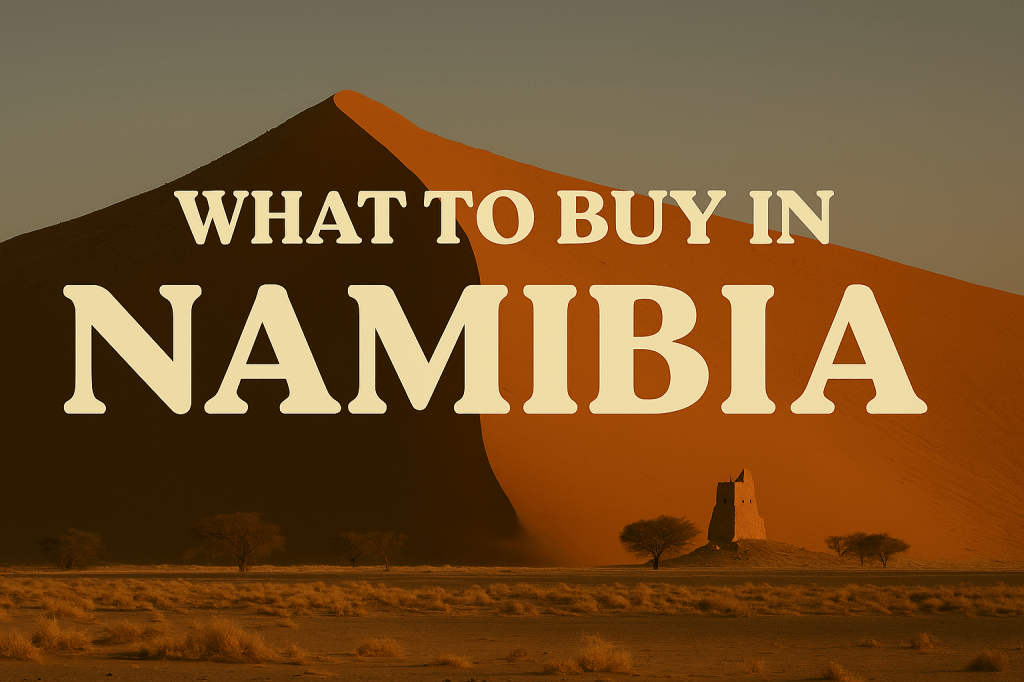
From the wind-swept orange ridges of Sossusvlei to the salty Atlantic mist off Swakopmund, Namibia greets the senses with extreme contrasts: the crunch of ancient sand underfoot, the metallic glint of minerals in Erongo rock, and the piercing blue of an Etosha waterhole at dusk.
Stalls in Windhoek’s craft markets fill the air with polished wood and leather, while distant choirs of mbira-like rhythms or the soft scrape of ostrich eggshell beads whisper of long-standing traditions.
On the roadside from Okahandja to the north, artisans sand and oil each carving by hand; in Katutura markets vendors sell marula oil alongside fresh fruits after the rains.
Whether it’s the powdered ochre used by Himba women or the geometric weaves from Kavango basket-makers, these tangible pieces of place are what make Namibia souvenirs worth bringing home. Here’s what to buy in Namibia to bring a piece of its spirit back home.
1. Ostrich leather goods
Why pick this up:
Ostrich leather is supple yet durable, and its distinctive quill pattern is instantly recognizable—an elegant reminder of Namibia’s ostrich farms and desert-adapted wildlife. Small goods age beautifully and capture the rugged-luxe aesthetic common in Swakopmund and Windhoek boutiques.
What to look for:
Seek tight, even quill rows and a soft but sturdy backing; avoid overly glossy finishes that can hide poor tanning. Verify hand-stitched seams and ask about the tannery—local producers often label where the leather was processed.
Price bracket (2025):
N$450–N$3,500
Where to find it:
Swakopmund craft shops, Windhoek Craft Market, and outlets near ostrich farms around the Karas region.
2. Okahandja wood carvings
Why pick this up:
Okahandja north of Windhoek is famous for its artisanal woodcarving tradition: elephants, giraffes, and abstract pieces carved from indigenous kiaat and camelthorn reflect local fauna and landscapes. Each piece feels warm to the touch, carrying the scent of the wood and the carver’s tool marks.
What to look for:
Look for carvings with clean tool marks, solid weight, and a clear grain pattern; ask if the wood is sustainably sourced. Small souvenir pieces are common in the Okahandja woodcarvers market, while larger sculptures may be commissioned.
Price bracket (2025):
N$100–N$4,000
Where to find it:
Okahandja woodcarvers market, Windhoek artisan stalls, museum shops in Windhoek.
3. Erongo semi-precious stones & lapidary jewelry
Why pick this up:
The Erongo Mountains yield vivid tourmaline, aquamarine, and garnet—stones polished into beads and cabochons that reflect Namibia’s mineral heritage. They’re tactile keepsakes that sparkle with the region’s geological story.
What to look for:
Buy from reputable lapidary stalls or galleries; ask for provenance and any paperwork for larger specimens. Inspect for natural inclusions—perfect clarity can be a sign of imported material.
Price bracket (2025):
N$150–N$12,000
Where to find it:
Omaruru and Omaruru lapidary shops, Windhoek mineral dealers, Erongo craft markets.
4. Kavango and Zambezi basketry
Why pick this up:
Hand-woven baskets from the Kavango and Zambezi regions use local reed and palm, dyed in earthy colors; their tight weave and geometric patterns are both decorative and utilitarian. They fold flat or stack for easy packing and carry stories of riverine life.
What to look for:
Check for even, tight stitching and natural dyes that don’t rub off. Ask where the fibers were harvested—seasonal reeds are a sign of local manufacture.
Price bracket (2025):
N$80–N$700
Where to find it:
Open-air markets in Rundu and Katima Mulilo, Windhoek craft markets, weekend maker markets in Swakopmund.
5. Himba-inspired beadwork and otjize motifs
Why pick this up:
Himba hair ornamentation and beadwork—recognizable by red-ochre hues and white shell accents—inspire many contemporary necklaces, bracelets, and headpieces sold ethically in craft centres. These pieces evoke the striking visual culture of the northwestern Himba communities.
What to look for:
Buy items labeled as “inspired by” or produced in collaboration with Himba artisans; authentic beadwork will use natural materials like ostrich eggshell beads and leather. Avoid mass-produced, plastic-laden imitations.
Price bracket (2025):
N$50–N$600
Where to find it:
Cultural centres in Kunene, Windhoek craft stalls, selected galleries in Swakopmund.
6. Sossusvlei and Namib sand art bottles
Why pick this up:
Bottled sand art captures the desert’s stratified reds, ochres, and golds—tiny cross-sections of Sossusvlei or dunes near Sesriem—making a vivid, lightweight souvenir. Each bottle is a small landscape you can shake in your hand.
What to look for:
Choose bottles sealed and labeled with the dune or park name; thicker glass and tight corks reduce breakage. Be wary of vendors selling sand from protected areas—ask if the sand was collected legally or purchased from local artisans.
Price bracket (2025):
N$60–N$450
Where to find it:
Sesriem souvenir stalls, Swakopmund markets, Windhoek airport gift shops.
7. Twyfelfontein rock-art prints and reproductions
Why pick this up:
Prints and quality reproductions of Twyfelfontein’s UNESCO-protected petroglyphs make thoughtful cultural keepsakes that honor Namibia’s San rock-art traditions. They pair well with coffee-table books on Namibia’s prehistory.
What to look for:
Select prints produced in collaboration with heritage centres or the Twyfelfontein visitor centre; authentic reproductions include interpretive captions and artist credits. Avoid cheap mass-printed images without provenance.
Price bracket (2025):
N$50–N$900
Where to find it:
Twyfelfontein visitor centre, regional galleries, Windhoek museum shops.
8. Marula oil and indigenous skincare products
Why pick this up:
Cold-pressed marula oil and marula-infused balms are prized for their nutty scent and moisturizing properties, reflecting Namibia’s northern fruit harvests. They’re compact, useful, and showcase local plant resources.
What to look for:
Opt for cold-pressed, organic-labeled products and check for local producer names—small-batch brands from Kavango and Kunene often note harvest months. Ensure sealed packaging for travel.
Price bracket (2025):
N$80–N$420
Where to find it:
Katutura market stalls, Windhoek health boutiques, craft markets in Rundu.
9. Kudu and game-hide accessories
Why pick this up:
Kudu, springbok, and other game hides are used for rugs, small bags, and wall hangings—each piece bears unique markings and a tactile softness that’s distinctly Namibian. They echo Namibia’s wildlife heritage in an elegant home accent.
What to look for:
Check legal export documentation and ensure hides are sourced through licensed abattoirs—reputable sellers will provide paperwork. Inspect seams and backing on finished products.
Price bracket (2025):
N$350–N$6,000
Where to find it:
Windhoek leather markets, Okahandja carvers and leather stalls, airport leather boutiques.
10. Hand-dyed textiles & Herero-pattern fabrics
Why pick this up:
Vibrant batiks, printed cottons, and fabrics echoing Herero dress patterns bring Namibia’s sartorial history home—perfect for wraps, wall hangings, or tailored garments. The colors and repeating motifs feel both local and wearable.
What to look for:
Pick tightly woven fabric with saturated, even dyes and ask whether dyes are natural. Local tailoring shops in Windhoek and Swakopmund can turn fabric into garments or souvenirs on request.
Price bracket (2025):
N$150–N$1,200
Where to find it:
Windhoek craft bazaars, Swakopmund artisan shops, market stalls in Walvis Bay.
Tip: Wrap fragile items in clothing inside your carry-on and request export paperwork for stones or hides to avoid customs delays. ✈️
Local Shopping Culture & Traditions
Namibian shopping is rooted in place: open-air markets and township stalls are where craft traditions meet daily life.
Markets such as Windhoek’s Craft Market on Independence Avenue, the Okahandja woodcarvers market north of Windhoek. The seaside stalls in Swakopmund are lively meeting points where artisans display wood, leather, beads, and textiles alongside everyday produce.
Cultural influences appear across regions, the Himba’s ochre and bead aesthetics in the northwest, Kavango basketry along the rivers, and rock-art reproductions from Twyfelfontein in Damaraland.
Bargaining is common but respectful: vendors expect small haggles in markets, while fixed-price boutiques and museum shops typically do not. Weekend markets and craft villages often host rotating makers, so timing a visit can reveal newer or collaborative works.
How to Spot Genuine Local Souvenirs
Look for material authenticity: kiaat or camelthorn wood with visible grain, ostrich leather with natural quill patterns, and hand-dyed textiles with slight irregularities- these imperfections signal handcrafting.
Ask about materials and sourcing: reputable sellers will name regions (Erongo for stones, Kavango for baskets) and sometimes the artisan or cooperative.
For minerals and hides, request provenance or export documentation; genuine semi-precious stones often show natural inclusions and are sold by lapidaries in Omaruru or Windhoek.
For food or oil products, check for sealed packaging, ingredient lists, and refrigeration if required. Avoid overly glossy, identical items sold in bulk, those are often imported rather than locally made.
Where to Shop in Namibia
- Windhoek Craft Market (Independence Avenue) – central hub for wood, textiles, and lapidary pieces.
- Okahandja woodcarvers market – renowned for larger carvings and sculptures.
- Swakopmund open-air markets and beachfront stalls – great for sand art, leather, and coastal crafts.
- Twyfelfontein visitor centre and Damaraland galleries – for rock-art reproductions.
- Katutura Market and Rundu markets – for marula products, beadwork, and regional foods.
- Windhoek National Museum and airport gift shops – for curated, export-ready souvenirs.
FAQs
Q: Are souvenirs in Namibia expensive?
A: Prices vary widely—open-air markets and township stalls offer budget-friendly finds, while gallery pieces, large carvings, and certified mineral specimens command higher prices.
Q: Is bargaining common in Namibia?
A: Yes, light bargaining is expected in markets and with street vendors, but offer respectful counter-prices; boutiques and museum shops usually have fixed prices.
Q: How do I know if items are locally made?
A: Ask for provenance, artisan names, or cooperative labels; inspect materials (natural grain, hand-tool marks, dye irregularities) and prefer pieces sold at regional markets or museum shops.
Take a slow stroll through Namibia’s markets and craft villages to discover the touchstones of place—there’s always another local story waiting to be wrapped up and taken home as a Namibia souvenirs.
Let me know in the comments if you have any other top ‘what to buy’ ideas!
About the Author
Colin is the founder of SouvenirsIdeas.com and a passionate traveller with a soft spot for ceramics, markets, and food tours. He writes practical, first-hand guides to help you bring home souvenirs that actually mean something — not just more clutter!


 Souvenir Ideas to Take Home from Every Country and City
Leave a comment