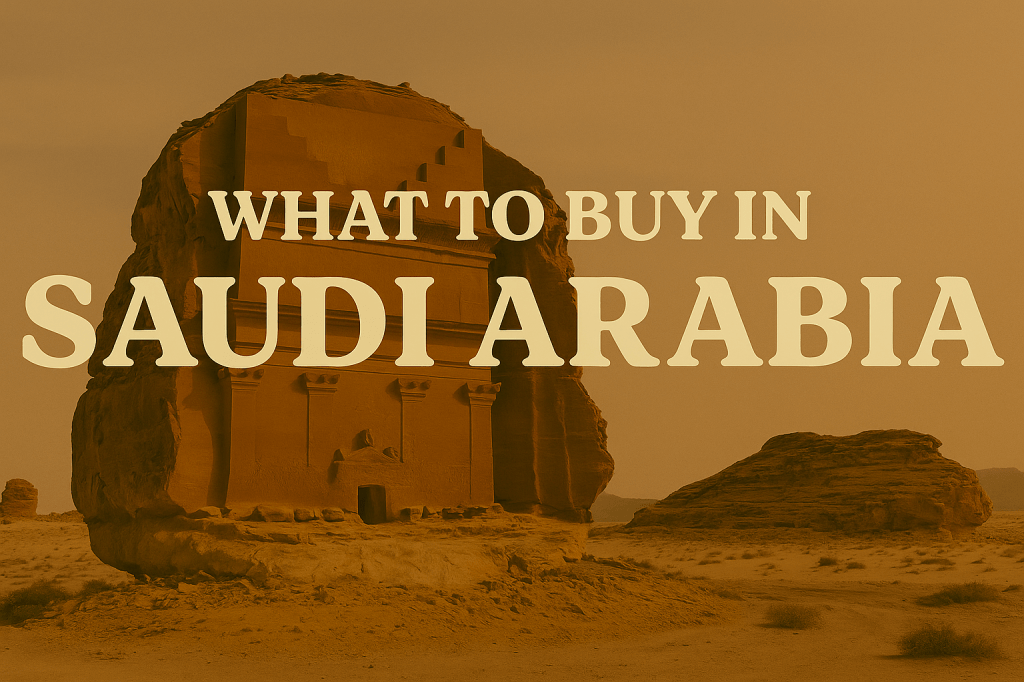
From the wind-blown ochre dunes of the Rub’ al Khali to the fragrant rose terraces of Taif and the salt-sweet breeze along Jeddah’s Corniche, Saudi Arabia unfolds in scents and textures.
Walk a souk and you’ll feel the weight of cold brass dallahs under your palm, inhale dense clouds of oud and bukhoor, and see handwoven Sadu stripes that echo the rhythm of Bedouin tents. If you’re wondering what to bring home, these Saudi souvenirs capture its scents and textures in tangible form.
Markets like Al-Balad in Jeddah and Souq Al-Zal in Riyadh crackle with barter, while mountain villages in Asir and the date oases of Al-Ahsa showcase centuries-old techniques in wood, palm, silver and textile.
The following list collects the best buys – from Ajwa dates to Taif rose oil that tell the story of landscapes, materials and craft. Here’s what to buy in Saudi Arabia to bring a piece of its spirit back home.
1. Ajwa Dates (Medina)
Why pick this up:
Ajwa dates are prized for their caramel sweetness and cultural significance—they’re associated with Medina and often gifted during special occasions. They make an instantly recognizable edible souvenir that lasts well when packed properly.
What to look for:
Choose plump, glossy dates without crystallized sugar on the surface and ask for Medina-origin packaging or a certificate of origin. Smaller boxes of premium-grade Ajwa are ideal for travel.
Price bracket (2025):
SAR 30–120 per 250g box.
Where to find it:
Dates stalls in Medina’s central souks, Al-Balad markets in Jeddah, and specialty counters at King Abdulaziz International Airport.
2. Oud and Bukhoor (Agarwood incense)
Why pick this up:
Oud oils and bukhoor (wood chips and incense blends) are the olfactory backbone of Saudi hospitality—rich, resinous and long-lasting. They’re a classic way to bring home the region’s scent profile.
What to look for:
Ask about the oud’s origin (Borneo, Assam, or locally blended) and prefer natural resin or high-grade attar rather than heavily diluted bottles. For bukhoor, look for whole wood chips and bags labeled with ingredients rather than cheap, perfumed blocks.
Price bracket (2025):
SAR 40–1,500 depending on purity and bottle size.
Where to find it:
Perfume souks in Al-Balad (Jeddah), luxury parfum counters in Riyadh malls, and specialist oud shops near Souq Al-Zal.
3. Brass Dallah (Arabic Coffee Pot)
Why pick this up:
A brass dallah is both decorative and functional, embodying Saudi coffee culture and majlis hospitality. It’s a showpiece that evokes ceremonial serving of Arabic gahwa.
What to look for:
Seek solid brass with clear spout and lid fittings; hand-engraved patterns are a sign of quality. Smaller travel-sized dallahs are easier for packing and practical for display.
Price bracket (2025):
SAR 80–600 depending on size and engraving.
Where to find it:
Traditional metalworkers’ stalls in Riyadh and Jeddah souks, and craft markets in Diriyah.
4. Sadu Weaving (Bedouin Textiles)
Why pick this up:
Sadu is the bold, geometric weaving made by Bedouin women—found in cushions, throws and wall panels that carry desert color palettes and storytelling motifs. Each piece speaks to nomadic design traditions.
What to look for:
Look for uneven weave, natural wool fibers, and hand-dyed colors; cooperative or artisan labels indicate authentic craft. Small cushions or runners are travel-friendly options.
Price bracket (2025):
SAR 120–1,200 depending on size and complexity.
Where to find it:
Artisan souks in Al-Ahsa and Riyadh, Asir craft centers in Abha, and museum shops featuring regional crafts.
5. Taif Rose Products (Rose Water & Oil)
Why pick this up:
Taif roses produce a delicate, honeyed perfume used in skincare, cuisine and traditional scents—Taif rose water and rose oil are uniquely floral and emblematic of the region. They make beautiful, portable gifts.
What to look for:
Choose cold-pressed or steam-distilled oil and pure rose water without synthetic additives; transparent labeling of origin (Taif) is key. Small glass bottles with seals travel best in checked luggage with protection.
Price bracket (2025):
SAR 20–400 (rose water to concentrated oil).
Where to find it:
Taif rose markets during harvest season, perfume stalls in Jeddah’s Al-Balad, and specialty shops in Riyadh.
6. Sidr & Mountain Honey (Asir / Al-Baha)
Why pick this up:
Sidr honey—dark, aromatic and prized for medicinal qualities—comes from sidr trees in southwestern highlands and is a delicious, natural souvenir. It captures floral landscapes in a jar.
What to look for:
Look for raw, unfiltered jars with producer details and harvest date; Sidr honey is typically thicker and deeper in color. Avoid generic supermarket brands with vague origin labels.
Price bracket (2025):
SAR 50–350 per 500g jar.
Where to find it:
Farmers’ stalls in Al-Baha and Asir, Al-Ahsa markets, and cooperative honey shops in regional souks.
7. Silver Bedouin Jewelry & Filigree
Why pick this up:
Handmade silver pieces—bracelets, amulets and necklaces—reflect tribal motifs and traditional silversmithing from Najran and Asir. They’re wearable pieces of regional identity.
What to look for:
Inspect for hallmarks or artisan stamps, hand-chasing marks and solid rather than plated silver. Local motifs (geometric, floral or talismanic) point to authentic makers.
Price bracket (2025):
SAR 80–1,800 depending on weight and intricacy.
Where to find it:
Jewelry stalls in Jeddah’s Al-Balad, Najran craft markets, and artisan workshops near Abha.
8. Palm-Weave Baskets & Mats (Al-Ahsa)
Why pick this up:
Woven from date-palm fronds, these baskets, mats and trays are everyday items turned art—sturdy and evocative of oasis life. They’re lightweight and practical souvenirs.
What to look for:
Choose tight, even plaiting with natural, untinted palm; darker, older fronds make stronger weaving. Small baskets and coasters pack easily.
Price bracket (2025):
SAR 25–250 depending on size.
Where to find it:
Al-Ahsa markets, date oasis cooperatives, and open-air souks across the Eastern Province.
9. Camel Leather Goods (Bags, Slippers)
Why pick this up:
Camel leather is durable, richly textured and deeply traditional—used for slippers (na’al), wallets and satchels with Arabic stitching. It’s a tactile reminder of desert life.
What to look for:
Check for genuine leather grain, secure stitching and sturdy hardware; leather stamped with maker or region adds credibility. Smaller items like wallets and belts are easier to pack.
Price bracket (2025):
SAR 60–900 depending on item and workmanship.
Where to find it:
Leatherworkers in Riyadh’s older quarters, souks in Jeddah, and artisan stalls at cultural festivals.
10. Mabkhara (Brass Incense Burner)
Why pick this up:
A mabkhara is the ornate burner used to smoke bukhoor during gatherings—an instantly recognizable centerpiece in Saudi homes. It’s decorative, functional and small enough for travel.
What to look for:
Prefer solid brass with pierced designs for smoke flow and a removable tray for charcoal; hand-hammered surfaces indicate traditional craft. Compact tabletop sizes are easiest to carry.
Price bracket (2025):
SAR 45–700 depending on size and ornamentation.
Where to find it:
Metalwork stalls in Souq Al-Zal, Jeddah’s Al-Balad markets, and homeware sections of major malls.
Tip: Pack fragile parfums and glass bottles in padded layers inside your carry-on, and always keep receipts for customs 🙂
Local Shopping Culture & Traditions
Shopping in Saudi Arabia is tactile and hospitable: sellers often offer a cup of gahwa and conversation before you buy, and bargaining is a respectful ritual in traditional souks, especially in places like Al-Balad (Jeddah) and Souq Al-Zal (Riyadh).
Artisan villages in Asir and Abha keep practices like Al-Qatt Al-Asiri wall art and Sadu weaving alive, while oasis markets in Al-Ahsa and Medina’s date souks are centered on local harvests and seasonal goods.
Cultural festivals, such as the Taif rose season or Al-Ula cultural events are excellent for meeting makers and seeing crafts made live.
Many crafts are region-specific: Taif for roses and perfumes, Medina for Ajwa dates, Asir for painted interiors and Abha for mountain textiles.
Weekend markets and seasonal bazaars are common places to find emerging artisans and cooperative-run stalls, and museum shops (for example at Al-Ula and Ithra region venues) are good sources for curated, authenticated items.
How to Spot Genuine Local Souvenirs
Look for natural materials and irregularities that indicate handcrafting—uneven weave in Sadu textiles, slight asymmetry in hand-hammered brass, or tool marks on silver filigree.
For edible goods, check producer labels, harvest dates and tamper-evident seals; Ajwa dates and Sidr honey often come with regional packaging or cooperative stamps.
With oud and bukhoor, ask vendors for information about origin and extraction method – pure oud oil will command a higher price and typically be clearer about its source than cheap synthetic blends.
Avoid items mass-produced with “Made in China” tags; genuine pieces will often have an artisan name, a cooperative label, or local provenance noted.
Where to Shop in Saudi Arabia
- Al-Balad (Jeddah) and Souq Al-Alawi for traditional perfumes, silver and antique-style goods.
- Souq Al-Zal and historic quarters of Riyadh for metalwork, dallahs and textiles.
- Taif rose markets (seasonal) and regional souks for rose oil and floral products.
- Al-Ahsa oasis markets for palm-weave crafts and date varieties.
- Asir/Abha artisan bazaars and folk-art centers for Sadu weaving and Al-Qatt Al-Asiri pieces.
- Museum shops (Al-Ula, Ithra) and major airports (Jeddah, Riyadh) for curated, travel-ready souvenirs.
FAQs
Q: Are souvenirs in Saudi Arabia expensive?
A: Prices vary widely—basic palm baskets and small perfume bottles are affordable, while premium oud, pure rose oil or large handwoven textiles can be costly; expect a broad range to suit most budgets.
Q: Is bargaining common in Saudi Arabian souks?
A: Yes—friendly negotiation is normal in traditional markets like Al-Balad and Souq Al-Zal, though fixed prices are typical in modern malls and museum shops.
Q: How do I know if edible items are locally made?
A: Check for producer labels, harvest dates and cooperative stamps; reputable sellers in Medina (for Ajwa dates) and Al-Ahsa (for dates and palm goods) will provide origin details and sealed packaging.
Explore Saudi Arabia’s markets and makers to find meaningful keepsakes that tell the story of its landscapes and people—Saudi souvenirs await your discovery.
Let me know in the comments if you have any other top ‘what to buy’ ideas!
About the Author
Colin is the founder of SouvenirsIdeas.com and a passionate traveller with a soft spot for ceramics, markets, and food tours. He writes practical, first-hand guides to help you bring home souvenirs that actually mean something — not just more clutter!
 Souvenir Ideas to Take Home from Every Country and City
Leave a comment