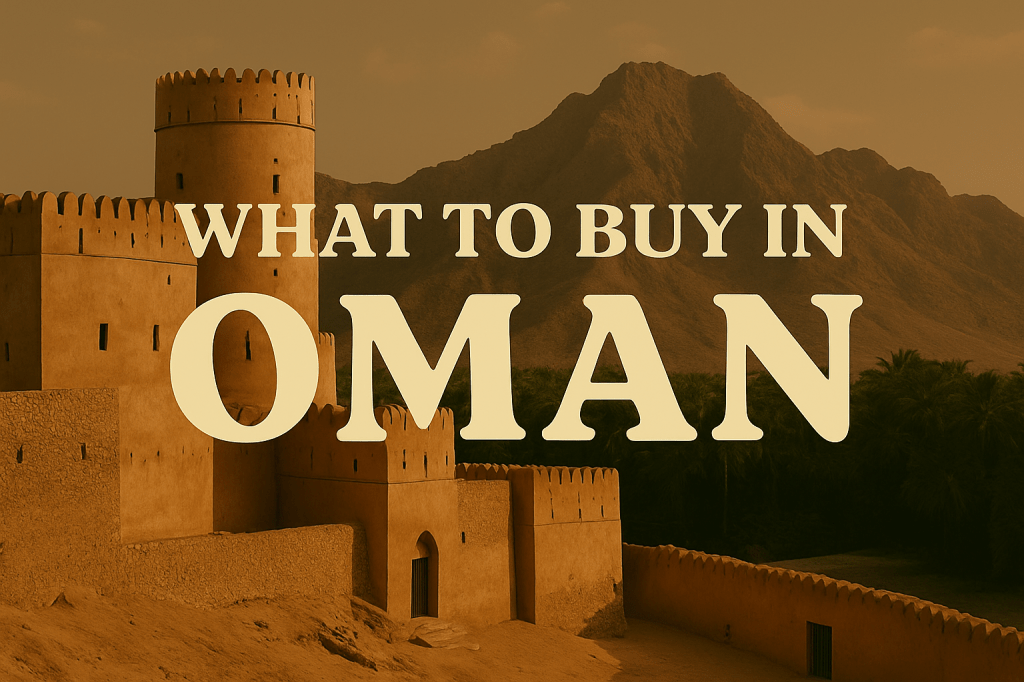
From the wind-swept dunes of the Empty Quarter to the terraced wadis of Jebel Akhdar, Oman smells of sun-baked frankincense, cardamom and hot metal from the souq’s copper workshops.
In Muscat’s Muttrah Corniche the call of merchants blends with the clink of silver, while in Salalah the air carries resinous notes from Dhofar’s ancient groves; each scent and sound tells the story of place and craft.
The question of what to buy in Oman begins with those sensory threads – raw frankincense, hand-loomed sadu, and the bright embroidery of a kumma all hold the landscape within their fibers.
Markets like Muttrah Souq, the hilltop lanes around Nizwa Fort and the Bahla artisans’ stalls are where materials like date palms, silver, palm fronds and oud wood transform under deft hands into keepsakes.
Pack a small box for halwa, fold a masar carefully, and let the textures and fragrances travel home with you. Here’s what to buy in Oman to bring a piece of its spirit back home.
1. Frankincense (Dhofari Resin)
Why pick this up:
Frankincense from Dhofar is ancient—its woody, citrusy smoke has been traded since antiquity and embodies Oman’s landscape and incense traditions. It’s a fragrant souvenir that instantly evokes Salalah’s monsoon-green wadis and desert groves.
What to look for:
Choose amber-colored resin chunks labeled “Dhofar” or “Salalah”; avoid uniformly polished pieces that may be synthetic. Look for light dust and a complex, citrusy-pine aroma when gently warmed.
Price bracket (2025):
OMR 1–15 depending on grade and size.
Where to find it:
Muttrah Souq (Muscat), Salalah souks, Nizwa Souq, and frankincense stalls near the Dhofar region.
2. Sadu Weaving (Bedouin Textiles)
Why pick this up:
Sadu is a geometric, hand-loomed textile tradition woven by Bedouin women that carries tribal stories and desert palettes. A sadu bag, cushion or wall hanging is a tactile piece of Oman’s nomadic heritage.
What to look for:
Seek tightly woven patterns with natural wool or goat hair and bold indigo, red and black dyes; ask if it’s hand-loomed rather than machine-made. Artisan cooperatives and certified sadu labels indicate authenticity.
Price bracket (2025):
OMR 20–150 depending on size and craftsmanship.
Where to find it:
Nizwa Souq, Bahla craft stalls, Bait Al Zubair museum shop, and sadu cooperatives around Muscat and Sohar.
3. Khanjar (Miniature or Decorative Daggers)
Why pick this up:
The khanjar, Oman’s curved dagger, is a potent national symbol used in ceremonies and on the national emblem; a miniature or decorative khanjar is a dramatic keepsake. It captures Omani pride and the metalworking skills of local artisans.
What to look for:
Choose pieces with hallmark silver work and traditional belt detailing; miniature versions are legal to export, while full-sized ceremonial khanjars may be restricted. Check for engraved motifs and solid construction.
Price bracket (2025):
OMR 10–120 depending on size and metal.
Where to find it:
Muttrah Souq, Nizwa Souq, and artisan workshops around Ibra and Nizwa.
4. Omani Silver Filigree Jewelry
Why pick this up:
Omani silversmiths craft intricate filigree and granulation necklaces, bracelets and rings that reflect centuries-old techniques. Jewelry often incorporates khanjar motifs or geometric designs tied to tribal identities.
What to look for:
Look for hallmarks, weighty pieces with fine filigree detail, and classic designs like belaq (bracelets) or pendant sets. Avoid overly shiny, lightweight pieces that may be plated.
Price bracket (2025):
OMR 20–200 depending on purity and intricacy.
Where to find it:
Silver souks in Muttrah and Nizwa, jewellery stalls in Ruwi and museum shops.
5. Omani Halwa and Dates
Why pick this up:
Warm, sticky halwa — made with rosewater, saffron, nuts and ghee — is a ceremonial sweet that defines hospitality in Oman, and dates (often from Al Batinah or Salalah) are prized for their flavor. These edible gifts tell the story of Omani food culture and celebrations.
What to look for:
Buy halwa in sealed tins from reputable stalls and choose locally packed date varieties like khunaizi or khalas. Check packaging dates and sealed containers for freshness on international flights.
Price bracket (2025):
OMR 2–12 for halwa tins; OMR 1–8 per kilo for dates.
Where to find it:
Muttrah Souq, Nizwa Souq, Salalah markets, and airport duty-free.
6. Oud & Attar Oils
Why pick this up:
Oud and attar perfumes distilled from agarwood and local botanicals are central to Omani scent traditions and make compact, long-lasting souvenirs. The concentrated oils capture the country’s love of incense and perfumery.
What to look for:
Choose pure attars or oud oils with clear provenance; test a dab on paper and ask about the blend (oud, rose, sandalwood, saffron). Beware of cheap, synthetic “oud” labeled perfumes.
Price bracket (2025):
OMR 5–120 depending on purity and size.
Where to find it:
Perfume shops in Muttrah and Ruwi, Salalah souks, and specialty perfume outlets at Muscat airport.
7. Kumma (Embroidered Cap)
Why pick this up:
The embroidered kumma is a distinctive Omani cap worn daily by men and often hand-stitched with intricate motifs, making it an instant wearable memory of the country. It’s lightweight and easy to pack.
What to look for:
Inspect tight, even embroidery and durable cotton construction; regional motifs can hint at origin (Muscat styles differ from Dhofar). Avoid poorly stitched, machine-printed imitations.
Price bracket (2025):
OMR 3–30. Where to find it:
Local tailors and stalls in Muttrah Souq, Nizwa, and neighborhood markets in Muscat.
8. Bahla Pottery
Why pick this up:
Bahla pottery, named for the ancient town with a UNESCO-listed fort, is known for its earthy glazes and traditional forms; pieces feel rooted in Oman’s clay traditions. A bowl or lamp brings rustic, hand-formed character into your home.
What to look for:
Choose pieces with visible hand-tool marks, uneven glazing and traditional motifs; check pottery from Bahla workshops for authenticity. Avoid factory-made ceramics with perfect, repeating patterns.
Price bracket (2025):
OMR 10–80. Where to find it:
Bahla Fort area, Nizwa Souq, craft stalls in Muscat and regional artisan markets.
9. Copperware & Mabkhara Incense Burners
Why pick this up:
Copper coffee pots, trays and ornate mabkhara burners show Omani metalwork’s shine and are used daily in homes and for hosting guests. They’re functional pieces that carry a ritual life.
What to look for:
Look for solid copper with patina or hand-hammered textures and clear joins; for mabkharas, check for a removable tray and neat ventilation holes. Polished but heavy items usually indicate quality.
Price bracket (2025):
OMR 10–120. Where to find it:
Muttrah Souq, Nizwa metal workshops, and copper stalls around Sohar.
10. Palm-frond Baskets & Weavings
Why pick this up:
Handwoven baskets, mats and hats made from date-palm fronds are everyday crafts across Oman and reflect sustainable, coastal and oasis economies. Their natural hues and patterns are perfect for practical souvenirs.
What to look for:
Choose tight weaves with minimal loose ends and natural dyeing; authenticity is clear when the strands still show their fibrous texture. Smaller, well-constructed baskets travel best.
Price bracket (2025):
OMR 2–25. Where to find it:
Local markets in Muttrah, Salalah souks, rural craft stalls and weekend maker markets.
Tip: Haggle gently and with a smile at souqs—start 20–30% below asking price and let the vendor counteroffer; buying directly from cooperatives often guarantees fair pay to artisans. 🛍️
Local Shopping Culture & Traditions
Omani shopping is as much a social ritual as commerce: hospitality, tea or kahwa offerings, and careful introductions set the tone.
Muttrah Souq in Muscat is a coastal maze of textiles and perfumes where vendors call out old family trades, while Nizwa Souq – famous for its Friday livestock market and silverwork remains a hub for traditional crafts.
In Dhofar, Salalah’s frankincense routes preserve harvesting practices; in Bahla and Nizwa, artisan villages and fort-adjacent stalls keep pottery and weaving alive.
Bargaining is normal but respectful: exchange begins with a smile, a cup of tea, and friendly negotiation rather than hard haggling.
Weekend markets and seasonal craft fairs (often around national holidays or in Salalah’s Khareef season) bring together cooperatives, where women’s sadu groups and small workshops sell directly and you can learn about materials and methods.
How to Spot Genuine Local Souvenirs
Look for signs of handwork: uneven stitches in sadu, tool marks on Bahla pottery, and the dusty translucence of real frankincense.
Materials unique to Oman like Dhofar frankincense, hand-spun goat or camel hair in sadu, and silver stamped with local hallmarks are reliable markers.
Ask about provenance: true oud or attar will have origin notes and often come in sealed vials; halwa should be in factory-sealed tins or wrapped from trusted confectioners.
Beware of perfectly machined “traditional” items, uniform patterns, plastic substitutes for natural fibers, or perfume labeled “oud” with no origin are red flags for imports.
When buying food, check packaging dates, choose vacuum-sealed products for travel, and keep perishable items refrigerated where possible; for export, ask sellers about customs and duty-free allowances.
Where to Shop in Oman
- Muttrah Souq (Muscat) — the most famous open-air souq for perfumes, silver, fabrics and frankincense.
- Nizwa Souq — renowned for silver, khanjars, and Friday livestock markets.
- Salalah markets (Dhofar) — best for frankincense, frankincense-derived products, and seasonal goods during Khareef.
- Bahla — pottery and artisan workshops near Bahla Fort.
- Bait Al Zubair museum shop (Muscat) — curated crafts and museum-quality pieces.
- Muscat International Airport duty-free — perfumes, dates and packaged halwa for last-minute buys.
- Weekend maker markets and cooperative stalls in Sohar and Ruwi for direct artisan purchases.
FAQs
Q: Are souvenirs in Oman expensive?
A: Prices vary widely—small items like kumma or baskets are inexpensive (OMR 2–10), while silver, large sadu textiles or high-grade oud can be costly (OMR 50–200+). Bargaining and shopping cooperatives help you find fair prices.
Q: Is bargaining common in Oman?
A: Yes, bargaining is common in souqs and is done respectfully; start lower than the asking price and expect a friendly back-and-forth rather than aggressive haggling.
Q: How do I know if food items are allowed through customs?
A: Sealed, commercially packed items like dates and vacuum-packed halwa are usually OK, but check your airline and destination country’s customs rules; ask sellers for invoices or export-friendly packaging for certainty.
Explore the markets, workshops and fragrant alleys—discovering what to buy in Oman is part of the journey, and each purchase tells a local story.
Let me know in the comments if you have any other top ‘what to buy’ ideas!
About the Author
Colin is the founder of SouvenirsIdeas.com and a passionate traveller with a soft spot for ceramics, markets, and food tours. He writes practical, first-hand guides to help you bring home souvenirs that actually mean something — not just more clutter!

 Souvenir Ideas to Take Home from Every Country and City
Leave a comment