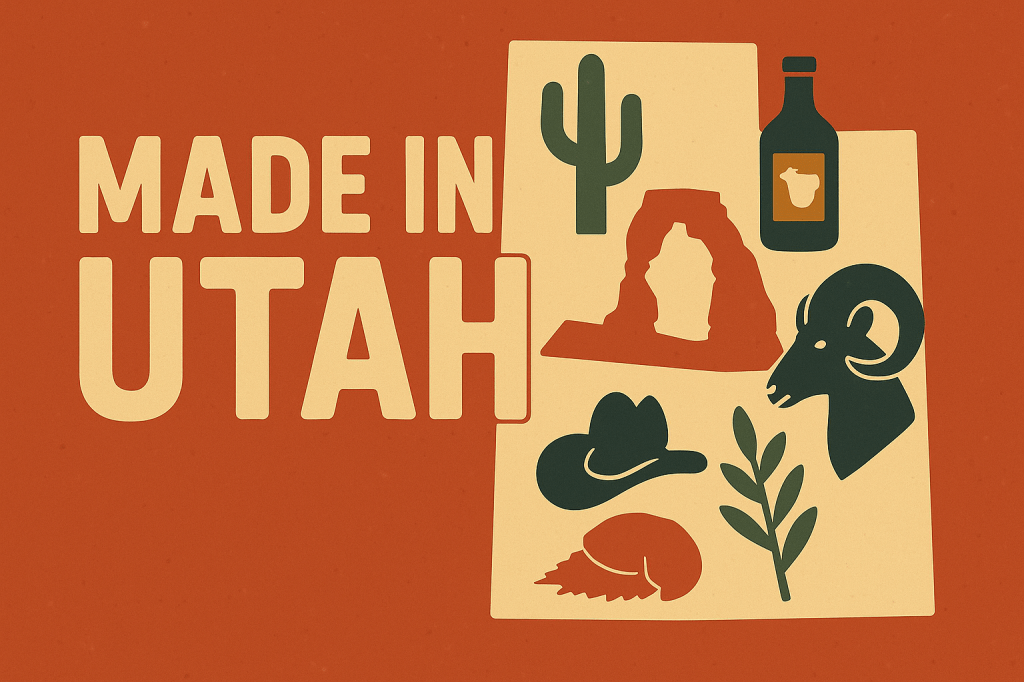
Utah is a place of high skies and red rock, of snow-fed mountain valleys and a briny inland sea. From the glitter of Topaz Mountain to the pine-scented workshops along the Wasatch Range, the state’s materials – salt, stone, native wool, juniper, and sage shape a practical, rugged craft tradition.
You can taste the landscape in a spoonful of canyon honey, feel it in a hand-turned bowl, and hear it in the clipped rhythm of a saddle stitch.
Here are the best things truly made in Utah – products that reflect its heritage, creativity, and everyday life. This guide highlights authentic, locally produced goods and where to find them, so you can bring home a piece of place that really says Made in Utah.
1. High-Altitude Honey (Mountain Wildflower Honey)
Why it’s made here:
Utah’s flowering meadows, sagebrush flats and alpine wildflowers produce distinctive monofloral and wildflower honeys. Beekeepers place hives at different elevations—Wasatch slopes and Uinta meadows—to capture unique floral notes influenced by bitterbrush, clover and mountain lupine.
What to look for:
Seek raw, unfiltered jars with harvest date and floral source listed. Creamed honey and single-source varietals (e.g., sage or wildflower) indicate small-batch processing.
Price bracket (2025):
$10–$30 for 8–16 oz jars; specialty single-flower or creamed jars up to $40. Where to find it:
Farmers’ markets, farm stands, mountain lodge shops and local food co-ops.
2. High West & Small-Batch Whiskey
Why it’s made here:
Utah’s water — snowmelt from the Wasatch — plus a western whiskey-making tradition produced notable craft distilleries. Distillers use local grains and mountain water to create rye-forward and blended whiskeys reflecting the state’s frontier spirit.
What to look for:
Small-batch or single-barrel labels, tasting-room bottlings and detail on mash bill or barrel source. Look for distiller marks and bottling location in Utah.
Price bracket (2025):
$40–$100 for standard bottles; limited releases $150+.
Where to find it:
Distillery tasting rooms, state liquor stores where allowed, and specialty liquor retailers.
3. Great Salt Lake Salts & Spa Products
Why it’s made here:
The Great Salt Lake concentrates minerals unique to the basin. Local producers harvest brine salts and create bath salts, scrubs and skincare that trade on the lake’s high mineral content and signature briny flavor.
What to look for:
Labels stating Great Salt Lake source (not generic “sea salt”), artisanal packaging, and ingredient lists that avoid excessive fillers.
Price bracket (2025):
$8–$30 for culinary and spa jars; curated spa sets $30–$70. Where to find it:
Museum gift shops, salt-themed visitor centers, artisan markets and online shops run by local producers.
4. Topaz Mountain Gems & Jewelry
Why it’s made here:
Utah’s Topaz Mountain (Juab County) and surrounding volcanic areas yield gem-quality topaz and quartz. Local lapidaries cut and set these stones into jewelry that literally comes from the state’s soils.
What to look for:
Unheated, natural topaz with provenance like “Topaz Mountain” or “Thomas Range.” Ask for miner or lapidary names and any certificate that verifies origin.
Price bracket (2025):
$20–$200 for simple stones or small settings; larger, fine-cut pieces or designer settings $300–$1,500+.
Where to find it:
Rockhounding tours, gem shows, local galleries and craft fairs.
5. Navajo and Ute Weavings & Rugs
Why it’s made here:
Indigenous weaving traditions run deep across Utah’s reservation lands and canyons. Wool from local sheep and time-honored patterns produce rugs and blankets that carry cultural stories and practical warmth.
What to look for:
Signed pieces, documentation of tribal provenance, hand-spun wool and natural dyes. Beware mass-produced “Southwestern” prints that mimic patterns but are machine-made.
Price bracket (2025):
$100–$1,500 depending on size, age and maker; rare or antique pieces significantly higher.
Where to find it:
Tribal arts markets, reservation co-ops, Native artisan booths at regional fairs and museum Native craft programs.
6. Hand-Quilted Bedcovers & Patchwork
Why it’s made here:
Pioneer settlement and communal quilting bees left a strong quilting culture in Utah. Local quilters use historic patterns and often source wool and cotton from nearby suppliers.
What to look for:
Hand stitching, natural-fiber batting, documented maker signatures or labels and regional motifs (e.g., rose, star, log cabin).
Price bracket (2025):
$80–$600 for contemporary handmade quilts; heirloom or show quilts $1,000+.
Where to find it:
County fairs, quilting guild sales, historic house museum shops and craft shows.
7. Juniper & Aspen Woodturning (Bowls, Utensils, Furniture)
Why it’s made here:
Juniper, aspen and other native woods are abundant in Utah’s forests. Local woodworkers turn burl bowls, carved utensils and small furniture that highlight the wood’s grain and desert-toned hues.
What to look for:
Quarter-sawn pieces, kiln-dried wood, clear maker’s mark and finishes that protect but don’t mask the grain (e.g., tung oil, beeswax).
Price bracket (2025):
$25–$300 for bowls and utensils; furniture $300–$2,000. Where to find it:
Artists’ co-ops, outdoor maker markets, gallery districts and woodworker studios.
8. Hand-Spun Wool & Navajo-Churro Yarns
Why it’s made here:
Utah’s sheep ranches supply wool prized for its loft and warmth; the Navajo-Churro breed in the region produces fibers prized by traditional weavers and contemporary fiber artists.
What to look for:
Local fleece origin, hand-spun labels, natural dyeing techniques and small-batch skeins with maker notes.
Price bracket (2025):
$15–$60 per skein; larger blanket-grade yarn or finished goods $150–$800. Where to find it:
Fiber festivals, farm stores, local yarn shops and craft fairs.
9. Saddle Leather & Tack (Belts, Saddles, Tooling)
Why it’s made here:
Ranching and rodeo are part of Utah’s working culture; skilled leatherworkers produce saddles, tooled belts and bridles using heavy veg-tanned leather and hand-stitching.
What to look for:
Full-grain leather, hand-tooling marks, reinforced stitching, and a maker’s stamp. Custom-fit options indicate bespoke work.
Price bracket (2025):
$30–$200 for belts and small goods; saddles $600–$5,000 depending on craftsmanship.
Where to find it:
Ranch suppliers, western gear shows, saddle makers’ shops and county fair displays.
10. Foraged Herbal Blends & Mountain Teas
Why it’s made here:
Utah’s sagebrush flats and alpine slopes host a range of aromatic herbs — chamisa, yarrow, peppermint, and mountain sage — that local herbalists harvest for teas, tinctures and culinary blends.
What to look for:
Harvest location, sustainable foraging claims, ingredient lists free from fillers, and batch dates.
Price bracket (2025):
$8–$30 per jar or pouch; curated apothecary sets $30–$90. Where to find it:
Farmers’ markets, apothecaries, natural-food co-ops and herbalist booths at festivals.
11. Artisanal Chocolates & Salted Caramels
Why it’s made here:
Talented chocolatiers in Utah pair high-quality chocolate with local flavorings like Great Salt Lake salt, mountain honey and even juniper-smoked accents.
What to look for:
Bean-to-bar claims, single-origin chocolate, minimal preservatives, and clear source notes for any local inclusions.
Price bracket (2025):
$8–$30 for boxes or bars; specialty gift sets $30–$90. Where to find it:
Downtown chocolatiers, farmers’ markets, specialty food stores and airport gift shops.
12. Native Silverwork & Beaded Jewelry
Why it’s made here:
Silversmithing and beadwork are living Indigenous arts in the Four Corners and Utah’s reservations. Craftspeople combine traditional motifs with contemporary forms using locally sourced turquoise and silver.
What to look for:
Artist signature or hallmarks, natural turquoise (not stabilized plastic), tight beadwork and provenance statements.
Price bracket (2025):
$40–$300 for bracelets, earrings and small pieces; larger statement works $300–$2,000+.
Where to find it:
Tribal arts markets, Native galleries, museum craft shows and reservation craft centers.
13. Salt-Glazed & Desert-Inspired Pottery
Why it’s made here:
Potters along the Wasatch and in Utah’s desert towns use regional clays and glazes inspired by red-rock hues and saline effects from local minerals to make functional pottery and decorative pieces.
What to look for:
Artist marks, hand-thrown texture, local-clay indication and well-finished rims and bases for functional pieces.
Price bracket (2025):
$20–$200 for mugs, bowls and vases; larger or signed pieces $200–$1,000. Where to find it:
Studio open houses, pottery co-ops, arts festivals and gallery shows.
14. Heritage Preserves & Small-Batch Condiments (Fry Sauce, Chutneys)
Why it’s made here:
Utah has a taste for regional condiments—from bottled fry sauce to preserves made from local cherries and orchard fruits. Small-batch producers translate home-canning traditions into gourmet condiments.
What to look for:
Short ingredient lists, “made in Utah” labelling, and small-batch or limited-run notes.
Price bracket (2025):
$6–$20 per jar; gift boxes $20–$60. Where to find it:
Farmers’ markets, farm stands, specialty food shops and festival food pavilions.
Local Makers & Traditions
Utah’s craft heritage is a layered story. Indigenous traditions of weaving, silversmithing and beadwork; pioneer-era quilting, canning and leatherwork. Additionally, mining and lapidary practices around Topaz Mountain; and contemporary makers who translate landscape and resource into product.
Artisan markets, from summer arts festivals to weekly farmers’ markets, are where makers meet local buyers. You’ll also find working studios in ski towns and desert communities where demonstrators show woodturning, pottery throwing and leather tooling.
Traditions like Navajo weaving and silversmithing remain central, while distillers and chocolatiers represent the newer small-batch wave.
How to Spot Genuine Local Products
- Look for provenance: “Made in Utah,” miner/artist name, harvest location or tribal affiliation are good signs.
- Check materials and technique: real Navajo weavings use hand-spun wool and natural dyes; authentic silverwork will have hallmarks or artist stamps.
- Inspect quality: hand-thrown pottery has irregularities and a maker’s mark; machine-perfect seams or repeated identical items suggest mass production.
- Ask questions: where was it made, who made it, what materials were used? Authentic makers welcome questions.
- Beware of mislabeling: “Southwestern-style” or “Navajo pattern” can be a red flag when sold without provenance; imported imitations often have generic country-of-origin labels.
Where to Buy Made-in-Utah Goods
- Local farmers’ markets and weekly craft markets in Salt Lake City, Park City and other towns.
- Artisan fairs and summer arts festivals that feature juried makers.
- Museum shops and cultural center boutiques that curate regional crafts.
- Makers’ districts and gallery streets in historic downtowns such as Park City, Ogden and Moab.
- Distillery tasting rooms, farm stands and airport shops that stock regional favorites.
FAQs
Q: Are products in Utah expensive?
A: Prices vary widely — you can find affordable small goods like salts and chocolates for under $30, while handcrafted textiles, silverwork and furniture command higher prices because of materials and labor.
Q: How can I tell if something is authentically made here?
A: Ask for provenance, look for maker names or stamps, check materials (e.g., Topaz Mountain on a topaz), and buy from reputable markets or directly from studios and tribal co-ops.
Q: What is the best made-in-Utah gift to bring home?
A: Something that uses the land — a jar of mountain honey, Great Salt Lake salt products, a small piece of Topaz jewelry or a hand-stitched leather belt — all are compact, transportable and distinctly Utah.
Explore local workshops and markets to discover your favorite pieces and support makers who keep Utah craft traditions alive; Made in Utah items tell the state’s story through materials and skill.
Let me know in the comments if you have any other top ‘what to buy’ ideas!
About the Author
Colin is the founder of SouvenirsIdeas.com and a passionate traveller with a soft spot for ceramics, markets, and food tours. He writes practical, first-hand guides to help you bring home souvenirs that actually mean something — not just more clutter!


 Souvenir Ideas to Take Home from Every Country and City
Leave a comment