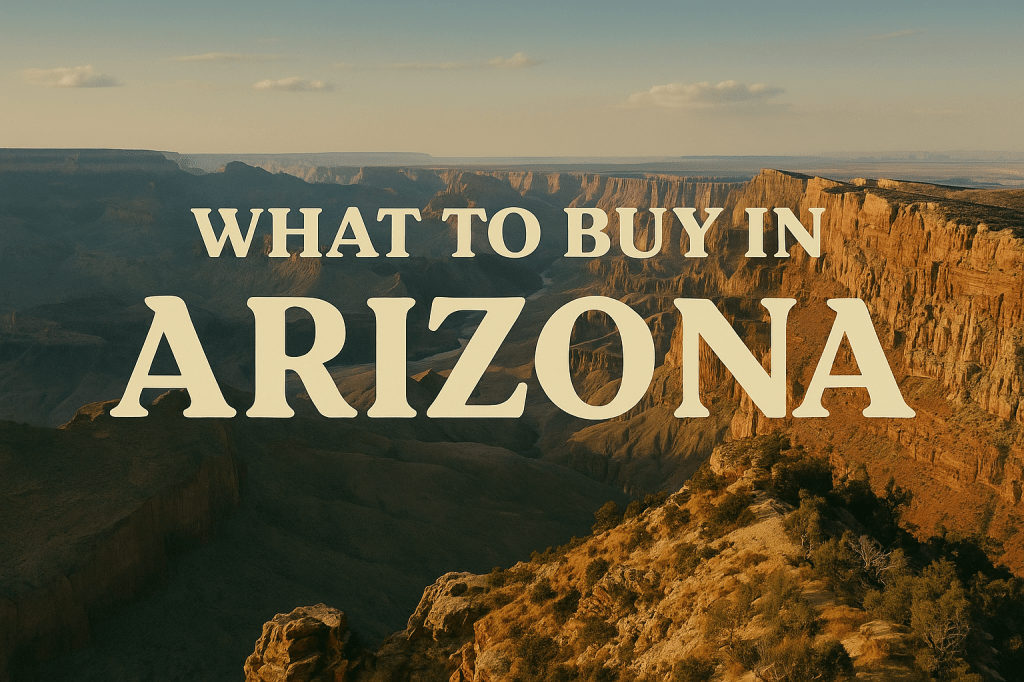
From the sun-baked red rocks of Sedona to the shadowed canyons of the Grand Canyon, Arizona feels like a postcard painted in ochre, turquoise, and cactus green.
Early-morning markets in Tucson and Old Town Scottsdale smell of roasted chilies and prickly pear jam while galleries glitter with silver and turquoise that catch the desert light. The tactile weight of hand-woven wool and the smooth, glassy shine of polished agate make the state’s geology and craft palpable in your hands.
The phrase Arizona souvenirs sits naturally among these textures, small tokens that carry the scent of mesquite smoke and the geometry of Navajo weaves.
Walk into a trading post on the Navajo Nation or an artisan stall at Tlaquepaque in Sedona and you’ll hear the rhythm of traditional techniques: a silversmith hammering a bezel, a potter burnishing clay the same way as generations, a vendor ladling prickly pear syrup into jars.
Here’s what to buy in Arizona to bring a piece of its spirit back home.
1. Turquoise & Silver Jewelry
Why pick this up:
Turquoise mined in the Southwest has a spectrum of blues and greeny-matrix patterns that pair uniquely with hand-stamped Navajo and Zuni silverwork; a piece can feel like wearing a sliver of desert sky. Jewelry is intimate and portable, often carrying the maker’s mark or tribal affiliation.
What to look for:
Seek hallmarks (925 for sterling) or an artist signature, and ask about the mine or origin of the stone — Royston and Sleeping Beauty turquoise are well-known regional names. Avoid lightweight, hollow pieces and look for natural matrix patterns rather than uniformly dyed stones.
Price bracket (2025):
$40–$1,500
Where to find it:
Trading posts on the Navajo Nation, Old Town Scottsdale galleries, Tucson’s Fourth Avenue, and the Tucson Gem & Mineral Show.
2. Navajo Rugs & Blankets
Why pick this up:
Handwoven Navajo rugs carry traditional motifs and natural dyes that echo the hues of Monument Valley and Canyon de Chelly; they’re both functional and deeply cultural. A rug can anchor a room with the geometry and stories woven into each warp and weft.
What to look for:
Authentic rugs have uneven, hand-spun wool, distinctive natural-dye tones, and sometimes a weaver’s seal or story card. Beware of mass-produced “Navajo-style” machine-made rugs lacking irregularities or provenance.
Price bracket (2025):
$200–$3,500
Where to find it:
Navajo Nation trading posts, reservation galleries, and reputable galleries in Flagstaff and Sedona.
3. Hopi Kachina Dolls & Carvings
Why pick this up:
Carved by Hopi artisans, kachina dolls are richly painted representations of spiritual beings and seasonal ceremonies, offering a tangible link to Hopi cosmology. They’re decorative, storytelling pieces with careful painted detail.
What to look for:
Look for hand-painted carving marks, a documented provenance or artist’s name, and culturally appropriate labeling—genuine Hopi work is usually identified by tribe and maker. Avoid items labeled generically “Southwestern kachina” without attribution.
Price bracket (2025):
$100–$1,200
Where to find it:
Hopi artists’ booths on the Hopi mesas, the Heard Museum shop in Phoenix, and Native American art bazaars.
4. Petrified Wood & Polished Agates
Why pick this up:
From the Petrified Forest National Park region, pieces of fossilized wood and colorful agate slices capture Arizona’s ancient geologic past and make striking bookends or display pieces. Their patterns are like time frozen in stone.
What to look for:
Choose polished slabs with intact matrix and clear banding; ask whether collection was legal and whether the seller is licensed (national park protection applies). Smaller polished slices are easier to pack than raw chunks.
Price bracket (2025):
$15–$350
Where to find it:
Sedona gem shops, Flagstaff rock stores, Petrified Forest visitor centers, and the Tucson Gem & Mineral Show.
5. “Apache Tears” (Obsidian) & Local Minerals
Why pick this up:
Small black obsidian nodules called Apache tears are tied to local stories and make pocket talismans or jewelry inserts, reflecting Arizona’s volcanic past. They’re lightweight, meaningful, and perfect for collectors.
What to look for:
Look for natural, unglued nodules and ask about origin; authentic Apache tears have a glossy glass-like surface and conchoidal fracture. Beware of heat-treated or artificially dyed stones sold as natural.
Price bracket (2025):
$5–$60
Where to find it:
Rock shops in Flagstaff, Tucson gem shows, and Sedona mineral boutiques.
6. Prickly Pear (Tuna) Jams, Syrups & Candy
Why pick this up:
Sweet-tart prickly pear products capture the Sonoran Desert’s edible flora — the flavor is floral, bright, and unmistakably desert-born. They’re lovely on toast, cocktails, or as gifts that evoke Arizona fields.
What to look for:
Choose sealed, commercially labeled jars with clear ingredient lists; look for small-batch producers at farmers’ markets for more concentrated flavor. Avoid unsealed homemade jars unless properly processed and labeled.
Price bracket (2025):
$6–$25
Where to find it:
Tucson farmer’s markets, Old Town Scottsdale specialty food stores, and Sonoran food stalls.
7. Mesquite Flour & Syrups
Why pick this up:
Made from ground mesquite pods, this gluten-free flour brings a nutty, caramel-like flavor popular in regional baking and barbecue rubs — a practical taste of the desert. It’s a pantry-ready souvenir that lasts.
What to look for:
Buy from small producers who list pod-sourcing and processing methods; pure mesquite flour should be free from additives. Look for sealed packaging and suggested uses on the label.
Price bracket (2025):
$8–$25
Where to find it:
Specialty food shops in Tucson and Sedona, farmers’ markets, and artisanal food stalls.
8. Native American Pottery
Why pick this up:
Hopi and other Pueblo-style pottery in Arizona is shaped and painted with ancestral techniques—each vessel holds ceremonial patterns and desert imagery. A piece becomes a decorative heirloom with both form and history.
What to look for:
Seek coil-made construction, hand-burnished surfaces, and artist signatures or tribal attribution; authentic pottery often shows slight asymmetry from handcrafting. Steer clear of factory-made ceramics branded as “authentic.”
Price bracket (2025):
$80–$2,500
Where to find it:
Heard Museum, Hopi villages, Sedona galleries, and Native art fairs.
9. Cactus Leather Goods & Saguaro-inspired Art
Why pick this up:
Ethical cactus leather wallets, belts, and saguaro-inspired prints connect modern design with desert botanicals—sustainable cactus leather makers in Phoenix and Scottsdale are producing refined items. Art prints or woodblock carvings echo the distinctive silhouette of the saguaro against the sunset.
What to look for:
Choose labeled cactus-leather (not treated animal hide) and ask about production methods; for saguaro-themed items, prefer prints or works by local artists rather than actual cactus parts (saguaro harvesting is protected). Look for fair-labeled or small-batch designers.
Price bracket (2025):
$25–$180
Where to find it:
Roosevelt Row in Phoenix, Scottsdale art walks, Sedona galleries, and artisan markets.
10. Sonoran-style Hot Sauces & Chiltepin Mixes
Why pick this up:
Sonoran hot sauces balance smoky, spicy, and tangy notes that pair well with regional dishes; chiltepin — a wild pepper from Arizona — offers a fiery, fruity kick distinct from store-bought blends. These condiments are compact and make excellent gifts.
What to look for:
Look for locally branded bottles that list chiltepin or regional peppers, with production dates and sealed caps. Small-batch producers will note pepper origin and heat level.
Price bracket (2025):
$5–$20
Where to find it:
Tucson farmer’s markets, Old Town Scottsdale food stalls, and specialty spice shops.
Tip: Pack fragile pottery and jewelry in clothes or bubble wrap, and keep sauces and jams in your checked luggage in sealed plastic bags to avoid leaks 🧳
Local Shopping Culture & Traditions
Arizona shopping blends Indigenous trading-post traditions with modern gallery circuits and weekly farmers’ markets.
Trading posts on the Navajo Nation and Hopi mesas remain cultural hubs where artisans sell directly, while annual events like the Tucson Gem & Mineral Show transform the state into a global marketplace.
Cities such as Phoenix (Roosevelt Row), Scottsdale (Old Town and the art walk), Sedona (Tlaquepaque Arts & Crafts Village), and Flagstaff host regular art markets and weekend maker fairs that celebrate local craft traditions and regional materials.
Bargaining is situational: it’s uncommon in established galleries but more acceptable at flea markets, swap meets, and some trading-post stalls.
Many Native artists follow protocols around sacred items and will provide provenance or decline certain sales; respect and asking about a piece’s story is both customary and appreciated.
How to Spot Genuine Local Souvenirs
Look for provenance: artist signatures, tribal affiliation, or written labels that identify the maker and community.
In jewelry, check for sterling marks and ask about the turquoise source; in textiles, inspect weave irregularities, natural-dye tones, and hand-tied fringe.
For pottery and kachinas, ask whether the piece was made by a member of the tribe it represents and request documentation if available.
Avoid items labeled vaguely as “Southwestern” or “Native-style”- these are often mass-produced imports. For food souvenirs, choose commercially sealed packaging with ingredient lists and production dates to ease customs and freshness concerns.
Where to Shop in Arizona
- Tucson Gem & Mineral Show (annual) and the city’s Fourth Avenue markets
- Old Town Scottsdale galleries and weekend artisan markets
- Roosevelt Row and local maker markets in Phoenix
- Tlaquepaque Arts & Shopping Village and galleries in Sedona
- Heard Museum and museum shops in Phoenix and Flagstaff
- Petrified Forest National Park visitor center and Sedona rock shops
- Airport gift shops at Phoenix Sky Harbor and Tucson International Airport
FAQs
Q: Are souvenirs in Arizona expensive?
A: Prices range widely: small items like jams and stones are inexpensive, while handwoven rugs and signed pottery can be costly; expect to pay more for documented, authentic Native-made work.
Q: Is bargaining common in Arizona?
A: Bargaining is okay at flea markets, swap meets, and some trading-post stalls, but not typically in galleries or museum shops—ask politely and read the vendor’s displayed policy.
Q: How do I know if food items will clear customs?
A: Choose sealed, commercially produced packages with ingredient lists; some fresh produce and meats are restricted, so check your destination’s customs rules before packing.
Explore Arizona’s markets and artisan studios to find pieces that tell the stories of its people and landscapes — Arizona souvenirs are waiting to be discovered.
Let me know in the comments if you have any other top ‘what to buy’ ideas!
About the Author
Colin is the founder of SouvenirsIdeas.com and a passionate traveller with a soft spot for ceramics, markets, and food tours. He writes practical, first-hand guides to help you bring home souvenirs that actually mean something — not just more clutter!


 Souvenir Ideas to Take Home from Every Country and City
Leave a comment