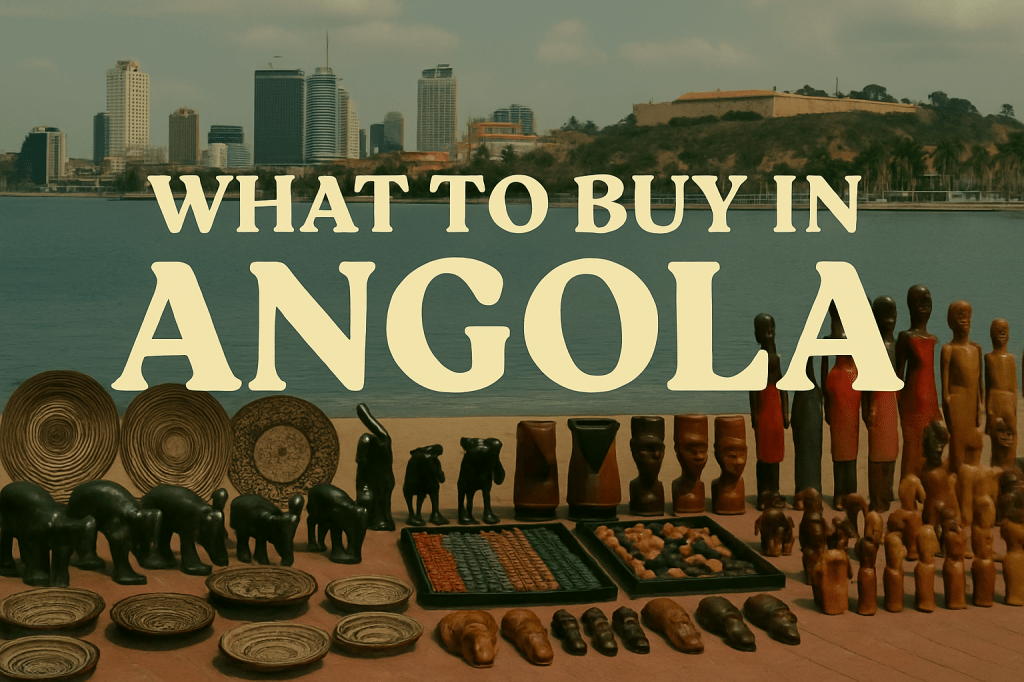
From the wind-creased capulana stalls in Luanda’s morning markets to the salty breeze off Ilha do Mussulo, Angola greets you with a chorus of textures, colors and smells. Sunlight bounces off the red escarpments of Serra da Leba and the ochre dunes of Namibe.
While sellers at Kinaxixe and weekend craft fairs lay out woven baskets, carved masks and glossy bundles of coffee beans that invite passing hands and lingering conversations about craft and origin.
When you walk through a market in Benguela or a craft fair in Lubango, the smell of roasted coffee, smoked fish and piri‑piri mingles with the dry, resinous scent of sapele wood and raffia.
The bright geometry of capulanas flutters beside polished Chokwe carvings and hand‑stitched raffia bags – the perfect reminder of Angola’s layered landscapes and long artisanal traditions, and a quick list of Angola souvenirs to get you started.
Here’s what to buy in Angola to bring a piece of its spirit back home.
1. Capulana (Printed Cloth)
Why pick this up:
Capulanas are bold, multipurpose cloths worn and used across Angola for everything from skirts to headwraps and home décor, carrying local patterns and Portuguese colonial-era influences. Owning one is an instant wearable memory of Luanda’s street style and coastal markets.
What to look for:
Choose vibrant, tightly printed fabrics with traditional motifs or modern geometric designs and check the hem for even stitching or hand-finished edges. Look for medium‑weight cotton blends that hold color after washing and ask vendors about local dyeing techniques.
Price bracket (2025):
Kz 8.000–30.000
Where to find it:
Kinaxixe Market in Luanda, weekend craft fairs in Benguela, and artisan stalls at Fortaleza de São Miguel.
2. Chokwe Masks & Wood Carvings
Why pick this up:
Carvings from Chokwe and Ovimbundu carvers reflect deep ritual and storytelling traditions, with stylized faces and abstract forms that are striking on any wall. They are a tactile way to bring Angola’s tribal artistry home.
What to look for:
Seek solid hardwood pieces (sapele or local hardwoods) with tool marks that suggest hand carving and patina from oil finishing rather than glossy factory varnish. Ask about the carver’s village or the mask’s ceremonial meaning to ensure provenance.
Price bracket (2025):
Kz 20.000–120.000
Where to find it:
Craft markets in Luanda, artisan cooperatives in Huambo and Malanje, and museum gift bazaars.
3. Woven Baskets & Palmware from Namibe
Why pick this up:
Namibe’s fishermen’s villages produce tight, functional baskets and storage cestos woven from palm and sisal that reflect desert-edge craftsmanship. They’re both decorative and durable, perfect for cupboards or wall displays.
What to look for:
Prefer even, compact weaving and natural dye patterns; look for sturdy rims and cleanly finished handles that show careful handwork. Avoid items with uniform machine-like spacing or synthetic fibers if you want authentic palmwork.
Price bracket (2025):
Kz 3.000–20.000
Where to find it:
Markets in Namibe province, Luanda craft stalls, and coastal craft fairs on Ilha do Mussulo.
4. Angolan Coffee (Uíge & Kwanza beans)
Why pick this up:
Angola was once a major coffee producer and coffee from Uíge and Kwanza Norte has a full-bodied, earthy profile with chocolate notes — a great edible souvenir. Buying beans supports local growers and gives you a roast unique to the region.
What to look for:
Choose recently roasted whole beans in sealed bags and ask for origin (Uíge, Kwanza). Avoid pre-ground or old packaging; check roast dates and opt for small-batch producers when possible.
Price bracket (2025):
Kz 2.500–8.000 per 250g bag
Where to find it:
Specialty cafes and markets in Luanda, farmer stalls in Uíge, and Luanda airport shops carrying regional blends.
5. Filigree & Silver Jewelry
Why pick this up:
Portuguese colonial influence left a legacy of filigree jewelry in coastal cities; delicate silver earrings and pendants pair European technique with local motifs. Jewelry makes a compact, elegant memento.
What to look for:
Look for hallmarks or sterling stamps where possible and fine, intricate threadwork in the filigree rather than thick, cast pieces. Buy from reputable stalls in established markets or galleries to avoid plated imitations.
Price bracket (2025):
Kz 10.000–60.000
Where to find it:
Luanda’s artisan markets, jewelry stalls near Fortaleza de São Miguel, and museum shops.
6. Hand‑Carved Stools & Household Figures
Why pick this up:
Small stools and household figures are functional folk art, often carved by Ovimbundu and Chokwe artisans and finished with oils that reveal wood grain. They serve as stools, side tables or sculptural pieces that anchor a room.
What to look for:
Prefer solid carpentry with stable legs and no glues visible at joints; natural finishes and slight asymmetry indicate handwork. Confirm the type of wood (sapele, mahogany alternatives) to ensure durability and legality.
Price bracket (2025):
Kz 30.000–150.000
Where to find it:
Carpentry cooperatives in Huambo and Benguela, craft exhibitions in Luanda, and artisan villages outside major towns.
7. Raffia & Sisal Handbags
Why pick this up:
Lightweight raffia and sisal bags are woven by coastal artisans and combine utility with coastal style — great for markets or beach days. Their textures and natural tones capture Angola’s shoreline aesthetic.
What to look for:
Choose tight, even weaving, strong linings, and sturdy leather straps; watch for reinforced seams. Avoid coarse synthetic blends if you want truly handmade fiber work.
Price bracket (2025):
Kz 5.000–35.000
Where to find it:
Luanda craft stalls, Miramar weekend markets, and maker fairs in Benguela.
8. Piri‑Piri & Traditional Sauces
Why pick this up:
Angolan piri‑piri carries the country’s Portuguese and African culinary fusion—spicy, bright and perfect for home grilling. Bottles are compact and make excellent edible souvenirs for food lovers.
What to look for:
Prefer glass bottles from reputable producers with ingredient lists and sealed lids; ask about heat level and whether it’s oil‑based or vinegar‑based. Avoid opened or homemade jars that may not travel safely.
Price bracket (2025):
Kz 800–4.000
Where to find it:
Grocers and food stalls in Luanda, specialty food sections at markets, and airport shops.
9. Traditional Drums & Percussion (Ngoma/Djembe variants)
Why pick this up:
Music is central to Angolan life — take home a hand‑carved drum or rattle to remember rhythms of semba and kizomba nights. They’re interactive souvenirs that bring a piece of street and village music into your living room.
What to look for:
Look for goatskin heads tensioned with rope or pegs and solid wooden shells with smooth interiors; test the tone if you can. Avoid low‑grade laminated shells and synthetic heads if you want authentic sound.
Price bracket (2025):
Kz 6.000–50.000
Where to find it:
Artisan markets in Luanda, music workshops in Huambo, and cultural centers hosting instrument makers.
10. Huíla Pottery & Ceramic Pieces
Why pick this up:
Huíla province and surrounding highlands produce functional, burnished pottery with earthy glazes — simple bowls, pitchers and decorative pieces that echo rural life. Pottery is a durable reminder of Angola’s highland clay traditions.
What to look for:
Choose pieces with even walls, visible hand-thrown marks and natural glazes; check for hairline cracks and stable bases. Smaller, well-packed items travel better than large, fragile vessels.
Price bracket (2025):
Kz 2.000–20.000
Where to find it:
Craft fairs in Lubango, weekend markets in Huíla, and museum bazaars.
Tip: Bargain politely at open markets and ask for provenance—small conversation goes a long way when buying from independent makers. 😊
Local Shopping Culture & Traditions
Angolan shopping is personal and place-driven: sellers in Luanda’s Kinaxixe or at Fortaleza de São Miguel will call out prices and stories while artisan villages outside Lubango or in Uíge trade directly with local buyers.
Weekends bring craft markets and fairs where families sell baskets, textiles and foodstuffs; holiday markets and city festivals are prime times for discovering regional specialties.
Portuguese colonial legacies mix with ethnic crafts from the Chokwe, Ovimbundu and Bakongo, producing hybrid designs in filigree, textiles and ceramics that reflect trade routes and local resources.
Bargaining is common in open-air markets, especially for textiles and carved pieces, but gallery or museum prices tend to be fixed; tipping for extra packing or delivery is appreciated.
Many artisans belong to cooperatives that rotate stalls at provincial craft fairs, while urban sellers often source items from rural communities, so provenance and stories are part of the purchase experience.
How to Spot Genuine Local Souvenirs
Check materials and technique: authentic Angolan baskets should be made of palm, raffia or sisal with hand-finished rims; capulanas will have crisp printed or block-dyed patterns and not the plastic sheen of mass-produced cloth.
For wood carvings, look for tool marks, weight and natural patina, machine-carved items are often perfectly symmetrical and lack finish variation. Ask about the village or ethnic group (Chokwe, Ovimbundu, Mbunda) and, where possible, buy directly from cooperatives that can confirm origin.
For food items like coffee or piri‑piri, inspect packaging dates and seals and favour small-batch producers with clear labeling on roast dates or ingredient lists.
Avoid suspiciously cheap “antique” carvings and question anything with a factory-looking finish; genuine pieces usually show small irregularities and are accompanied by a maker’s story or regional name.
Where to Shop in Angola
- Kinaxixe Market (Luanda) — main hub for textiles, carvings and everyday goods.
- Fortaleza de São Miguel craft stalls and the weekend fairs along Luanda’s bay.
- Benguela and Lubango craft markets — good for pottery, woodwork and coastal baskets.
- Uíge coffee estates and farmer markets for single-origin beans.
- Museum shops and cultural centers in Luanda for authenticated crafts and filigree jewelry.
- Luanda Quatro de Fevereiro Airport shops for last-minute, travel‑friendly souvenirs.
FAQs
Q: Are souvenirs in Angola expensive?
A: Prices vary widely—local markets offer very affordable items (baskets, small textiles) while larger carvings and handcrafted furniture are pricier; buying directly from artisans often gives better value.
Q: Is bargaining common in Angola?
A: Yes—bargaining is expected in open markets and with independent sellers, but be respectful and start lower than the asking price; fixed-price shops and museum stores do not bargain.
Q: How do I know if a food product is safe to bring home?
A: Choose sealed, labeled products from reputable vendors, check expiration or roast dates for coffee, and avoid fresh or improperly packaged items to prevent customs or spoilage issues.
Explore Angola’s markets and meet the makers who craft its colors, rhythms and flavors — Angola souvenirs are waiting to tell their stories.
Let me know in the comments if you have any other top ‘what to buy’ ideas!
About the Author
Colin is the founder of SouvenirsIdeas.com and a passionate traveller with a soft spot for ceramics, markets, and food tours. He writes practical, first-hand guides to help you bring home souvenirs that actually mean something — not just more clutter!

 Souvenir Ideas to Take Home from Every Country and City
Leave a comment