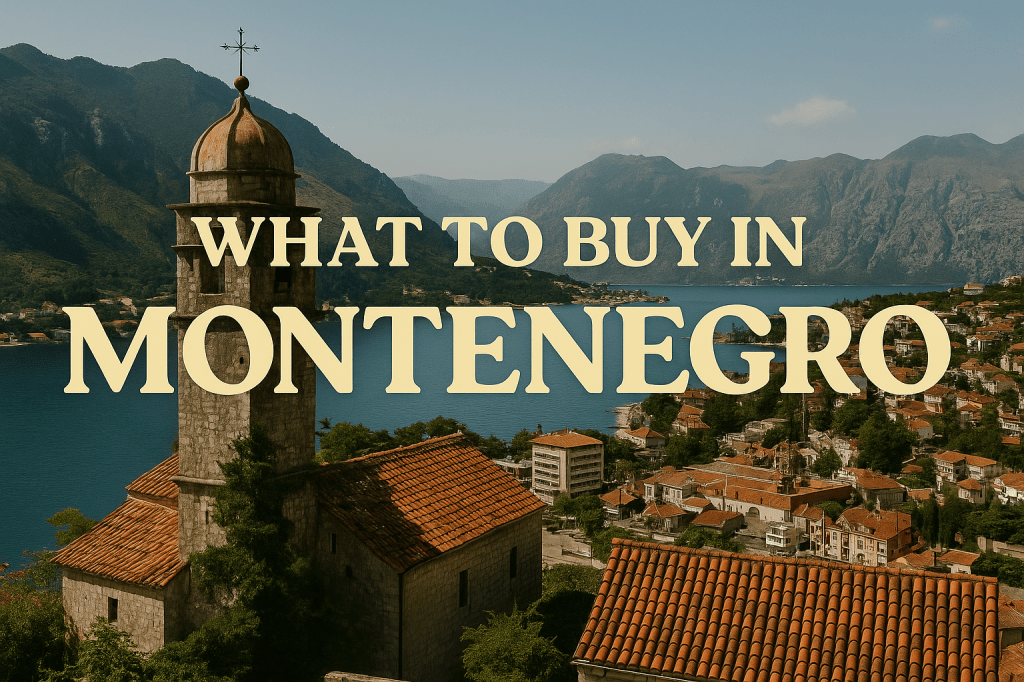
From the silver-lined fjords of the Bay of Kotor to the wind-bleached pines of Durmitor, Montenegro greets the senses at every turn: the briny tang of Adriatic wind, the smoke-warm perfume of Njeguši ham hanging in village rafters, and market stalls beneath red-tiled roofs spilling with honey, olives and woven wool.
Walking through Kotor’s Old Town at dusk, you hear church bells and a patchwork of languages while your fingers brush hand-carved icons and filigree necklaces spun from bright silver.
On the coast, citrus and fig stalls glisten with sea-sweet light; inland, mountain cheeses and jam jars are stacked beside bottles of Plantaže Vranac wine and homemade rakija. The tactile textures of sheep’s wool blankets from Žabljak and the glossy sheen of cold-pressed olive oil from Bar tell stories of climate and craft.
If you’re in Podgorica check my article for gift ideas. Here’s what to buy in Montenegro to bring a piece of its spirit back home.
1. Njeguški Pršut (Smoked Ham from Njeguši)
Why pick this up:
Njeguški pršut is a deeply smoked, air-dried ham from the mountain village of Njeguši on Lovćen—its nutty, slightly salty flavor embodies Montenegrin mountain curing traditions. It’s an iconic edible souvenir that pairs beautifully with local cheeses and a glass of Vranac.
What to look for:
Look for a visible smoke ring, a firm but tender texture and a producer’s seal or vendor who can name the village source. Ask sellers about curing time; older, slower-cured legs tend to be richer.
Price bracket (2025):
€15–€40 (small to medium pieces)
Where to find it:
Njeguši village producers, Kotor Old Town market stalls, Budva summer food markets.
2. Vranac Wine (Plantaže & Regional Bottlings)
Why pick this up:
Vranac is Montenegro’s signature red—full-bodied, dark-fruited and built for mountain stews or coastal grills. Plantaže, near Podgorica, produces internationally recognised bottles that make impressive gifts.
What to look for:
Seek bottles labelled “Vranac” or the Plantaže logo; check vintage and sugar/alcohol content if you prefer dry styles. Smaller boutique producers from the Zeta Valley can offer distinctive regional twists.
Price bracket (2025):
€8–€30 per bottle
Where to find it:
Plantaže winery tours, Podgorica and Kotor wine shops, airport duty-free.
3. Montenegrin Kapa (Traditional Cap)
Why pick this up:
The kapa is a small, round traditional cap that carries regional embroidery and historic symbolism—an instantly recognisable piece of Montenegrin dress from Cetinje and the highlands. It’s both a wearable souvenir and a conversation starter about local identity.
What to look for:
Choose hand-embroidered kapa with dense stitching and wool backing; genuine pieces often come from Cetinje artisans or mountain villages. Beware mass-produced caps with cheap fabric and machine embroidery.
Price bracket (2025):
€10–€40
Where to find it:
Cetinje artisan shops, Kotor Old Town stalls, folk craft tables at weekend markets.
4. Cold-Pressed Olive Oil (Bar, Ulcinj, Luštica Peninsula)
Why pick this up:
Coastal Montenegro yields richly flavoured olive oils—green, peppery, and perfect for finishing seafood or salads. A bottle captures the sun and soil of the Adriatic coast.
What to look for:
Look for bottles marked as “extra virgin” and for harvest dates or estate names; single-estate or cold-pressed labels indicate quality. Smaller producers often sell unfiltered oil with deeper aroma.
Price bracket (2025):
€8–€25 per 250–500 ml
Where to find it:
Bar and Ulcinj farmers’ markets, Luštica cooperative stands, gourmet food shops in Kotor and Budva.
5. Mountain Honey (Durmitor, Lovćen, Skadar Lake Hinterlands)
Why pick this up:
Mountain honey in Montenegro is floral and robust—often a blend of wild herbs, heather and chestnut from high-elevation pastures. It’s a taste of the alpine meadows and lacustrine shrubs.
What to look for:
Choose jars labelled with region or “domaći” (homemade); thick, slightly crystallised honey often signals minimal processing. Ask about the flora the bees visited for flavour clues.
Price bracket (2025):
€6–€20 per jar
Where to find it:
Podgorica Pijaca, Kotor stalls, roadside stands near Žabljak and Njeguši.
6. Handwoven Wool Blankets & Kilims (Northern Highlands)
Why pick this up:
Wool blankets and kilims from Kolašin, Pljevlja and Žabljak are warm, durable and feature traditional motifs reflecting Slavic and highland weaving techniques. They make practical souvenirs with rustic charm.
What to look for:
Examine the weave for tightness and uneven hand-spun yarns; authentic pieces use local sheep’s wool and natural dyes. Ask about the village of origin—the region often shapes patterns and colours.
Price bracket (2025):
€30–€150 depending on size and intricacy
Where to find it:
Artisan villages, Cetinje craft workshops, weekend maker markets in Budva and Kotor.
7. Filigree Silver Jewelry (Filigran Work from Coastal Workshops)
Why pick this up:
Fine filigree silver—delicate threads of silver twisted into floral or geometric patterns—reflects Adriatic-era craftsmanship seen in Kotor and Cetinje. These pieces are elegant, lightweight and distinctly regional.
What to look for:
Seek pieces stamped with a silver mark (e.g., 925) and inspect the filigree for crisp, hand-worked wires rather than glued lattice. Small galleries in Kotor often carry signed artisan pieces.
Price bracket (2025):
€20–€150
Where to find it:
Old Town Kotor jewelers, Cetinje galleries, museum shops.
8. Rakija & Travarica (Fruit & Herbal Brandies)
Why pick this up:
Homemade rakija—often plum-based—or travarica (herbal-infused brandy) is central to Montenegrin hospitality and makes a spirited souvenir. The herbal versions capture mountain herbs like sage and mountain tea.
What to look for:
Choose clear bottles with producer notes or small-batch labels; taste when possible at a konoba (tavern) to gauge flavour intensity. Beware unlabeled bulk bottles if you need customs-friendly quantities.
Price bracket (2025):
€8–€35 per bottle
Where to find it:
Local konobas, roadside producers in Njeguši and highland villages, Podgorica markets.
9. Hand-Painted Ceramics (Kotor & Coastal Styles)
Why pick this up:
Ceramic plates, bowls and tiles with coastal motifs—nautical scenes, pomegranates, or folk patterns—reflect Montenegro’s Adriatic heritage and Mediterranean palette. They’re decorative and practical keepsakes from seaside towns.
What to look for:
Look for hand-painted brush strokes, artist signatures and thicker glaze indicative of small-studio work. Avoid perfectly uniform pieces that suggest mass production.
Price bracket (2025):
€10–€60
Where to find it:
Kotor Old Town craft stalls, Budva artisan markets, museum gift shops.
10. Njeguški Cheese & Kačkavalj (Mountain Cheeses)
Why pick this up:
Hard and semi-hard cheeses from Njeguši and the highlands—often smoked or aged—offer concentrated flavor and a taste of pastoral Montenegro. They pair classically with pršut and local bread.
What to look for:
Seek cheeses wrapped and labelled by producer or sold at certified market stalls; ask about refrigeration for travel. Smoked varieties have a distinct brown exterior and a smoky aroma.
Price bracket (2025):
€5–€20 per piece
Where to find it:
Njeguši producers, Kotor and Budva markets, Podgorica specialty food shops.
11. Fig Preserves & Lavender Sachets (Coastal & Lovćen Flavours)
Why pick this up:
Fig preserves from Bar and Ulcinj capture Mediterranean sweetness, while lavender sachets from Lovćen offer aromatic reminders of mountain slopes. Both are lightweight, travel-friendly gifts.
What to look for:
Choose preserves in sealed jars with visible fruit pieces and labels indicating local origin; lavender should be whole buds with a bright scent, not faded or powdery. Look for small-batch packaging from regional producers.
Price bracket (2025):
€4–€18
Where to find it:
Bar and Ulcinj farmers’ markets, Budva summer stalls, Kotor specialty food vendors.
Quick tip: Pack fragile ceramics and jars in soft clothing and declare food items at customs to avoid fines and ensure safe transport. 🧳
Local Shopping Culture & Traditions
Montenegrin shopping mixes coastal bazaars with mountain cooperatives: seasonal markets pop up in Kotor and Budva during the summer, while year-round hubs like the Podgorica Pijaca (Green Market) and Cetinje’s artisan quarter serve locals and visitors alike.
Njeguši and small highland villages maintain family-run producers for pršut and cheese, and olive pressing on the Bar and Luštica coasts follows centuries-old harvest patterns.
Cultural influences—Venetian along the coast, Ottoman and Slavic inland—shape motifs and techniques in jewelry, textiles and ceramics.
Bargaining can be part of the rhythm in open-air stalls, especially off-season or for multiple purchases, but prices in galleries, museums and branded wineries are usually fixed.
How to Spot Genuine Local Souvenirs
Look for provenance: a producer’s name, village origin (e.g., Njeguši, Bar, Lovćen) or estate label on olive oil and wine signals authenticity.
Handcrafted textiles will show irregularities in weave and dye; wool should feel dense and slightly coarse rather than synthetically smooth. Filigree jewelry reveals its handwork in uneven wire twists and small solder marks; mass-produced copies often look mechanically perfect and lack hallmarks.
For foods, check seals, harvest dates and whether the vendor is a known cooperative or family producer; “domaći” indicates homemade. Avoid glossy export packaging with generic “Made in EU/China” stickers for items that claim local heritage.
Where to Shop in Montenegro
- Kotor Old Town market and narrow craft lanes
- Budva Old Town summer artisan market and the Budva Riviera stalls
- Podgorica Pijaca (Green Market) for fresh produce, honey and cheeses
- Cetinje artisan quarter and museum shops (National Museum, King’s Palace)
- Bar and Ulcinj farmers’ markets and olive oil stands
- Žabljak and Durmitor craft stalls for highland wool goods
- Tivat and Podgorica airport gift shops for last-minute authentic items
FAQs
Q: Are souvenirs in Montenegro expensive?
A: Prices vary widely—local markets and village producers tend to be affordable, while gallery pieces, branded wines and museum-quality crafts cost more. Expect to pay premium prices in tourist-heavy spots like Kotor Old Town.
Q: Is bargaining common in Montenegro?
A: Bargaining is acceptable at open-air stalls and with independent artisans, especially if buying multiple items; it’s less common in boutiques, wineries or museum shops where prices are fixed.
Q: How do I know if food items can be taken home?
A: Check packaging and seals, buy commercially sealed jars or bottles when possible, and declare any meats or dairy at customs. Small, vacuum-sealed portions of pršut or cheese from certified vendors are easier to transport than loose products.
Montenegro’s markets and mountain workshops reward the curious with tactile, flavour-rich souvenirs—explore its bazaars and coastal lanes to discover authentic treasures and savor the country’s spirit through souvenirs in Montenegro.
Let me know in the comments if you have any other top ‘what to buy’ ideas!
About the Author
Colin is the founder of SouvenirsIdeas.com and a passionate traveller with a soft spot for ceramics, markets, and food tours. He writes practical, first-hand guides to help you bring home souvenirs that actually mean something — not just more clutter!


 Souvenir Ideas to Take Home from Every Country and City
Leave a comment