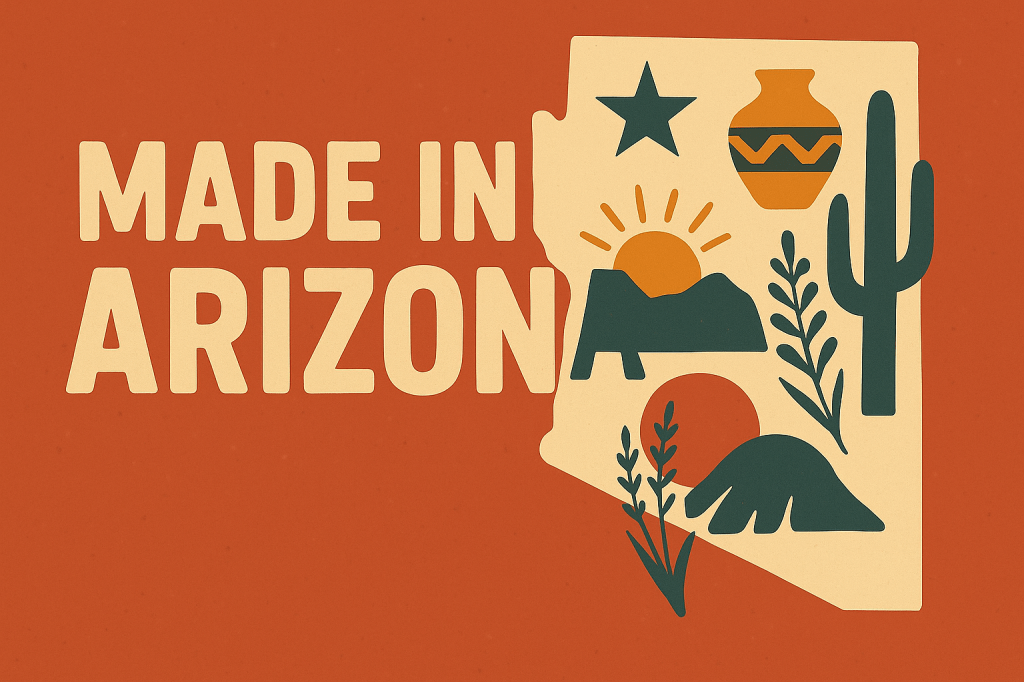
Arizona’s landscape is a study in contrasts: sun-baked Sonoran deserts dotted with prickly pear and mesquite, the high‑desert grasses and vineyards of Willcox and Sonoita, and the red-rock mesas around Sedona.
Annual monsoon storms leave a clean, sharp scent in cottonwood groves, while Native American traditions, weaving, jewelry-making, pottery and basketry, remain woven into everyday life. You can taste the desert in a jar of prickly pear syrup, see it in the blue flash of Bisbee turquoise, and feel it in a hand‑tooled leather belt shaped by cowboy country.
Here are the best things truly Made in Arizona, products that reflect its heritage, creativity, and everyday life.
1. Kingman & Bisbee Turquoise Jewelry
Why it’s made here: Arizona sits on some of the most storied turquoise deposits in North America. Mines around Kingman and Bisbee produced distinctive blue‑green stones that have been worked by Indigenous silversmiths and contemporary jewelers for generations.
What to look for: Natural matrix patterns, hand‑stamp silverwork, artist hallmarks (artist signature or tribal affiliation), and substantial weight; avoid uniformly colored, plastic‑looking stones which may be stabilized or reconstituted.
Price bracket (2025): $50–$2,500+ depending on stone provenance and craftsmanship.
Where to find it: Native American trading posts, artisan booths at Phoenix/Flagstaff markets, museum gift shops (e.g., Heard Museum), and galleries in Bisbee and Jerome.
2. Navajo Rugs & Tapestries
Why it’s made here: The Navajo Nation spans northern Arizona; its weaving tradition uses locally inspired designs, wool from regional sheep herds, and centuries‑old techniques such as hand‑spun wool and natural dyes.
What to look for: Hand‑spun wool texture, irregularities in weave indicating handwork, signature patterns (Chief’s blankets, eye‑dazzler), and artist or trading post provenance.
Price bracket (2025): $200–$15,000+ (small contemporary pieces to large historic weavings).
Where to find it: Trading posts on the Navajo Nation, regional galleries, and artisan fairs in Flagstaff and Page.
3. Hopi Pottery
Why it’s made here: Hopi potters use local clay and traditional coiling and firing techniques to create matte, mineral‑painted vessels rooted in ceremonial forms and natural motifs.
What to look for: Polished surfaces, mineral pigment paints, Hopi signatures or clan marks, and cultural context provided by the seller; ask about provenance and whether a piece is for sale versus a sacred object.
Price bracket (2025): $50–$2,000+ depending on age and artist.
Where to find it: Hopi villages and cultural centers, select galleries in northeastern Arizona, and museum specialty shops.
4. Zuni Inlay Jewelry & Stone Fetishes
Why it’s made here: Zuni artisans are renowned for intricate stone inlay and small carved fetishes using local and regional stones — a long‑standing tradition centered in western New Mexico and eastern Arizona communities.
What to look for: Tiny, precise stone inlays, artist marks, and traditional motifs; confirm that fetishes are carved by Zuni artists and not mass‑produced copies.
Price bracket (2025): $40–$1,200. Where to find it: Native artisan markets, Zuni trading posts, and curated boutiques that verify tribal origin.
5. Tohono O’odham Basketry
Why it’s made here: The Tohono O’odham of southern Arizona have a centuries‑old tradition of coiled basketry using native yucca, beargrass and devil’s claw fibers — fine double‑weave pieces are both functional and highly decorative.
What to look for: Tight, even coils, vegetal dyes, slight asymmetry from handwork, and artist attribution; ask about harvesting practices to ensure materials were sustainably collected.
Price bracket (2025): $75–$2,500. Where to find it: Tribal craft centers, artisan markets in Tucson and Sells, and museum shop collections.
6. Prickly Pear Syrup, Jam & Candies
Why it’s made here: The Sonoran Desert’s Opuntia cactus yields prickly pear fruit with a floral, fruity flavor that local producers turn into syrups, preserves, candies and liqueurs.
What to look for: Bright, natural color, short ingredient lists, and small‑batch labels indicating local harvest; avoid generic, mass‑market jars with vague sourcing.
Price bracket (2025): $8–$30 per jar or bottle.
Where to find it: Farmers markets (Tucson, Phoenix), artisanal food stalls, and local grocery co‑ops.
7. Mesquite Flour & Mesquite‑Smoked Foods
Why it’s made here: Mesquite trees are native to Arizona; their pods are ground into sweet, smoky flour for baking and used to smoke meats and salts in regional kitchens.
What to look for: Single‑ingredient mesquite flour, artisan smoked salts and meats labeled by producer, and recipes or tasting notes from the maker.
Price bracket (2025): $6–$25 per package/jar.
Where to find it: Farmers markets, specialty food shops, and farm stands across southern Arizona.
8. Arizona Wines (Sonoita, Willcox, Verde Valley)
Why it’s made here: High‑desert vineyards in Willcox, Sonoita/Elgin and Verde Valley produce cool‑climate reds and whites that reflect altitude, diurnal range, and volcanic soils.
What to look for: Winery tasting‑room bottles with vineyard and vintage info, small production runs, and AVA or estate‑grown labels.
Price bracket (2025): $15–$60 per bottle.
Where to find it: Tasting rooms in Sonoita, Willcox and Verde Valley, regional wine shops, and select airport retailers.
9. Small‑Batch Agave Spirits & Arizona Mezcal
Why it’s made here: Sonoran agaves and other agave species are being cultivated and distilled locally into artisanal agave spirits and mezcal‑style products that capture desert terroir.
What to look for: Transparent distillery notes, type of agave used, small batch numbers, and tasting‑room provenance; local distilleries often sell direct.
Price bracket (2025): $40–$150. Where to find it: Micro‑distillery tasting rooms, farmers markets, and specialty liquor stores in Phoenix and Tucson.
10. Hand‑tooled Leather & Cowboy Goods
Why it’s made here: Arizona’s ranching history and saddle culture foster skilled leatherwork — belts, saddles, boots and holsters are crafted by leather artisans who use local motifs and sturdy materials.
What to look for: Hand‑stitched seams, raised tooling, full‑grain leather, rivets and hardware stamped with maker’s marks; avoid glued or machine‑printed faux tooling.
Price bracket (2025): $60–$2,000+ (from belts to custom saddles).
Where to find it: Ranch supply stores with artisan sections, leather workshops in Prescott and Tucson, and Western trade fairs.
11. Sonoran‑Style Chorizo & Carne Seca
Why it’s made here: The Sonoran culinary corridor blends Mexican and Southwestern techniques — small butchers and family producers cure chorizo, carne seca (dried beef) and other preserved meats using regional chiles and salt.
What to look for: Short ingredient lists, traditional spice blends, refrigeration or proper vacuum packing, and producer provenance.
Price bracket (2025): $8–$35 per package.
Where to find it: Local butcher shops, Hispanic markets, and food stalls at regional fairs and rodeos.
12. Hand‑blown Glass from Arizona Studios
Why it’s made here: A number of glassblowing studios in Phoenix, Tucson and Flagstaff craft colorful, desert‑inspired glass — paperweights, pendants, and sculptural pieces often reflect cactus forms, river stones and desert sunsets.
What to look for: Pontil marks, subtle asymmetry from handwork, artist signatures, and thickness variations that indicate handmade glass.
Price bracket (2025): $25–$3,000+.
Where to find it: Studio galleries, glassblower open‑studio events, and arts markets.
13. Craft Beer from Arizona Microbreweries
Why it’s made here: Arizona’s vibrant craft‑beer scene channels local ingredients (cactus fruits, mesquite, regional hops) and desert water profiles into distinct IPAs, ales and barrel‑aged releases.
What to look for: Brewery labels with production dates, small batch or numbered releases, and tasting‑room exclusives; seasonal brews often highlight local botanicals.
Price bracket (2025): $3–$25 per bottle/can or flight price.
Where to find it: Brewery taprooms across Phoenix, Tucson, Flagstaff and Sedona, bottle shops and some airport craft beer sections.
14. Jojoba Oil & Desert Botanical Skincare
Why it’s made here: Jojoba plants and other desert botanicals grow wild in parts of Arizona; local apothecaries press jojoba and blend it with prickly pear, mesquite or creosote essences for small‑batch skincare.
What to look for: Cold‑pressed jojoba, clear ingredient lists, and small‑batch labeling; sustainability notes on wild‑harvested botanicals are a plus.
Price bracket (2025): $12–$80 per bottle or jar.
Where to find it: Natural product boutiques, farmers markets, and maker stalls in Tucson and Phoenix.
Local Makers & Traditions
Arizona’s artisanal fabric is woven from Indigenous, Hispanic and Anglo influences. Navajo, Hopi, Zuni and Tohono O’odham nations maintain living arts – weaving, pottery, beadwork and basketry, while Spanish colonial and frontier crafts informed leatherwork, charcuterie and distillation.
Cities such as Flagstaff, Bisbee and Prescott host studios and galleries, and markets like the Tucson Historic Farmers Market and Phoenix’s First Fridays connect makers with locals.
Traditional techniques, Navajo hand‑spinning and weaving, Hopi coiling and mineral paints, and Zuni inlay continue to be taught within communities and practiced by contemporary artisans.
How to Spot Genuine Local Products
- Ask about provenance: trustworthy sellers will name the artist, tribe, studio or farm and describe production methods.
- Look for signatures, hallmarks, or tribal affiliation markings on jewelry, pottery and baskets; many Indigenous artists sign or mark their work.
- Inspect craftsmanship: irregularities, tool marks, and natural material variation are signs of handmade work; perfect uniformity often means machine production.
- Check materials: genuine turquoise has matrix and natural flaws; hand‑woven rugs show variations in dye and weave; mesquite flour should list only mesquite pod.
- Beware of suspiciously low prices on traditional Indigenous crafts — if a Navajo rug or Hopi pot is priced far below market, it may be an import or reproduction.
- Buy from tribal markets, authorized trading posts, or co‑ops when purchasing Indigenous art to ensure proceeds benefit the creators.
Where to Buy Made-in-Arizona Goods
- Regional farmers markets and craft fairs (Tucson, Phoenix, Flagstaff).
- Native American trading posts and tribal arts centers on the Navajo Nation, Hopi and Tohono O’odham lands.
- Tasting rooms and vineyards in Willcox, Sonoita/Elgin and Verde Valley.
- Distillery and brewery taprooms in Phoenix and Tucson.
- Museum shops and cultural centers (e.g., Heard Museum) for curated, authenticated pieces.
- Historic downtowns and galleries in Bisbee, Jerome, Prescott and Sedona.
- Airport specialty shops that feature local foodstuffs and packaged artisan goods.
FAQs
Q: Are products in Arizona expensive?
A: Prices range widely — small items like prickly pear jam or a jar of mesquite flour are affordable, while authentic Navajo rugs, Hopi pottery and custom turquoise jewelry can be significant investments because of material and labor costs.
Q: How can I tell if something is authentically made here?
A: Ask for the maker’s name or tribal affiliation, check for signatures or hallmarks, examine the materials and workmanship, and prefer purchases from trading posts, museum shops or direct‑to‑artist sales.
Q: What is the best made‑in‑Arizona gift to bring home?
A: That depends on the recipient, but a small piece of authentic turquoise jewelry, a jar of prickly pear syrup, or a hand‑woven Tohono O’odham basket offers a compact, meaningful taste of Arizona craftsmanship.
Explore local studios, markets and cultural centers — you’ll find plenty of treasures truly Made in Arizona.
Let me know in the comments if you have any other top ‘what to buy’ ideas!
About the Author
Colin is the founder of SouvenirsIdeas.com and a passionate traveller with a soft spot for ceramics, markets, and food tours. He writes practical, first-hand guides to help you bring home souvenirs that actually mean something — not just more clutter!


 Souvenir Ideas to Take Home from Every Country and City
Leave a comment