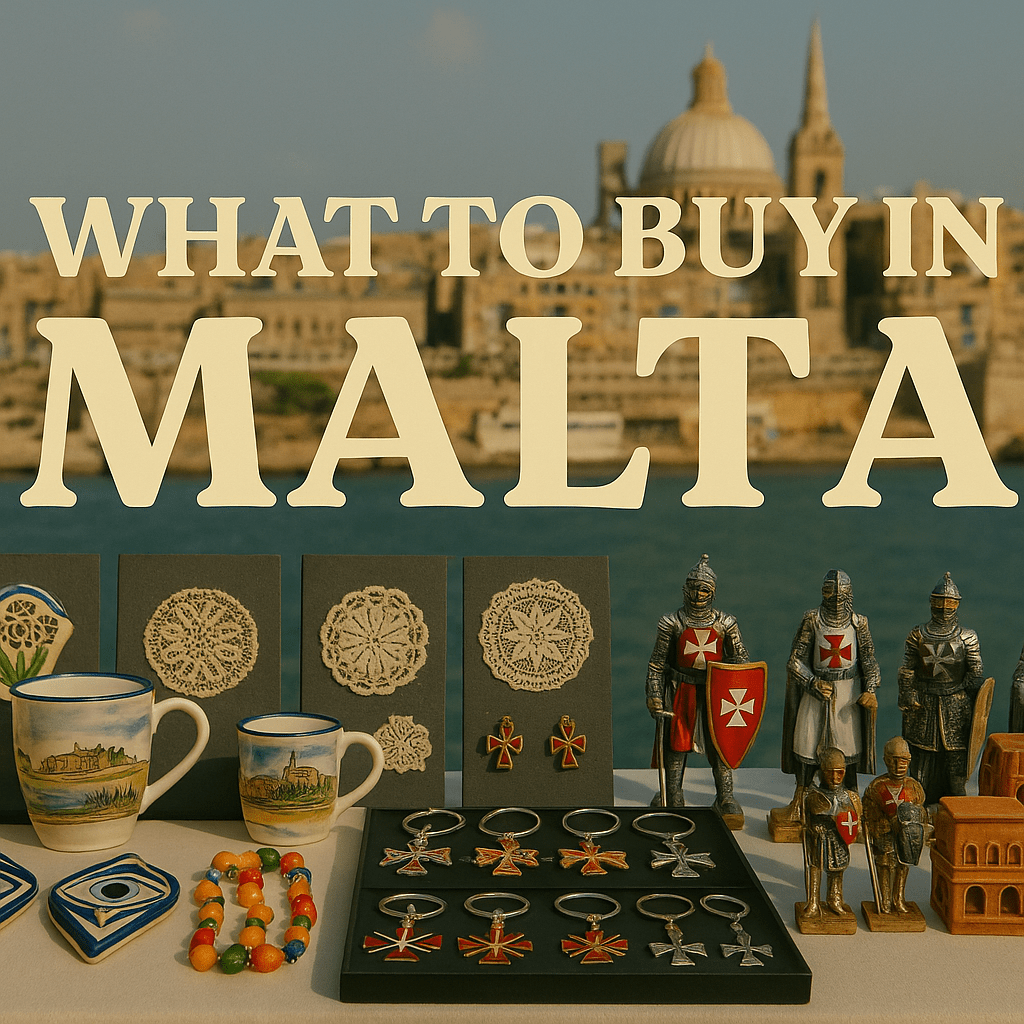
From limestone streets warmed by the late afternoon sun to the salty hiss of waves against the brightly painted luzzus in Marsaxlokk, Malta is a place where textures and tastes linger in memory.
Wander through Valletta’s narrow Republic Street and your fingers will trace cool carved limestone, your nose will catch fried pastizzi and sea spray, and merchants will offer filigree necklaces, Mdina glass, and jars of golden honey that smell faintly of maquis herbs.
Along the cliffs of Dingli and the blue lagoon’s cobalt calm, local makers turn clay, glass, and sheep’s milk into objects that feel rooted in island life and festa traditions. On Sundays, Marsaxlokk’s fish market fills with cries, nets, and bright fresh catch while Ta’ Qali craftspeople hammer filigree or mouth-blow glass just as their grandparents did.
If you’re wondering what to buy in Malta to bring a piece of its spirit back home, read on for sensory, practical picks for authentic keepsakes and edible delights and what to watch for when choosing them.
Here’s what to buy in Malta to bring a piece of its spirit back home.
1. Mdina Glass
Why pick this up:
Mdina Glass is synonymous with Malta’s modern glassmaking revival; each piece holds vivid island colors and shapes inspired by the sea and baroque façades. A hand-blown vase or paperweight makes a tactile souvenir that captures Malta’s light.
What to look for:
Seek pieces with irregularities—air bubbles or slight asymmetry—signs of hand-blown craft rather than mass production. Look for labels or ask about the Mdina Glass studio in Mdina for provenance.
Price bracket (2025):
€20–€150
Where to find it:
Mdina Glass shops in Mdina village, Ta’ Qali Crafts Village, and Valletta souvenir shops.
2. Maltese Filigree Jewelry
Why pick this up:
Delicate silver or gold filigree, twisted threads of metal forming roses, crosses, and Maltese patterns—reflects centuries of Mediterranean metalwork. It’s wearable art that nods to local religious and festive traditions.
What to look for:
Check the fineness of the wirework and solder joints; genuine filigree is airy and intricate, not stamped. Ask if it’s sterling silver (925) or gold-plated and request a small certificate for pricier pieces.
Price bracket (2025):
€25–€200
Where to find it:
Craft stalls in Valletta and Mdina, Ta’ Qali Crafts Village, and jewelry stores on Republic Street.
3. Gozitan Lace (Bobbin Lace)
Why pick this up:
Handmade bobbin lace from Gozo carries patterns passed down through generations, filigree in thread rather than metal. It’s perfect for scarves, doilies, or framed art that speaks of slow craft.
What to look for:
Inspect the evenness of threads and the complexity of motifs; machine-made lace will feel machine-uniform and lack slight irregularities. Buy from known lace cooperatives in Victoria (Rabat) on Gozo.
Price bracket (2025):
€15–€80
Where to find it:
Gozo markets in Victoria, Ta’ Qali Crafts Village, and museum shops in Gozo and Valletta.
4. Ġbejna (Gozitan Sheep’s-Milk Cheese)
Why pick this up:
A signature taste of the islands, ġbejna – small round cheeses made from sheep or goat milk—offers a tangy, pastoral flavor unique to Maltese tables. A vacuum-packed selection makes an edible memory of rural Gozo.
What to look for:
Choose vacuum-sealed or waxed varieties for travel; ask sellers about pasteurization and shelf life. Look for smoked or pepper-coated versions for variety.
Price bracket (2025):
€3–€10
Where to find it:
Marsaxlokk market, farmers’ stalls in Gozo, and specialty food shops in Valletta.
5. Maltese Honey & Caper Products
Why pick this up:
Honey from Maltese maquis, often scented with rosemary and thyme, tastes of the island’s scrubland; capers and caperberries are another quintessential Mediterranean flavor used in local cooking. These small jars bottle a piece of the landscape.
What to look for:
Prefer raw or single-origin honey and caper products labeled with region (Gozo or Malta). Avoid blends that don’t list floral sources if you want distinctive flavor.
Price bracket (2025):
€6–€25
Where to find it:
Farmers’ markets, specialty delis in Valletta, and market stalls in Marsaxlokk and Gozo.
6. Kinnie & Bajtra (Local Drinks)
Why pick this up:
Kinnie, Malta’s bittersweet orange-and-herb soft drink, is a cult favorite; bajtra is a local prickly pear liqueur that tastes of summer on the islands. Both make quirky, transportable tastes of Maltese refreshment.
What to look for:
Buy sealed bottles from grocery stores or markets; for liqueurs, check alcohol content and origin labels (small-batch producers are prized). Airport shops stock Kinnie multipacks for travel.
Price bracket (2025):
€2–€10 for Kinnie; €15–€30 for bajtra liqueur
Where to find it:
Supermarkets across Malta, Valletta grocers, and airport duty-free.
7. Luzzu Models & Nautical Motifs
Why pick this up:
Miniature luzzus, those cheerful, striped fishing boats with painted eyes, capture Malta’s maritime heart and make colorful decorative pieces. They link directly to Marsaxlokk’s harbor and fisherfolk culture.
What to look for:
Look for hand-painted wood and dovetailed joints; avoid plastic copies if you want artisanal charm. Small boats and magnets are good for packing.
Price bracket (2025):
€10–€120
Where to find it:
Marsaxlokk harbor stalls, craft markets in Birgu (Vittoriosa), and Valletta souvenir shops.
8. Maltese Olive Oil
Why pick this up:
Local olive oil carries a peppery, grassy character when produced from island groves; it’s a practical souvenir that elevates home cooking with Maltese terroir. Artisanal cold-pressed bottles are especially prized.
What to look for:
Choose extra-virgin, cold-pressed oils with harvest date and producer listed. Smaller boutique producers often offer single-vineyard bottles with distinctive flavor notes.
Price bracket (2025):
€8–€30
Where to find it:
Farm shops, Marsaxlokk markets, and specialty food stores in Valletta and Gozo.
9. Traditional Sweets: Figolla & Imqaret
Why pick this up:
Figolla (Easter almond pastries) and imqaret (date-filled fried pastries) are island favorites that carry festival and street-food memory. Packaged versions or boxed sweets make great small gifts.
What to look for:
Buy sealed or bakery-packed items and check best-before dates for travel. Imqaret are more common year-round, while figolla is seasonal around Easter.
Price bracket (2025):
€3–€20
Where to find it:
Local bakeries in Valletta, Ta’ Qali and Marsaxlokk stalls, and Sliema shops.
10. Maltese Cross & Religious Icons (Limestone or Silver)
Why pick this up:
The Maltese cross is an instantly recognizable emblem, often crafted in silver, wood, or carved limestone, materials tied to the islands’ churches and quarries. It’s a symbol that holds historical resonance and elegant design.
What to look for:
Seek artisanal carving in local limestone or properly hallmarked silver for jewelry. Avoid cheap painted trinkets if you want something enduring.
Price bracket (2025):
€10–€150
Where to find it:
Church-located shops in Mdina and Valletta, Ta’ Qali Crafts Village, and market stalls.
Tip: Wrap fragile glass and ceramics in clothing and declare any dairy or meat products at customs to avoid issues. ✈️
Local Shopping Culture & Traditions
Shopping in Malta mixes Mediterranean market bustle with deep-rooted artisan traditions. Weekend and Sunday markets (Marsaxlokk’s fish market is the most famous) are social rituals where fishing families, chefs, and tourists gather; Ta’ Qali Crafts Village is the island’s formal hub for traditional crafts like glassblowing and filigree.
Religious festas and seasonal fairs also shape what’s made and sold: lace and carved icons for feasts, sweets at Easter or Carnival, and small-batch food products timed to harvests.
Bargaining is modest—expected more at open-air markets than at fixed-price shops—while many artisans operate out of family-run workshops where you can watch processes like bobbin lace, glassblowing, or filigree being made.
On Gozo, cooperative stalls and village fairs remain important for sustaining slower, heritage crafts.
How to Spot Genuine Local Souvenirs
Genuine Maltese items show craft-specific signs: Mdina glass will have slight asymmetry and signature color blends; authentic filigree displays fine, airy wirework rather than stamped patterns; Gozitan lace feels light with tiny, consistent knots from bobbins.
For food, check harvest dates, producer names, and vacuum-sealing for dairy and cheese; single-origin labeling on honey or olive oil indicates smaller producers.
Avoid overly glossy “antiqued” finishes or items stamped “Made in” another country—mass-produced imitations often use cheaper metals, uniform machine-made lace, or plastic coatings.
When in doubt, ask about the artisan or cooperative, seek out Ta’ Qali or Mdina Glass signage, and buy from markets or museum shops that document provenance.
Where to Shop in Malta
- Marsaxlokk Fish Market (Sunday market) — fresh fish, local foods, harbor crafts.
- Ta’ Qali Crafts Village — glassblowing, filigree, traditional workshops.
- Valletta (Republic Street, Merchant Street, and museum shops) — jewelry, Mdina Glass, speciality foods.
- Mdina village — glass studios and historic-limestone crafts.
- Gozo markets (Victoria/Rabat) and village fairs — lace and local food.
- Sliema and Birgu promenades — souvenirs, luzzu motifs, and boutique finds.
- Malta International Airport duty-free — bottles, packaged foods, and sealed local brands.
FAQs
Q: Are souvenirs in Malta expensive?
A: Prices vary widely—market goods and small food items are affordable, while handcrafted jewelry, Mdina Glass, and large art pieces can be mid- to high-range depending on materials.
Q: Is bargaining common in Malta?
A: Bargaining is possible at open-air stalls like Marsaxlokk or at informal market tables, but shops and branded craft studios usually have fixed prices.
Q: How do I know if food items are easy to take through customs?
A: Sealed, vacuum-packed items with clear labels and small quantities (olive oil, honey, packaged sweets) are usually fine; declare fresh dairy, meats, or large quantities to customs on departure and check your airline rules.
Explore Malta’s markets and workshops to discover the island’s craft and culinary soul through these souvenirs in Malta.
Let me know in the comments if you have any other top ‘what to buy’ ideas!
About the Author
Colin is the founder of SouvenirsIdeas.com and a passionate traveller with a soft spot for ceramics, markets, and food tours. He writes practical, first-hand guides to help you bring home souvenirs that actually mean something — not just more clutter!

 Souvenir Ideas to Take Home from Every Country and City
Leave a comment