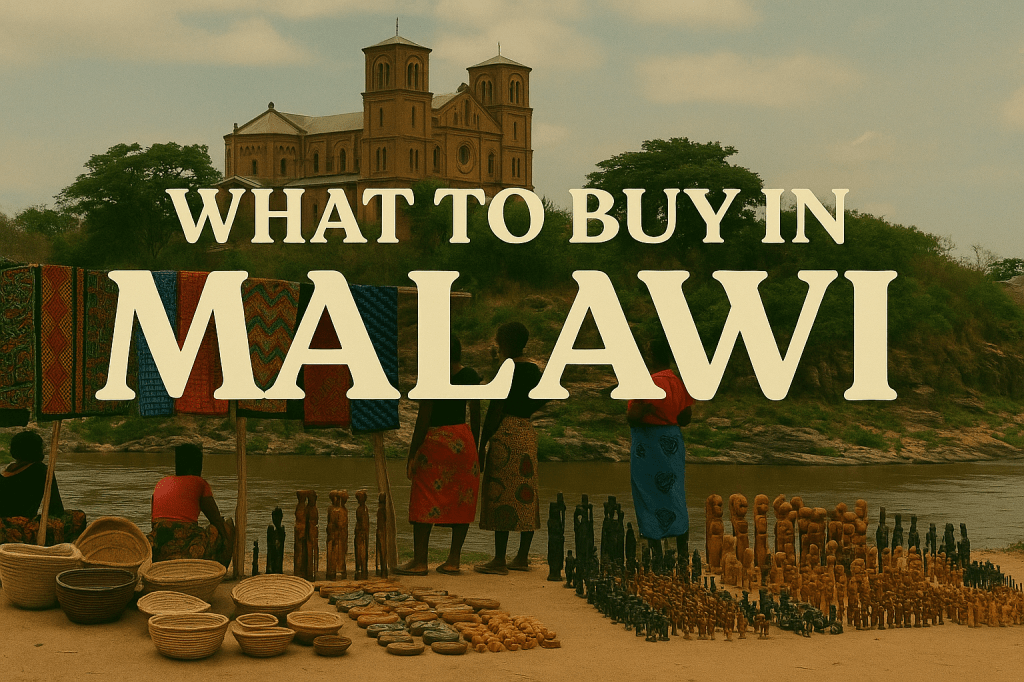
Warm, sun-baked afternoons on the shore of Lake Malawi taste like grilled kapenta and lemon—smoke rising from market stalls while fishermen haul small silver fish onto woven mats.
The landscape shifts from the lush tea terraces of Thyolo and Mulanje to the red-dust lanes around Lilongwe Market, and everywhere the air carries the earthy scent of wood smoke, fresh clay, and sun-dried cotton.
Inside bustling markets and quiet craft villages you’ll see bright chitenje cloths fluttering like flags, the glossy glaze of Dedza pottery, and carved wooden fish shaped from mvule and teak. Those textures, colors, and rhythms are the clues to what to buy in Malawi to bring a piece of its spirit back home.
1. Chitenje (Wax-Print Fabric)
Why pick this up:
Chitenje is the everyday canvas of Malawian life, the bold colors and symbolic patterns worn as wraps, headscarves, and gifts. Its vibrant prints evoke township markets and village celebrations, making it an instantly wearable memory.
What to look for:
Seek 100% cotton pieces with deep, even dye and a crisp selvedge; traditional motifs often reference nature, churches, or political events. Local seamstresses in Lilongwe or Blantyre can also turn flat cloth into tailored garments on request.
Price bracket (2025):
MK 6,000–30,000 per length (depending on quality and print).
Where to find it:
Lilongwe Market, Limbe Market (Blantyre), and small stalls around Mzuzu and Mulanje.
2. Dedza Pottery
Why pick this up:
Dedza pottery marries pragmatic form with earthy Glazes – plates, jugs and decorative bowls that feel like a piece of Malawi’s red soil and rainy seasons. The work has a recognisable style and is produced by a long-running, well-regarded studio.
What to look for:
Hand-thrown pieces with a slightly irregular shape and layered glazes (cream, brown, olive) are authentic; look for the Dedza mark or a maker’s signature. Smaller pieces are easier to pack and make great display items.
Price bracket (2025):
MK 12,000–70,000 for small to medium pieces.
Where to find it:
Dedza Pottery Centre and craft stalls at Lilongwe and Blantyre markets.
3. Mua & Mulanje Wood and Stone Carvings
Why pick this up:
Sculptures, from delicate birds to expressive human figures, capture scenes from Malawian life and myth. Carvings from Mua Cultural Centre and Mulanje woodworkers are tactile souvenirs that tell stories of the plateau and mission communities.
What to look for:
Choose carvings with visible hand-tool marks and natural finishes, mvule and rosewood are common and ask about the piece’s origin (Mua vs. mass-produced imports). Larger stone pieces from Mua are iconic but packable smaller carvings are more travel-friendly.
Price bracket (2025):
MK 15,000–120,000 depending on size and material.
Where to find it:
Mua Cultural Centre, Mulanje craft stalls, Lilongwe and Blantyre craft markets.
4. Paper-Bead & Seed Jewelry
Why pick this up:
Hand-rolled paper beads and seed necklaces are lightweight, colorful, and often made by women’s cooperatives, each piece a small story of creativity and reuse. They make excellent gifts and add a splash of Lake Malawi color to any outfit.
What to look for:
Inspect bead uniformity and knotting; quality makers seal beads with a glossy varnish and combine local seeds or recycled glass. Ask if purchases support a women’s group—many vendors proudly share that info.
Price bracket (2025):
MK 1,500–8,000 per necklace or bracelet.
Where to find it:
Lilongwe Craft Market, Mzuzu Market, and community cooperatives around Likoma and Mangochi.
5. Woven Reed Baskets & Sleeping Mats
Why pick this up:
Woven baskets and mats, made from reeds, sisal or ilala palm, are both beautiful and practical, echoing fishing villages along Lake Malawi and rural homesteads. Their tight weave and graphic patterns are classic Malawian workmanship.
What to look for:
Look for even, compact weaving and natural dyes; bulging sides or synthetic fibers often signal lower quality. Smaller bread baskets or coasters are easier to transport than full-size floor mats.
Price bracket (2025):
MK 2,000–25,000 depending on size and material.
Where to find it:
Mangochi and Monkey Bay markets, Lilongwe and Blantyre craft stalls, Likoma Island artisans.
6. Malawi Tea (Thyolo & Mulanje Estates)
Why pick this up:
Malawi’s highland estates produce brisk, fragrant black teas, perfect for anyone who wants a taste of the cool highlands of Thyolo or Mulanje at home. The aroma alone recalls misty plantation mornings.
What to look for:
Choose loose-leaf or whole-leaf black tea from named estates (Thyolo, Mulanje) for the best flavor; vacuum-sealed packs are fresher and fare better through customs. Organic and small-producer labels are becoming more common.
Price bracket (2025):
MK 1,500–6,000 per 250 g.
Where to find it:
Estate shops in Thyolo and Mulanje, Lilongwe supermarkets, airport gift shops.
7. Raw Honey & Baobab Preserves
Why pick this up:
Malawi’s wildflower honey is thick and floral, while baobab powder or jam captures the tang of the iconic tree, both are edible souvenirs that reflect rural pollination cycles and orchard harvests. They’re lovely for breakfast or baking back home.
What to look for:
Opt for jars with producer information and minimal processing; crystalline honey is natural and high-quality. Pack jars securely and check customs rules for food imports to your destination.
Price bracket (2025):
MK 2,000–10,000 per jar.
Where to find it:
Farmer stalls at Lilongwe Market, Mulanje and Zomba producers, Monkey Bay coastal markets.
8. Carved Lake Malawi Fish Sculptures
Why pick this up:
Carved fish evoke the long relationship between Malawians and the lake, artists carve mbuna cichlids and catfish in expressive forms that celebrate local species. They’re charming, lightweight, and instantly place-specific.
What to look for:
Look for smooth carving, natural wood grain, and hand-painted details mimicking local fish colors. Smaller tabletop pieces are easiest to pack and still make a strong visual statement.
Price bracket (2025):
MK 3,000–25,000. Where to find it:
Monkey Bay, Nkhotakota and Likoma Island markets, beachside stalls along Lake Malawi.
9. Gule Wamkulu Masks & Miniatures
Why pick this up:
Inspired by the ceremonial Gule Wamkulu performances of the Chewa people, small masks and figures celebrate a powerful local tradition without crossing into sacred territory. They’re dramatic, colorful pieces that speak to Malawi’s living ritual arts.
What to look for:
Buy decorative masks explicitly sold as tourist or decorative items rather than ritual paraphernalia; look for hand-painted surfaces and locally sourced wood. Respect cultural protocols, ask vendors about the item’s use and provenance.
Price bracket (2025):
MK 10,000–60,000 for decorative pieces.
Where to find it:
Mua Cultural Centre, Lilongwe craft market, Blantyre stalls near cultural centres.
10. Polished Gemstones (Rubies & Sapphires)
Why pick this up:
Malawi produces small quantities of attractive rubies and sapphires, polished stones can be a special, investment-quality keepsake tied to the land. They’re a gemstone-hunter’s treat and often sold with local origin details.
What to look for:
Ask for certification of origin and a written receipt; small, heat-treated stones are common, while untreated stones command higher prices. Be cautious, buy from reputable dealers or through recommended contacts to avoid imported fakes.
Price bracket (2025):
MK 20,000–200,000+ depending on size and quality.
Where to find it:
Gem dealers in Lilongwe and Blantyre, reputable traders at larger craft markets, and occasional rock fairs.
Tip: When buying breakable or liquid items, pack them in soft clothing and carry them in your checked luggage or buy vacuum-sealed/pack-friendly options to avoid spills and damage. 🧳
Local Shopping Culture & Traditions
Markets in Malawi are social stages: early-morning fish and vegetable markets give way to midday cloth trading and late-afternoon craft bargaining.
In Lilongwe, the central craft market and the Old Town market are meeting points for artisans and traders, while Blantyre’s Limbe area and Mzuzu serve regional shoppers. Cultural influences are layered, Chewa mask traditions,
Yao coastal crafts, and the colonial-era mission craft centres like Mua shape what’s made and sold.
Artisan villages such as the Mua Cultural Centre and the Dedza region anchor the craft economy, offering workshops and direct sales; Mulanje and Thyolo estates combine agro-tourism with sales of tea and honey.
Bargaining is common in open-air markets but done politely: start lower than the asking price and expect counters, while fixed-price shops and museum stores usually don’t negotiate.
How to Spot Genuine Local Souvenirs
Look for hand-tool marks, irregularities in glaze or carving, and natural materials—mvule and teak wood, ilala palm or reed weaving, and 100% cotton chitenje are signs of authentic craftsmanship.
For pottery, a slightly uneven base and layered glazes often indicate handmade Dedza pieces; for textiles, examine the selvedge and dye saturation to distinguish authentic wax-print or hand-dyed chitenje from cheap printed imports.
Ask about the maker and provenance: cooperative-stamped beads, named tea estates, and pottery with a Dedza stamp are reliable markers.
For food items like honey and tea, choose vacuum-sealed packages or jars with producer labels; for gemstones, request provenance documentation and prefer established dealers or market stalls recommended by cultural centres.
Where to Shop in Malawi
- Lilongwe Craft Market and Old Town Market (central hubs for textiles, beads and woodwork)
- Limbe and Blantyre city markets (large southern trading centres)
- Mua Cultural Centre and Dedza Pottery (artisan villages with studio pieces)
- Mulanje and Thyolo tea estates (estate shops for tea and honey)
- Monkey Bay and Likoma Island markets (Lake Malawi crafts and fish carvings)
- Mzuzu Market (northern craft and produce stalls)
- Kamuzu International Airport (Lilongwe) and Chileka Airport (Blantyre) gift shops for last-minute purchases
FAQs
Q: Are souvenirs in Malawi expensive?
A: Prices vary widely—local markets and cooperatives offer very affordable items, while studio pottery, quality carvings, and certified gemstones command higher prices.
Q: Is bargaining common in Malawi?
A: Yes, bargaining is expected in open-air markets and with independent craft sellers; be polite and start lower than the asking price. Fixed shops and museum stores usually have set prices.
Q: How do I know if food items will pass customs?
A: Choose vacuum-sealed or factory-packed tea and commercially labeled honey, and check your home country’s rules on importing food before you travel to avoid problems at customs.
Enjoy wandering stalls and studios, and discover the stories behind each handcrafted piece—what to buy in Malawi will always be a personal note from your travels.
Let me know in the comments if you have any other top ‘what to buy’ ideas!
About the Author
Colin is the founder of SouvenirsIdeas.com and a passionate traveller with a soft spot for ceramics, markets, and food tours. He writes practical, first-hand guides to help you bring home souvenirs that actually mean something — not just more clutter!


 Souvenir Ideas to Take Home from Every Country and City
Leave a comment