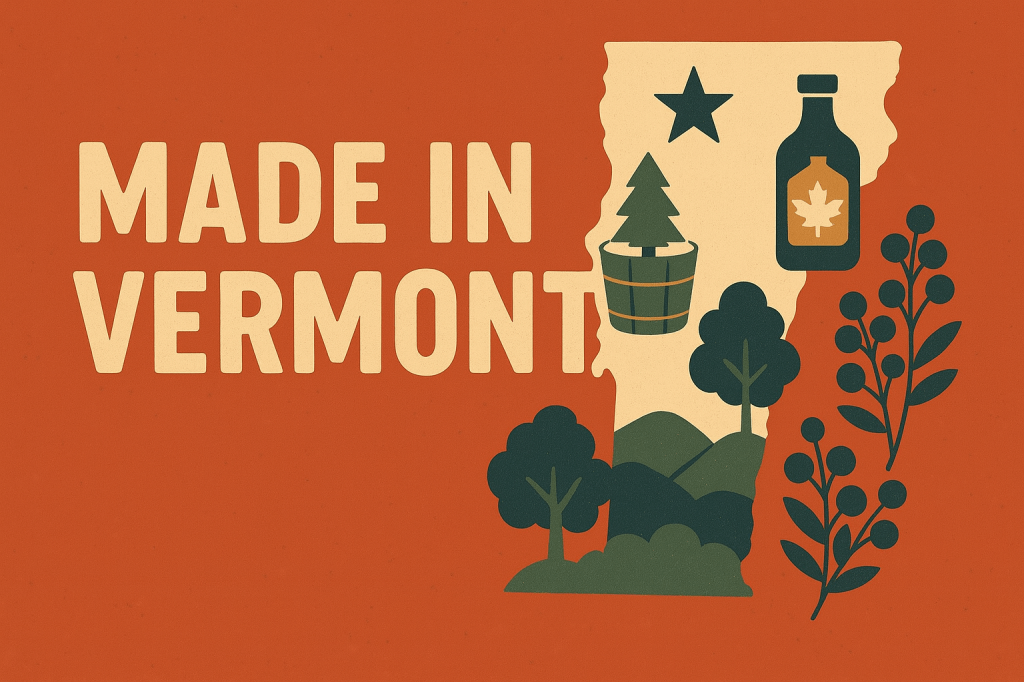
Vermont’s landscape — a patchwork of sugar-maple woods, rocky stone walls, dairy pastures, and river valleys — shapes a slow-made culture where seasons and raw materials dictate craft.
You can smell wood smoke on a chilly October day, hear loons across a summer lake, and taste the late-winter sap boiled down to amber syrup; those sensory details show up in everything from hand-thrown pottery to woolen blankets.
Here are the best things truly made in Vermont — products that reflect its heritage, creativity, and everyday life. This guide highlights small-batch, locally produced goods so you can bring home authentic Made in Vermont finds.
1. Maple Syrup and Maple Confections
Why it’s made here:
Vermont’s cold winters and thawing springs create perfect maple-sugaring cycles. Generations of sugarmakers run family sugarhouses, using wood-fired evaporators and time-honored tapping techniques that concentrate sap into syrup with deep, complex flavors.
What to look for:
Seek “pure maple syrup” or “grade A” with a harvest year and producer’s name. Small-batch or barrel-aged varieties have more pronounced caramel or vanilla notes. Maple cream, sugar, and single-origin candies are other local specialties.
Price bracket (2025):
$12–$35 for 250–500 ml (higher for single-origin, aged, or small-batch specialty syrups).
Where to find it:
Sugarhouses (seasonal open houses), farmers’ markets, farm stores, and regional food festivals.
2. Farmstead Cheeses (Aged Cheddar, Goat & Alpine-Style)
Why it’s made here:
Vermont’s dairy farms produce rich milk from grass-fed cows and goats; many creameries are farmstead operations that control milk-to-cheese processes, producing distinctive, terroir-driven cheeses.
What to look for:
Labels naming the farm, pasteurized vs. raw milk, and aging time. Farmstead cheddars, fresh chevre, and washed-rind or alpine-style wheels are hallmark styles to sample.
Price bracket (2025):
$8–$30 per wedge (depending on age and rarity), specialty wheels higher.
Where to find it:
Creamery shops, farmers’ markets, cheesemongers in town centers, and tasting rooms at larger farms.
3. Small-Batch Craft Beer (Hazy IPAs & Farmhouse Ales)
Why it’s made here:
Vermont’s craft-brewing scene grew from backyard hops and a culture of experimentation. Many breweries focus on unfiltered, hop-forward IPAs, saison-style farmhouse ales, and barrel-aged releases that reflect local grain and yeast strains.
What to look for:
Cans or bottles with production dates, small-batch or limited-release notes, and brewery contact info. Freshness matters for hop-forward beers; look for canning dates within weeks.
Price bracket (2025):
$10–$20 per 4-pack; $25–$60+ for specialty bottles and barrel-aged releases.
Where to find it:
Taprooms, brewery bottle shops, beer festivals, and select liquor stores carrying local drafts and cans.
4. Bean-to-Bar Chocolate
Why it’s made here:
Several Vermont makers focus on the bean-to-bar movement, sourcing cacao responsibly and emphasizing small roasts and conching to create chocolate with clear origin flavors and minimal additives.
What to look for:
Single-origin bars, cocoa percentage, bean origin, and transparent sourcing. Hand-cut packaging or batch numbers indicate small-batch production.
Price bracket (2025):
$6–$18 per bar (higher for single-origin or limited-run flavors).
Where to find it:
Artisan chocolate shops, farmers’ markets, and co-op grocery stores.
5. Hand-turned Wooden Bowls & Cutting Boards
Why it’s made here:
Vermont’s hardwood forests offer maple, cherry, and black walnut prized by woodworkers. Many artisans salvage fallen or reclaimed wood and turn it into functional objects that highlight unique grain and spalting.
What to look for:
Hand-tool marks, a clear finish (food-safe oils), and wood provenance. Live-edge pieces and laminated construction show local creativity.
Price bracket (2025):
$25–$250 depending on size and species; bespoke pieces higher.
Where to find it:
Craftsman studios, weekend artisan fairs, and gallery co-ops in historic villages.
6. Wool Blankets, Rugs & Hand-knit Sweaters
Why it’s made here:
Sheep farming and small woolen mills are part of Vermont’s fiber heritage. Local mills and independent knitters turn fleece into robust, warm textiles suited to the state’s winters.
What to look for:
Wool content (100% wool vs. blends), mill or maker label, and traditional patterns or natural dyeing. Tightly woven blankets and hand-knit garments will have slight irregularities that show handwork.
Price bracket (2025):
$40–$250 for blankets; $80–$400+ for hand-knit sweaters or bespoke pieces.
Where to find it:
Wool mills, fiber festivals, cooperative shops, and farm stores.
7. Craft Cider
Why it’s made here:
Vermont’s orchard tradition and cooler climate produce balanced apples ideal for cider. Small cideries press local fruit into everything from dry sparkling ciders to dessert-style bottles and barrel-aged blends.
What to look for:
“Estate” or “Orchard” on the label (fruit sourced from the cider maker), bottle dates, and descriptions of apple varieties or wild fermentation.
Price bracket (2025):
$10–$25 per bottle; special barrels or limited editions higher.
Where to find it:
Cider houses, tasting rooms, farmers’ markets, and seasonal orchard events.
8. Small-Batch Gin, Rye & Barrel-Aged Spirits
Why it’s made here:
Vermont distillers favor local grains, maple, and botanicals, producing compelling small-run gins, rye whiskies, and spirit finishes that speak to the state’s agricultural ingredients and cooperage choices.
What to look for:
Batch numbers, mashbill or grain source, and tasting-room availability. Proof and aging statements help distinguish craft bottlings.
Price bracket (2025):
$30–$80 for standard bottlings; limited or aged releases $100+.
Where to find it:
Distillery tasting rooms, farm distilleries, and select specialty liquor retailers.
9. Hand-thrown Pottery (Wood-fired & Salt-glazed)
Why it’s made here:
Vermont’s pottery community draws on local clays and wood-fired kilns; potters emphasize functional wares — mugs, baking dishes, and jars — that bear the marks of flame and ash from traditional firing.
What to look for:
Potter’s signature or stamp, slight variations in glaze and form, and kiln markings (flashing or ash deposits) that indicate wood firing.
Price bracket (2025):
$25–$200 for everyday pieces; larger or artist-signed works higher.
Where to find it:
Pottery studios, artisan co-ops, craft fairs, and seasonal open-studio weekends.
10. Natural Soaps, Salves & Herbal Remedies
Why it’s made here:
Abundant wild herbs, milk from local dairies, and a tradition of home apothecaries inspired artisans to make plant-based soaps, balms, and tinctures using locally foraged botanicals.
What to look for:
Ingredient lists (recognizable botanicals), small-batch or hand-poured notes, and producer contact info. Look for local herb names and sustainably wildcrafted claims.
Price bracket (2025):
$6–$20 per soap bar or jar; salves and tinctures vary by potency.
Where to find it:
Farmers’ markets, herbalist shops, apothecary stalls at craft fairs, and trail-side farm stores.
11. Hand-dyed Textiles & Natural Dyes (Indigo, Madder)
Why it’s made here:
Textile artists in Vermont often use natural dye gardens and hand-weaving to create scarves, table linens, and tapestries that echo the state’s color palette — deep indigos, rusty madder tones, and mossy greens.
What to look for:
Fiber content (silk, wool, linen), notes on dye source, and visible dye-batch variation. Hand-dyed pieces will have subtle irregularities in tone.
Price bracket (2025):
$30–$200 depending on fiber and technique.
Where to find it:
Weavers’ studios, fiber festivals, and craft markets in historic towns.
Local Makers & Traditions
Vermont’s craft heritage is rooted in seasonal work and small farms: sap runs and sugarhouses, creameries where milk is turned into cheese that carries the flavor of local pastures, and family workshops where wood and clay become household objects. Traditions include the sugaring season (maple tapping and boiling), farmstead cheesemaking, and a vibrant fiber culture tied to local wool and hand-spinning. Potters often use wood-fired kilns and small cooperatives keep craft techniques alive; craft breweries and cideries evolved from farmhouse brewing and orchard culture.
Artisan markets (weekend farmers’ markets and winter craft fairs) and open-studio weekends are common fixtures. Many makers welcome visitors for tours and tastings, so you can see production from tree to bottle or fleece to blanket.
How to Spot Genuine Local Products
- Look for maker names, farm or creamery origins, batch numbers, and a clear ingredient list — genuine local producers are transparent.
- Authentic handcrafted items show small irregularities: tool marks on pottery, slight weave inconsistencies, natural wood grain variations, or hand-sewn stitching.
- Certified local labels help: products that state “Made in Vermont,” “estate,” or “farmstead” indicate closer ties to place.
- Beware of generic packaging, identical machine-perfect pieces in bulk, or tags claiming “Vermont style” without a local producer listed — these often signal imported or mass-produced goods.
- Ask questions: where were the raw materials sourced? Can the maker explain their process? Real artisans are proud and specific about provenance.
Where to Buy Made-in-Vermont Goods
- Farmers’ markets and seasonal craft fairs in towns and county seats.
- Farmstores and sugarhouse standstills during sugaring season.
- Distillery, cidery, brewery, creamery, and chocolate maker tasting rooms.
- Artisan districts and gallery co-ops in historic downtowns.
- Museum shops and curated airport stores that emphasize regional producers.
FAQs
Q: Are products in Vermont expensive?
A: Prices vary widely — everyday artisanal items (small soaps, chocolate, standard syrup) are affordable, while handcrafted furniture, aged cheeses, or limited-release spirits command higher prices because of material and labor costs.
Q: How can I tell if something is authentically made here?
A: Check for a maker’s name or farm, batch details, ingredient lists, and local provenance claims. Genuine items often come with a story, clear labeling, or the opportunity to meet the maker at a market or tasting room.
Q: What is the best made-in-Vermont gift to bring home?
A: Maple syrup is a classic for a reason — it’s perishable-proof, unmistakably regional, and available in many small-batch expressions, making it a reliable and delicious Vermont gift.
Explore local workshops, markets, and tasting rooms to discover the depth of true Made in Vermont craftsmanship.
Let me know in the comments if you have any other top ‘what to buy’ ideas!
About the Author
Colin is the founder of SouvenirsIdeas.com and a passionate traveller with a soft spot for ceramics, markets, and food tours. He writes practical, first-hand guides to help you bring home souvenirs that actually mean something — not just more clutter!


 Souvenir Ideas to Take Home from Every Country and City
Leave a comment