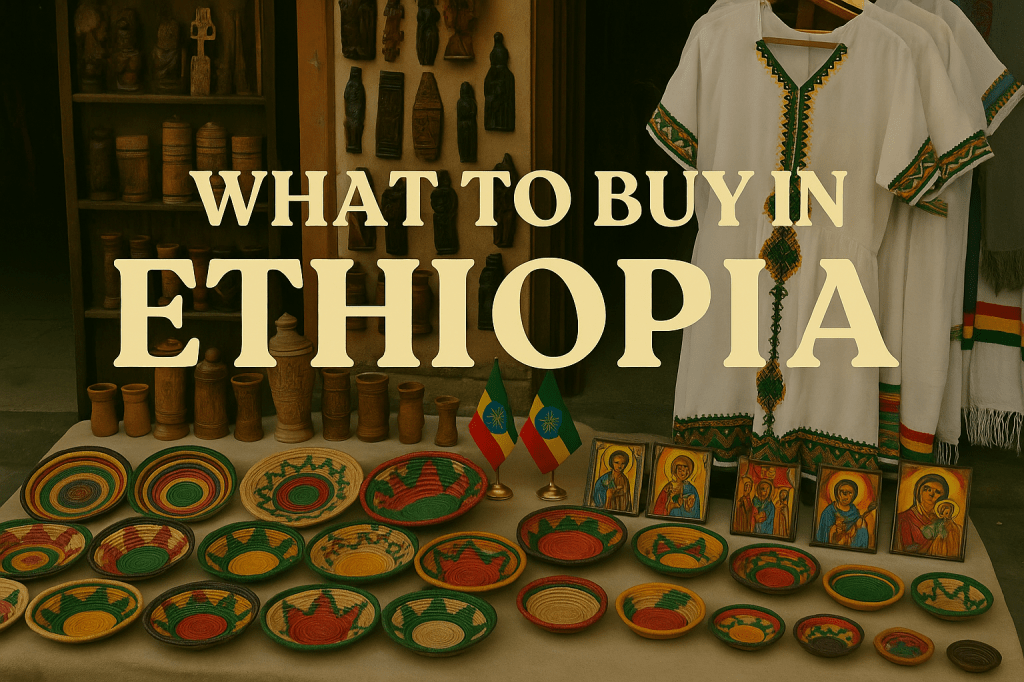
Dusty highland air carries the scent of freshly roasted coffee and incense; women in white netela wrap themselves against the cool morning on the plateau; centuries-old rock-hewn churches stand carved into crimson stone. Ethiopia smells like spice markets, sounds like the krar and masinko, and feels like a deep, layered history you can hold in your hands.
Whether you’re hunting for handcrafted keepsakes or edible delights, here’s what to buy in Ethiopia to bring home authentic Ethiopian souvenirs.
1. Single-origin Ethiopian Coffee (Yirgacheffe, Sidamo, Guji)
Why pick this up: Ethiopia is the birthplace of coffee — beans here are floral, citrusy, and complex in a way you won’t find elsewhere. A bag of single-origin beans captures the terroir of the highlands and is a living souvenir of the coffee ceremony.
What to look for: Look for small-batch, single-estate labels (Yirgacheffe, Sidamo, Guji, Harrar); ask for whole beans and a roast date; vacuum-sealed bags keep aroma fresh.
Price bracket (2025): Br 150–700 per 250g depending on origin and roast.
Where to find it: Tomoca Coffee in Addis Ababa, specialty stalls in Merkato, roasters in Bahir Dar and Dire Dawa, or directly from farmers’ cooperatives.
2. Jebena (Traditional Ethiopian Coffee Pot)
Why pick this up: The jebena is both functional and sculptural — clay pots used in the traditional coffee ceremony and perfect as a decorative memento.
What to look for: Hand-thrown clay with a narrow neck and round belly; intact spout and handle; some are glazed inside for durability.
Price bracket (2025): Br 100–600.
Where to find it: Ceramic stalls in Merkato, craft shops in Addis Ababa, Lalibela markets and artisan cooperatives in the southern regions.
3. Tej (Ethiopian Honey Wine)
Why pick this up: Tej is Ethiopia’s fragrant, slightly effervescent honey wine flavored with gesho leaves — a taste of traditional celebrations and neighborhood tej bets.
What to look for: Bottled tej from trusted vendors or labeled artisanal bottles; darker, richer honey color indicates fuller flavor.
Price bracket (2025): Br 80–400 per bottle (500ml–1L).
Where to find it: Local tej bets in Addis Ababa, Gondar and Lalibela taverns, and packaged bottles in Merkato or airport shops.
4. Habesha Kemis Fabric and Netela
Why pick this up: The netela (light cotton shawl) and handwoven cloth used for the habesha kemis (traditional dress) are quintessentially Ethiopian — linen-like cotton with delicate brocade stripes.
What to look for: Handloomed cotton with finely woven borders (tibeb); longer netela are lighter, higher thread counts feel softer.
Price bracket (2025): Netela Br 200–800; full habesha kemis or handwoven cloth Br 800–3,000.
Where to find it: Shiro Meda market (Addis), textile cooperatives in Gondar and Lalibela, and high-end boutiques in Bole.
5. Mesob (Woven Injera Basket/Table)
Why pick this up: Colorful, conical mesob baskets are both artful serving tables for injera and striking home decorations made by women’s weaving collectives.
What to look for: Tight, even weaving of grass or straw dyed with local colors; lids fit snugly; medium sizes are easiest to pack.
Price bracket (2025): Br 300–1,200.
Where to find it: Merkato, Bahir Dar craft stalls, Harar workshops, and fair-trade cooperatives.
6. Silver Crosses and Traditional Jewelry
Why pick this up: Intricately pierced silver crosses reflect Ethiopia’s ancient Christian heritage; necklaces and earrings make powerful, wearable keepsakes.
What to look for: Hallmarked silver, traditional Lalibela or Axum designs, filigree work and oxidized finishes.
Price bracket (2025): Br 500–4,000 depending on size, age, and workmanship.
Where to find it: Jewelry lanes around Merkato, artisan stalls in Lalibela, and craft shops in Axum and Gondar.
7. Frankincense, Myrrh and Resin Incense
Why pick this up: Ethiopia produces high-quality frankincense and myrrh used for centuries in liturgy and healing — the aromas are transportive and long-lasting.
What to look for: Hard, translucent tears for frankincense; dark, sticky myrrh; ask for origin (Somali, Ogaden, or Tigray regions).
Price bracket (2025): Br 50–350 per 50–200g.
Where to find it: Spice and incense stalls in Merkato, Harar bazaars, and specialty shops in Addis Ababa.
8. Berbere, Mitmita and Ethiopian Spice Blends
Why pick this up: Berbere is the backbone of Ethiopian cuisine — a warm, complex mix of chiles, korarima, fenugreek, and more that makes your stews sing.
What to look for: Fresh, bright red berbere with balanced heat; smaller tins or vacuum packs for travel; ask vendors for roast dates.
Price bracket (2025): Br 30–150 per 100g.
Where to find it: Merkato spice alleys, local markets across the country, and packaged blends in Addis supermarkets.
9. Leather Goods (Handmade Bags & Sandals)
Why pick this up: Ethiopian tanneries and leatherworkers in Addis and Bahir Dar produce sturdy, stylish bags, belts, and sandals, often with a rustic, handcrafted feel.
What to look for: Full-grain leather, solid stitching, natural dyes; avoid chemically treated finishes if you want authenticity.
Price bracket (2025): Br 400–1,500.
Where to find it: Addis Ababa leather markets near Merkato, small workshops in Bahir Dar, Lamu-style shops in the south.
10. Hand-carved Wooden Crosses and Religious Icons
Why pick this up: Woodcarving is a living tradition — hand-carved Ethiopian crosses, saints and icon panels make striking decor and reflect centuries of Orthodox artistry.
What to look for: Carving style linked to region (Lalibela, Tigray); solid hardwoods, signed pieces from known carvers if possible; check for insect treatment.
Price bracket (2025): Br 200–2,500.
Where to find it: Lalibela and Axum workshops, craft stalls in Gondar, and ecclesiastical art shops in Addis.
Tip: Pack breakables (jebena, carved crosses) in clothing, declare food and alcohol items at customs, and haggle gently in markets — the best Ethiopian souvenirs tell a story you can carry home. ✈️
Let me know in the comments if you have any other top ‘what to buy’ ideas!
About the Author
Colin is the founder of SouvenirsIdeas.com and a passionate traveller with a soft spot for ceramics, markets, and food tours. He writes practical, first-hand guides to help you bring home souvenirs that actually mean something — not just more clutter!


 Souvenir Ideas to Take Home from Every Country and City
Leave a comment